

By Eduardo Bacci — The Investigative Journal
The stretch of filings around the Independence Day holiday produced a dense run of accountability actions and market-structure disclosures from the U.S. Securities and Exchange Commission. Records posted to the Commission’s litigation-release docket, its administrative-proceedings file and the EDGAR system between June 29 and July 6, 2026 show the enforcement division continuing to close out a backlog of fraud and reporting cases — several of them resolved by consent rather than trial — even as the agency’s economists reported a sharp year-over-year rebound in initial public offerings. This edition of SEC Watch surveys eight notable items across both the disclosure and enforcement fronts, with direct links to the underlying public records.
Corporate Disclosure Watch
1. SEC data shows Q1 2026 IPO proceeds up roughly 86%
In a July 1 release, the SEC’s Division of Economic and Risk Analysis (DERA) published updated capital-markets statistics that point to a meaningful reopening of the new-issue market. According to the Commission, there were 99 IPOs raising more than $22 billion in the first quarter of 2026, compared with 84 IPOs raising more than $11.8 billion in the first quarter of 2025 — an increase of approximately 86% in proceeds raised. The data also show 264 follow-on registered offerings raising over $44.2 billion, up from 250 offerings and roughly $40.4 billion a year earlier.
The figures, released as interactive visualizations, are the sort of high-level indicator that tends to shape the tenor of the SEC’s rulemaking agenda. Chief Economist Joshua T. White framed the publication as part of the agency’s effort to provide “reliable information and valuable insights to the investing public.” For accountability purposes, the underlying registration statements behind that $22 billion in first-quarter issuance now sit in EDGAR as primary-source disclosure documents. Investors and reporters weighing the durability of the rebound will want to test whether the newly public companies’ risk-factor and use-of-proceeds language holds up against subsequent quarterly results. The release is available on the SEC newsroom (Release 2026-61).
2. Six Flags discloses C-suite change in an 8-K
Six Flags Entertainment Corporation (NYSE: FUN), which the company describes as North America’s largest regional amusement-park operator, disclosed a leadership change in a Current Report filed with the SEC. According to the exhibit accompanying the filing, dated July 2, 2026, the company appointed Mark Pauls as Chief Operating Officer effective July 15, 2026. Pauls succeeds Tim Fisher, who the company said will serve as a Special Advisor through December 15, 2026 to support the transition.
Executive-officer changes are reportable under Item 5.02 of Form 8-K, and they can be an early signal of strategic or operational shifts, particularly at a company still integrating a large merger. The filing notes Pauls’ prior roles at Herschend Family Entertainment and Palace Entertainment, and it references the earlier Cedar Fair combination that created the current Six Flags. TIJ takes no view on the personnel decision itself; the disclosure is worth flagging because operational leadership turnover at a consumer-facing operator often precedes changes in cost structure and guidance that later surface in the company’s 10-Q filings. The exhibit is posted on EDGAR.
3. The SEC names its own Chief Operating Officer
On July 6 the Commission announced the appointment of Paul Knight as Chief Operating Officer, a role that, per the agency, oversees operational and administrative functions including the Office of Human Resources, the Office of Acquisitions, the Office of Financial Management, the EDGAR Business Office, the Office of the Chief Data Officer and the Office of the Chief Risk Officer. The EDGAR Business Office is a notable line item for anyone who relies on the filing system: it sits at the center of how public disclosure is ingested and made available to investors.
Agency operational appointments rarely make headlines, but they bear on the plumbing of public disclosure. The announcement, Release 2026-62, is available in the SEC newsroom. Read alongside the DERA statistics and the agency’s pending disclosure-modernization proposals, it reflects a Commission actively reorganizing its back office at the same time it is reshaping the rules that govern corporate filers.
SEC Enforcement
4. Merrill Lynch to pay $7.5 million over Suspicious Activity Report failures
The most significant fresh monetary sanction in this window came in a settled administrative order. On June 29, the SEC announced that Merrill Lynch, Pierce, Fenner & Smith Incorporated agreed to pay a $7.5 million civil penalty to resolve findings that it failed to file numerous Suspicious Activity Reports (SARs) between April 2020 and September 2024. According to the order, Merrill relied on parent company Bank of America’s enterprise-wide Bank Secrecy Act/Anti-Money Laundering program, which used transaction-monitoring software to sort potentially suspicious events into risk-scored “event groups.”
The order finds that only groups scoring above a certain threshold were investigated, even though internal analyses indicated — as early as April 2020 — that certain lower-scoring groups would have generated SAR filings if reviewed. The Commission found that Merrill violated Section 17(a) of the Securities Exchange Act of 1934 and Rule 17a-8. Without admitting or denying the findings, the firm consented to a cease-and-desist order, a censure and the penalty. The threshold-calibration issue at the heart of the case is a recurring theme in anti-money-laundering enforcement, and it raises a question worth tracking across other large broker-dealers that lean on affiliated bank programs. The full order summary is on the SEC administrative-proceedings page (File No. 3-22652).
5. Advisory-firm owner faces judgment after parallel criminal guilty plea
In a July 1 litigation release, the SEC said it filed proposed partial judgments against David Kushner of Boca Raton, Florida, and his firm La Mancha Funding Corp. The Commission’s complaint, originally filed in November 2024 in the Southern District of New York, alleges that Kushner and La Mancha raised roughly $10.49 million by selling membership interests in a series of LLCs meant to fund short-term loans to borrowers including sports agents and professional athletes.
According to the complaint, the defendants made material misrepresentations about the use of investor funds and misappropriated at least $2.14 million — money the SEC says went to credit-card bills, a child’s college tuition, country-club dues, a Mercedes-Benz and a Hamptons rental. These remain allegations for purposes of the civil case; Kushner and La Mancha consented to judgments, subject to court approval, that would impose injunctions and, for Kushner, an officer-and-director bar, while reserving the amount of any monetary relief for later. Separately, and as a matter of record in the criminal system, the release notes that Kushner previously pleaded guilty to a seven-count indictment brought by the Manhattan District Attorney, including grand-larceny and scheme-to-defraud counts. The civil release is posted as Litigation Release No. 26579.
6. Las Vegas “financial education” company settles unregistered-broker claims
On July 6 the Commission announced a final consent judgment, entered June 29 in the District of Nevada, against Quest Education L.L.C., its principal Daniel Blue, and former employees David Christopher White and Keitoh Jordan Spears. The SEC’s complaint alleged that Quest marketed itself as an investor-education company helping customers open self-directed retirement accounts, when its largest revenue driver was commissions for steering those customers into unregistered securities offerings.
According to the complaint, between October 2019 and April 2023 Quest solicited customers to invest in offerings from at least eight issuers and collected roughly $2.5 million in commissions, while White and Spears each allegedly received more than $200,000. The SEC alleged the defendants were acting as brokers without being registered or associated with a registered broker-dealer. Without admitting the allegations, the defendants consented to injunctions under Section 5 of the Securities Act and Section 15(a)(1) of the Exchange Act; Blue and Spears were each ordered to pay a civil penalty of $11,823, and Blue accepted a broad securities-participation bar. The matter is documented in Litigation Release No. 26580. The case is a useful reminder that “education” branding does not insulate a firm from broker-registration requirements when commissions drive the model.
7. Consent judgments proposed in the Adani Green Energy disclosure case
A higher-profile matter continues to move toward resolution. In a May 14, 2026 litigation release, the SEC said it moved for entry of final judgments by consent against Gautam Adani and Sagar Adani, respectively the founder and an executive director associated with Adani Green Energy Ltd. The Commission’s November 2024 complaint alleged that the two orchestrated a scheme to pay or promise hundreds of millions of dollars in bribes to Indian government officials, and that in September 2021 — while that alleged scheme was ongoing — Adani Green’s offering materials for a $750 million bond touted anti-bribery compliance in statements the SEC characterized as materially false or misleading. The offering, per the complaint, raised more than $175 million from U.S. investors.
Without admitting or denying the allegations, both men consented to judgments, subject to court approval, that would enjoin them from violating the antifraud provisions and impose civil penalties of $6 million against Gautam Adani and $12 million against Sagar Adani. The allegations have not been adjudicated on the merits, and the defendants have not admitted wrongdoing; the proposed judgments require a judge’s sign-off. Because the case turns on the accuracy of anti-corruption representations in bond-offering documents, it is a template worth watching for how the Commission treats compliance-language disclosures by foreign issuers accessing U.S. capital. See Litigation Release No. 26554.
8. Musk trust consents to $1.5 million penalty over a late ownership report
The Commission also advanced its beneficial-ownership case tied to the 2022 acquisition of Twitter stock. In a May 4, 2026 litigation release, the SEC said it filed an amended complaint adding the Elon Musk Revocable Trust dated July 22, 2003 as a defendant, alleging the defendants failed to timely file a beneficial-ownership report after the trust crossed the 5% threshold in Twitter, Inc. common stock — a violation of Section 13(d) of the Exchange Act and Rule 13d-1.
Without admitting or denying the allegations, the trust consented to a judgment, subject to court approval, enjoining future violations and imposing a $1.5 million civil penalty. According to the SEC’s consent motion, if the court enters that judgment as proposed, the Commission will file a stipulated dismissal of Musk in his personal capacity, resolving the case. The dollar figure is modest relative to the headlines, but the matter is a reminder that the timing of Schedule 13 disclosures — the mechanism that alerts the market to accumulating stakes — remains an active enforcement priority. The release is posted as Litigation Release No. 26548.
Filings that may warrant deeper TIJ investigation
Several threads in this cycle merit closer reporting. First, the volume of consent resolutions that reserve monetary relief for a later ruling — as in the Kushner matter — means the ultimate financial accountability in these cases is not yet fixed; the follow-up disgorgement motions are where the real numbers will land, and they are easy to miss. Second, the Merrill Lynch order’s finding that risk-score thresholds were set in a way that predictably suppressed SAR filings invites a broader question the public record does not yet answer: whether other large broker-dealers relying on affiliated bank AML programs calibrated their thresholds similarly. That is a data-driven investigation waiting to be built from settled orders and Financial Crimes Enforcement Network guidance.
Third, the pace of settlement-by-consent should be read against the Commission’s own May 18 decision (Release 2026-45) rescinding a prior policy on denials of settlements in enforcement actions — a procedural change whose downstream effect on how quickly cases resolve is worth quantifying over the coming quarters. Finally, the contrast between actions filed and investigations quietly closed deserves attention: earlier this year, for example, Faraday Future Intelligent Electric Inc. disclosed in an 8-K exhibit that the SEC had ended a years-long investigation with no recommended enforcement action. Closed matters generate no litigation release, which makes company disclosures the only public window into them — and a reason to keep reading EDGAR as closely as the enforcement docket.
All items above are drawn from public SEC records and company filings; allegations described in pending civil matters have not been proven, and settling parties did not admit wrongdoing except where a separate criminal guilty plea is noted. Figures are as stated in the cited primary sources.
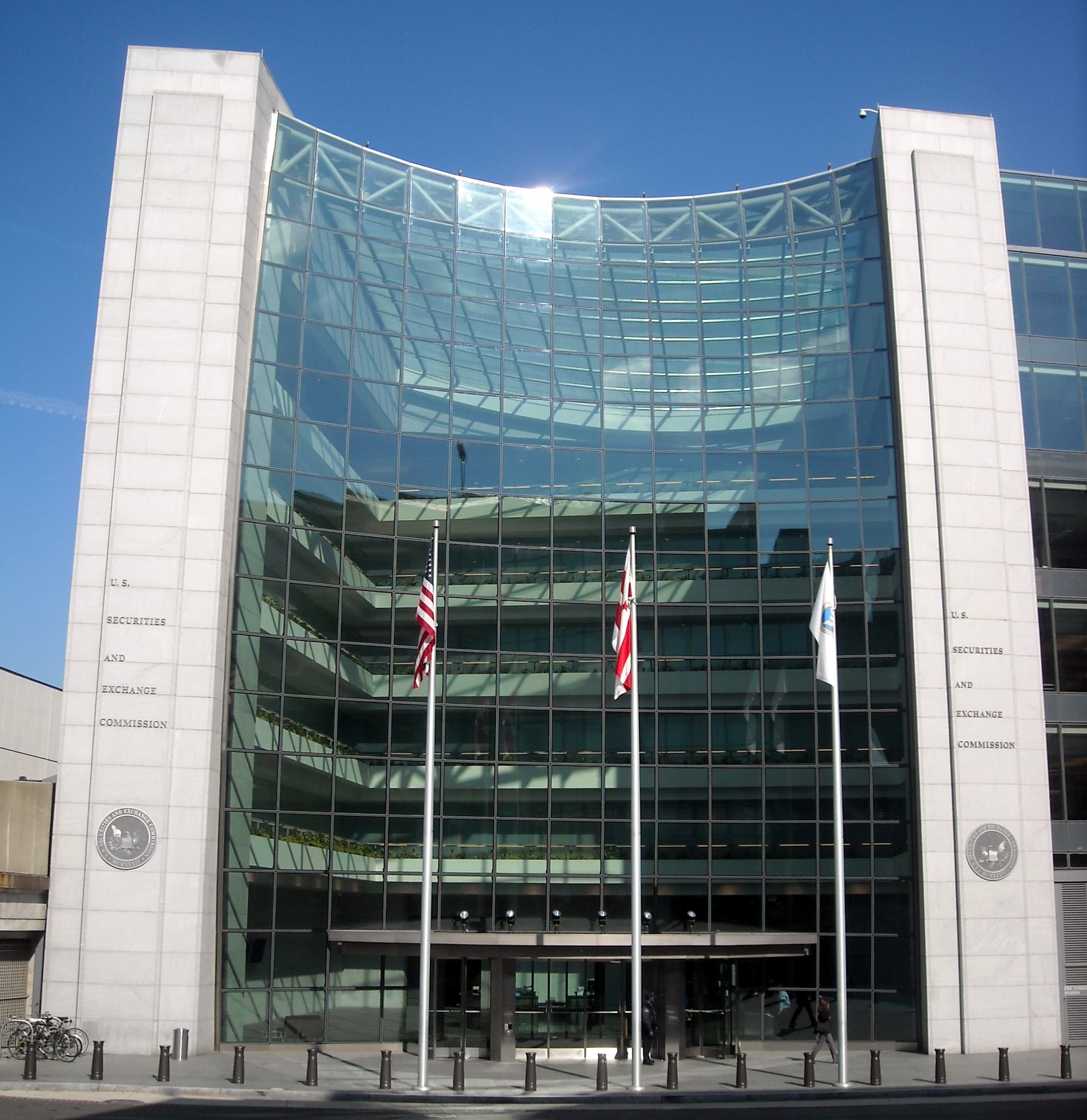
Featured image: U.S. Securities and Exchange Commission headquarters, 100 F Street NE, Washington, D.C. Photo by Wikimedia Commons user AgnosticPreachersKid, licensed under CC BY-SA 3.0.