

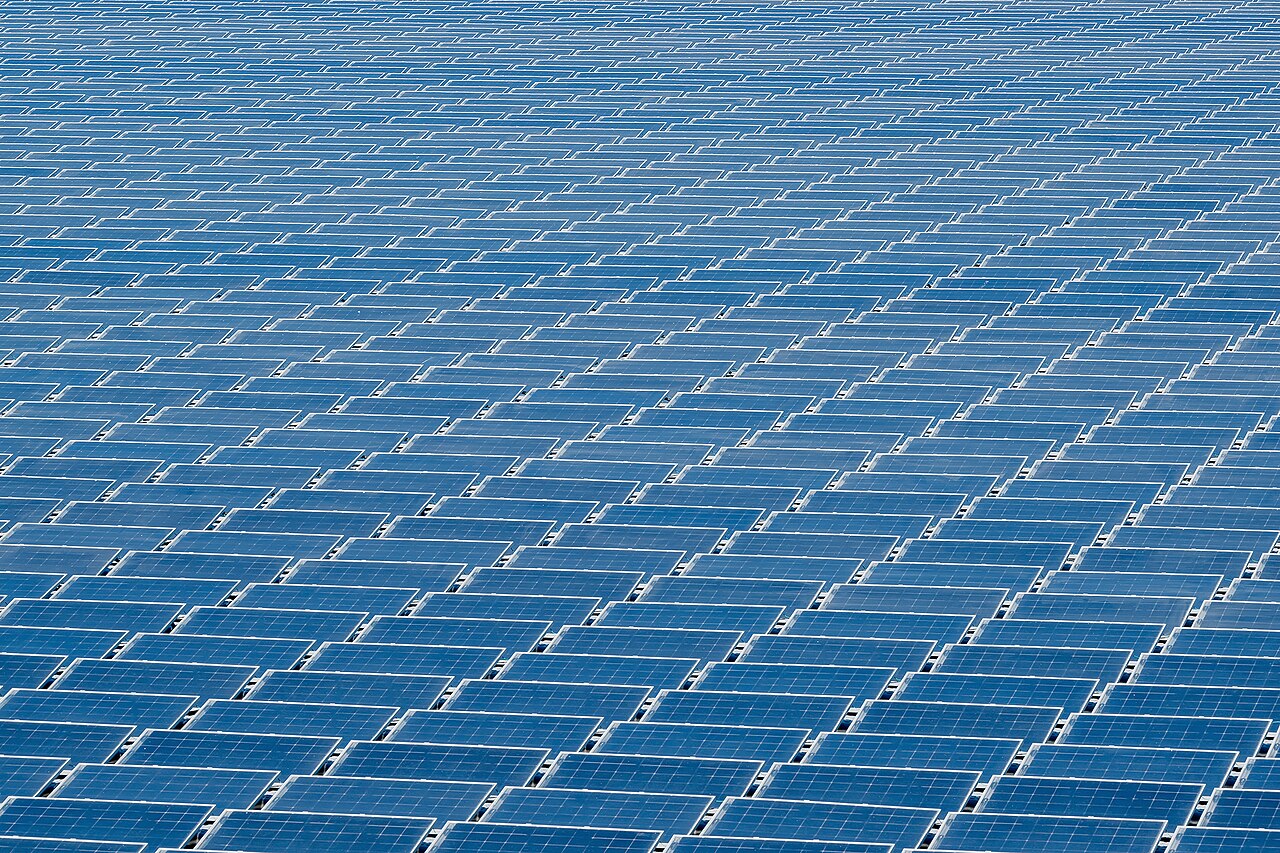
The solar panels spreading across American rooftops and desert installations carry a promise of clean, renewable energy — a future free from fossil fuel dependency and carbon emissions. But behind that promise lies an inconvenient truth that the green energy industry has struggled to confront: a significant portion of the global solar supply chain runs through the Xinjiang Uyghur Autonomous Region of China, where the United States government has determined that forced labor is endemic, systematic, and state-sponsored.
In 2020, forty-five percent of the world’s polysilicon — the foundational material in most solar panels — was produced in Xinjiang, according to research published by Sheffield Hallam University’s Helena Kennedy Centre for International Justice. By 2022, that figure had dropped to approximately thirty-five percent, not because of meaningful reform but because production shifted to other Chinese provinces. China as a whole controls 93.5 percent of global polysilicon output, according to Bernreuter Research’s 2024 market analysis. Nine of the world’s ten largest polysilicon manufacturers are Chinese. The solar industry’s dependence on China is not a flaw in the system; it is the system.
What makes this dependency particularly troubling is the documented connection between Xinjiang’s polysilicon industry and the Chinese government’s campaign of mass repression against the Uyghur Muslim minority. Sheffield Hallam University’s May 2021 report, “In Broad Daylight,” found that all four major polysilicon manufacturers operating in Xinjiang participate in state-sponsored labor transfer programs — the mechanism through which Uyghurs and other ethnic minorities are coerced into factory work under conditions that international human rights organizations have described as forced labor. The researchers identified at least ninety Chinese and international companies whose supply chains are contaminated by these practices.
The Enforcement Gap
The United States has not been entirely passive. On June 24, 2021, U.S. Customs and Border Protection issued a Withhold Release Order against Hoshine Silicon Industry Co., Ltd., one of Xinjiang’s largest silicon metal producers. That same month, the Commerce Department added Hoshine, Daqo New Energy, GCL-Poly’s Xinjiang subsidiary, and Xinjiang East Hope Nonferrous Metals to the entity blacklist. Hoshine had received $9.7 million in subsidies from the Xinjiang Production and Construction Corps, a paramilitary organization that the U.S. government has sanctioned for its role in operating internment camps and facilitating forced labor transfers.
Congress went further with the Uyghur Forced Labor Prevention Act, signed into law on December 23, 2021, and taking effect in June 2022. The UFLPA established a rebuttable presumption that all goods manufactured wholly or in part in the Xinjiang region were produced with forced labor and therefore barred from entry into the United States. On paper, it was the strongest legislative response any Western government had mounted against Xinjiang’s forced labor apparatus.
In practice, the results have been mixed at best. Solar panels account for 82 percent of all goods stopped under the UFLPA by value, according to Reuters reporting in February 2026 — a total of $3.26 billion in semiconductor devices, primarily solar panels and cells, seized since the law’s implementation. But more than 79 percent of those halted solar shipments were eventually released to importers after review. Enforcement slowed sharply in 2025, with only $187.7 million in stopped shipments compared to $1.78 billion the previous year. The solar industry has learned to navigate the enforcement regime, and the regime appears to have lost much of its teeth.
A Dependency Too Convenient to Break
The fundamental problem is that the United States cannot simultaneously pursue aggressive solar energy targets and meaningfully decouple its solar supply chain from China. The U.S. installed 43 gigawatts of new solar capacity in 2025, according to the Solar Energy Industries Association. The industry is projected to install 490 gigawatt-hours of direct current capacity over the next decade. That level of deployment requires an enormous and steady supply of polysilicon, wafers, cells, and assembled modules — and China dominates every link in that chain.
Some manufacturers have attempted to create Xinjiang-free production lines, but Sheffield Hallam’s November 2023 follow-up report found that these “untainted” product lines represent less than twelve percent of total production capacity. The polysilicon supply chain is structured in a way that makes full traceability extremely difficult. Silicon metal and polysilicon from multiple sources are blended during processing, and the documentation required to prove a shipment’s chain of custody from mine to module is often incomplete or unreliable. Companies have strong financial incentives to claim compliance while maintaining plausible deniability about the true origins of their materials.
Meanwhile, the Chinese government has flatly denied all forced labor allegations, describing them as fabrications created by anti-China media. Companies like Daqo New Energy have conducted public facility tours and issued statements insisting that their labor transfer programs are voluntary employment initiatives serving poverty alleviation. No major Chinese solar company has voluntarily divested from Xinjiang operations.
The Moral Calculus
The solar industry finds itself in a position remarkably similar to the fast fashion and electronics industries of the past two decades — profiting from supply chains built on exploitation while issuing earnest commitments to responsible sourcing. The difference is that solar energy carries an additional layer of moral complexity because it is marketed not merely as a consumer product but as a moral imperative. Americans are told that installing solar panels is an act of environmental responsibility, a contribution to the collective fight against climate change. That framing makes the industry’s entanglement with forced labor not just hypocritical but uniquely corrosive to public trust.
There are no easy solutions. Domestic polysilicon production could be scaled up, but the capital costs are enormous and the timeline measured in years, not months. Tariffs and import restrictions can redirect trade flows but often result in transshipment through third countries like Vietnam, Thailand, and India — nations whose own solar manufacturers procure polysilicon from the same Xinjiang-linked suppliers. The Inflation Reduction Act’s domestic content incentives are a step in the right direction, but they operate at the margins of an industry still overwhelmingly dependent on Chinese materials.
What is needed, at minimum, is honesty. The American public deserves to know that the solar panels on their roofs may be produced with materials tainted by one of the most significant human rights abuses of the twenty-first century. Policymakers who champion solar mandates and subsidies should be required to explain how they intend to reconcile those policies with the reality of forced labor in the supply chain. And the solar industry itself must move beyond compliance theater and toward genuine supply chain transparency — not because it is good marketing, but because the alternative is complicity in the repression of an entire people.