

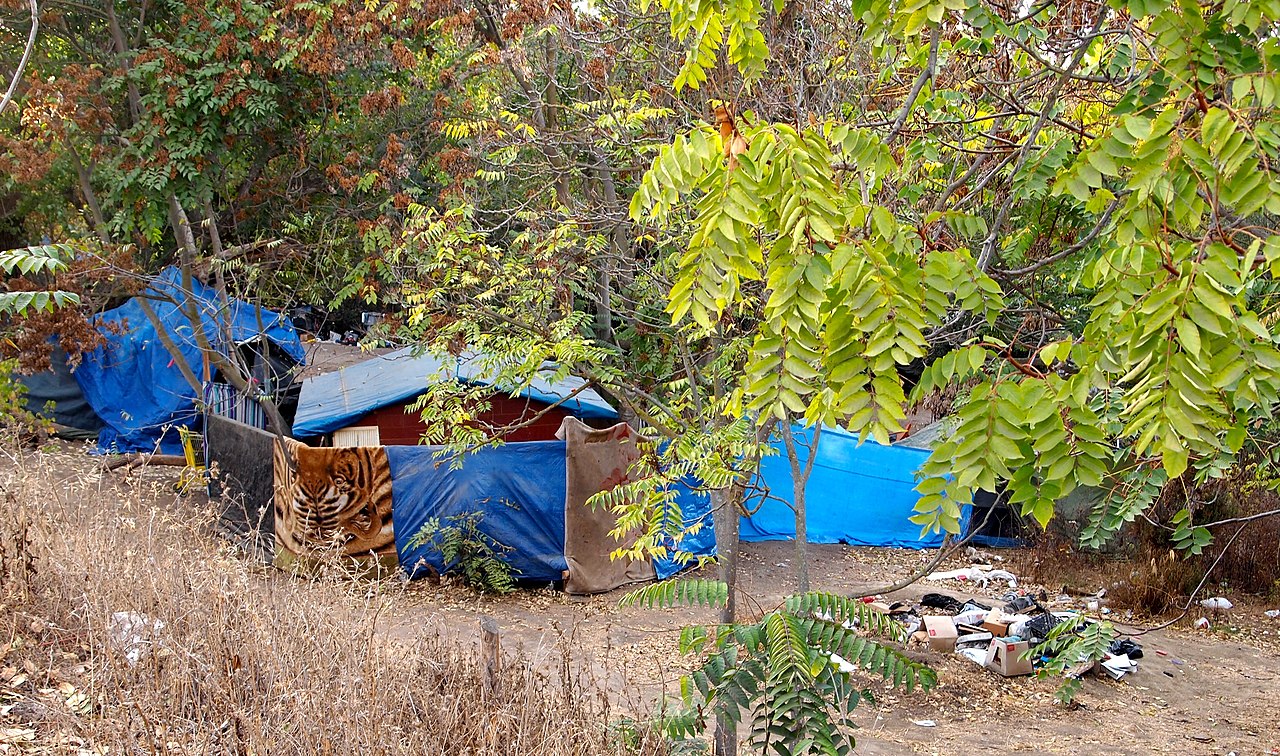
California has spent $24 billion over five fiscal years on homelessness, according to the California State Auditor’s April 2024 report. During that same period, the state’s homeless population grew by approximately 30,000 people to more than 181,000 — roughly 30 percent of the nation’s total despite California comprising just 12 percent of the U.S. population. By any rational measure, this represents one of the most spectacular policy failures in modern American governance. But in Sacramento, Los Angeles, and San Francisco, the response has not been accountability or reform. It has been more money.
Los Angeles allocated $961 million for homelessness services in its 2024-2025 budget. The city’s controller found that more than $473 million of the $1.3 billion homelessness budget went unspent in fiscal year 2025 — a staggering underspend that suggests the problem is not insufficient funding but institutional incapacity to deploy resources effectively. A court-ordered audit in 2025 found that the city could not properly account for $2.3 billion in spending on homeless programs, intensifying scrutiny of the Los Angeles Homeless Services Authority, the sprawling bureaucracy tasked with coordinating the city’s response.
San Francisco, a city of fewer than 900,000 people, budgeted $846 million for its Department of Homeless and Supportive Housing in fiscal year 2024-2025. The city’s 2024 point-in-time count found 8,323 people experiencing homelessness — a seven percent increase from 2022. A GrowSF analysis found that just 162 adults, representing nine percent of the chronic homeless population, cost the city $113.6 million over eight years in emergency services, with some individuals generating $182,000 annually in emergency room visits alone. The financial incentive structure rewards crisis management over prevention, creating a self-perpetuating cycle that benefits the organizations managing homelessness far more than the people experiencing it.
Following the Money
The nonprofit ecosystem surrounding homelessness in California has grown into a multi-billion dollar industry. People Assisting the Homeless, one of Los Angeles’s largest homeless services providers, reported $185.7 million in revenue in fiscal year 2022, with executive compensation totaling $1.74 million. The Union Rescue Mission reported $68.1 million in revenue with $1.2 million in executive compensation and $2.5 million in professional fundraising fees. These organizations do important work, and executive compensation at this scale is not inherently unreasonable. But when the organizations collectively absorb billions in public funding while the problem they exist to solve grows worse, the question of accountability becomes unavoidable.
The State Auditor’s findings on this point are damning. Of the 30 state homelessness programs reviewed, the auditor determined that cost-effectiveness could be assessed for only two. The remaining 28 lacked sufficient outcome data to evaluate whether they were actually working. California was, in effect, spending billions of dollars annually on programs it could not measure, administered by agencies it could not audit, to address a crisis it could not contain.
The fraud case of Alexander Soofer illustrates how this accountability vacuum can be exploited. Soofer, the executive director of Abundant Blessings, was arrested and charged with embezzling $23 million in public funds contracted through LAHSA for homeless services. He allegedly kept $10 million for personal use, including a $7 million Westwood home, a $125,000 Range Rover, and private school tuition. His organization had reported Form 990 revenues of only $3.17 million, yet was contracted to serve over 600 program participants. The gap between reported revenue and alleged theft suggests a system with insufficient oversight to catch even the most brazen abuse.
The Perverse Incentive
The mathematics of California’s homelessness spending tell a story that no amount of press releases can obscure. Dividing $24 billion by the state’s homeless population yields approximately $160,000 per person over five years, or $32,000 annually. The National Alliance to End Homelessness estimates the annual taxpayer cost of chronic homelessness at $35,578 per person. California’s own data shows that prevention programs — keeping people housed before they become homeless — cost between $12,000 and $22,000 per household annually, making them 1.6 to 3 times more cost-effective than the crisis-response model that dominates current spending.
Yet prevention programs receive a fraction of the funding directed toward shelter operations, supportive housing construction, and the administrative apparatus that surrounds them. Los Angeles County’s Measure A, approved in 2024, will generate an estimated $1 billion annually from a half-cent sales tax increase — more than double the revenue of the previous Measure H. The money will flow into the same institutional ecosystem that has presided over two decades of rising homelessness. There is no mechanism in the measure to redirect funds if outcomes do not improve, no sunset clause tied to performance, and no independent evaluation framework.
The political dynamics are equally dysfunctional. Homeless services providers are among the most powerful lobbying forces in California municipal politics. They advocate relentlessly for increased funding while resisting the performance metrics and accountability measures that might reveal the inefficiency of current approaches. Elected officials, dependent on the support of these organizations and fearful of being seen as unsympathetic to the homeless, comply. The result is a system in which the financial interests of the organizations tasked with solving homelessness are structurally aligned with the perpetuation of the crisis.
None of this is to say that homelessness is an easy problem or that the people working in the field are uniformly cynical. Many frontline workers are dedicated professionals operating under impossible conditions. But the institutional architecture surrounding California’s homelessness response has taken on a life of its own — a self-sustaining bureaucratic ecosystem that consumes enormous resources while producing outcomes that, by the state’s own auditor’s admission, it cannot measure. Until California’s leaders are willing to impose genuine accountability on this system, the billions will continue to flow, the counts will continue to rise, and the human suffering at the center of this crisis will remain a manageable political problem rather than an urgent moral one.