

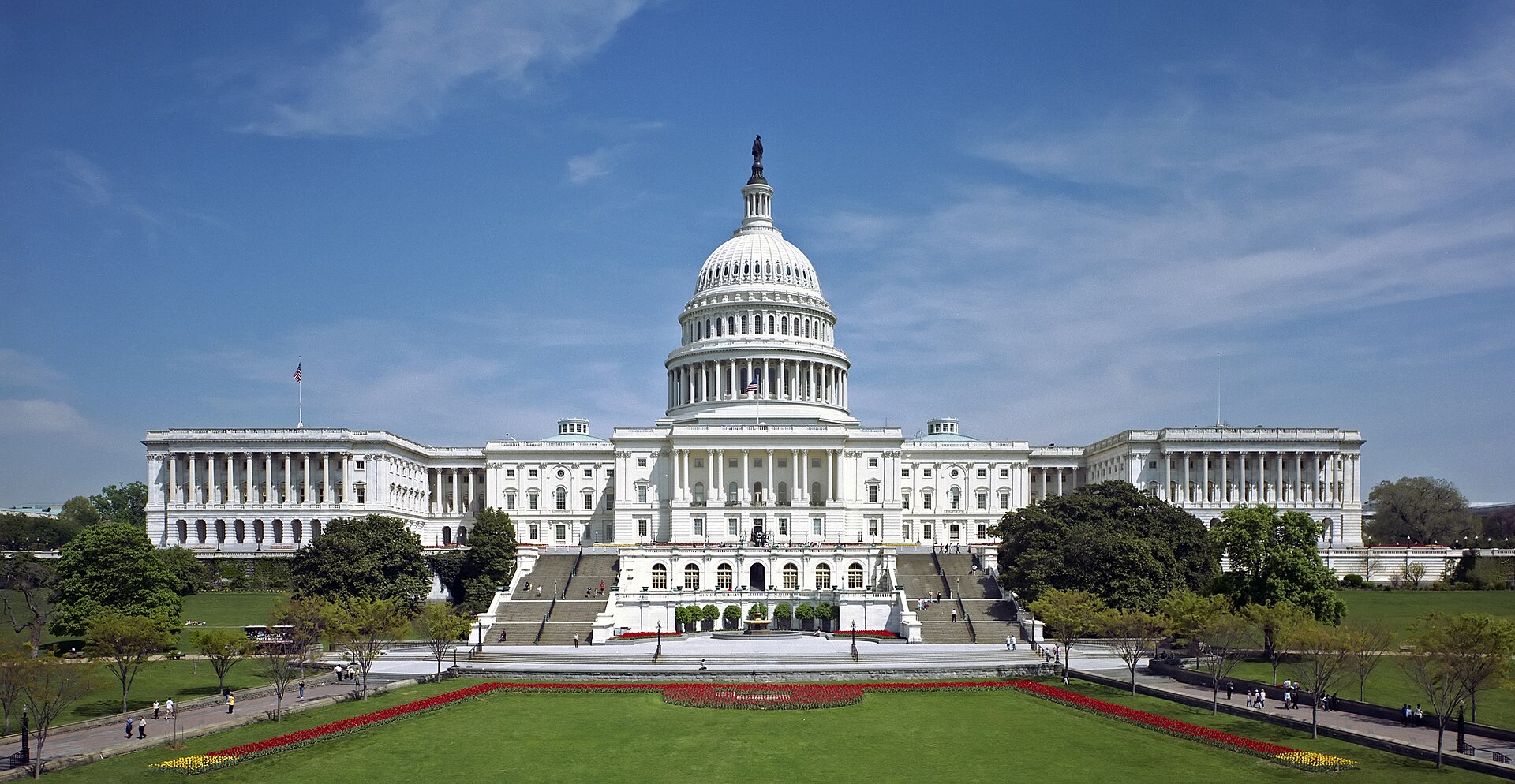
The Investigative Journal’s daily review of floor action, committee activity, and budget analysis on Capitol Hill. Every item below is sourced to official records; links go to Congress.gov, chamber schedules, committee notices, and Congressional Budget Office documents.
The House gavels back into legislative session this week while the Senate remains in pro forma sessions until mid-September — and the first order of business, according to official schedules, is the stopgap funding measure the Senate passed before leaving town. With the fiscal year ending September 30, the next five weeks will determine whether Washington opens fiscal 2027 with a funded government or a lapse. Here is where the record stands as of Monday, August 31, 2026.
1. House returns with the FY2027 stopgap on its fast-track calendar
The headline action this week is procedural but consequential: H.R. 6500, the Continuing Appropriations and Extensions Act, 2027, appears on the list of bills posted for consideration under suspension of the rules in the House during the week of August 31, according to a Congressional Budget Office notice published August 27. Suspension of the rules limits debate, bars floor amendments, and requires a two-thirds majority for passage — a route House leadership typically reserves for measures expected to command broad bipartisan support.
The Senate has already acted. According to the official floor wrap-up for August 7–8, the Senate invoked cloture on a Collins substitute amendment to H.R. 6500 by a vote of 91–6 with one senator voting present, then passed the continuing resolution, as amended, 90–6 with one voting present. Margins of that size in the Senate suggest the measure was negotiated across the aisle before recess; if the House clears the Senate-amended text under suspension this week, Congress would remove the immediate shutdown threat well ahead of the September 30 deadline. The bill’s final text and end date are posted on its Congress.gov page.
2. Rules Committee tees up mining, lobster-fleet, and academic-freedom bills
The House Committee on Rules met Monday at 4:00 p.m. to report rules for floor consideration of three measures: H.R. 1501, the Protecting Domestic Mining Act of 2025; H.R. 9436, the Northeast Lobsterman Protection Act of 2026, which would extend the effective period of certain regulations concerning the North Atlantic right whale under the Consolidated Appropriations Act, 2023; and H.R. 4795, the Protect Economic and Academic Freedom Act of 2026. The committee also noticed H.Res. 1490, a resolution condemning socialism in all its forms.
Bills that move through Rules, unlike the suspension calendar, can carry structured amendment debate and pass by simple majority — a signal that leadership anticipates closer, likely party-line votes on these measures. Floor action is expected later this week; the House’s daily schedule is posted at house.gov.
3. The Senate’s pre-recess sprint: sanctions, an attorney general, and 74 nominations
The Senate’s last working session before recess, recorded in the August 7–8 wrap-up, packed in a year’s worth of consequential votes. The chamber passed H.R. 5334, sanctions legislation carried on a substitute amendment sponsored by Senators Graham and Blumenthal, by a vote of 86–11 — one of the broadest bipartisan margins recorded this session. A Paul amendment to the substitute was rejected 32–64 before final passage.
On the executive calendar, the Senate confirmed Todd Blanche of Florida to be Attorney General, 50–49, after cloture was invoked by the same one-vote margin — among the narrowest confirmation votes possible. The chamber also confirmed 74 nominations en bloc, 51–47, under the procedure set out in S.Res. 817, and earlier that week confirmed Erica Schwartz as Director of the Centers for Disease Control and Prevention, 51–44, per the August 5 wrap-up. One measure that did not advance: cloture on the motion to proceed to S. 5271, a bill to amend the Help America Vote Act of 2002, failed 52–46, short of the 60 votes required. Full tallies are archived on the Senate’s roll call vote record.
4. A war powers vote is now on the calendar
Buried in the pre-recess unanimous consent agreements is a scheduling commitment with significant separation-of-powers implications. According to the official wrap-up, no later than Friday, October 2, H.Con.Res. 89 — directing the President, pursuant to section 5(c) of the War Powers Resolution, to remove United States Armed Forces from hostilities with Iran — will be discharged from the Senate Foreign Relations Committee and brought to the floor, with six hours of debate equally divided before a vote on adoption.
War powers resolutions are privileged measures that force senators on the record regarding ongoing military operations. The agreement also locks in a cloture vote on the motion to proceed to S. 4668 at a time to be set by the Majority Leader between September 15 and September 23. Both items will anchor the Senate’s September floor calendar once the chamber returns from its adjournment on September 14, per the posted schedule.
5. CBO scores an export-control enforcement package
The Congressional Budget Office closed out August with a cluster of estimates for export-control enforcement bills ordered reported by the House Foreign Affairs Committee on April 22 — a pattern that, records suggest, points to floor preparation for a fall enforcement package. On August 28, CBO scored H.R. 5853, which would amend the Export Control Reform Act of 2018 to increase civil penalties. A day earlier it published estimates for H.R. 8202, establishing a ten-year statute of limitations for export-control violations, and H.R. 6322, the Stop Stealing our Chips Act.
Taken together, the three bills would lengthen the government’s reach against illicit technology transfers — stiffer fines, a longer window to prosecute, and chip-specific enforcement. CBO also released scores for two artificial-intelligence security measures reported by the Science, Space, and Technology Committee: H.R. 9363, the AI Security and Innovation Act, and H.R. 9333, the AI Flaw Reporting and Security Enhancement Act. The full run of recent estimates is on CBO’s cost estimates page.
6. Watchdog bills move: inspectors general and public-comment integrity
Two accountability measures ordered reported by the House Oversight and Government Reform Committee on July 22 received CBO scores on August 27. H.R. 9725, the Restoring Integrity and Efficiency to Inspector General Oversight Act of 2026, addresses the machinery of the federal watchdog system itself. H.R. 9643, the Comment Integrity and Management Act, targets the federal rulemaking comment process — an area where mass-generated and fraudulent submissions have drawn scrutiny from both parties in recent years.
A CBO score is generally among the final procedural steps before committee-reported legislation becomes eligible for floor scheduling. Both bills bear watching in September as the House works through its backlog of reported measures.
7. Oversight docket: climate-review documents, an Epstein-file transcript, and two new hearings
The House Oversight Committee posted a burst of activity in the final days of August. On August 28, Chairman James Comer demanded the National Academy of Sciences turn over withheld documents related to what the committee describes as a biased climate review. On August 26, the committee released the transcript of its interview with former banking executive Jes Staley, part of its continuing review of the federal government’s handling of the Jeffrey Epstein investigation — a probe in which the committee has previously subpoenaed J.P. Morgan and Deutsche Bank for Epstein’s financial records and released roughly 65,000 pages of documents.
Two hearings were also noticed for September: Subcommittee Chairman Eric Burlison announced a hearing on state and local natural gas bans, and Representative Brandon Gill announced a hearing on birth tourism. Witness lists and testimony will post to the committee’s hearings page as the dates approach.
8. The September cliff is about more than appropriations
The September 30 deadline stacks several expirations on top of the fiscal year’s end. According to the Committee for a Responsible Federal Budget’s fiscal deadlines tracker, certain Veterans Affairs health care extenders lapse that day, the surface transportation authorization expires, farm bill provisions expire, and new Medicaid provider-tax limits take effect. The title of the Senate-passed stopgap — the Continuing Appropriations and Extensions Act — indicates expiring authorities ride along with the funding patch; the specifics are enumerated in the bill text.
For the full-year picture, the twelve fiscal 2027 appropriations bills remain works in progress in both chambers; CRFB’s Appropriations Watch: FY 2027 tracks each bill’s status. Data from that tracker and CBO’s status of appropriations page will show how much of the government’s discretionary budget rides on whatever end date the stopgap carries.
The week ahead
In addition to the continuing resolution, the House suspension calendar for this week, per the CBO notice, includes H.R. 1869, the Protecting American Industry and Labor from International Trade Crimes Act; H.R. 6048, the NDO Fairness Act; H.R. 7730, the Bankruptcy Threshold Adjustment Act of 2026; H.R. 8481, Kayleigh’s Law Act of 2026; S. 32, the Local Access to Courts Act; S. 307, the Prison Staff Safety Enhancement Act; S. 858, the Hershel “Woody” Williams National Medal of Honor Monument Location Act; and a series of technical corrections bills to the U.S. Code. The House Permanent Select Committee on Intelligence also met Monday at 1:00 p.m. The Senate convenes pro forma sessions only until Monday, September 14, when it returns to a floor agenda headlined by the S. 4668 cloture vote and the Iran war powers resolution.
On TIJ’s radar
Three threads from this digest connect to The Investigative Journal’s accountability beats. First, H.R. 9725’s inspector-general reforms — and whether they strengthen or constrain watchdog independence — merit a close read of the reported text once it posts. Second, the Comment Integrity and Management Act touches the documented problem of fabricated public comments in federal rulemaking, a subject with a long paper trail across agencies. Third, the Oversight Committee’s Epstein financial-records review — now including the Staley transcript and prior bank subpoenas — continues to generate primary-source documents worth independent examination. Entities named in committee correspondence referenced above, including the National Academy of Sciences, had not publicly responded at time of publication; this article will be updated with any responses.
Eduardo Bacci is editor of The Investigative Journal. This digest is compiled from official congressional records, chamber schedules, committee notices, and Congressional Budget Office publications; all claims are sourced to the linked public documents.