

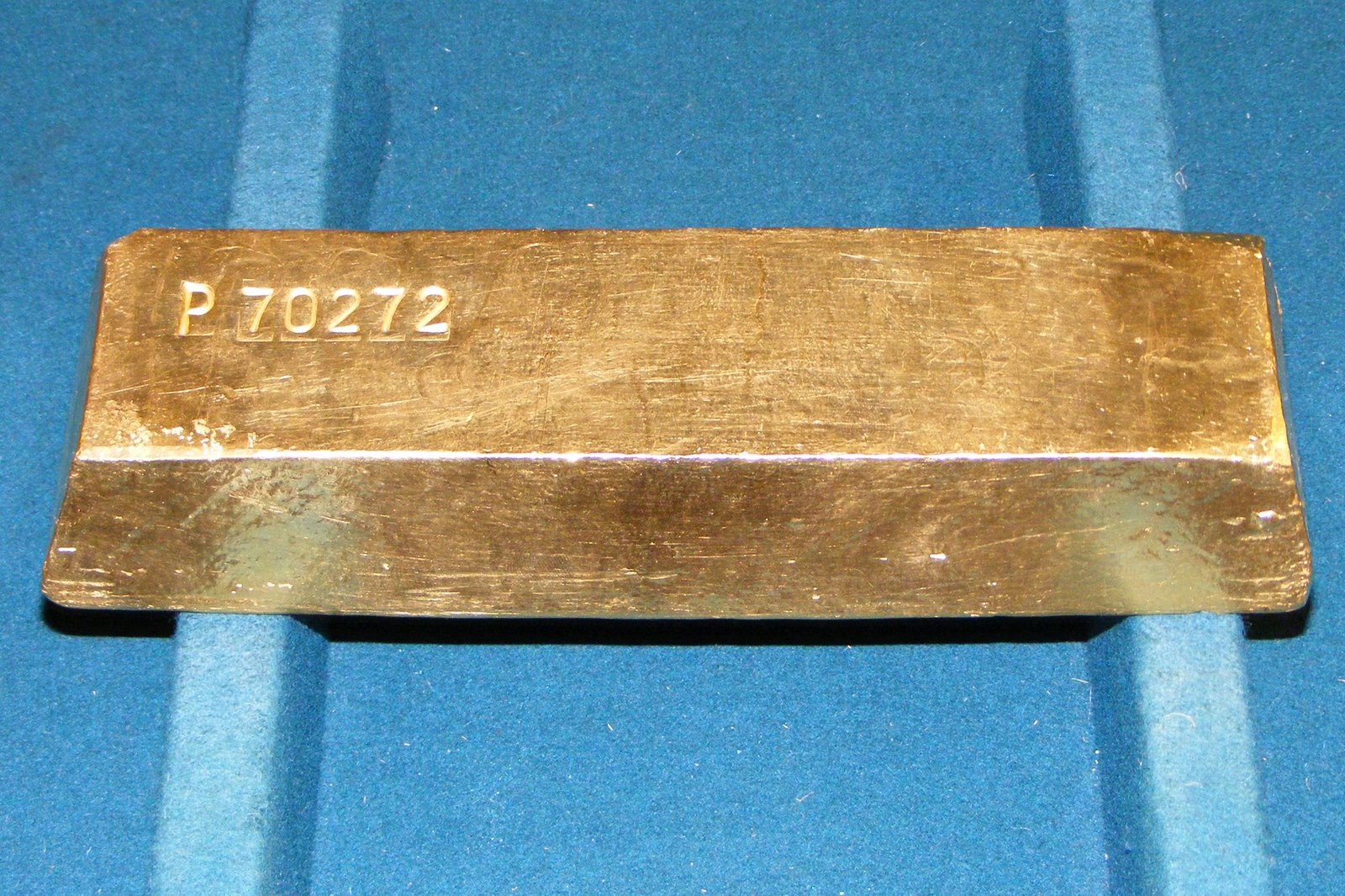
Court filings in a six-year-old federal case show a precious-metals operation that regulators say deliberately marketed to politically conservative and Christian retirees. Approved victims have so far been repaid 11 cents on the dollar — and 93 of them have died waiting.
When the Commodity Futures Trading Commission and thirty state regulators walked into a Los Angeles office suite in September 2020 and seized the assets of a company called Metals.com, they described the case in superlatives. It was, the agency said at the time, the largest joint filing in CFTC history with state regulators — a thirty-count complaint alleging that at least 1,600 mostly elderly Americans had been induced to move more than $185 million, much of it out of retirement accounts, into gold and silver coins sold at prices that bore little relationship to what the metal was worth.
Six years later, the arithmetic of that case is a study in how slowly gold IRA fraud actually unwinds. According to the court-appointed receiver’s twentieth status report, filed May 4, 2026 in the Northern District of Texas, the court has approved $72,260,999 in claims from 1,058 investors. Against that figure, the receivership has distributed exactly one payment: an $8 million interim distribution mailed on or about May 1, 2025, amounting to 11 percent of approved claims. The receivership account held $7,407,700.59 as of May 1, 2026.
The same report records a detail that no press release has carried. “To date,” the receiver wrote, “93 claimants have passed away during the pendency of this case.”
The allegations remain allegations. On August 3, 2026, U.S. District Judge Brantley Starr denied summary judgment to every party and set the civil case for trial on March 1, 2027. Nothing has been proven against the individual defendants, who have contested the government’s account throughout.
The Pitch: Fear, Faith, and a Conservative Media Buy
What distinguishes this case from ordinary elder-fraud litigation is how specifically the government says the marketing was aimed.
The complaint filed by the Texas State Securities Board and its co-plaintiffs — available in full on the agency’s public filing portal — does not describe a scattershot boiler room. It describes a targeting strategy. At paragraph 31, the plaintiffs allege that “Defendants’ solicitations targeted politically conservative and Christian investors,” and that sales representatives were instructed to concentrate on those persons “to gain access to their retirement savings.”
The complaint goes further. According to the filing:
- Principals Lucas Thomas Erb (who the complaint says also used the names Lucas Asher and Luke Asher) and Simon Batashvili allegedly directed representatives to “employ solicitations designed to instill fear in elderly and retirement aged investors and build trust with investors based on representations of political and religious affinity.”
- “Defendants placed their advertisements on conservative media and websites,” the plaintiffs allege at paragraph 34.
- At paragraph 35, the complaint alleges the two men “falsely claimed they were friends with a conservative television and radio personality and that the personality recommended buying Precious Metals Bullion” — and that they continued to do so after receiving a cease-and-desist demand from that personality.
- Sales agents allegedly told investors the stock market would fail, emailed them articles selected to induce fear, and urged full liquidation of retirement accounts — a recommendation the complaint notes contradicted the defendants’ own websites’ guidance on how much of a portfolio should sit in metal.
One example in the complaint involves an Alabama investor told that “any money held in an IRA or retirement account was going to be taken or seized by the Government, but an investment in Precious Metals Bullion would not be taken or seized.”
The prices, the plaintiffs allege, were where the model earned out. The complaint sets out average undisclosed markups over prevailing market price at the time of purchase: 213 percent on half-ounce silver Royal Canadian Mint “Polar Bear” bullion, 120 percent on the tenth-ounce gold version, and — through the affiliated entity Barrick Capital — 312 percent on tenth-ounce Silver Spade Guinea coins and 287 percent on tenth-ounce Silver Britannias. A customer watching the live spot-price ticker on the Metals.com website, the government contends, had no way to see the spread being charged. The fear-and-affinity template is familiar from other operations that have worked conservative donor and consumer lists, including the scam-PAC committees that solicit small-dollar givers under patriotic banners.
Following the Money: $72 Million in Claims, $8 Million Returned
The receivership docket is where the consequences become legible.
Kelly Crawford, a Dallas attorney appointed receiver the day the complaint was filed, has assembled a recovery effort from fragments: row houses in Philadelphia sold for $65,000 and $95,000, automobiles, three paintings of “nominal value,” a Rolex Cosmograph valued at $28,500, a diamond ring appraised near $59,000, and litigation against the sales brokers who earned commissions on the coin sales.
In the reporting period ending May 4, 2026, the receiver recovered an additional $574,560.14 — of which $534,362.62 came from settlements with brokers and recipients of alleged fraudulent conveyances. The estate also holds startup shares valued at $598,580.32 as of March 31, 2026, down $118,231.98 in three months.
The single $8 million distribution was itself delayed roughly two years. The court authorized it in July 2023, but the receiver could not issue checks until the Internal Revenue Service — which had a claim against one defendant entity for unpaid taxes — consented. The IRS agreed in April 2025. Of the $8 million mailed, $7,735,627.34 had been deposited as of May 5, 2026. Fifty-nine claimants, holding $259,827.86 in checks, never cashed them; the receiver has said he intends to ask the court to declare those distributions forfeited. One claimant has never been located.
The receiver has told investors from the outset that “there may not be sufficient funds or assets recovered to repay the victims.” On the current numbers, a final distribution drawing on the remaining $7.4 million would bring total recovery to roughly one-fifth of approved claims — before the receivership’s own court-approved fees and expenses.
Gold IRA Fraud: A Pattern, Not an Outlier
Federal records indicate the business model at issue is neither novel nor rare.
In a joint investor bulletin, the CFTC and the Financial Industry Regulatory Authority state plainly that “over the past decade, the CFTC has charged numerous companies with selling overpriced precious metals to customers, for an alleged total of more than $500 million in fraudulent sales.” The same bulletin notes the structural fact that makes the sector attractive to bad actors: “Retail metal dealers are not regulated at the federal level.”
The affinity element is not TIJ’s inference. In a March 2024 joint warning issued with FINRA and the North American Securities Administrators Association, the CFTC wrote that these schemes “use common affinity fraud techniques, purposefully targeting people with specific political and religious beliefs,” infiltrating social media groups and stealing “images of popular religious leaders, pundits, and celebrities to create fake endorsements.” It is the same structural playbook documented in the First Liberty collapse in Georgia, where a $140 million scheme recruited through conservative and church networks. The agency’s standing advisory adds that such operations “prey on fears related to the durability of the United States financial system.”
Resolved cases show the same shape:
- Safeguard Metals LLC. A California federal court entered a final judgment ordering the company and principal Jeffrey Ikahn to pay $25.6 million in restitution and a matching $25.6 million civil penalty, the CFTC announced in November 2025. A prior consent order found the defendants liable for taking roughly $68 million from more than 450 mostly elderly or retirement-aged customers by misrepresenting price markups.
- Red Rock Secured LLC. The SEC alleged in May 2023 that the firm told investors to sell securities in Thrift Savings Plan accounts, 401(k)s and IRAs to buy coins at a promised 1 to 5 percent markup, while charging as much as 130 percent — pocketing more than $30 million of the roughly $50 million received. A consent judgment entered in April 2024 required the defendants to pay more than $76 million. The company subsequently operated under a different name.
- National Coin Broker Inc. Court orders announced in September 2025 required defendants to pay a combined $6.9 million in restitution and an $11.5 million penalty over a “Silver Lease Program”; three individuals pleaded guilty in a parallel criminal case.
The consent judgments in these matters generally resolve claims without admissions of liability.
The Jurisdictional Question Underneath
The Metals.com litigation has also produced an unusually consequential side dispute: whether the CFTC may police physical gold and silver dealers at all.
In an earlier ruling, Judge Starr held that the agency lacked jurisdiction over gold and silver trades under the Commodity Exchange Act, reasoning that the statute’s catch-all phrase “all other goods and articles” was limited to agricultural products. The court ordered fresh briefing. In the August 3, 2026 opinion, Starr reversed course, concluding that a 1978 Fifth Circuit decision, CFTC v. Muller, “is binding” and establishes the agency’s authority over gold and silver in that circuit.
He did not leave it there. The court wrote that Muller‘s analysis “seems a bit conclusory,” relied on legislative history that “courts currently run from,” and involved “agency deference at play and no major questions analysis.” Starr added that the jurisdictional conclusion “could change if the Fifth Circuit adopts Justice Gorsuch’s view of the major questions doctrine.” For an industry whose federal policeman has extracted more than half a billion dollars in alleged fraudulent sales figures over a decade, that is a live question rather than a settled one.
What Happens Next
Two trials are now scheduled. The receiver’s public case timeline records that Batashvili was indicted on July 25, 2025 on two counts of mail fraud and one count of wire fraud, and that a second superseding indictment naming Erb followed on February 3, 2026. A criminal jury trial is set for February 1, 2027; the civil trial follows on March 1, 2027. Both men are presumed innocent, and their positions are set out in the summary-judgment briefing that Judge Starr declined to resolve — filings in which they argued the plaintiffs’ claims “are not supported by law or fact.” The receiver’s office maintains a public contact line for investors and has published every status report to its case website.
What the record already establishes is the timeline itself. The complaint was filed in September 2020. A verdict will not arrive before 2027 — more than six years later, and roughly a decade after the conduct the government alleges began. Ninety-three approved claimants have died in the interval. Whatever the jury concludes about Erb and Batashvili, the enforcement machinery that eventually reached them moved on a schedule measured against the actuarial tables of the people it was built to protect. The one figure not in dispute is that those claimants, or their estates, have so far received 11 cents for every dollar the court agreed they lost.