

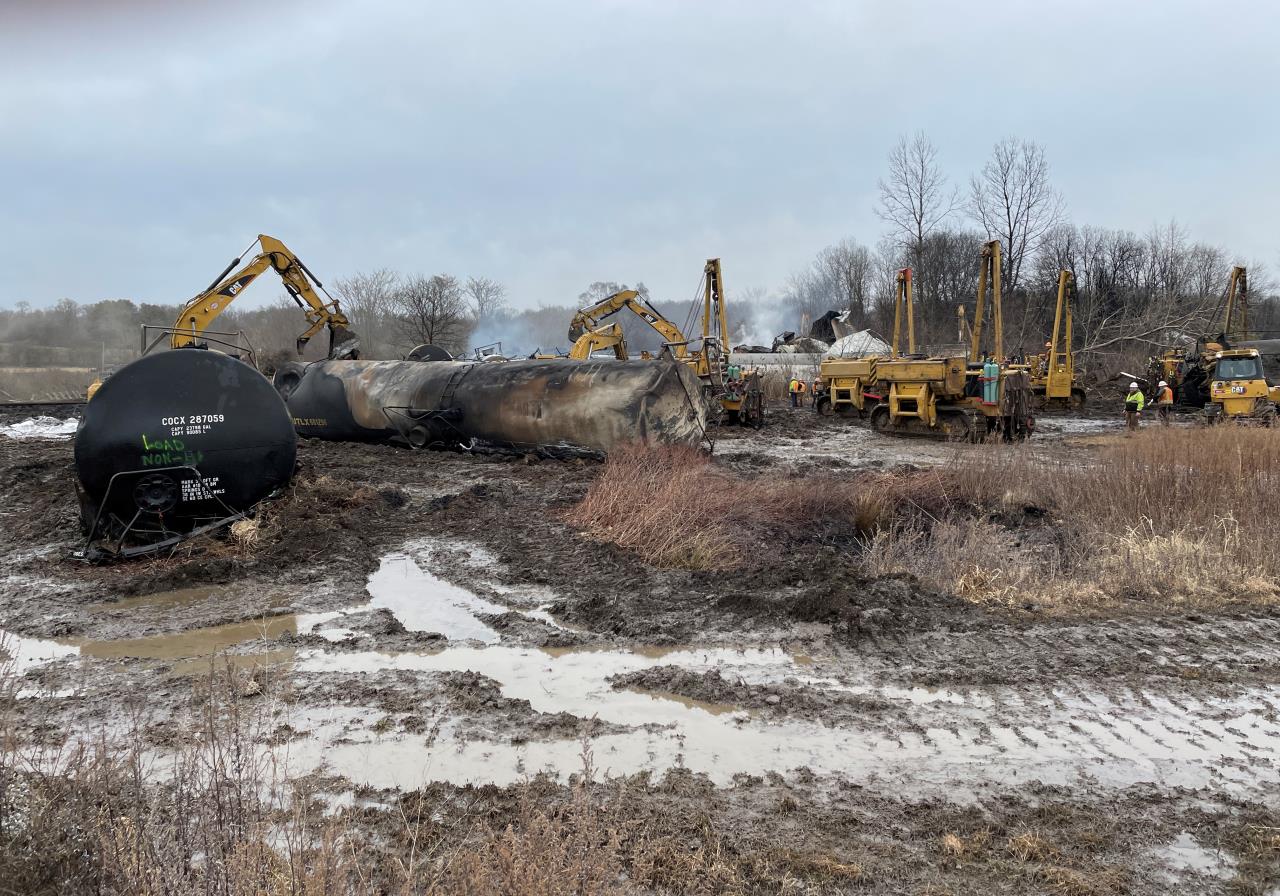
When a Norfolk Southern freight train dumped nearly one million pounds of vinyl chloride into rural Ohio, the nation’s most powerful environmental organizations were nowhere to be found. An investigation into the selective outrage of America’s green establishment.
Image directive: Source a public domain image from the EPA’s East Palestine response page or NTSB incident gallery. Alternatively, search Unsplash for “train tracks industrial” or create a data visualization comparing NGO social media posts about East Palestine vs. other 2023 environmental campaigns.
The Night the Sky Turned Black
At approximately 9:00 PM on February 3, 2023, a 100-car Norfolk Southern freight train derailed in East Palestine, Ohio — a working-class town of roughly 4,700 people near the Pennsylvania border. Thirty-eight cars left the tracks. At least 14 of them were carrying hazardous materials, including vinyl chloride, ethylene glycol monobutyl ether, ethylhexyl acrylate, isobutylene, butyl acrylate, and benzene residue.
The numbers were staggering: nearly one million pounds of vinyl chloride aboard the train, with 115,000 gallons spilling into the surrounding environment. Two days later, on February 5, authorities made the fateful decision to conduct a “controlled release” — venting and burning vinyl chloride from five tanker cars. The result was a massive black funnel cloud visible for miles, raining toxic compounds onto the town and surrounding waterways.
Within weeks, 3,500 fish were dead in nearby streams. Chemicals were detected in soil and water throughout the Ohio River basin — a watershed serving 25 million people. Residents reported nausea, headaches, and unexplained rashes. CDC testing later found vinyl chloride in residents’ urine samples.
The Silence of the Green Giants
What happened next — or rather, what didn’t happen — revealed an uncomfortable truth about America’s environmental movement. The organizations that command hundreds of millions of dollars in annual revenue, that mobilize thousands of activists for pipeline protests and climate marches, that flood social media with content about environmental justice — were largely silent.
The Sierra Club eventually published a piece titled “Please Pray for EP” — approximately three weeks after the derailment. The Natural Resources Defense Council and Greenpeace produced no major national campaign announcements in the critical early weeks. There were no celebrity-studded fundraisers. No mass demonstrations. No hashtag campaigns reaching millions.
Compare this to the environmental movement’s response to pipeline construction projects, where organizations deploy legal teams, media operations, and on-the-ground activists within days of any development. East Palestine, a predominantly white, working-class community in a deep-red county of a swing state, simply didn’t fit the narrative template that drives green fundraising.
The EPA’s Sluggish Timeline
The federal response was hardly better. The EPA didn’t issue its administrative order requiring Norfolk Southern to develop cleanup plans and reimburse response costs until February 21 — eighteen days after the derailment. The Department of Justice didn’t file its lawsuit alleging Clean Water Act violations until March 30, nearly two months later.
By the time the federal apparatus fully engaged, the damage was done. The cleanup would eventually require the removal of 9.2 million gallons of wastewater and 12,932 tons of contaminated soil — a Superfund-scale remediation in all but name.
Follow the Money
The disconnect between environmental organizations’ stated missions and their response to East Palestine becomes clearer when you examine their funding structures. Major green NGOs derive substantial portions of their revenue from coastal, urban donors who respond to narratives about climate change, renewable energy, and environmental justice in communities of color. A toxic train derailment in rural Ohio — caused by corporate negligence rather than fossil fuel extraction — doesn’t fit neatly into fundraising appeals.
Norfolk Southern ultimately agreed to a $310 million settlement with the DOJ in May 2024, including $235 million for EPA cleanup costs and a $15 million civil penalty — the maximum allowed under the Clean Water Act. The company pledged a total $1.7 billion response commitment, and a separate $600 million class-action settlement compensated individuals and businesses.
But those settlements came through government enforcement and private litigation — not environmental advocacy. The green NGOs that claim to speak for “environmental justice” had effectively outsourced the fight to federal prosecutors and trial lawyers.
The Inconvenient Demographics
East Palestine’s demographics tell the story. Columbiana County voted for Donald Trump by roughly 45 percentage points in 2020. The town’s residents are overwhelmingly white, working-class, and politically conservative — precisely the communities that America’s progressive environmental establishment has struggled to connect with and, in some cases, actively disdains.
The University of Pittsburgh has since launched a long-term health study examining liver disease links to vinyl chloride exposure among East Palestine residents. The NIEHS established a formal East Palestine Train Derailment Health Studies program. These are the quiet, institutional responses that will determine the long-term health outcomes for thousands of people.
But the loudest voices in American environmentalism — the organizations that command the media megaphone and the fundraising infrastructure — chose silence when the victims didn’t match their preferred narrative. East Palestine deserved better. And the environmental movement’s credibility is poorer for it.
Eduardo Bacci is an investigative journalist at The Investigative Journal. Data sources include NTSB preliminary reports, EPA administrative orders, DOJ settlement filings, and Congressional testimony records.