

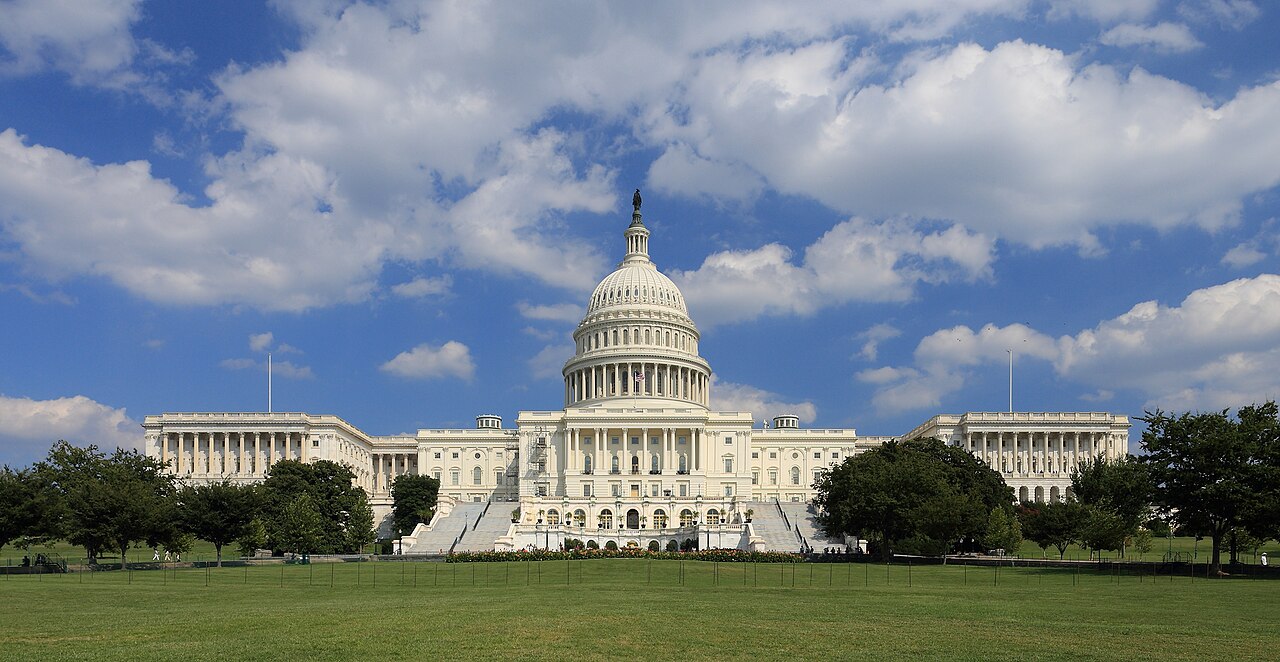
Washington — The Senate returned from a truncated recess Monday afternoon to resume consideration of a federal judicial nomination, setting the stage for a procedurally heavy week dominated by oversight hearings, a Federal Trade Commission confrontation, and new scrutiny of the Trump administration’s Fiscal Year 2027 budget request. The House of Representatives, still in its district work period through April 13, is scheduled to return Tuesday with committee activity resuming across both chambers.
The Investigative Journal’s Capitol Watch digest summarizes the day’s most consequential floor, committee, and oversight developments, with direct links to the public record.
1. Senate Advances Shepherd Judicial Nomination
The Senate convened at 3:00 p.m. ET and resumed consideration of the nomination of John Thomas Shepherd of Arkansas to serve as United States District Judge for the Western District of Arkansas, according to the U.S. Senate Daily Press schedule. A cloture vote was scheduled for approximately 5:30 p.m. ET, following Majority Leader John Thune’s filing of cloture on March 27.
Senate records indicate Shepherd’s nomination has moved through the Judiciary Committee without significant public controversy, though the cloture filing signaled that Democratic leadership intended to require the full post-cloture debate period rather than consent to a voice vote. If cloture is invoked, a confirmation vote could occur later this week.
The Shepherd vote continues a pattern of steady judicial confirmation activity in the 119th Congress. The Senate Judiciary Committee’s public list of confirmed nominations provides the running tally, and the Executive Calendar shows additional district and circuit nominees queued behind Shepherd.
2. Senate Commerce Sets Up FTC Oversight Showdown
The Senate Committee on Commerce, Science, and Transportation will convene a full committee oversight hearing of the Federal Trade Commission on Wednesday, April 15, at 10:00 a.m. ET in Room 253 of the Russell Senate Office Building, according to the committee’s announcement. FTC Chairman Andrew Ferguson and Commissioner Mark Meador are scheduled to testify.
Chairman Ted Cruz’s office described the hearing as the committee’s first FTC oversight session in nearly six years. Ranking Member Maria Cantwell sent a letter to Cruz urging him to invite former commissioners Rebecca Slaughter and Alvaro Bedoya — whom she described as “unlawfully fired” — to testify, according to her official release.
The dispute reflects continuing litigation over the President’s removal of Democratic commissioners and the reach of Humphrey’s Executor as Supreme Court precedent. Records suggest the legal posture of the removals remains unresolved in federal court, and the hearing is likely to produce extensive questioning on independence, merger review priorities, and the FTC’s approach to labor and non-compete rules.
3. House Oversight’s Epstein Probe: Wexner Deposition Fallout
The House Committee on Oversight and Government Reform continues to process materials from its February 2026 deposition of Ohio billionaire Leslie Wexner, taken at his New Albany residence pursuant to committee subpoena. The committee released nearly five hours of deposition video and transcript earlier this year, according to the committee’s own release.
In his sworn statement, Wexner told investigators he “never witnessed nor had any knowledge of Epstein’s criminal activity” and described himself as having been “duped by a world-class con man.” Committee Democrats disputed that characterization, with Rep. Robert Garcia telling reporters the former L Brands chairman sought to “downplay” the depth of his financial relationship with Jeffrey Epstein.
Filings indicate the committee’s Epstein-related investigation remains active, and additional document productions and witness interviews are anticipated. TIJ has been tracking the committee’s subpoena compliance posture and related litigation; readers can monitor new filings at the committee’s hearings archive.
4. House Judiciary to Examine Second Amendment Restrictions
The House Judiciary Subcommittee on Crime and Federal Government Surveillance is scheduled to hold a hearing titled “Restricted Rights: Second Amendment Under Fire,” per the committee’s notice. The hearing will examine recent firearms policies proposed in Virginia affecting lawful gun ownership, carry, and use, and whether those measures impose undue burdens on law-abiding citizens rather than addressing criminal misuse.
Committee staff indicate the hearing will feature testimony from state legislators, constitutional scholars, and firearms policy experts. The hearing comes amid ongoing federal court litigation over post-Bruen carry restrictions in several states, and the record established here is likely to be cited by amici in pending Fourth Circuit cases.
5. House Budget Committee Takes Up FY 2027 Request
The House Committee on the Budget will receive testimony this week on the President’s Fiscal Year 2027 Budget Request, which the White House transmitted to Congress in early April. According to analysis from the Committee for a Responsible Federal Budget, the administration projects deficits rising from $2.1 trillion in FY 2026 to $2.2 trillion in FY 2027.
The Congressional Budget Office’s most recent economic outlook diverges from the President’s assumptions in several material respects. CBO projects real GDP growth slowing to an average of 1.8 percent annually in 2027 and 2028 as the near-term stimulus from the 2025 reconciliation act recedes, with unemployment ticking up to 4.4 percent in 2027. The CBO’s Budget and Economic Outlook: 2025 to 2035 provides the baseline against which the President’s request will be scored.
Data shows debt held by the public reaching approximately 100 percent of GDP in FY 2025, with the administration projecting a peak near 103 percent in 2029 before descent to 94 percent by 2036 under its assumptions. Independent scorekeepers note those trajectories depend on economic and policy assumptions the CBO has not adopted.
6. Education and Workforce: AI’s Economic Impact
The House Education and Workforce Subcommittee on Higher Education and Workforce Development has scheduled a hearing titled “Building an AI-Ready America: Understanding AI’s Economic Impact on Workers and Employers,” according to the Congress.gov committee schedule. The session is expected to address workforce displacement modeling, retraining programs funded under the Workforce Innovation and Opportunity Act, and the adequacy of federal data collection on AI-related employment effects.
Records suggest members on both sides of the aisle have pressed the Bureau of Labor Statistics for more granular reporting on AI-affected occupational categories. The hearing is likely to generate bipartisan interest in BLS funding levels and in statutory authorities for interagency workforce data sharing.
7. Bipartisan Development: MATCH Act on Chip Equipment Controls
Rep. Michael Baumgartner (R-Wash.) introduced the Multilateral Alignment of Technology Controls on Hardware (MATCH) Act on April 3, 2026, with bipartisan cosponsorship including Rep. John Moolenaar, who chairs the House Select Committee on the Chinese Communist Party, according to the committee’s release. The bill aims to close gaps in U.S. export controls on semiconductor manufacturing equipment and align restrictions with allied regimes in the Netherlands and Japan.
Filings indicate the bill would amend the Export Control Reform Act to authorize the Department of Commerce to impose foreign direct product rule extensions on specified semiconductor tool categories and would require annual reports on allied alignment. Industry observers note the legislation responds to continuing concerns that unilateral U.S. controls alone have been insufficient to prevent advanced tool access by restricted end users.
8. Appropriations Watch: FY 2026 Homeland Security Package
House Republican leadership agreed on April 1, 2026, to advance the bipartisan Homeland Security funding measure previously passed unanimously by the Senate, according to a statement from the House Appropriations Democrats. The agreement closes one of the last remaining FY 2026 appropriations vehicles.
The package completes the FY 2026 cycle following House passage of H.R. 7148 and H.R. 7147, detailed in the majority committee’s announcement. With FY 2026 now essentially complete, the appropriations focus shifts to the President’s FY 2027 request and the 302(b) allocation process in both chambers.
Looking Ahead: This Week’s Scheduled Action
According to the Congress.gov committee schedule for April 13–19, 2026, notable items on the week’s calendar include the House Oversight subcommittee hearing on “Fraud Prevention: Understanding Fraud in Federally Funded Programs Run by the States” on April 15 at 10:00 a.m., the Senate Commerce FTC oversight hearing the same morning, and the Judiciary subcommittee hearing on the Second Amendment later in the week.
The House floor is expected to resume legislative business on Tuesday, with suspension-calendar measures likely to consume much of Monday and Tuesday pending the release of the formal whip notice. Senate leadership has not yet posted post-Shepherd floor plans, but the Senate tentative legislative schedule indicates appropriations and nominations are the leading priorities for the remainder of April.
TIJ Investigative Watchlist
Three items on this week’s congressional calendar intersect directly with The Investigative Journal’s ongoing accountability beats. The House Oversight Committee’s continuing Epstein-related document productions remain central to TIJ’s reporting on public records requests and subpoena compliance. The Senate Commerce FTC hearing is expected to surface questions about the removal of sitting commissioners — a matter with significant implications for independent-agency jurisprudence. And the FY 2027 budget hearings will provide the first sustained opportunity for members to probe discrepancies between White House assumptions and CBO’s more conservative baseline.
TIJ will continue to monitor committee schedules, roll-call votes, and document releases throughout the week. Readers seeking the primary record can consult the Office of the Clerk’s Floor Summary, the Congressional Record, and individual committee pages linked throughout this digest.
This digest reflects the public congressional record as of the afternoon of April 13, 2026. Hearings, schedules, and floor plans are subject to change.
Sources
- Congress.gov — Committee Schedule for the Week of April 13–19, 2026
- U.S. Senate Daily Press — Monday, April 13, 2026
- Senate Commerce Committee — FTC Oversight Hearing Notice
- House Oversight — Wexner Deposition Release
- House Judiciary — Second Amendment Hearing Notice
- CBO — Current View of the Economy From 2025 to 2028
- CRFB — Overview of the President’s FY 2027 Budget
- Select Committee on the CCP — MATCH Act Cosponsorship Release