

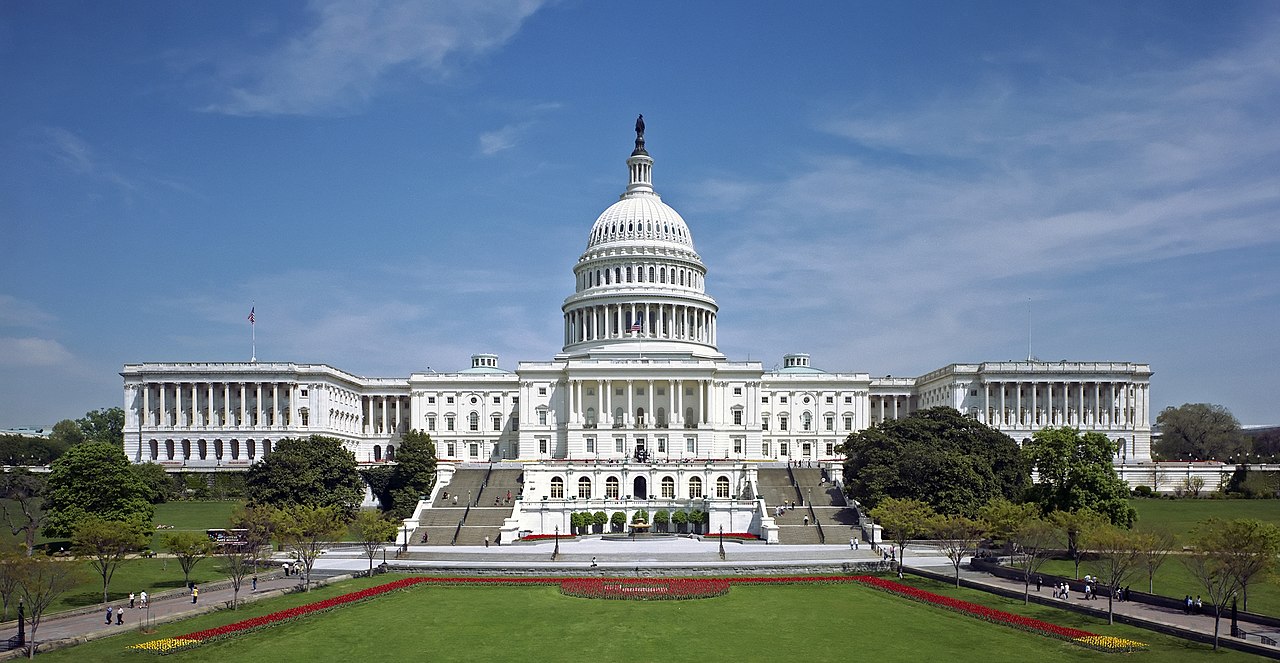
Capitol Watch is TIJ’s daily readout of floor action, committee oversight, and legislative movement on Capitol Hill. Items below reflect publicly available records on Congress.gov, committee websites, and official member statements as of the morning of April 15, 2026.
Senate clears Shepherd for federal bench as judicial backlog eases
The Senate on Tuesday confirmed John Thomas Shepherd of Arkansas to be a United States District Judge for the Western District of Arkansas, 53-44, at 11:25 a.m., according to the Senate’s roll call tally. The vote came after the chamber reconvened at 10 a.m. following its April 13 recess, and it marks another incremental step in the Senate’s steady work to reduce vacancies on the federal bench.
Records from the Senate Legislative Information System indicate Shepherd’s nomination had been pending since earlier in the 119th Congress. District-court confirmations continue to attract limited cross-aisle support, and Tuesday’s margin is consistent with the narrow but workable coalition Majority Leader John Thune has assembled for trial-court nominees this session. The official roll call is posted to the Senate’s public vote portal for readers who wish to verify how individual senators voted.
Commerce Committee sets FTC oversight hearing for Wednesday
The Senate Committee on Commerce, Science, and Transportation is scheduled to convene a full-committee hearing, “Oversight of the Federal Trade Commission,” at 10 a.m. Wednesday in Room SR-253 of the Russell Senate Office Building. Committee notices indicate FTC commissioners are expected to appear to answer questions about the agency’s enforcement priorities, merger review posture, and rulemaking pipeline.
Oversight of the FTC has been a recurring flashpoint in both chambers, with lawmakers from each party pressing the agency on its Section 5 authority, noncompete rulemaking, and the economic-analysis standards it applies in merger challenges. Committee staff have signaled that Wednesday’s questioning will focus on the agency’s litigation record and its handling of pending consent-decree reviews — topics that TIJ has examined in previous reporting on administrative-state accountability.
Energy subcommittee to take testimony on pending legislation
Later Wednesday, the Senate Energy and Natural Resources subcommittee on energy is scheduled to meet at 2:30 p.m. in Room SD-366 of the Dirksen Senate Office Building to receive testimony on a slate of pending bills, according to the committee’s official hearings calendar. The legislative hearing format typically combines administration witnesses with outside stakeholders, and it is the principal forum in which technical issues with draft text — permitting timelines, grid interconnection standards, and critical-minerals supply — are aired on the record.
Wednesday’s docket is expected to include measures touching grid reliability and domestic energy production, areas where bipartisan coalitions have repeatedly formed in the 119th Congress. Witness lists and prepared testimony are customarily posted to energy.senate.gov in the hours before the gavel.
Appropriations chairman releases FY2027 markup calendar
House Appropriations Chairman Tom Cole (R-Okla.) on April 13 released the committee’s markup schedule for fiscal year 2027 spending bills, kicking off what is typically the most consequential stretch of the appropriations calendar. Published on the committee’s website, the schedule sets a subcommittee markup for Friday, April 17 at 8 a.m. covering the Military Construction and Veterans Affairs bill and the Financial Services and General Government bill.
Full-committee markups on those two measures are set for Tuesday, April 21, with a continuation on April 23. A second pair — National Security/State and Foreign Operations, and Agriculture/FDA — enter subcommittee markup April 23 and full committee April 28. The cadence reflects the committee’s stated goal of moving the 12 regular appropriations bills through markup on a front-loaded timeline, ahead of the Memorial Day recess, after the drawn-out FY2026 cycle that only concluded with the House’s late-March passage of H.R. 7148 and H.R. 7147.
CBO flags $1.9 trillion deficit path; economic-impact report due April 21
The Congressional Budget Office’s most recent baseline projects a $1.9 trillion federal deficit for fiscal year 2026, with federal debt held by the public rising to 120 percent of GDP by 2036, according to the agency’s January outlook. In its half-year snapshot, CBO estimated the deficit in the first six months of FY2026 at roughly $1.2 trillion, about $139 billion below the comparable period last year — a modest improvement driven largely by receipts timing and lower outlays in a handful of mandatory programs.
CBO’s work-in-progress notice indicates a follow-on report, “How Changes in Economic Conditions Might Affect the Federal Budget: 2026 to 2036,” is scheduled for release April 21. The sensitivity analysis is closely watched by appropriators and tax writers because it frames how much fiscal room committees have as they draft the FY2027 bills — and it will land squarely in the middle of the House Appropriations markup week.
Judiciary Committee advances “Arctic Frost” oversight series
Senate Judiciary Chairman Chuck Grassley (R-Iowa) has made the committee’s “Arctic Frost” series a centerpiece of its 2026 oversight agenda, according to statements posted on his official Senate page. The hearings are framed by the majority as an examination of the constitutional and legal questions surrounding the federal investigation that targeted the former president and associated individuals, and the committee has signaled that subpoena authorizations for additional records and witnesses remain on the table.
Under Senate rules, committee subpoenas require either a chair’s issuance under delegated authority or a committee vote. Readers should note that hearings of this kind generate allegations and testimony that have not been independently adjudicated; filings and transcripts should be reviewed in full on judiciary.senate.gov before drawing conclusions. TIJ will continue to monitor the record as documents are produced.
Bipartisan export-controls bill targets chipmaking equipment
A bipartisan bill to tighten U.S. export controls on advanced semiconductor manufacturing equipment — the MATCH Act (Multilateral Alignment of Technology Controls on Hardware) — picked up additional cosponsors this month, according to statements from the House Select Committee on the Chinese Communist Party. Rep. John Moolenaar (R-Mich.), the select committee’s chairman, signed on April 3, joining lead sponsor Rep. Michael Baumgartner (R-Wash.). Senators Pete Ricketts (R-Neb.) and Andy Kim (D-N.J.) are carrying companion legislation in the Senate.
The measure would close what proponents describe as gaps in current licensing rules covering lithography, deposition, and inspection tools that can be diverted to advanced-node fabrication abroad. The policy debate sits at the intersection of national-security concerns highlighted in prior committee reporting and the commercial interests of U.S. equipment makers, whose overseas sales depend on predictable licensing. Readers should track the bill’s text and amendments as introduced on Congress.gov.
Housing supply bill crosses to House
The Senate’s bipartisan housing-supply package, which cleared the upper chamber on March 12 with a broad vote, remains pending before House committees as members return to their FY2027 workload. The bill targets investor behavior in single-family housing markets and includes a regulatory easing component aimed at local permitting. Its House prospects are uncertain; congressional scorekeepers and housing analysts have flagged both the cost offsets and the preemption provisions as items that could draw amendments at markup.
Homeland Security funding: House adopts Senate bipartisan text
Earlier this month, House leadership accepted the Senate’s bipartisan Homeland Security appropriations text to close out the FY2026 cycle. The agreement ended a protracted standoff over border-enforcement line items and reflects a pattern — visible across multiple subcommittees this cycle — in which the Senate’s bipartisan product has ultimately anchored the final agreement.
What to watch next
TIJ will be tracking three items in the 48 hours ahead: (1) the FTC oversight hearing Wednesday morning in Senate Commerce, where commissioners’ answers on merger guidelines and Section 5 rulemaking will shape enforcement expectations; (2) the Energy subcommittee’s legislative hearing Wednesday afternoon, where witness testimony on permitting and grid measures will establish the committee record; and (3) Friday’s House Appropriations subcommittee markups — the first marker of how Chairman Cole intends to handle contested policy riders in the FY2027 MilCon-VA and FSGG bills.
Relevant to TIJ’s investigative beats, we are also watching the Senate Judiciary oversight track, the select-committee MATCH Act progress given its nexus with technology-transfer and national-security reporting, and CBO’s April 21 sensitivity analysis, which will calibrate the fiscal frame for every appropriations decision this spring.
Sources
- Senate Roll Call Votes, 119th Congress, 2nd Session
- On the Senate Floor Today — Congress.gov
- Senate Commerce Committee Hearings
- Senate Energy Subcommittee hearing notice, April 15, 2026
- Chairman Cole FY2027 markup schedule
- CBO, The Budget and Economic Outlook: 2025 to 2035
- CBO, Recent Publications and Work in Progress (as of March 31, 2026)
- Sen. Grassley statement on Judiciary 2026 oversight agenda
- House Select Committee on the CCP — MATCH Act cosponsorship