

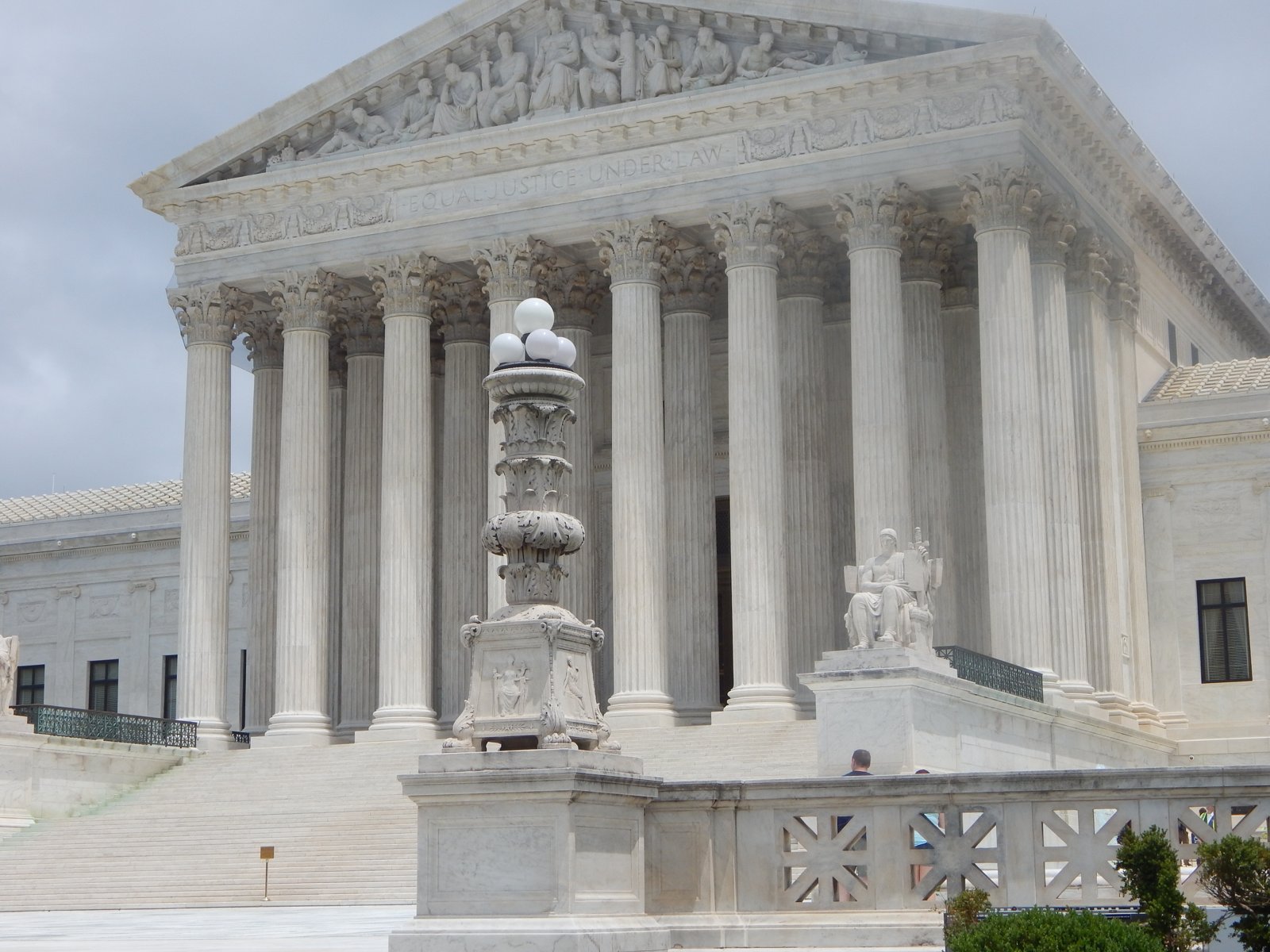
The Investigative Journal’s weekly docket review tracks rulings, orders, and high-stakes filings across the federal judiciary and state courts. Analysis below reflects public records and court filings as of April 20, 2026.
A federal appellate panel’s Friday-night stay of a district court injunction halting construction of the $400 million White House ballroom capped a week in which the federal courts again sat at the center of American policymaking. Alongside that dispute, the Supreme Court continued deliberating the most consequential citizenship case in a generation; the Third Circuit drew a new preemption line for federally regulated prediction markets; and a federal judge in Massachusetts extended an order blocking a disputed Education Department survey. Below is The Investigative Journal’s weekly Court Watch, covering nine developments — grouped by court level — that practitioners, policymakers, and investors should track.
Supreme Court of the United States
Trump v. Barbara: Birthright Citizenship Decision Pending
Two weeks after the justices heard argument on April 1 in Trump v. Barbara, the merits challenge to the administration’s executive order redefining the Fourteenth Amendment’s Citizenship Clause, the case remains the term’s most closely watched matter. Court transcripts and contemporaneous reporting indicate a majority of justices pressed the Solicitor General on the practical administration of the order. Chief Justice John Roberts responded to the government’s “new world” framing by noting, “It’s the same Constitution.” Justice Amy Coney Barrett pressed on adjudication mechanics, and Justice Ketanji Brown Jackson raised whether pregnant women would be subject to depositions to establish intent.
Briefs filed with the Court indicate that the merits decision — expected by the end of the term in late June — could reshape immigration administration, hospital birth recording practices, and a range of federal benefits programs. Legal analysts at SCOTUSblog note that the government’s argument must clear both textualist and originalist hurdles, and that the argument transcript suggests several of the Court’s conservatives remain unpersuaded. The Investigative Journal will publish a dedicated merits analysis when the opinion issues.
Cert Grant: Johnson v. United States Congress
In its most recent order list, the Court granted certiorari in Johnson v. United States Congress, a veterans-benefits case asking whether the Veterans’ Judicial Review Act strips district courts of jurisdiction to hear constitutional challenges to acts of Congress affecting veterans’ benefits. The grant, discussed in SCOTUSblog’s Relist Watch coverage, positions the Court to clarify a recurring jurisdictional question that has divided the circuits. Oral argument is expected next term.
Tariff Refund Implementation Continues
Following the Court’s February ruling overturning tariffs imposed under the International Emergency Economic Powers Act (IEEPA), implementation of refunds remains contested. Penn Wharton Budget Model estimates the federal government could owe refunds approaching $175 billion; more than $130 billion was collected under the overturned regime through mid-December. As detailed below, the Federal Circuit this week rejected the administration’s push to delay the refund process.
Federal Courts of Appeals
D.C. Circuit Stays Ballroom Injunction
On Friday night, April 17, a three-judge panel of the U.S. Court of Appeals for the D.C. Circuit stayed U.S. District Judge Richard Leon’s preliminary injunction that had blocked above-ground construction of the planned 90,000-square-foot White House ballroom. The panel scheduled oral argument on the merits of the appeal for June 5. The underlying suit, filed by the National Trust for Historic Preservation, alleges violations of the Administrative Procedure Act and the National Environmental Policy Act, and raises separation-of-powers questions about unilateral modifications to a site subject to federal preservation statutes.
The panel’s order, reported widely by NPR and other outlets, allows construction to resume during the appeal. Judge Leon’s underlying injunction — issued earlier in the week — had permitted only below-ground work related to “national security facilities.” The dispute is likely to reach the Supreme Court on the shadow docket if construction proceeds meaningfully before the June 5 argument.
Third Circuit: Kalshi v. Flaherty
On April 6, a divided panel of the Third Circuit issued a landmark ruling in KalshiEX LLC v. Flaherty, holding that the Commodity Exchange Act (CEA) preempts state gambling laws as applied to sports-related event contracts traded on CFTC-registered designated contract markets. It is the first federal appellate court to address the issue. The panel affirmed the district court’s preliminary injunction barring New Jersey from enforcing its gambling laws against Kalshi, finding that field preemption applies based on the CEA’s grant of exclusive jurisdiction to the CFTC over swaps.
The ruling arrives as the Ninth Circuit heard argument on April 16 in a related dispute involving Kalshi, Crypto.com, Robinhood, and the State of Nevada. A circuit split on state regulatory authority over prediction markets would likely draw Supreme Court attention next term. Industry analysts at Skadden and Paul Weiss have noted that the Third Circuit’s reasoning — particularly its conclusion that sports event contracts qualify as “swaps” — will reshape the regulatory map even pending final disposition.
Federal Circuit Rejects Tariff Refund Delay
A federal appeals court this month rejected the Trump administration’s push to delay implementation of tariff refunds ordered by Judge Richard Eaton of the U.S. Court of International Trade. Judge Eaton had ruled that “all importers of record” were entitled to benefit from the Supreme Court’s February decision voiding the IEEPA tariffs. Customs and Border Protection has told the trial court that its systems were “not designed for a mass refund,” complicating the implementation timeline even as the legal obligation remains intact.
D.C. Circuit: Alien Enemies Act Contempt Inquiry
A divided D.C. Circuit panel, in a 2-1 ruling, blocked further steps in a criminal contempt inquiry targeting the Trump administration in litigation over the March 2025 removal of 137 Venezuelan men to the CECOT facility in El Salvador under the Alien Enemies Act. The panel’s order halts the trial court’s inquiry pending further appellate review. The ACLU, which represents plaintiffs in the underlying case, has criticized the ruling; administration counsel has argued that the inquiry intrudes on core executive functions. The case remains active and The Investigative Journal is reviewing the panel’s reasoning as part of an ongoing accountability series.
Fourth Circuit: Fairfax County Police Shooting
On April 17, a federal appeals court ruled against Fairfax County, Virginia, in a civil case arising from a police shooting, according to reporting by The Washington Post. The ruling revives claims against the county and opens further proceedings in the trial court. The decision is notable for its treatment of qualified immunity in the circuit and may influence pending Fourth Circuit litigation involving similar claims.
Federal District Courts
Massachusetts: ACTS Survey Injunction Extended
On April 13, U.S. District Judge F. Dennis Saylor IV of the District of Massachusetts issued a temporary restraining order extending the deadline for the Education Department’s ACTS survey through April 24. The order follows Judge Saylor’s April 3 preliminary injunction finding the survey likely “arbitrary and capricious” under the Administrative Procedure Act. Ogletree Deakins’s legal alert describes the court as now poised to consider a broader preliminary injunction with multistate reach. The case illustrates how the Supreme Court’s 2025 decision in Trump v. CASA — which narrowed universal injunctions — has not eliminated broad relief when plaintiff states establish concrete, state-specific harms.
D.D.C.: Judge Leon’s Ballroom Ruling
As noted above, U.S. District Judge Richard Leon’s preliminary injunction — now stayed — narrowly allowed below-ground construction at the East Wing site while blocking above-ground work. Records from the D.D.C. docket indicate Judge Leon stayed his order for an additional week to permit the administration to seek further appellate review. The National Trust for Historic Preservation’s complaint argues the ballroom project was advanced without the statutorily required approvals from federal planning bodies; the administration contends that the project falls within executive authority over the White House complex.
State Supreme Courts
North Carolina: Leandro Dismissed
On April 2, the Supreme Court of North Carolina dismissed the long-running Leandro school-funding litigation without granting relief. The decision closes a case that had spanned three decades and shaped education finance debates in the state. Governor Josh Stein responded critically to the ruling, arguing it leaves students without an enforceable remedy for the state’s constitutional obligation to provide a “sound basic education.” Education policy analysts note the dismissal may shift advocacy pressure back to the legislature and to local school boards.
Cases To Watch Next Week
Three matters warrant close attention in the coming week. First, the Supreme Court’s order list is expected Monday; watchers are monitoring for resolution of several relisted petitions involving Second Amendment and parental rights claims. Second, the Ninth Circuit may issue a ruling — or expedited briefing order — in the Kalshi/Crypto.com/Robinhood prediction-markets litigation heard April 16; any panel decision will sharpen or resolve the incipient circuit split with the Third Circuit. Third, the White House ballroom construction dispute continues on an accelerated appellate track, with June 5 argument scheduled at the D.C. Circuit and a plausible shadow-docket petition to the Supreme Court if the construction posture shifts materially.
Filings indicate additional activity in the Alien Enemies Act litigation, the IEEPA tariff refund process at the Court of International Trade, and a pending cert petition concerning federal review of state-court decisions flagged in SCOTUSblog’s coverage. The Investigative Journal will track each development in subsequent Court Watch editions.
Court Watch is a weekly feature of The Investigative Journal. All claims above are sourced to public court records, appellate opinions, and attributed third-party reporting. Cases remain pending unless the text states otherwise; allegations should not be read as findings.