

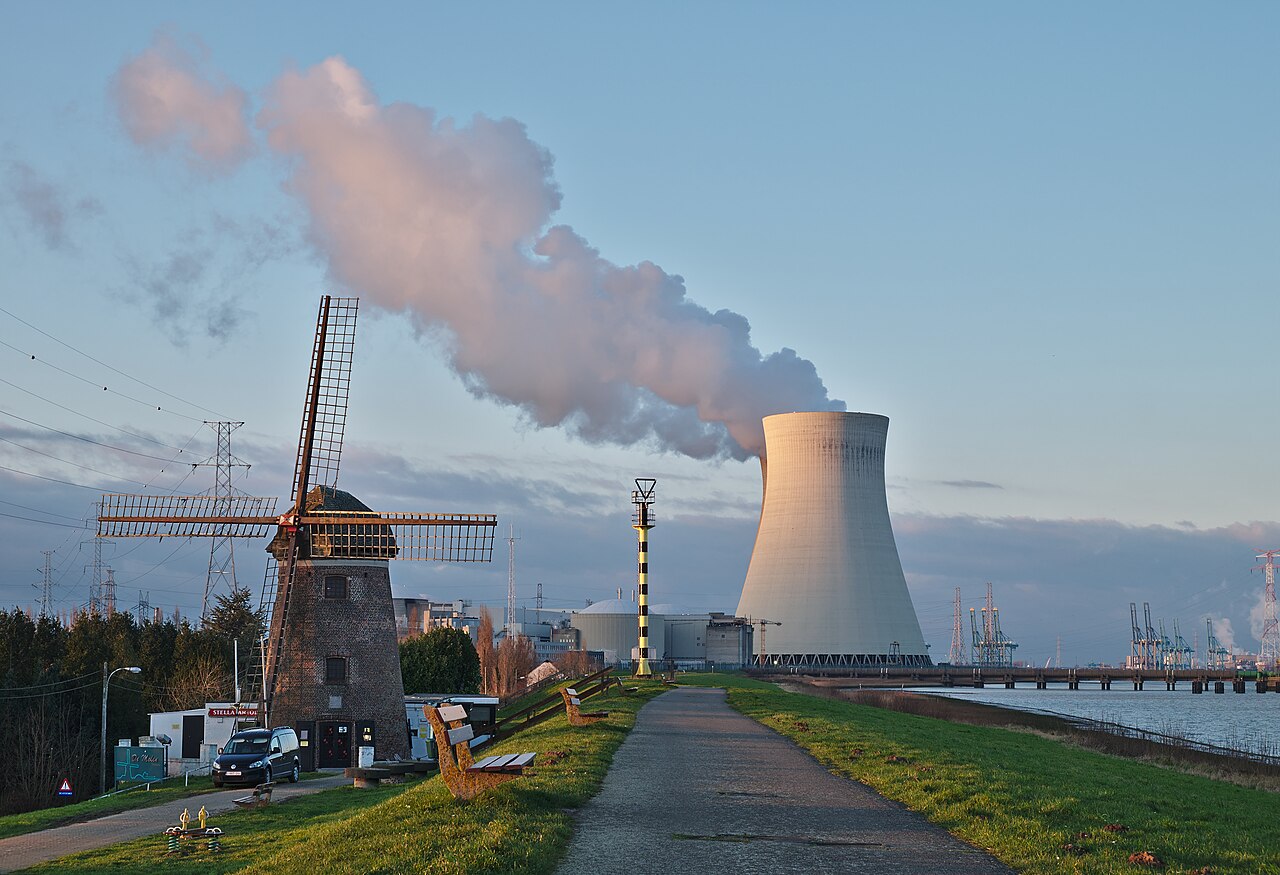
Federal court records and Equal Access to Justice Act fee data reveal a pattern of environmental litigation designed not to protect the environment, but to delay and destroy nuclear energy projects — the only proven zero-carbon baseload power source — while collecting millions in taxpayer-funded legal fees.
The EAJA Pipeline
The Equal Access to Justice Act allows organizations that successfully sue federal agencies to recover their attorney fees from the government. Originally designed to level the playing field for small businesses challenging bureaucratic overreach, the EAJA has become a revenue stream for large environmental organizations that use litigation as a primary strategy.
The pattern is consistent: environmental organizations including the Sierra Club, NRDC, and Earthjustice file suits challenging permits, environmental impact statements, and regulatory approvals for nuclear energy projects. Even when the suits don’t succeed in permanently blocking projects, they create years of delay — during which project costs escalate, investor confidence erodes, and the financial viability of the project deteriorates. When the organizations do win — or reach settlements — they recover their legal costs from the federal treasury.
The Nuclear Paradox
The environmental movement’s opposition to nuclear energy is one of the great paradoxes of climate policy. Nuclear power produces zero direct carbon emissions. It provides reliable baseload electricity that doesn’t depend on weather conditions. It has a safety record that, despite high-profile accidents, is statistically superior to every fossil fuel source. And it occupies a fraction of the land area required by equivalent solar or wind installations.
Yet organizations that claim climate change is an existential threat have spent decades — and millions of dollars — fighting the only proven technology that can provide zero-carbon electricity at scale. The Climate Case Chart database documents extensive environmental litigation targeting energy projects, including nuclear facilities, through EPA and NRC challenges.
The Delay Costs
The financial impact of environmental litigation on nuclear projects is devastating. A nuclear plant that takes 15 years to permit and build instead of 7 years accumulates billions in additional financing costs, construction escalation, and lost revenue. These delay costs are then cited by anti-nuclear advocates as evidence that nuclear energy is “too expensive” — a self-fulfilling prophecy created by the very litigation that caused the delays.
The House Natural Resources Committee has examined how EAJA fee payouts to environmental organizations create a litigation incentive structure: organizations can file suits with limited financial risk (knowing that successful challenges will be reimbursed) while imposing enormous costs on the projects they target. The asymmetry favors the litigant at every stage.
The Funding Sources
Environmental organizations that litigate against nuclear energy are funded by a network of foundations whose portfolios often include investments in competing renewable energy technologies. When a foundation funds both anti-nuclear litigation and renewable energy advocacy, the financial interest in nuclear’s failure extends beyond ideology to economics. Every nuclear project killed is market share gained for the alternatives.
The environmental movement’s anti-nuclear stance predates climate change as a political issue — it originated in Cold War-era anxieties about radiation and nuclear weapons. But the persistence of that stance in an era when climate scientists overwhelmingly support nuclear as part of any serious decarbonization strategy reveals an organization more attached to its founding ideology than to its stated mission.
If climate change is truly an existential threat, then opposing the most effective zero-carbon technology available is not environmentalism. It’s institutional self-preservation masquerading as principle.
Eduardo Bacci is an investigative journalist at The Investigative Journal. Data sources include EAJA fee records, federal court PACER databases, and Congressional oversight hearing transcripts.