

County commission minutes across the Midwest reveal a growing conflict between wind energy companies and rural communities over who bears the cost of removing turbines that have reached the end of their 20-25 year operational lives.
The Decommissioning Question
The first generation of large-scale wind turbines installed across the American Midwest in the early 2000s is reaching the end of its operational life. These turbines — with 20-to-25-year design lives — are becoming less efficient, more expensive to maintain, and in some cases, structurally unsafe. And the communities that hosted them are discovering an uncomfortable truth: the contracts they signed often don’t adequately address who pays for removal.
EIA data shows thousands of early-generation turbines approaching or past their design life across states like Iowa, Kansas, Oklahoma, and Texas. Each turbine represents approximately 1,000 tons of steel, concrete, and composite materials that must be removed and disposed of when the turbine is decommissioned — at an estimated cost of $200,000 to $500,000 per unit.
The Bond Shortfall
County commission minutes from rural Midwest jurisdictions reveal heated debates over decommissioning bonds — the financial guarantees that wind companies are supposed to post to cover removal costs. In many cases, the bonds were set at levels that reflected optimistic cost assumptions from two decades ago. The actual cost of decommissioning — including crane rental, transport, foundation removal, and land restoration — far exceeds the bonded amounts.
Worse, some early wind projects were approved with minimal or no decommissioning requirements. Rural counties that were eager for the tax revenue and economic development that wind farms promised didn’t negotiate adequate protections against the end-of-life costs. Now those costs are materializing, and the companies that built the projects may have changed hands, restructured, or in some cases, declared bankruptcy.
The Blade Disposal Problem
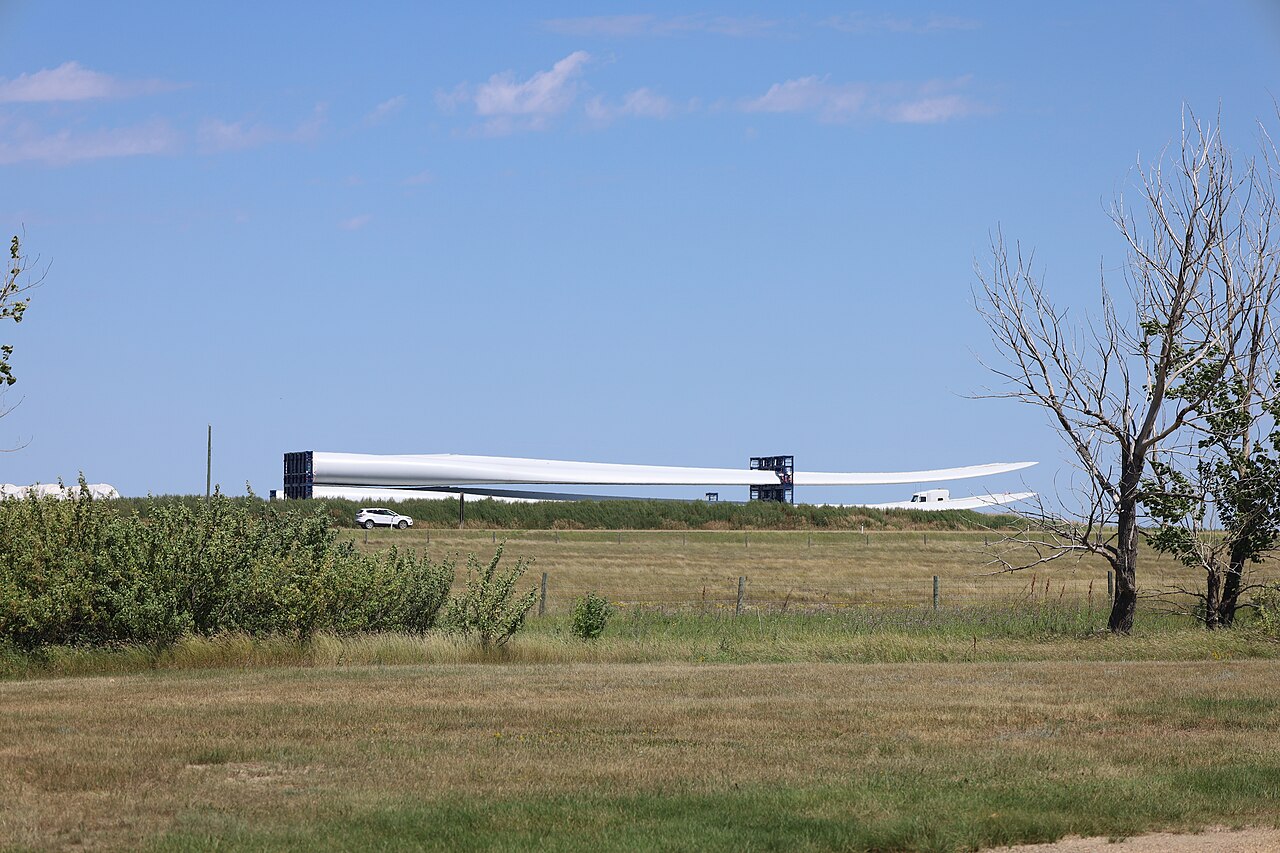
Turbine blades present a unique disposal challenge. Made of fiberglass and composite materials, they cannot be recycled using current commercial processes. The blades — up to 200 feet long — are typically cut into sections and buried in landfills. Communities near landfills receiving blade waste have raised environmental and aesthetic objections, and some landfills have refused to accept them.
Research into blade recycling is underway at several universities and companies, but no commercially viable process exists at scale. Until one does, the disposal of tens of thousands of end-of-life blades represents a growing environmental liability that the wind industry has been slow to address.
The Rural Reckoning
For rural communities that embraced wind energy as an economic lifeline, the decommissioning crisis is a betrayal. The jobs that wind farms promised during construction were temporary. The tax revenue, while real, is declining as aging turbines produce less electricity. And the cost of cleaning up the infrastructure — towering concrete foundations, miles of access roads, buried electrical cables — may fall on local governments that don’t have the fiscal capacity to absorb it.
The wind industry’s decommissioning problem mirrors the fossil fuel industry’s orphaned well crisis: companies profit during the operational phase and disappear when the cleanup bill arrives. The technology is different. The pattern is the same.
Eduardo Bacci is an investigative journalist at The Investigative Journal. Data sources include EIA wind energy statistics, county commission public records, and American Clean Power Association decommissioning guidance.