

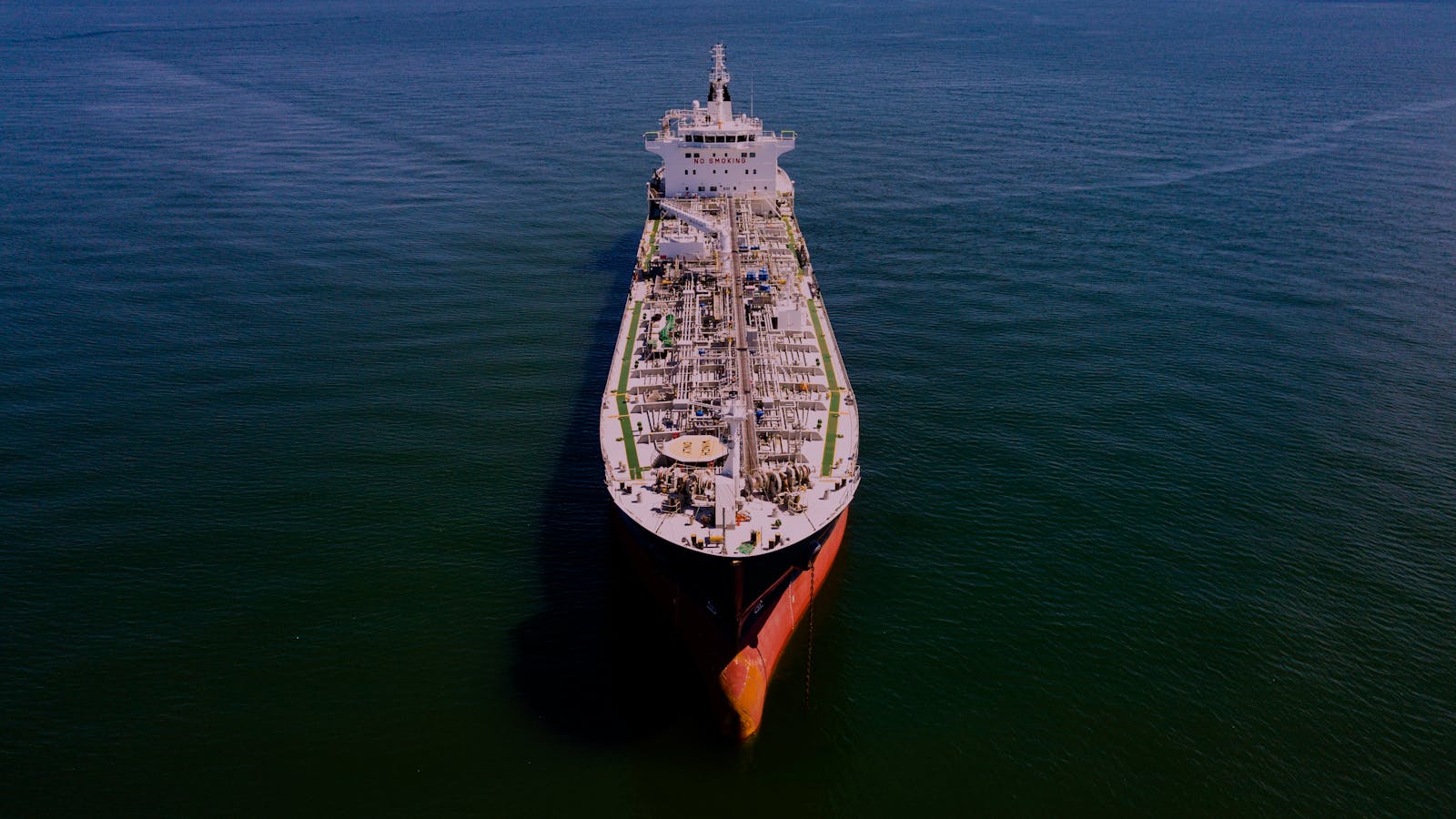
When U.S. Treasury sanctions hit a Chinese oil refinery on April 24, the target was not an obscure shell company tucked behind a Hong Kong post office box. It was Hengli Petrochemical (Dalian) Refinery Co., Ltd., a subsidiary of one of China’s largest privately held industrial conglomerates — a Fortune Global 500 group with a 400,000-barrel-per-day refining complex on Changxing Island and roughly $35 billion in 2024 revenue. According to the Treasury Department announcement, Hengli had spent years quietly buying billions of dollars’ worth of Iranian crude shipped by a “shadow fleet” of sanctioned tankers — and the buyer on the Iranian side, Treasury said, was a front company controlled by Iran’s Armed Forces General Staff.
The designation, issued under Executive Order 13902 as part of the administration’s “Economic Fury” campaign, marks the largest single Chinese end-user refinery ever placed on Treasury’s Specially Designated Nationals list. It also reflects a strategic shift: after spending much of 2025 sanctioning small “teapot” refiners in Shandong Province whose exposure to the U.S. financial system was minimal, OFAC has moved up the supply chain to a publicly listed petrochemical giant whose offshore counterparties — and bankers — cannot pretend not to notice.
What the filings, vessel records, and Treasury’s accompanying advisories show is a multi-year procurement pipeline running from Iranian Armed Forces oil-sales offices in Tehran, through ship-to-ship transfers off Malaysia, into the docks at Dalian. The action also exposes a pattern: every prior Trump-era teapot designation has been smaller, less integrated, and less politically visible than the one that came after it. Hengli is not a teapot in any traditional sense. It is the largest customer Treasury has identified, by a wide margin, in Iran’s oil-export network.
Inside the Hengli Designation
The Treasury Department’s recent actions notice formally added Hengli Petrochemical (Dalian) Refinery Co., Ltd. — Unified Social Credit Code 91210244089087324F, established March 10, 2014 — to the SDN List under Iran-related authorities. Treasury also issued General License V, authorizing wind-down transactions involving Hengli and any 50-percent-or-greater owned subsidiary.
Records released alongside the designation lay out a detailed factual basis:
- Hengli’s Dalian complex has a refining capacity of approximately 400,000 barrels of crude per day, making it among the largest independent refiners in China, according to Reuters.
- Treasury identifies Hengli as China’s “second-largest teapot refinery” and “one of Tehran’s most valued customers,” stating the company has purchased “billions of dollars’ worth” of Iranian petroleum.
- Since at least 2023, Hengli has received Iranian crude cargoes from sanctioned shadow-fleet vessels, including the BIG MAG (IMO 9263215), GALE (IMO 9294240), and ARES (IMO 9174397), which alone have delivered more than five million barrels of Iranian crude.
- The crude was supplied through Sepehr Energy Jahan Nama Pars Company — described by Treasury as “the oil sales arm of Iran’s Armed Forces General Staff” — generating “hundreds of millions of dollars in revenue for the Iranian military.”
- OFAC simultaneously designated 19 shadow-fleet vessels and roughly 40 shipping firms operating across Hong Kong, the UAE, Panama, and Greece, including the newly listed Extensive Shipping Limited at Kai Tak Factory Building, San Po Kong, Hong Kong.
The Hengli action follows three earlier teapot designations issued during 2025: Shandong Shouguang Luqing Petrochemical, Hebei Xinhai Chemical Group, and Shandong Shengxing Chemical, the first of which was sanctioned under an OFAC press release in 2025 targeting “the first teapot refinery.” Each prior round added smaller refiners with limited international banking exposure. Hengli is something different: a vertically integrated public company whose parent group is a 2017 Fortune Global 500 entrant and whose listed subsidiary trades on the Shanghai Stock Exchange. The parent group, founded in 1994 by Chen Jianhua and Fan Hongwei as a polyester textile mill in Suzhou, raised roughly ¥30 billion in its 2018 listing, according to industry profiles compiled by MatrixBCG.
The Iranian Counterparty: A Military Front in Tehran
The Iranian side of the Hengli pipeline is no commercial trader. According to a November 2025 Treasury notice, Sepehr Energy Jahan Nama Pars was established in late 2022 and operates under the umbrella of Iran’s Armed Forces General Staff — the same body that commands the Islamic Revolutionary Guard Corps, the regular Artesh, and Iran’s Ministry of Defense and Armed Forces Logistics (MODAFL). U.S. authorities have repeatedly described Sepehr Energy as a front company whose proceeds “supplement” the Iranian military’s budget and underwrite ballistic missile, UAV, and proxy-group activity.
Investigative reporting by Iran International, citing internal corporate emails and shipping documents, mapped a network of Sepehr-linked shells — including Sepehr Energy Paya Gostar Jahan and Sepehr Energy Hamta Pars — designed to mask the military origin of the crude as it moved through ship-to-ship transfers near Singapore and Malaysia before delivery to Asian buyers. Treasury’s own enforcement record shows Sepehr Energy at the center of seven separate U.S. actions between November 2023 and the April 24 Hengli designation, according to OpenSanctions aggregated public records.
The Hengli notice, taken together with the May 2025 State Department designation memo, indicates that U.S. investigators have now traced specific Iranian military oil cargoes through specific tankers to a specific Chinese end-user, by IMO number and by date. The level of granularity is unusual for a sanctions action targeting a Tier-1 Chinese corporate. It suggests that the underlying intelligence — voyage data, ship-to-ship transfer timing, port arrivals, and contractual chain of custody — is sufficiently detailed to support follow-on enforcement actions against banks and cargo insurers should Treasury elect to pursue them.
Secondary Sanctions and the Banks
The Hengli designation arrives roughly nine days after Treasury Secretary Scott Bessent told reporters at the White House that Treasury had “written to two Chinese banks” warning that “if we can prove that there is Iranian money flowing through your accounts, then we are willing to put on secondary sanctions,” according to Reuters. Sanctions analysts have argued for years that designating end-user refineries alone has limited effect because teapots have minimal direct exposure to dollar-clearing infrastructure. Banks do not.
The relevant data points from Treasury’s filings and from public reporting by Bloomberg, The Wall Street Journal, and the South China Morning Post:
- China’s teapot refineries account for roughly a quarter of the country’s total refining capacity, according to industry data cited by Reuters.
- China imported more than 80 percent of all Iranian oil shipped abroad in 2025, according to analytics firm Kpler.
- The Hengli action coincides with an ongoing U.S. naval blockade of the Strait of Hormuz, in effect since April 13, 2026, and with the seizure this month of the M/T Majestic and M/T Tifani — together carrying nearly four million barrels of Iranian crude.
- The designation comes “just a few weeks before” a planned Trump–Xi summit in China, according to SCMP reporting, raising the diplomatic stakes for both sides.
The market signal of the action is twofold. First, OFAC has now publicly attached a major listed Chinese petrochemical company — not just a Shandong-only operator — to the Iranian military’s oil revenue stream. Second, by reportedly putting Chinese banks on formal notice of secondary-sanctions exposure, Treasury has begun to raise the cost of intermediating those flows even where the end-user refinery itself has no dollar accounts to seize. Whether Beijing’s larger state-owned banks pull back from Hengli’s invoices is the pivot point. The Chinese embassy in Washington publicly objected, calling on the United States to “stop abusing various kinds of sanction to hit Chinese companies,” but as Reuters has reported, Chinese banks “still comply with U.S. sanctions because they are more exposed to the U.S.-dominated financial system.”
A Conglomerate Beyond Refining
Hengli is not only a refiner. The parent Hengli Group operates one of the world’s largest purified terephthalic acid complexes in Dalian, with roughly 12 million metric tons of annual PTA capacity, and in 2022 acquired the bankrupt STX Dalian shipyard for ¥1.729 billion to launch Hengli Heavy Industries, according to corporate-history compilations from Pestel-Analysis. The group is chaired by founder Chen Jianhua, with co-founder Fan Hongwei serving as chairwoman and president of the listed Hengli Petrochemical entity.
The April 24 designation does not, on its face, sweep in the parent group or its non-refining subsidiaries. But OFAC’s “50 percent rule” — which automatically blocks any entity owned 50 percent or more, directly or indirectly, by a sanctioned person — is now in play across the corporate tree. Counterparties dealing with the Dalian refinery, with affiliated trading desks, or with downstream petrochemical sales linked to that complex face the same diligence problem they face with any major SDN: confirming, line by line, that they are not transacting with a blocked entity through an intermediate ownership stake. General License V provides a wind-down window through May 14, 2026, before the full force of the prohibitions takes effect.
For Iran, the implications of losing — or even partially losing — Hengli as a customer are substantial. Industry estimates compiled by CNBC place Hengli among the largest single buyers of Iranian crude, with deliveries traceable to specific shadow-fleet vessels carrying millions of barrels each. The parallel U.S. blockade in the Strait of Hormuz further constrains physical lift, and Brussels-based think tank Bruegel reported last month that teapot refineries are now facing “high replacement prices in a market already strained by global tensions.”
What Remains Unknown
What is not yet visible in the public record is whether Treasury intends to follow the Hengli action with named designations of Chinese banks. Bessent’s mid-April warning letter to “two Chinese banks” has not been made public, and Treasury has not identified the institutions. Sanctions experts cited by Reuters have long argued that designating banks — rather than only refiners and tankers — is the step that would meaningfully constrict Chinese purchases. The Hengli action moves the line, but does not yet cross it.
Also unresolved is how Hengli’s listed parent and minority strategic investors — including, per industry tracking, a reported equity tie with Saudi Aramco — respond to the U.S. designation of a flagship subsidiary. Hengli Petrochemical Co., Ltd. is publicly traded. A material adverse change disclosure on its Shanghai filings, or a counterparty pullback from PTA off-takers in textiles and packaging, would mark a second-order shock distinct from the immediate sanctions effect. None of those have been reported as of publication.
For now, the April 24 action represents the most concrete public link Treasury has drawn between Iran’s military oil-revenue pipeline and a Tier-1 Chinese industrial end-user. Records suggest the underlying intelligence is voyage-specific and vessel-specific. What happens next depends on whether U.S. enforcement extends from the refinery dock to the bank wire — and on whether Chinese state-owned lenders decide that compliance with U.S. sanctions remains, as it has been for a decade, the cheaper option.