

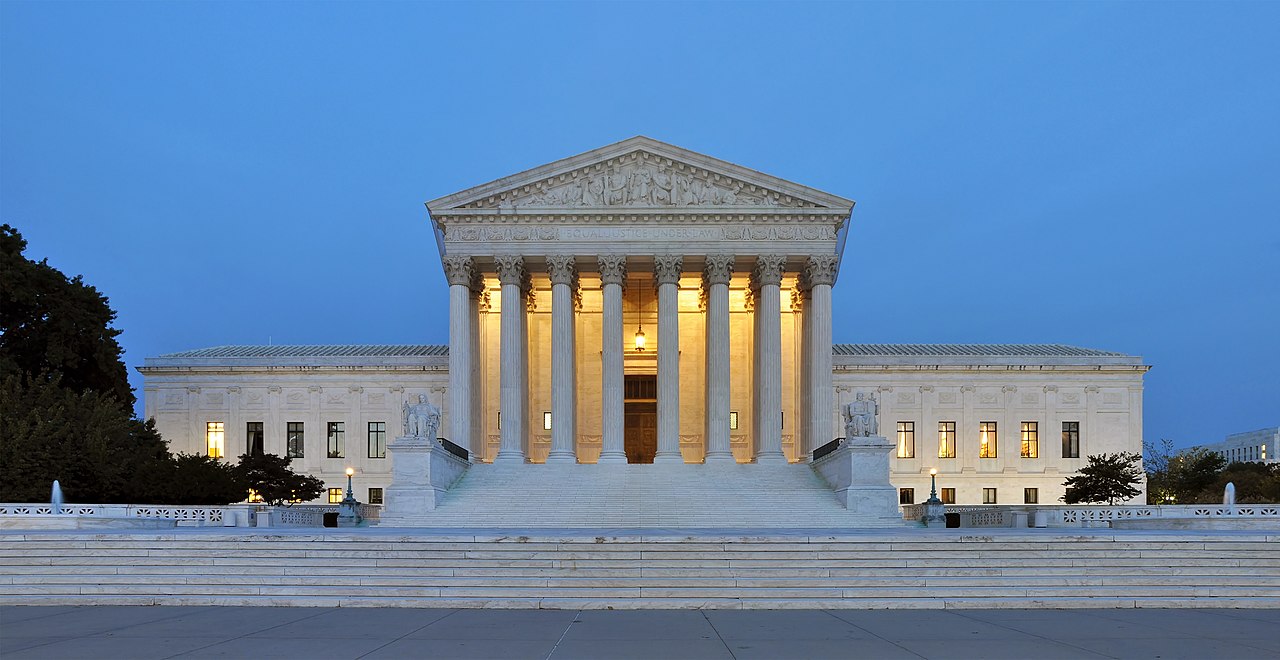
The Investigative Journal’s weekly survey of consequential rulings, cert grants, and pending motions across the federal and state judiciary. This week’s docket was dominated by a Supreme Court decision narrowing federal-contractor immunity, two divergent appellate rulings on immigration enforcement, and a cert grant teeing up another First Amendment battle over religious schools.
Supreme Court
Hencely v. Fluor Corp.: Court narrows contractor immunity in 6–3 ruling
On April 22, the Supreme Court ruled in Hencely v. Fluor Corp., No. 24-924, that a former Army specialist may pursue state-law tort claims against military contractor Fluor over a 2016 suicide bombing at Bagram Airfield in Afghanistan. The opinion, authored by Justice Clarence Thomas, vacated a Fourth Circuit decision that had dismissed the suit on combatant-activities preemption grounds. Justice Samuel Alito dissented, joined by Chief Justice John Roberts and Justice Brett Kavanaugh.
The Court held that the so-called Yearsley doctrine — which shields federal contractors from liability when carrying out government directives — does not extend to conduct the government neither ordered nor authorized. Records before the Court indicated that Fluor was alleged to have violated specific military instructions in supervising the local-national worker who later detonated explosives, killing five and wounding 17. Specialist Winston T. Hencely was permanently disabled in the attack.
The ruling carries significant implications for the multibillion-dollar government-services contracting sector. Filings in the case suggest that defense contractors will now face a heavier burden in establishing immunity defenses at the pleadings stage, particularly where injured service members allege deviation from contractual or military instructions. Bloomberg Law’s analysis notes that the decision narrows but does not eliminate the doctrine.
Enbridge Energy, LP v. Nessel: Unanimous ruling on removal deadlines
The Court issued a unanimous decision the same day in Enbridge Energy, LP v. Nessel, No. 24-783, holding that the 30-day deadline under 28 U.S.C. § 1446(b)(1) for removing a state-court action to federal court is not subject to equitable tolling. The ruling sends Michigan Attorney General Dana Nessel’s lawsuit against the Canadian pipeline operator over the Line 5 pipeline back to state court, where it was originally filed.
According to the opinion, the statute’s text, structure, and context are inconsistent with judicially crafted exceptions to the filing window. Records suggest the holding will tighten removal practice across federal civil dockets. Attorney General Nessel’s office framed the ruling as a procedural victory that allows Michigan’s environmental and public-trust claims to proceed in the forum she selected.
District of Columbia v. R.W.: Reasonable-suspicion totality test reaffirmed
District of Columbia v. R.W., No. 25-248, decided April 20, summarily reversed the District of Columbia Court of Appeals in a Fourth Amendment dispute. The Court held that lower courts must examine the totality of the circumstances when assessing reasonable suspicion and may not evaluate factors in isolation. Filings indicate Officer Vanterpool had observed multiple corroborating indicators before stopping the juvenile respondent, and the Court concluded those factors, taken together, supported the stop.
The unsigned per curiam disposition is consistent with a long line of cases — including United States v. Arvizu and Navarette v. California — instructing courts to view investigative stops holistically. The decision is narrow but is likely to be cited frequently by police-misconduct defense counsel.
St. Mary Catholic Parish v. Roy: Cert granted on religious-school exclusion
The Court on April 20 granted certiorari in St. Mary Catholic Parish v. Roy, No. 25-581. The petition challenges the exclusion of a Catholic preschool from Colorado’s universal preschool program because the school declined to admit students whose enrollment would conflict with its religious doctrine on sexuality and gender. The cert grant teesup another major Religion Clauses ruling in the wake of Trinity Lutheran, Espinoza, and Carson v. Makin, all of which barred states from excluding religious institutions from generally available public-benefit programs.
Briefing is expected through the summer, with argument likely in the 2026–27 term. According to filings, the case will test whether the Free Exercise Clause forbids states from conditioning public-benefit eligibility on compliance with anti-discrimination policies that conflict with sincerely held religious beliefs. The case is being closely watched by religious-liberty advocates and state education officials.
Cert denied: Bank-collusion class action proceeds
The Court on April 20 declined to disturb a Second Circuit ruling that certified a class of municipalities suing Bank of America, JPMorgan Chase, Citigroup, and five other financial institutions for allegedly inflating interest rates on variable-rate demand obligations. According to U.S. News & World Report, the underlying case alleges roughly $12 billion in damages. The denial allows the litigation to proceed on a class basis through trial.
Federal Appeals Courts
D.C. Circuit blocks asylum suspension
On April 24, a divided three-judge panel of the U.S. Court of Appeals for the D.C. Circuit ruled that the Trump administration’s directive suspending the asylum process at the U.S.–Mexico border exceeded the President’s authority under the Immigration and Nationality Act. The majority opinion concluded that “the [INA’s] text, structure, and history make clear that in supplying power to suspend entry by Presidential proclamation, Congress did not intend to grant the Executive the expansive removal authority it asserts.” CBS News reports the administration has signaled it will seek further review.
The ruling affirms a district-court injunction issued earlier this year and reframes the legal terrain heading into a likely Supreme Court petition. Records indicate the underlying proclamation invoked Sections 212(f) and 215(a) of the INA — provisions previously upheld in Trump v. Hawaii in the travel-ban context. The panel distinguished those provisions from authority to bypass statutorily mandated asylum screening.
Fifth Circuit clears Texas SB 4 on standing grounds
The full Fifth Circuit, sitting en banc, voted 10–7 on April 24 to vacate a preliminary injunction against Texas Senate Bill 4, the 2023 statute that permits state law-enforcement officers to arrest individuals suspected of unlawful entry. As The Texas Tribune reports, the majority held that plaintiffs Las Americas Immigrant Advocacy Center, American Gateways, and El Paso County lacked Article III standing under the Supreme Court’s 2024 decision in FDA v. Alliance for Hippocratic Medicine.
The court did not reach the underlying preemption question — whether SB 4 conflicts with the federal government’s exclusive authority over immigration. State officials may now enforce the law while separate federal-government and individual-plaintiff challenges remain pending. The Justice Department’s parallel suit against Texas is expected to proceed on the merits in the coming months.
Ninth Circuit blocks California’s ICE mask and ID laws
A unanimous three-judge panel of the Ninth Circuit on April 22 enjoined two California statutes — the No Vigilantes Act and the No Secret Police Act — that required federal immigration officers to display identification and prohibited them from wearing face coverings while making arrests. According to CalMatters, the panel concluded the laws likely violate the Supremacy Clause by directly regulating the operations of the federal government, in tension with McCulloch v. Maryland and the doctrine of intergovernmental immunity. California is weighing rehearing en banc and a cert petition.
Second Circuit declines to revive NBCUniversal VPPA class action
On April 23, the Second Circuit refused to revive a putative class action alleging NBCUniversal violated the Video Privacy Protection Act through digital tracking pixels. The court concluded that the dispute was “materially indistinguishable” from a recent precedential panel ruling defining personally identifiable information under the statute. The decision tightens VPPA pleading standards and is likely to ripple through similar suits filed against streaming platforms.
U.S. District Courts and State Courts
Colorado federal court declines to dismiss JBS class allegations
On April 23, a Colorado federal judge declined to grant meatpacker JBS USA Food Co. an early dismissal of a putative class action filed by Haitian-immigrant workers. The complaint alleges race-based discrimination and labor-law violations at a JBS facility. The court held that further factual development is required before assessing class certification or merits dismissal, allowing discovery to proceed.
California Supreme Court declines Delta tunnel review
On April 20, the California Supreme Court denied review of a Third Appellate District opinion holding that the California Department of Water Resources lacks statutory authority to validate bond financing for the Delta Conveyance Project — the proposed multibillion-dollar tunnel beneath the Sacramento–San Joaquin Delta. According to a press release circulated by project opponents, the denial leaves the appellate ruling final and binding, complicating Governor Gavin Newsom’s signature water-infrastructure initiative.
Cases to Watch Next Week
The Supreme Court is scheduled to release additional opinions on Wednesday and Thursday from the April sitting. Court-watchers are tracking Trump v. Barbara, the birthright-citizenship case argued April 1, where reporting from SCOTUSblog suggests a majority appears inclined to rule against the executive order. A decision is expected by the end of June. Also pending is the consolidated FCC v. AT&T / Verizon Communications v. FCC, argued April 21, which could redefine agency adjudication under the Seventh Amendment in light of last term’s Jarkesy ruling.
At the federal-appeals level, the Justice Department’s appeal of the asylum-suspension injunction is expected to land at the Supreme Court within days; the administration has signaled it will request a stay. The Fourth Circuit is expected to rule shortly on a challenge to the federal voter-registration executive order following Judge Colleen Kollar-Kotelly’s December 2025 permanent injunction. And the Eleventh Circuit has scheduled oral argument for early May in a case challenging Florida’s 2025 social-media age-verification statute under the First Amendment.
The Investigative Journal will continue tracking these cases as briefing and opinions develop.