

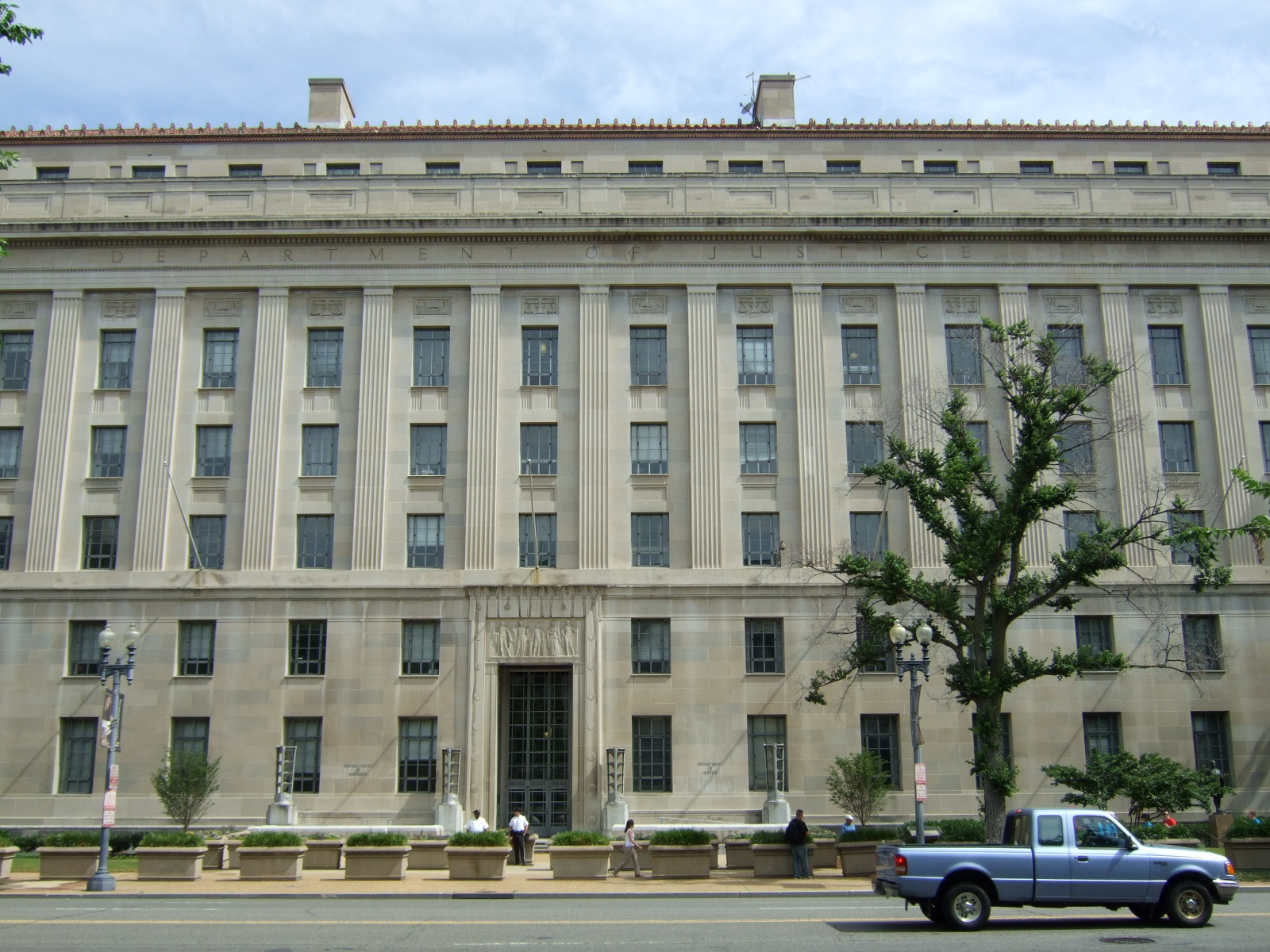
The Investigative Journal’s daily accountability brief tracking Department of Justice enforcement, U.S. Attorney prosecutions, and federal court activity. Today’s edition surveys the week through Monday, April 13, 2026.
Federal prosecutors closed the second week of April with a cluster of resolutions that cut across civil rights, healthcare subsidy fraud, defense contracting, public corruption, and immigration enforcement. The headline development was the Justice Department’s announcement that IBM would pay more than $17 million to settle False Claims Act allegations — the first resolution secured under Acting Attorney General Todd Blanche’s Civil Rights Fraud Initiative, according to the DOJ’s Office of Public Affairs. Below is a structured review of the week’s most consequential enforcement actions, with direct links to primary source materials and notes on the cases that warrant deeper investigation.
1. IBM Pays $17 Million in First Civil Rights Fraud Initiative Settlement
IBM Corp. has agreed to pay the United States $17,077,043 to resolve allegations that it violated the False Claims Act by failing to comply with anti-discrimination requirements attached to its federal contracts. According to the DOJ press release, the settlement is the first False Claims Act recovery secured under the Civil Rights Fraud Initiative that Acting Attorney General Todd Blanche launched in May 2025.
Records suggest the government alleged that IBM altered interview criteria based on race or sex, set demographic targets for business units, and used a “diversity modifier” to tie executive bonuses to demographic outcomes — practices the United States contends constituted unlawful discrimination under Title VII of the Civil Rights Act of 1964. The settlement agreement notes that IBM made early disclosures of facts gathered during its independent internal investigation, including information used to calculate damages and penalties. IBM denies wrongdoing; the agreement explicitly states that it is neither an admission of liability nor a concession by the United States that its claims lack merit.
The case significance is considerable. Filings indicate the Civil Rights Fraud Initiative intends to use the False Claims Act as a lever to police employment practices at federal contractors and grant recipients. Because the IBM resolution establishes a template — voluntary disclosure, cooperation credit, and a nine-figure-eligible damages model — corporate compliance officers should expect follow-on investigations across Fortune 500 contractors.
2. AP of South Florida Agrees to Plead Guilty in ACA Enrollment Fraud Scheme
AP of South Florida, LLC (APSF), a Florida-headquartered insurance brokerage, has agreed to plead guilty for its role in a scheme to defraud the Affordable Care Act marketplace, according to DOJ enforcement filings. Prosecutors allege that from February 2021 through September 2022, APSF knowingly submitted false or fraudulent applications for subsidized ACA plans for thousands of consumers in order to collect commissions and bonus payments from insurers.
Court records indicate APSF contracted with “street marketers” who targeted homeless shelters, bus stops, and drug-treatment clinics, offering cash and gift cards to individuals to enroll in subsidized plans or surrender personal information. Brokerage employees then allegedly submitted applications falsely representing that consumers would earn an income just above the federal poverty line — the threshold that triggers the highest available subsidy. A relator (whistleblower) associated with the case is set to receive $24.3 million as their share of the recovery.
The case significance: the ACA enrollment broker channel has become one of the highest-risk fraud vectors in federal healthcare. The recovery amount and whistleblower share suggest DOJ will continue to leverage the False Claims Act’s qui tam provisions against brokerages that appear to exploit the subsidy verification process.
3. Denaturalization: U.S. v. Pizzuti (S.D.N.Y.)
On April 10, 2026, the U.S. District Court for the Southern District of New York revoked the naturalized U.S. citizenship of Michael Pizzuti, according to DOJ announcements. Filings indicate the revocation proceeded under 8 U.S.C. § 1451(a), which permits the government to strip citizenship obtained by concealment of a material fact or willful misrepresentation.
Denaturalization filings are relatively rare — the Civil Division’s Office of Immigration Litigation has historically brought a modest number of such actions each year. A revocation secured in the Southern District of New York is significant because that district’s procedural rigor tends to produce opinions that become templates elsewhere. TIJ has flagged the underlying record for deeper review: the public docket should clarify whether the predicate conduct involved an undisclosed criminal history, fraud in the naturalization application, or affiliation with a proscribed organization.
4. Former Air Force Master Sergeant Pleads Guilty in Defense IT Contract Fraud
On April 8, 2026, a former active-duty Master Sergeant with the U.S. Air Force pleaded guilty to fraudulently inflating the cost of information technology contracts for the federal government, according to DOJ filings. Records suggest the defendant directed business to a contractor in exchange for kickbacks and caused the Air Force to pay above-market prices for IT goods and services.
The case fits a pattern the DOJ Criminal Division’s Fraud Section has prioritized: insider procurement fraud within the Department of Defense, particularly at installation-level IT and logistics contracts where individual contracting officers and technical representatives exercise considerable influence with limited oversight. The 2025 Fraud Section Year in Review flagged procurement integrity as a focus area; this week’s plea is consistent with that signal.
5. Public Corruption Roundup: USPS Bribery, Correctional Officer Smuggling, USDA Gratuity
Three public corruption matters resolved across the first ten days of April demonstrate the breadth of the FBI’s Public Corruption program. On April 7, 2026, four individuals were sentenced to a combined 99 months in federal prison for participating in a U.S. Postal Service bribery scheme, per DOJ announcements. Filings suggest postal employees and outside co-conspirators engaged in a pay-to-play arrangement involving routing and contracting decisions.
On April 6, 2026, a federal correctional officer was convicted of bribery, smuggling contraband, and conspiracy to distribute controlled substances. Bureau of Prisons integrity cases have accelerated over the past year as Inspector General referrals have increased. Separately, on April 3, 2026, a former U.S. Department of Agriculture official pleaded guilty to receiving an illegal gratuity in connection with official action — a reminder that 18 U.S.C. § 201(c) prosecutions remain viable even where the government cannot meet the higher “quid pro quo” standard required for bribery under § 201(b).
TIJ has flagged the USDA matter for follow-up: the agency’s grant and program decisions affect billions in producer payments, and gratuity prosecutions frequently precede broader probes of agency decision-making.
6. Former Tribal Police Officer Pleads Guilty to Obstruction
On April 10, 2026, a former officer with the Ohkay Owingeh Police Department pleaded guilty to obstruction of justice, according to DOJ records. Tribal law enforcement prosecutions fall within a specialized federal jurisdiction, and obstruction pleas in this context frequently involve interference with Major Crimes Act investigations. The docket warrants review to determine whether the obstruction concerned a pending violent-crime investigation on tribal land — a recurring area of concern highlighted by the DOJ Office of Tribal Justice.
7. Former NATO Official and Turkish Defense Contractor Indicted for Bribery
The Justice Department unsealed an indictment charging a former NATO official and a Turkish defense contractor with a bribery scheme related to military contracts, according to the Office of Public Affairs. Allegations in the indictment — which are not findings of guilt — describe an arrangement in which the official allegedly received payments in exchange for steering procurement decisions toward the contractor.
Case significance: this is a transatlantic prosecution implicating both Foreign Corrupt Practices Act considerations and allied-force procurement integrity. The defendants are presumed innocent, and the case remains pending. TIJ will monitor the docket for downstream civil forfeiture actions and any cooperating-witness disclosures that could identify additional procurement decisions under review.
8. Former DOJ Contractor Charged With Mail Fraud in $1.3 Million Cell Phone Theft
The U.S. Attorney’s Office for the District of Columbia charged a former DOJ contractor with mail fraud in connection with the alleged theft of cell phones valued at approximately $1.3 million from department inventory. The case illustrates the Department’s willingness to pursue insider theft of government property under federal mail and wire fraud statutes rather than relying exclusively on theft-of-government-property charges under 18 U.S.C. § 641. The defendant is presumed innocent unless and until convicted in a court of law.
Cases Warranting Deeper TIJ Investigation
Three threads from this week’s enforcement docket merit extended accountability reporting. First, the IBM settlement’s Civil Rights Fraud Initiative playbook raises questions about which federal contractors will face follow-on investigations and whether publicly traded companies will be required to disclose investigation status under Item 103 of Regulation S-K. Second, the APSF ACA fraud resolution points to a larger broker-channel vulnerability — data shows enrollment commissions can exceed $1,000 per policy, creating structural incentives that compliance programs have struggled to police. Third, the USDA illegal-gratuity plea, though modest in dollar value, often precedes broader program-integrity investigations of commodity support payments and disaster relief.
Right of Reply
The Investigative Journal extends a standing right of reply to any party named in this digest. Statements received will be appended to the online edition. Pending cases are described on the basis of indictments and charging documents; the defendants are presumed innocent unless and until proven guilty beyond a reasonable doubt.
Sources: U.S. Department of Justice Office of Public Affairs press releases; U.S. Attorney’s Office press releases (D.D.C.); FBI Public Corruption program disclosures; court filings referenced in each case above; DOJ Criminal Division Fraud Section 2025 Year in Review.