

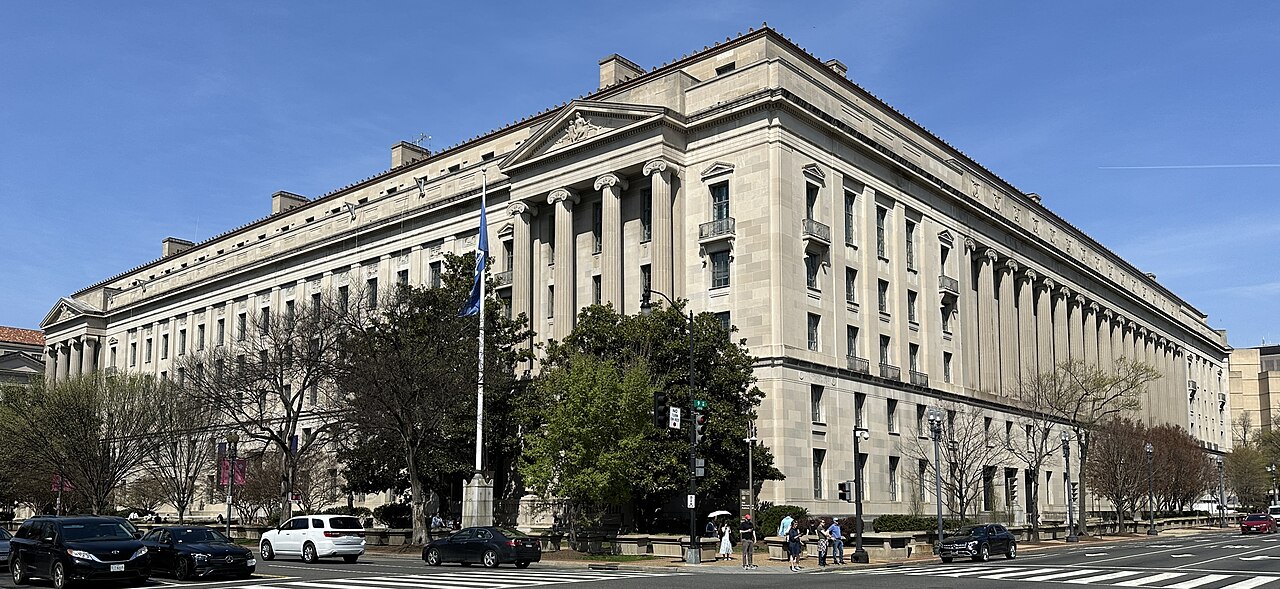
A daily accounting of federal enforcement activity from across the Justice Department, US Attorney offices, and the FBI. All figures and allegations below are drawn from public filings and Justice Department press releases; unresolved matters are flagged as pending.
Aetna to pay $117.7 million in Medicare Advantage coding case
Aetna Inc. has agreed to pay $117.7 million to resolve False Claims Act allegations that it submitted — or failed to withdraw — inaccurate diagnosis codes that inflated risk-adjustment payments from the Centers for Medicare & Medicaid Services, the Justice Department announced. The agreement was unsealed by the US Attorney’s Office for the Eastern District of Pennsylvania and publicized by Main Justice in early April.
Filings indicate that from 2015 onward, Aetna operated a chart-review program in which coders combed medical records for additional diagnoses that could be submitted to CMS for higher payments, while allegedly ignoring results that showed the insurer had been overpaid. A second tranche of allegations, covering payment years 2018 through 2023, claims Aetna submitted or failed to delete morbid-obesity diagnosis codes for enrollees whose recorded body-mass index was inconsistent with that diagnosis. Approximately $106.2 million of the settlement addresses the broader inaccurate-coding allegations, and roughly $11.5 million resolves the obesity-coding claims.
The case originated as a qui tam complaint filed in January 2024 by Mary Melette Thomas, a former Aetna risk-adjustment coding auditor, who will receive about $2 million as her relator share. Aetna did not admit liability; a company spokesperson said the insurer “continues to disagree” with the government’s industry-wide theory. Records suggest the settlement continues a pattern of Medicare Advantage upcoding enforcement that produced more than $6.8 billion in False Claims Act recoveries in fiscal 2025.
ADT settles SCRA charges for $1.3 million
ADT LLC, operating as ADT Security Services, will pay more than $1.3 million to resolve allegations that it violated the Servicemembers Civil Relief Act by imposing unlawful charges on at least 3,400 servicemembers who terminated home-security contracts after receiving military relocation orders, the Justice Department announced on April 14. The case was handled by the US Attorney’s Office for the Southern District of Florida together with the Civil Rights Division’s Housing and Civil Enforcement Section.
According to the settlement papers, ADT imposed a 30-day notice requirement on servicemembers seeking to end contracts under SCRA’s lease-termination protections, which the department argues override private-contract terms for qualifying relocation orders. Under the agreement, ADT will pay up to $1,260,000 in restitution to affected servicemembers and a $79,380 civil penalty — the statutory maximum for a first SCRA violation — and will implement compliance and training changes.
The ADT accord arrives two weeks after a related SCRA settlement in which Georgia professional licensing boards agreed to pay $3 million to resolve allegations they denied or delayed licensure for servicemembers and military spouses. Together, the two agreements indicate the Civil Rights Division is continuing an active SCRA docket even as other enforcement priorities shift under the new administration.
Former Army employee charged with leaking classified defense information
Courtney Williams, 40, of Wagram, North Carolina, a former Army civilian employee who held a Top Secret clearance, was arrested and indicted by a federal grand jury in connection with the alleged transmission of classified national-defense information to individuals not authorized to receive it, including a journalist, according to a Justice Department announcement dated April 9. The matter is being prosecuted by the National Security Division alongside the US Attorney’s Office for the Eastern District of North Carolina.
Court filings indicate Williams is charged under 18 U.S.C. § 793 with unauthorized retention and transmission of national-defense information. The indictment is an allegation; Williams is presumed innocent unless proved guilty, and the case remains pending. Records suggest the prosecution is one of several leak-related cases the National Security Division has advanced in recent months and is likely to draw First Amendment scrutiny given that one recipient was reportedly a journalist.
Tennessee woman pleads guilty to arson, material support for foreign terrorist organization
Regan Darby Prater, 28, of Tullahoma, Tennessee, entered a guilty plea on April 13 to charges of arson and attempting to provide material support to a foreign terrorist organization, according to the Justice Department. Filings indicate Prater admitted to an arson offense and to conduct the government alleges was intended to support a designated foreign terrorist group; sentencing has not yet been set. The plea reflects continuing domestic-terrorism prosecutions that bridge the National Security Division and the FBI’s Joint Terrorism Task Forces. The case warrants deeper coverage as the underlying facts — including the target of the arson and the specific FTO — become public at sentencing.
Bangladeshi national extradited from Brazil on alien-smuggling charges
Saiful Islam, 39, a Bangladeshi national, was extradited from Brazil on April 13 to face charges in the Southern District of Texas arising from an alleged alien-smuggling operation, the Justice Department announced. According to the indictment, Islam is alleged to have participated in a transnational network that moved migrants from South Asia through Latin America and into the United States. The extradition indicates continuing coordination with Brazilian authorities and is a data point for TIJ’s ongoing coverage of migration-linked criminal networks. The charges are allegations; the case remains pending.
Florida nursing assistant sentenced to nine years in $11.4 million Medicare fraud scheme
A Florida nursing assistant was sentenced on April 14 to nine years in federal prison for her role in an $11.4 million healthcare-fraud scheme that targeted Medicare beneficiaries, according to the Criminal Division’s Fraud Section. Records indicate the defendant participated in billing Medicare for services that were either never rendered or were medically unnecessary, and that proceeds were laundered through affiliated durable-medical-equipment and home-health entities. The sentencing follows a broader enforcement posture toward Medicare fraud announced in the Fraud Section’s 2025 Year in Review, which highlighted DME and home-health as continuing high-risk categories.
Three charged with diverting US artificial-intelligence technology to China
The Justice Department announced charges against three individuals accused of conspiring to unlawfully divert cutting-edge US artificial-intelligence technology to the People’s Republic of China, according to a press release from the Office of Public Affairs. The indictment, filed in federal district court, alleges the defendants attempted to circumvent US export controls governing advanced semiconductors and AI-related equipment. Case documents describe a scheme that used intermediaries and misrepresentations on export paperwork to route restricted items to end users in China.
The prosecution is being handled jointly by the National Security Division’s Counterintelligence and Export Control Section and a US Attorney’s Office, reflecting the Disruptive Technology Strike Force posture that has produced a steady stream of AI- and chip-related export cases. The charges are allegations and the case is pending; defendants are presumed innocent. For TIJ readers tracking the US–China technology decoupling, the indictment is another data point that federal prosecutors are increasingly treating diverted AI hardware as a national-security offense, not a regulatory one.
DOJ stands up National Fraud Enforcement Division
Framing this week’s filings is the formal April 7 rollout of the National Fraud Enforcement Division, a new Main Justice component announced by Acting Attorney General Todd Blanche. The division is led by Assistant Attorney General Colin McDonald, a career federal prosecutor with a background in narcotics, immigration, fraud, and public-corruption cases. Blanche’s memorandum instructs each US Attorney’s Office to designate, within 21 days, an experienced prosecutor to be detailed to the new division to carry out its mission in the district.
Public filings and departmental statements indicate the division will prioritize schemes that target federal programs — Medicare, Medicaid, disaster relief, and pandemic-era programs — and will coordinate with the False Claims Act litigators who already handle civil healthcare-fraud matters. Outside counsel commentary from firms including Sidley Austin, Ropes & Gray, and Latham & Watkins suggests the structure will shorten the distance between civil and criminal fraud referrals and increase the tempo of parallel proceedings. TIJ will continue to track indictments and declinations coming out of the new component.
What warrants deeper TIJ investigation
Three threads from today’s docket merit follow-up reporting. First, the Aetna settlement closes one chapter but opens another: the government’s theory that Medicare Advantage chart-review programs generate False Claims Act liability when insurers decline to delete unsupported codes is now a template that can be — and likely will be — applied to other national carriers. Second, the Williams leak case is likely to surface novel First Amendment questions given the involvement of a journalist recipient and deserves close docket monitoring. Third, the Prater plea and the AI-diversion indictment both illustrate how National Security Division prosecutions are increasingly converging on domestic actors, a shift that merits a longer-form piece.
All claims above are sourced to Justice Department press releases, court filings, and outside legal-sector analyses; charged defendants are presumed innocent unless convicted, and civil settlements do not constitute admissions of liability.
Sources
- DOJ Office of Public Affairs — Aetna agrees to pay $117.7 million
- US Attorney EDPA — Aetna False Claims Act settlement
- DOJ Office of Public Affairs — ADT to pay $1.3M to servicemembers
- US Attorney SDFL — ADT SCRA settlement
- DOJ — $3M Georgia professional licensing boards SCRA settlement
- DOJ — Former Army employee charged with leaking classified NDI
- DOJ — Three charged with diverting AI technology to China
- DOJ Criminal Division — Fraud Section 2025 Year in Review
- DOJ Press Releases index
- Ropes & Gray — DOJ establishes National Fraud Enforcement Division
- Sidley Austin — White House and DOJ anti-fraud initiatives