

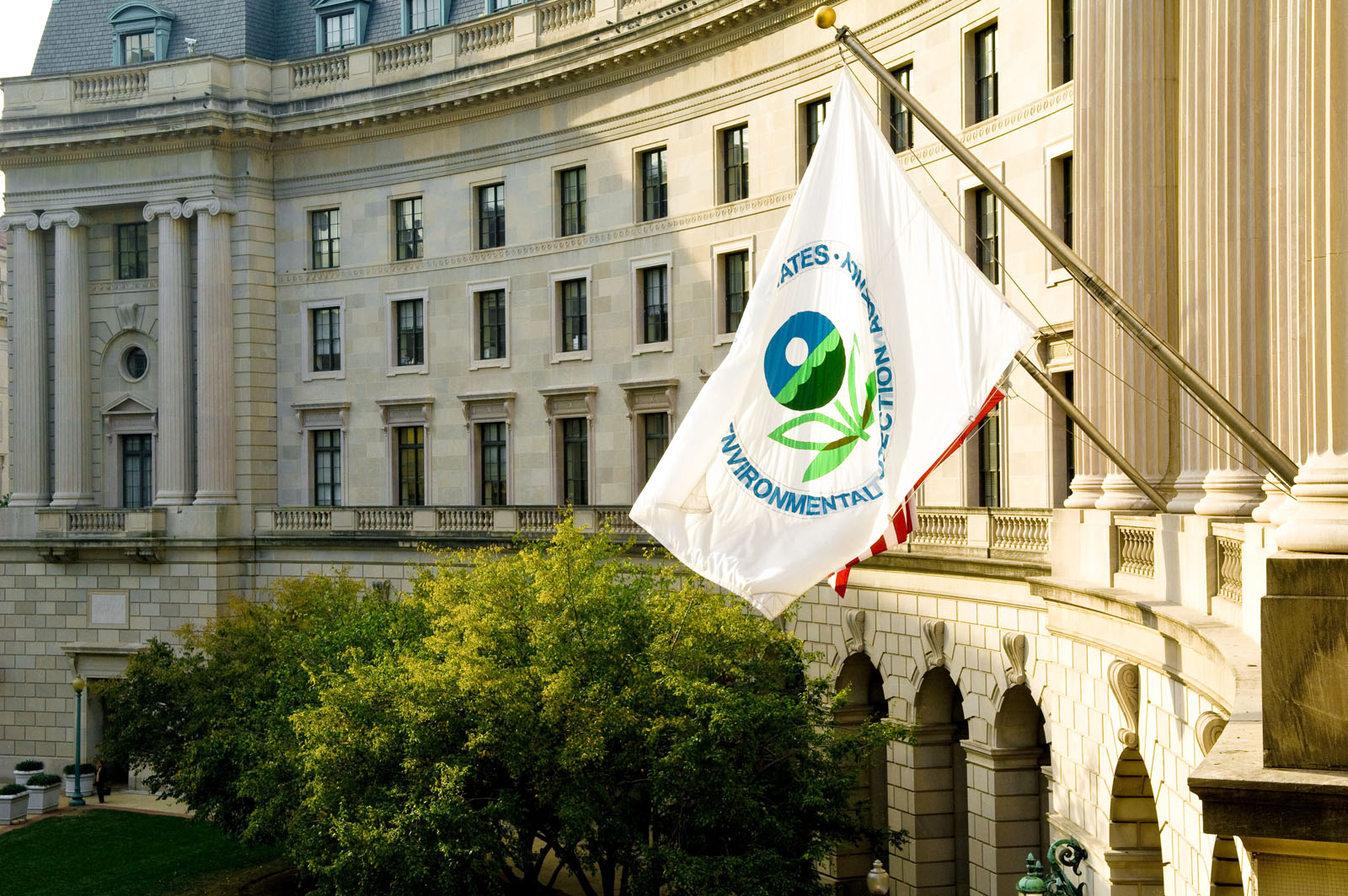
The Investigative Journal’s weekly review of federal and state environmental enforcement, compiled from the EPA’s ECHO enforcement database, EPA news releases, Department of Justice filings, Federal Register notices, and state agency records. Every claim below is drawn from the public record linked in each item. This digest is compiled from public documents; parties named are invited to submit responses to the editor.
Water cases dominated the federal environmental enforcement docket over the past two weeks. The Justice Department lodged consent decrees resolving Clean Water Act claims against a repeat offender in New Hampshire and Safe Drinking Water Act claims against one of New Jersey’s largest water utilities, while a Superfund cost-recovery settlement filed in Oklahoma — and noticed for public comment this week — resolves fraudulent-transfer claims for a fraction of what taxpayers likely spent. On the criminal side, DOJ’s environmental crimes docket continued its focus on falsified compliance data. Here is what the records show.
1. Superfund settlement of the week: $20,000 to close fraudulent-transfer claims at Oklahoma asbestos site
On August 19, DOJ lodged a proposed partial consent decree in the Northern District of Oklahoma in United States v. Real Estate Remediation, LLC; George Blakeney; GB Services, LLC; and G&H Ventures, LLC (No. 4:25-cv-00289), with the Federal Register notice published August 24 — opening a 30-day public comment period that runs through late September. The settlement would resolve claims the United States brought on behalf of EPA against Real Estate Remediation, LLC under Section 107(a) of CERCLA for past response costs at the Goodrich Asbestos Superfund Site in Miami, Oklahoma, along with claims against George Blakeney and GB Services, LLC under the Federal Debt Collection Procedures Act for what the government’s complaint describes as fraudulent transfers each received from the company.
The settling defendants agree to pay a total of $20,000 to EPA, which may be deposited in the Hazardous Substance Superfund. The notice states plainly that the figure “is based on an analysis of the Settling Defendants’ limited ability to pay.” A consent decree is a settlement, not a finding of liability, and the filing indicates the decree is partial — it does not resolve claims against co-defendant G&H Ventures, LLC. The gap between federal response costs at an asbestos site and a $20,000 ability-to-pay recovery is the kind of arithmetic that warrants closer review; the proposed decree is available on DOJ’s proposed consent decrees page during the comment period.
2. New Hampshire mustard maker settles Clean Water Act case after two decades of enforcement history
On August 13, EPA and DOJ announced a settlement with Old Dutch Mustard Co., Inc., a mustard and vinegar manufacturer in Greenville, New Hampshire, resolving alleged Clean Water Act violations tied to acidic discharges into a tributary of the Souhegan River. The proposed consent decree, lodged in the District of New Hampshire and noticed in the Federal Register on August 18, requires a $50,000 civil penalty — again expressly calibrated to the company’s limited financial ability to pay — plus a comprehensive compliance program: third-party engineering and environmental site investigations, monitoring for water quality and acetic acid discharge, elimination of non-stormwater discharges, and an updated stormwater pollution prevention plan.
According to EPA’s release, the complaint alleges the company’s own monitoring showed high acidity on at least 1,728 days beginning in November 2019, indicating unauthorized wastewater discharges. (The release states the monitoring window as “November 2019 and December 2026” — an end date that had not yet occurred when the release issued, an apparent error TIJ has flagged for verification against the complaint itself.) The enforcement history here is unusually deep: EPA notes the company and its president pleaded guilty to separate criminal Clean Water Act violations in February 2025; in April 2026, records indicate, the president was sentenced to 18 months in federal prison and a $250,000 fine, while the company received five years’ probation and a $1.5 million fine. U.S. Attorney Erin Creegan said government efforts to secure cooperation “were met with schemes and deception.” The civil decree is subject to a 30-day comment period.
3. Passaic Valley Water Commission to pay $132,500 over uncovered drinking water reservoirs
On August 12, DOJ lodged a consent decree in the District of New Jersey in United States, et al. v. Passaic Valley Water Commission (No. 2:26-cv-10199), noticed August 14. The government alleges violations of the Long Term 2 Enhanced Surface Water Treatment Rule under the Safe Drinking Water Act — specifically, the utility’s obligation to cover its Great Notch, Levine, and New Street reservoirs, or to treat water discharged from them before human consumption.
The proposed decree requires a $132,500 civil penalty, a schedule of feasibility studies and compliance projects, and interim measures to protect public health until full compliance is achieved. The LT2 rule dates to 2006, which raises a question the filings do not answer: how long these finished-water reservoirs served customers out of compliance, and on what timetable regulators pressed the issue. Drinking water compliance is one of EPA’s stated National Enforcement and Compliance Initiatives, and this decree suggests the initiative has teeth for public utilities, not just private operators.
4. Criminal docket: falsified air reports in Kentucky, sewer-tampering sentencings in Nashville
On August 18, DOJ announced that Nicholas Upchurch, owner of Rebel Smoke, a charcoal producer in Burkesville, Kentucky, pleaded guilty to fabricating air-emissions data submitted to the Commonwealth of Kentucky under the company’s Clean Air Act permit. According to court documents cited by DOJ, facility emissions were supposed to be routed through pollution controls; Upchurch admitted falsifying compliance data. The falsification count carries a maximum of two years in prison and a $250,000 fine. Sentencing has not been scheduled, and the plea agreement remains subject to acceptance by the court.
Meanwhile, the sentencing phase arrived in the Nashville pretreatment case. Per a May DOJ release, David Ray Stark and Caleb Warren Randall, former managers at Allwaste Onsite LLC (d/b/a Onsite Environmental), admitted to conspiring to bypass waste pretreatment and discharge untreated industrial waste and landfill leachate into Nashville’s sewer system — and to directing employees to tamper with the city’s sampling device by placing its intake hose in a bucket of cleaner water. Randall’s sentencing was set for August 4 and Stark’s for August 19; as of publication, DOJ had not announced outcomes, and TIJ will report the sentences when docketed. Each faces up to five years and $250,000. The company itself was previously sentenced to a $512,000 fine, and city records cited by DOJ show Nashville recouped over $80,000 in sewer repair costs plus $299,576 in unpaid surcharges.
5. Lead-paint disclosure penalty in Connecticut: $359,069
EPA’s New England office announced August 10 a settlement with Konover Residential Corporation resolving alleged violations of the Toxic Substances Control Act and the Residential Lead-Based Paint Hazard Reduction Act at the Cargill Falls Mill property in Putnam, Connecticut. Filings indicate the company failed to provide required lead-based paint disclosures to tenants of 11 apartment units at the converted mill. Konover agreed to pay $359,069 and certify compliance with federal disclosure rules going forward. Lead disclosure penalties of this size against a single residential landlord are comparatively rare, and worth noting for property managers of pre-1978 housing stock.
6. State enforcement of note: federal court approves New Jersey’s $2.5 billion PFAS settlements
The largest environmental money of the month moved at the state level. On August 7, Chief Judge Renee Marie Bumb of the U.S. District Court for the District of New Jersey approved settlements resolving the state’s PFAS contamination claims against DuPont-related entities and 3M, valued at approximately $2.5 billion according to the New Jersey Attorney General. The joint NJDEP release describes the DuPont settlement — over $2 billion — as the largest environmental settlement ever achieved by a single state, with payments spread over roughly 25 years and directed toward drinking water remediation and natural resource restoration at four industrial sites including Chambers Works and Pompton Lakes Works.
The approval lands two months after EPA’s own June consent decree with Chemours — announced by the agency as securing over $450 million in penalties and relief for PFAS pollution across three states, and described by EPA as the first comprehensive federal settlement with a major PFAS manufacturer. Together, the two outcomes mark a shift from litigation posture to negotiated multi-decade payout structures across the PFAS defense bar — structures whose real value depends on corporate solvency decades out, a point TIJ intends to examine.
7. Defeat-device enforcement grinds on
EPA’s ledger of 2026 Clean Air Act vehicle and engine case resolutions, updated August 18, now lists 14 resolutions this year, the newest a stipulated settlement with Margin Racing Inc. The roster — small tuners, parts importers, and trading companies from Washington State to New York — shows the aftermarket defeat-device initiative proceeding mostly through expedited administrative settlements rather than headline consent decrees, a volume-over-value approach consistent with the agency’s mobile-source strategy since the Hino Motors and Turn 14 cases.
Patterns worth noting
Three threads run through this cycle. First, water is carrying the docket: of the federal actions above, four arise under the Clean Water Act or Safe Drinking Water Act, consistent with the drinking-water and border-security initiatives EPA has emphasized in its current enforcement priorities. Second, ability-to-pay settlements are conspicuous: both the Goodrich ($20,000) and Old Dutch Mustard ($50,000) decrees expressly peg penalties to defendants’ limited finances, meaning headline numbers understate the compliance obligations attached. Third, data integrity remains the through-line of criminal enforcement — falsified air reports in Kentucky, a rigged sampling device in Nashville, and the “schemes and deception” federal prosecutors described in the New Hampshire case. Regulators can forgive exceedances; they prosecute concealment.
What TIJ is watching
Several items from this digest warrant deeper investigation. The Goodrich Asbestos settlement raises the question of what the government actually spent at the Miami, Oklahoma site versus the $20,000 recovered, and what became of the assets the complaint says were fraudulently transferred — the non-settling co-defendant leaves that case alive. The Old Dutch Mustard record — two decades of state and federal enforcement, a criminal conviction, and continuing alleged violations — is a case study in how long a small facility can remain out of compliance, and the apparent date error in EPA’s own release merits a documents request. The Passaic Valley decree invites a timeline of how long uncovered finished-water reservoirs served North Jersey customers after the 2006 LT2 rule. And New Jersey’s 25-year PFAS payment schedules deserve scrutiny for what happens if corporate structures change midstream. Readers can explore the underlying compliance records for any facility named above in EPA’s ECHO database.
Sources: EPA ECHO database; EPA news release, Old Dutch Mustard settlement (Aug. 13, 2026); 91 FR 53426 (Aug. 18, 2026); 91 FR 54766 (Aug. 24, 2026); 91 FR 52731 (Aug. 14, 2026); DOJ release (Aug. 18, 2026); DOJ release (May 19, 2026); EPA Region 1 release (Aug. 10, 2026); N.J. Attorney General release (Aug. 2026); DOJ proposed consent decrees.
Consent decrees and settlement agreements referenced above resolve alleged violations and are not admissions or judicial findings of liability except where a guilty plea or sentencing is expressly noted. Proposed decrees remain subject to public comment and court approval.