

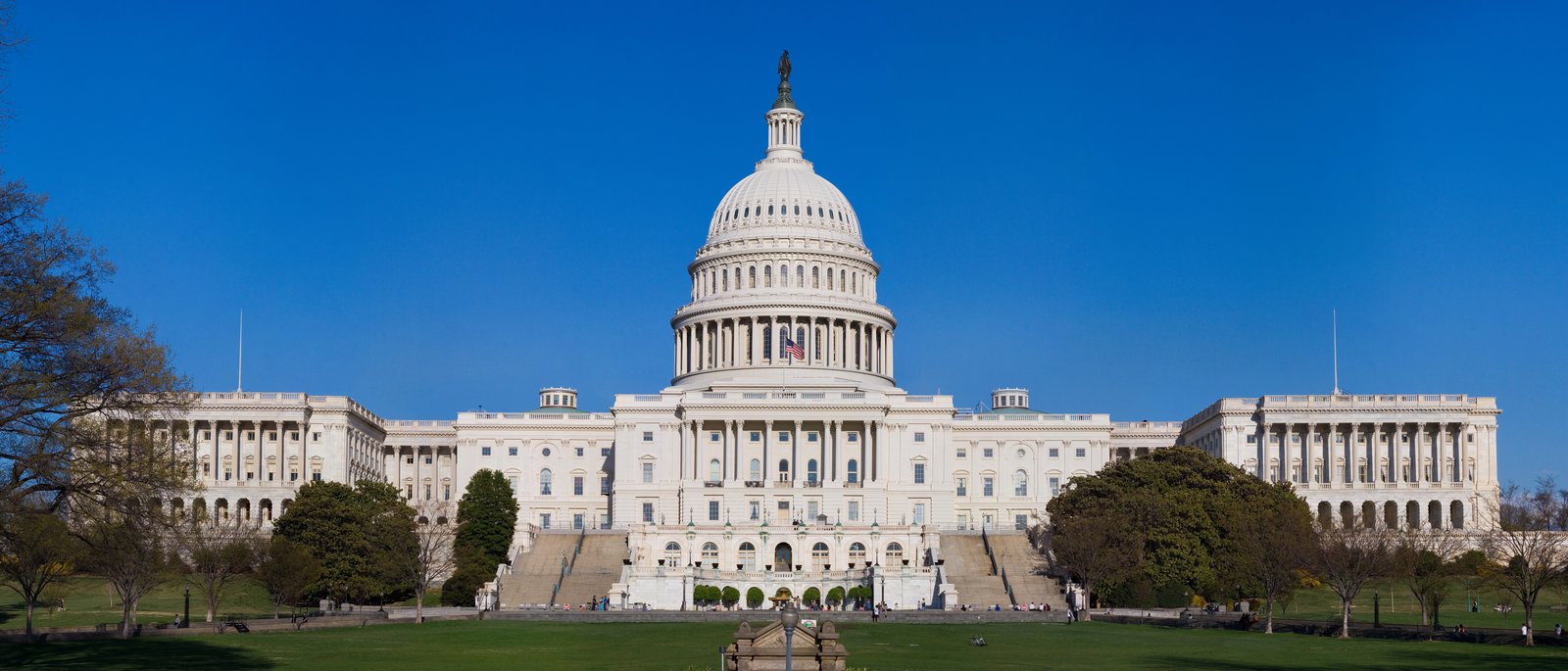
The Investigative Journal’s daily scan of the Federal Register, surfacing the rules, proposed rules, and agency notices that move money, shift compliance burdens, or test the boundaries of administrative authority. The April 27, 2026 edition runs to 64 published documents; what follows are the eight items that warrant a second read.
OCC moves to scrap CLO carve-out and strip “minority and women-owned” references in DOGE-driven rewrite
The Office of the Comptroller of the Currency, an arm of the Treasury Department, published a notice of proposed rulemaking that would rescind or amend three sets of bank regulations the agency now describes as “unnecessary, based on anything other than the best reading of the underlying statutory authority, or lacking clear statutory authority.” The rule is one of the more consequential financial-regulation actions the OCC has taken under the Executive Order titled “Ensuring Lawful Governance and Implementing the President’s ‘Department of Government Efficiency’ Deregulatory Initiative,” and it touches three discrete areas of national-bank and federal-savings-association practice.
The first change would strip out specific references to minority- and women-owned entities from the public welfare investment rules; the second would remove the alternative compliance pathway for lead arrangers of open-market collateralized loan obligations under credit risk retention rules originally written to implement Dodd-Frank; the third would eliminate non-discrimination requirements for federal savings associations that the OCC characterizes as duplicative of other federal civil-rights statutes. Records suggest the CLO carve-out has been a long-running point of contention between bank trade groups and consumer advocates since the 2014 risk-retention rule was finalized.
The proposed rule is open for public comment, and stakeholders in the structured-credit market — particularly CLO arrangers, asset managers, and pension-fund investors who rely on the open-market exception — will have a narrow window to weigh in. TIJ will track the comment docket and the response from minority depository institutions and community-development financial institutions whose statutory framework intersects with the public-welfare investment provisions.
DOT reinstates Trump-era rulemaking, guidance, and enforcement procedures
In a sweeping final rule covering the entire Department of Transportation — including the Pipeline and Hazardous Materials Safety Administration, the Federal Motor Carrier Safety Administration, NHTSA, and the Federal Transit Administration — DOT has reinstated and expanded procedural reforms that govern how the department writes regulations, issues guidance, and brings enforcement actions. The rule reverses a 2021 rescission and revives constraints on the use of guidance documents as de facto rules.
The substantive changes filings indicate include heightened internal review of guidance, a presumption that guidance is non-binding, and additional procedural steps before the department initiates enforcement actions in federal court. Industry groups in trucking, rail, and aviation have for years argued that DOT sub-agencies use guidance and informal interpretive letters to expand the reach of underlying statutes; the reinstated procedures aim to limit that practice.
For the regulated public, the practical effect is a slower but more predictable enforcement environment. For accountability journalists, the rule is worth watching because it reshapes how DOT documents the basis for civil penalties — including penalties imposed on hazardous-materials shippers and motor carriers — and may surface internal deliberations that previously went unrecorded.
Fish and Wildlife Service designates 3,814 river miles of critical habitat across 17 states
The U.S. Fish and Wildlife Service finalized a critical-habitat designation under the Endangered Species Act for four freshwater mussel species: the rayed bean, sheepnose, snuffbox, and spectaclecase. In total, approximately 3,814 unique river miles across 76 units in Alabama, Arkansas, Illinois, Indiana, Iowa, Kentucky, Michigan, Minnesota, Mississippi, Missouri, New York, Ohio, Pennsylvania, Tennessee, Virginia, West Virginia, and Wisconsin will be subject to the ESA’s section 7 consultation requirements when federal agencies authorize, fund, or carry out actions that may affect those waters.
The designation is one of the largest freshwater critical-habitat actions in recent years and will have downstream effects on Army Corps permitting, FERC hydropower licensing, and federal highway and pipeline projects that cross the affected reaches. Proponents argue the four mussel species are sentinel indicators of water quality; opponents — primarily agricultural and energy trade associations — have historically argued that critical-habitat designations functionally restrict private land use even when no federal nexus exists.
The Service’s economic analysis, attached to the rule, will be the first place to look for the agency’s own estimate of consultation costs and project delay. Records of past mussel listings suggest that in-stream construction, dredging, and discharge permits typically require modified work windows and additional mitigation when overlapping designated critical habitat.
FAA proposes airworthiness directive on Boeing 737 fuselage skin cracks
The Federal Aviation Administration proposed a new airworthiness directive applicable to all Boeing Model 737-600, -700, -700C, -800, -900, and -900ER series airplanes — the entire Next Generation 737 family. The proposed AD was prompted by reports of fuselage skin cracks found near the aft drain mast and would require inspection of the aft drain mast area and surrounding fuselage skin, repetitive inspections of the fuselage structure common to the aft drain mast, and on-condition corrective actions.
The 737 NG fleet remains the workhorse of U.S. domestic carriers. Filings indicate the directive, if adopted, will impose recurring inspection burdens on operators including Southwest, Delta, Alaska, and United, with associated maintenance downtime. Comments are open during the public comment period set forth in the proposed AD, and operators with detailed in-service data on similar crack findings typically file substantive comments that influence the final inspection thresholds.
NRC opens scoping for Duke Energy early-site permit at Belews Creek, North Carolina
The Nuclear Regulatory Commission announced its intent to prepare an environmental impact statement to evaluate Duke Energy Carolinas’ application for an Early Site Permit at the Belews Creek site in Stokes and Forsyth Counties, North Carolina. The NRC opened a 30-day public scoping period to gather input on the scope of the EIS, with the U.S. Army Corps of Engineers serving as a cooperating agency.
An ESP is the regulatory precursor to a combined construction and operating license. Duke’s application signals continued utility interest in siting new nuclear capacity at existing thermal-generation sites, where transmission and water infrastructure are already established. The Belews Creek site currently hosts a coal-fired plant; reusing the site for nuclear generation would fit the broader pattern of “coal-to-nuclear” repowering studies that the Department of Energy has funded over the past several years.
Treasury OFAC adds new names to Specially Designated Nationals list
The Treasury Department’s Office of Foreign Assets Control published a notice placing one or more persons on the Specially Designated Nationals and Blocked Persons List. All property and interests in property of the designated persons subject to U.S. jurisdiction are blocked, and U.S. persons are generally prohibited from engaging in transactions with them. The Federal Register notice does not, by itself, identify the targets; the operative identifying information appears on OFAC’s online SDN list.
SDN designations are a routine instrument of U.S. economic statecraft, but each designation carries immediate compliance consequences for U.S. financial institutions, exporters, and any company that screens counterparties against the SDN list. TIJ will check the underlying OFAC press release to identify the specific designations and the legal authorities cited (the relevant executive order series typically signals whether the action targets narcotics trafficking, terrorism, sanctions evasion, or human-rights abuses).
Commerce locks in antidumping coverage on Chinese chassis components
The Commerce Department’s International Trade Administration issued a final determination in a covered-merchandise inquiry on certain chassis and subassemblies from the People’s Republic of China. The determination, prompted by a referral from U.S. Customs and Border Protection, finds that the merchandise at issue is covered by the existing antidumping and countervailing duty orders on Chinese chassis. The orders, originally imposed after a 2021 ITC injury determination, were a high-profile early action against Chinese intermodal-transport equipment.
For TIJ readers tracking Chinese-affiliated logistics and last-mile-delivery companies operating in North America, this determination is a useful data point: it confirms continued enforcement attention on chassis provenance and the cross-border supply chain that supports container drayage. Importers and brokers that rely on covered merchandise will face retroactive duty exposure and should expect heightened CBP scrutiny on entries dating to the inquiry’s effective period.
State Department codifies Security Review Committee charter
The State Department issued a final rule defining the membership and operating procedures of the department’s Security Review Committee, the internal panel that reviews serious security incidents involving U.S. diplomatic personnel and facilities. The rule formalizes membership composition and procedural requirements that until now had been governed largely by internal departmental directives.
The SRC has been the locus of post-incident accountability for events ranging from the 2012 Benghazi attack to more recent compound and convoy incidents abroad. Codifying the committee’s charter in the Code of Federal Regulations gives outside parties — including congressional oversight committees and FOIA requesters — a clearer baseline against which to assess the department’s compliance with its own review obligations. TIJ’s accountability beat will track whether the codified procedures meaningfully change the public availability of SRC findings, which have historically been treated as Sensitive But Unclassified.
What this means for TIJ’s investigative beats
Three threads from today’s Federal Register cut directly across TIJ’s standing investigative interests. The OCC deregulatory rulemaking is the latest concrete instance of the Department of Government Efficiency executive order being operationalized by a financial regulator; the comment docket will surface industry priorities and the trade groups driving them. The Commerce chassis determination ties to TIJ’s continuing reporting on Chinese-affiliated last-mile delivery and intermodal logistics in North America. And the OFAC SDN designation is a pointer to whichever foreign-policy theater Treasury chose to act on this morning — worth a follow-up once the underlying press release is parsed.
Federal Register Watch is published every business day. All documents cited here are public records, accessible through the Office of the Federal Register’s online repository. Comment-period deadlines for proposed rules are calculated from the date of Federal Register publication; readers intending to file should confirm the deadlines directly on the underlying documents.