

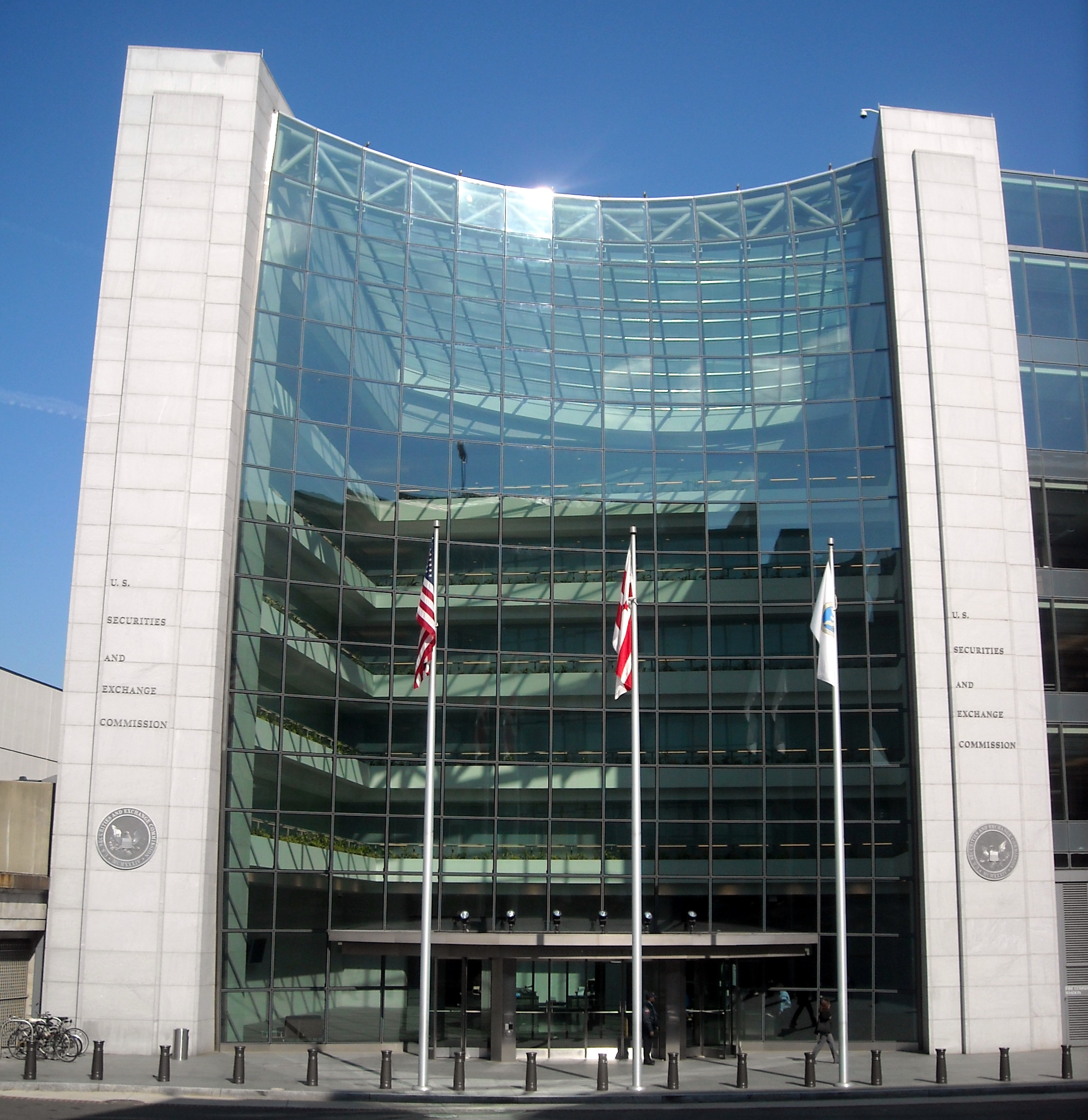
Filings dated April 14, 2026, drawn from SEC EDGAR, company press releases, and SEC newsroom publications. All figures as disclosed in filings; pending matters are flagged as allegations.
Debt Reshuffle at NRG Energy Headlines Tuesday’s Tape
The most consequential corporate filing of the day came from NRG Energy Inc. (NYSE: NRG), which disclosed via Form 8-K the pricing of a $2.6 billion three-tranche notes offering alongside a $1.5 billion tender offer by its Lightning Power subsidiary. According to the company’s filings, the package includes $500 million of 4.955% senior secured first-lien notes due 2031, $1.05 billion of 5.875% senior unsecured notes due 2034, and $1.05 billion of 6.125% senior unsecured notes due 2036. Proceeds, combined with $900 million from a new term loan B, are earmarked to pay down NRG’s revolving credit facility and to finance the buyback of Lightning Power’s outstanding 7.250% senior secured notes due 2032.
The tender offer, disclosed concurrently, offers $1,063.75 per $1,000 principal amount — inclusive of a $50 early tender premium — for notes tendered by April 27, 2026, with the offer expiring May 12. For NRG, the transaction represents a meaningful duration extension and a coupon arbitrage that swaps out high-coupon secured paper for a combination of lower-cost secured and longer-dated unsecured debt. The structure filings indicate confidence in the company’s credit profile following its Vistra-era repositioning and its expanding data-center power-supply book.
For investors, the filing bears watching on two fronts: the incremental leverage created by the term loan layer and the refinancing risk embedded in the 2034 and 2036 maturities, each of which will reprice against Federal Reserve policy well into the next decade.
Galera–Obsidian Reverse Merger: A $350 Million Biotech Reset
Galera Therapeutics (Nasdaq: GRTX) filed both a Form 8-K and a Form 425 on April 14 disclosing a definitive all-stock merger agreement with privately held Obsidian Therapeutics, paired with a concurrent $350 million private investment in public equity (PIPE). The combined company will retain Obsidian’s name and trade under the ticker OBX.
The ownership split disclosed in the filings tells the story: pre-closing Galera stockholders excluded from the PIPE will retain roughly 1.8% of the combined entity, while pre-closing Obsidian holders will hold approximately 53.2% and PIPE investors will own the remaining 45.0%. Named PIPE participants include Balyasny Asset Management, Caligan Partners, Eventide Asset Management, Nantahala Capital, Octagon Capital, Redmile, Spruce Street Capital, and Trails Edge Capital Partners. The combined company expects the closing cash balance to fund operations into the second half of 2028.
Reverse-merger structures remain a dominant route for private biotech companies to reach public markets when the traditional IPO window is closed. The 1.8% residual stake for legacy Galera shareholders is characteristic of a clinical-stage shell transaction; filings indicate Phase 1 non-small-cell lung cancer data is expected in the first half of 2027, with melanoma registration-enabling data by year-end 2027. The transaction is subject to shareholder approvals on both sides and is targeted to close in Q3 2026. Direct filing: Galera EDGAR page.
F.N.B. Corporation Authorizes $250 Million Buyback, Lifts Dividend
Pittsburgh-based regional bank F.N.B. Corporation (NYSE: FNB) disclosed in a Form 8-K that its board approved an 8% increase to the quarterly common dividend — to $0.13 per share, payable June 15 to shareholders of record as of June 1 — and authorized a new $250 million share repurchase program. The new authorization stacks on approximately $50 million remaining under the April 2022 program.
The filing is notable in the context of the regional-bank sector’s continued recovery from the 2023 liquidity episode. Filings indicate FNB’s board framed the combined dividend-and-buyback decision as a product of “sustained exceptional financial performance,” language that regulators have recently scrutinized when tied to capital distribution plans. With community and regional banks navigating both higher-for-longer deposit costs and a reshaping CRE book, FNB’s willingness to deploy $300 million-plus in shareholder capital is a signal worth tracking against peer disclosures later this earnings cycle.
StoneCo Extraordinary Dividend: Capital Return From São Paulo
Brazilian payments processor StoneCo Ltd. (Nasdaq: STNE) disclosed a one-time extraordinary cash dividend of R$3.08 billion (approximately $600 million at current rates). The disclosure, filed under the company’s foreign-private-issuer regime, reflects accumulated cash from StoneCo’s financial-services and software segments.
Extraordinary-dividend filings from foreign private issuers occasionally warrant closer reading because the distribution mechanics, record-date timing, and U.S. withholding treatment can diverge sharply from ordinary-course dividends. TIJ will watch for related Schedule 13G amendments from large U.S. holders in the days following the record date.
Oracle CFO Transition Made Formal
A Form 3 initial statement of beneficial ownership filed for Oracle Corporation (NYSE: ORCL) lists Hilary Maxson as the company’s new Chief Financial Officer. Form 3 filings are triggered when an individual first becomes a Section 16 officer and thus represent the formal regulatory fingerprint of a C-suite transition. Maxson, previously CFO at Schneider Electric, had been rumored in industry press; the SEC filing makes the appointment official. Nerdy Inc. (NYSE: NRDY) made a parallel Form 3 disclosure naming Atul Madan Mohan Bagga as Chief Financial Officer.
CFO transitions at companies of Oracle’s scale routinely coincide with guidance resets or strategic reviews. Whether the changeover at Redwood City presages a revised capital-allocation posture — particularly around Oracle’s aggressive cloud-infrastructure capex — is the disclosure question worth tracking in the company’s next 10-Q.
Insider Activity: Broadcom, Lithium Americas, Autodesk
Form 4 filings on April 14 showed a Broadcom (Nasdaq: AVGO) Infrastructure Solutions Group president selling roughly 8,000 shares at an average price near $370.52, a routine but non-trivial disposition. Multiple executives at Lithium Americas (NYSE: LAC) exercised restricted-stock-unit grants with accompanying tax-withholding dispositions, a pattern consistent with a scheduled vesting cliff. Autodesk (Nasdaq: ADSK) filed equity-award disclosures covering the CEO and senior leadership.
These Form 4 filings rarely move markets individually but in aggregate provide a granular map of insider confidence and vesting calendars. TIJ flags Broadcom in particular: with the stock trading near record levels on the back of AI-infrastructure demand, sustained insider selling in coming weeks would merit closer attention.
SEC Enforcement: Camarda Plea, FY2025 Results Recap
On the regulatory side, the most significant recent development — reported earlier in April but central to this week’s enforcement backdrop — is the parallel Department of Justice and SEC action against Vincent J. Camarda, a Long Island–based investment adviser and CEO of A.G. Morgan Financial Advisors LLC. According to DOJ and SEC statements, Camarda pleaded guilty on April 3, 2026, to securities fraud and investment-adviser fraud in connection with an alleged scheme that took at least $138 million from more than 430 investors, many of them elderly. He faces up to 20 years in prison and restitution exceeding $160 million. (Status: guilty plea entered; sentencing pending.) Full background: Holland & Knight alert.
On April 7, the Commission released its fiscal year 2025 enforcement results, reporting 456 enforcement actions, 303 standalone actions, 69 follow-on administrative proceedings, and $17.9 billion in ordered monetary relief. Under Chairman Paul Atkins and Commissioner Mark Uyeda, the agency emphasized a philosophical reset away from volume-driven metrics and toward “fraud, investor harm, and congressional intent.” The FY2025 numbers remain the baseline against which this year’s enforcement pace will be measured.
Separately, the Division of Enforcement announced updates to its Enforcement Manual earlier in the month, formalizing changes in how the staff evaluates cooperation credit and Wells submissions — changes the defense bar is already parsing closely.
Watchlist: Filings That May Warrant Deeper TIJ Investigation
Three filings from April 14 rise to the level of medium-term watchlist candidates. First, the NRG Energy capital structure restack deserves follow-up once covenant packages and use-of-proceeds language in the final indentures are public; of particular interest is the disclosed interplay between the company’s merchant power exposure and its data-center contracting pipeline. Second, the Galera–Obsidian reverse merger, at a 1.8% residual stake, tests the boundary of what the SEC staff considers acceptable dilution structuring in a reverse-merger context; a review of the S-4 once filed will show whether fairness-opinion valuations hold up to scrutiny. Third, the StoneCo extraordinary dividend, paired with the company’s ongoing exposure to Brazilian payment-regulation reforms, is worth tracking for foreign-private-issuer disclosure completeness.
Finally, market participants should monitor the next SEC litigation-release batch for any follow-on actions related to the Camarda matter, including potential clawback claims against associated entities at A.G. Morgan Financial Advisors. Pending matters remain allegations; the underlying entity has not been criminally charged.
Reporting by Eduardo Bacci. All filings referenced are available via the SEC’s EDGAR system at sec.gov/edgar/search. Corrections: editor@tij.news. Subjects of reporting have a standing right of reply; TIJ will publish responses received within five business days.