

Morning Wire is The Investigative Journal’s daily digest of overnight breaking news and early developments across government, the courts, and international affairs. Saturday, June 20, 2026.
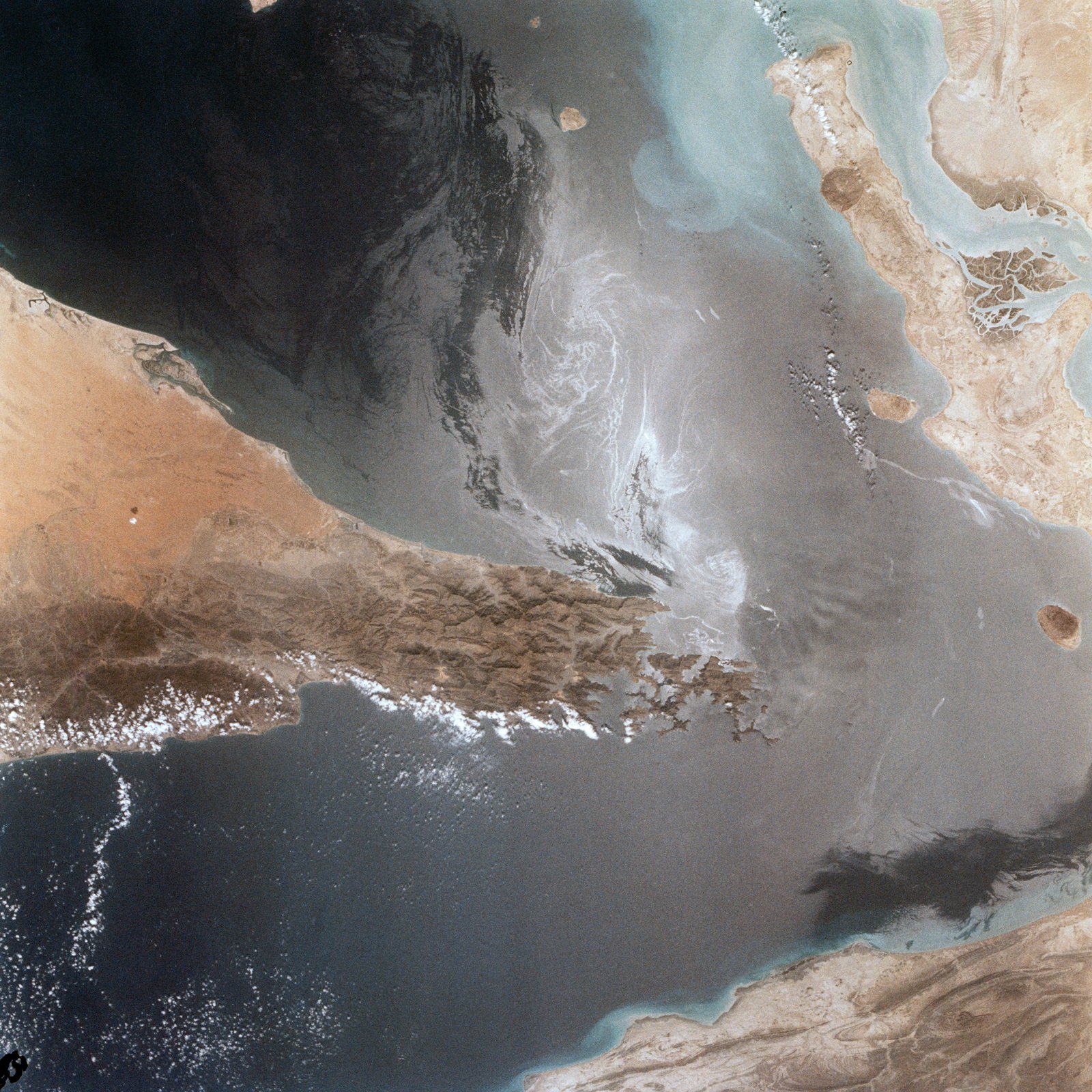
Iran’s military declared the Strait of Hormuz “closed” early Saturday, citing alleged violations of the U.S.-Iran ceasefire after a fresh round of Israeli strikes in southern Lebanon — a claim U.S. Central Command swiftly rejected, insisting the world’s most important oil chokepoint remains open and that traffic continues to flow. The competing assertions, arriving only days after Washington and Tehran signed a preliminary agreement to end their war, dominated the overnight wires and set a tense tone for a weekend of fragile diplomacy. Below, the developments worth your attention across government, the courts, and the world — followed by what to watch in the hours ahead.
Government
Defense Secretary Pete Hegseth ordered a six-month review of the U.S. military footprint in Europe, telling NATO defense ministers in Brussels that the alliance must move “irreversibly” toward Europe assuming primary responsibility for its own conventional defense. According to The Washington Post, Hegseth framed the review as a push toward what he called a new era of burden-sharing, warning that allies who fail to meet defense-spending commitments could face consequences.
The review will examine America’s basing, access, and overflight arrangements across the continent and will include consultations with Congress, which has legislated a floor on U.S. troop levels in Europe. CBS News reported that roughly 80,000 U.S. service members are currently stationed in Europe, with lawmakers having required the Pentagon to submit a plan before any reduction below 76,000. Officials cited by Stars and Stripes stressed that no immediate drawdown has been ordered, characterizing the effort as a posture study rather than a withdrawal decision.
The review lands the same week President Donald Trump and Iranian President Masoud Pezeshkian signed a preliminary agreement intended to end their countries’ conflict. According to NPR, the memorandum of understanding — signed by Trump on June 17 following the Group of Seven summit in France — envisions a permanent ceasefire, the reopening of the Strait of Hormuz, phased sanctions relief for Tehran, and international oversight of Iran’s nuclear program, with the two sides committing to negotiate a final settlement within 60 days. NPR has published the full text of the document. The agreement has drawn mixed reviews in Washington, where some Republican lawmakers have voiced concern about the speed of sanctions relief on Iranian oil exports.
At the G7 summit that preceded the signing, leaders pledged to tighten pressure on Russia over its war in Ukraine. Reuters reported that the group agreed to add sanctions and to strengthen Ukraine’s air defenses, with Ukrainian President Volodymyr Zelenskyy calling the outcome a meaningful result for Kyiv. A summit live blog from NBC News noted that Trump joined the joint statement despite his past reluctance to commit to additional sanctions.
Courts
The Supreme Court handed down a unanimous Second Amendment ruling Thursday in United States v. Hemani, siding with a Texas man who challenged the federal law barring habitual drug users from possessing firearms. Writing for the Court, Justice Neil Gorsuch held that the government cannot automatically strip someone of gun rights solely because they use a controlled substance, according to analysis from SCOTUSblog. The decision was narrow: the justices did not strike down 18 U.S.C. § 922(g)(3) in its entirety, but found it could not be applied to disarm a person who uses marijuana a few times a week absent the historical tradition required under the Court’s 2022 Bruen framework.
The lineup underscored the ruling’s limits. As reflected in the case file, Justice Clarence Thomas filed a concurrence, Justice Ketanji Brown Jackson concurred joined by Justice Sonia Sotomayor, and Justice Samuel Alito concurred in the judgment joined by Justice Elena Kagan — signaling continued disagreement over how far the Second Amendment reaches. CBS News noted the decision leaves the statute on the books while constraining how prosecutors may use it.
The Court issued several other opinions the same day as it races to clear its docket. In Hunter v. United States, the justices held that a defendant’s agreement not to appeal a sentence is unenforceable where it would leave in place an egregious error amounting to a miscarriage of justice, per the Court’s opinion announcements. In T.M. v. University of Maryland Medical System Corporation, the Court addressed the Rooker-Feldman doctrine, ruling that it does not bar a federal suit when the underlying state-court judgment remains subject to further review in state appellate proceedings. Records compiled by Justia show the Court has now cleared a substantial share of its argued cases, with roughly two dozen still pending as the term winds down.
International
The day’s most consequential development unfolded at sea. Iran’s Islamic Revolutionary Guard Corps Navy announced Saturday that the Strait of Hormuz was “closed,” describing the move as a “first step” in response to what Tehran called breaches of the newly signed memorandum, and warning ships away from the waterway. Newsweek reported that the declaration followed overnight Israeli strikes in southern Lebanon that Iran said violated the ceasefire.
U.S. Central Command pushed back forcefully. According to NBC News, CENTCOM said Iran “does not control the Strait of Hormuz,” that traffic continues to flow, and that U.S. forces are monitoring the situation. The strait carries roughly a fifth of the world’s oil, and a sustained closure would carry significant economic stakes; for now, the conflicting claims center on disputes over how the ceasefire is being implemented rather than a confirmed halt to shipping. A research briefing from the U.K. House of Commons Library lays out the background to the reopening commitments now in dispute.
The flashpoint is the deteriorating situation in Lebanon. PBS NewsHour reported that the initial U.S.-Iran deal to extend the ceasefire and reopen Hormuz always carried significant implementation risks, and that renewed fighting threatened to unravel it. A planned meeting between U.S. and Iranian officials in Switzerland was reportedly called off amid the strikes, underscoring how quickly the diplomatic track has come under strain.
Beyond the Gulf, global health authorities are racing to contain a worsening Ebola outbreak. The World Health Organization, which declared a Public Health Emergency of International Concern on May 17 over an outbreak of the Bundibugyo strain in the Democratic Republic of the Congo and Uganda, reports that the epidemic is still spreading. The DRC Ministry of Health had recorded 837 confirmed cases and 196 related deaths as of mid-June, with Ituri province the hardest hit. CBS News quoted a WHO incident manager warning that deaths reported by communities suggest cases are still being missed. There is no approved vaccine or treatment for the Bundibugyo strain, and the U.S. Centers for Disease Control and Prevention continues to publish situation updates as the response unfolds in a region already strained by conflict and displacement.
Worth Watching
The Supreme Court returns to the bench next week with its term nearing its end. Per the SCOTUSblog calendar, an order list is expected Monday, June 22, with opinion announcements set for Tuesday, June 23, and again Thursday, June 25. As NPR has reported, roughly two dozen argued cases remain undecided, among them paired challenges to state laws restricting transgender athletes in school sports — Little v. Heacox and West Virginia v. B.P.J. — which were argued in January and could land any day.
On the international front, the central question is whether the Strait of Hormuz dispute escalates or de-escalates over the weekend. Watch for further CENTCOM statements on freedom of navigation, any confirmed disruption to tanker traffic, and whether Washington and Tehran reschedule the postponed talks. The durability of the broader ceasefire will hinge on whether the strikes in Lebanon continue. On global health, the WHO is expected to publish updated situation reports on the Ebola response in the days ahead. The Investigative Journal will continue to track each of these stories.
Editor’s note: This briefing summarizes public statements, official records, court opinions, and wire reporting available as of publication. Figures and characterizations are attributed to their sources; pending matters are noted as such. Officials and parties named here were quoted from public statements; this article will be updated to reflect any responses or material developments.