

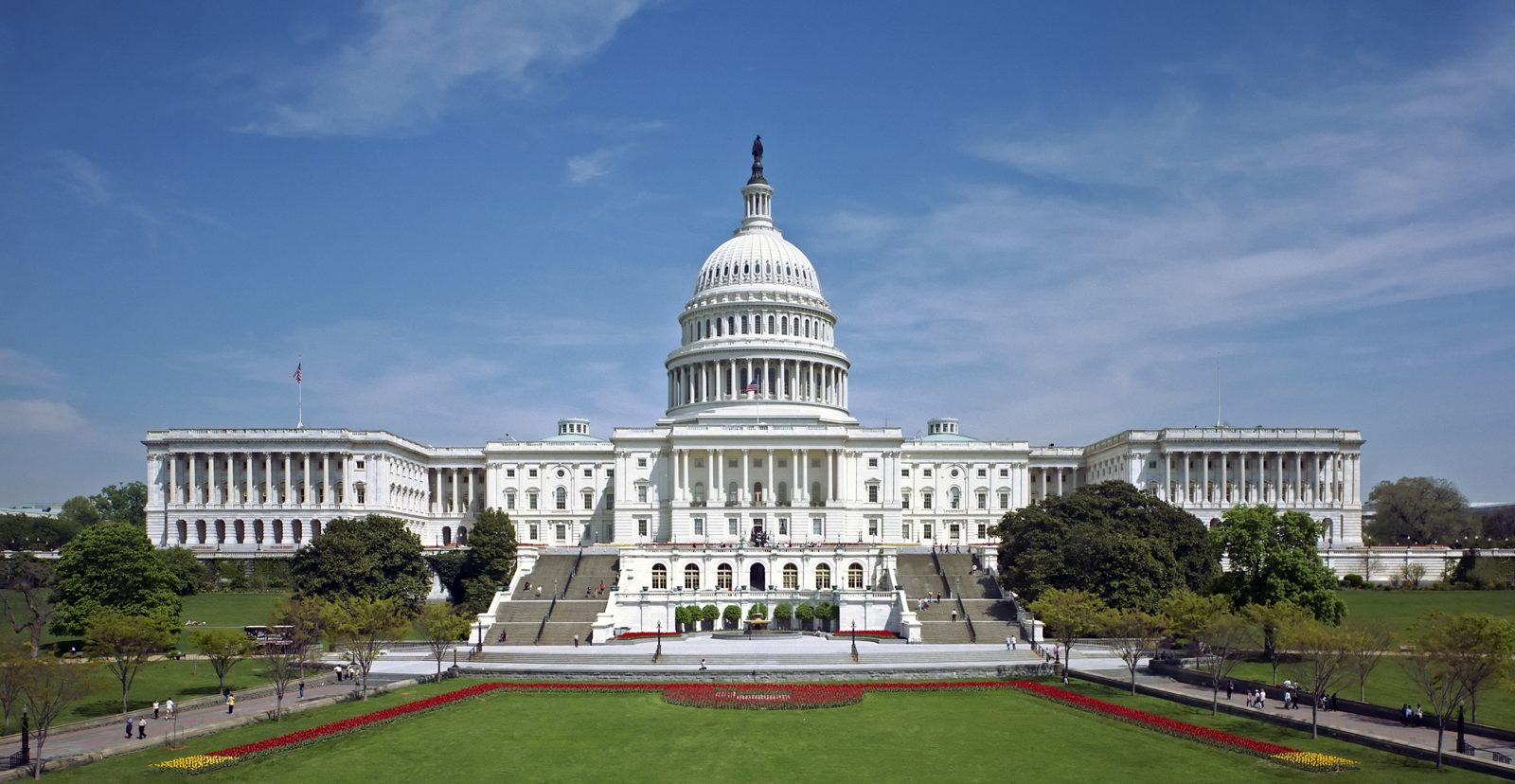
WASHINGTON — The Capitol is quiet this week, but the machinery of Congress is not. Both chambers remain in their five-week August district work period, convening only for brief pro forma sessions — the Senate gaveled in and out on Monday, August 17, and again at 11:30 a.m. on Thursday, August 20, with no votes taken. Yet oversight letters are still moving, a government funding deadline is 40 days out, and a stack of unfinished legislation awaits members when the House returns September 1 and the Senate follows on September 14. Here is where congressional activity stands as of Friday, August 21.
1. Comer demands answers from Becerra over Fauci diary and phone
The most recent oversight action came Wednesday, when House Oversight and Government Reform Chairman James Comer (R-Ky.) sent a letter to former Health and Human Services Secretary Xavier Becerra pressing him on why Dr. Anthony Fauci’s government-issued diary and phone were not produced to the committee’s Select Subcommittee on the Coronavirus Pandemic during the last Congress. According to the committee’s August 19 release, a November 2023 document request covered search terms such as “COVID-19,” “gain-of-function,” and “Wuhan” — terms the committee says appear throughout a diary Fauci kept on government computers between 2019 and 2022.
The committee alleges that Becerra’s response included no portion of the diary and did not acknowledge its existence. These remain allegations at this stage; the letter gives Becerra two weeks — a window that runs into early September — to answer the committee’s questions, and the release does not include a response from him. The letter follows a July 29 committee statement noting that Fauci invoked the Fifth Amendment in the committee’s ongoing COVID-origins inquiry.
2. Oversight task force opens records demand to McKinsey over DEI research
Two days earlier, Rep. Brandon Gill (R-Texas), chairman of the Oversight Committee’s Task Force on Defending Constitutional Rights and Exposing Institutional Abuses, sent a letter to McKinsey & Company Global Managing Partner Robert Sternfels requesting all documents, underlying datasets, and records of academic review behind four of the firm’s diversity studies published between 2015 and 2023. The committee’s August 17 release asserts the reports were widely cited by public companies, asset managers, and proxy advisers, and that researchers have been unable to replicate their findings.
The request is voluntary — no subpoena has been issued — and the committee’s own release acknowledges that McKinsey stands by its research. The letter’s claims about economic costs, including an asserted $94 billion in foregone revenue in 2023, are the task force’s characterizations and have not been independently adjudicated. The firm’s response, or lack of one, will indicate whether this escalates into compulsory process when Congress returns.
3. Dueling stopgaps: a December 4 versus December 11 funding fight
Congress left town with two competing continuing resolutions and no agreement. In the early morning of August 8, the Senate passed H.R. 6500, its vehicle for the bipartisan Continuing Appropriations Act, 2027, by a 90-6 vote, funding the government at current levels through December 11. Negotiated by Appropriations Chair Susan Collins (R-Maine) and Vice Chair Patty Murray (D-Wash.), the Senate text includes a temporary delay of the Office of Management and Budget’s proposed federal grantmaking rule and spending flexibility for 2030 Census preparations, according to an analysis by the Federation of Associations in Behavioral and Brain Sciences. Senators also tabled, 61-32, an amendment by Sen. Ted Budd (R-N.C.) to strike one section of the measure.
The House passed its own “clean” stopgap through December 4 before beginning its recess on July 24, and the two chambers must reconcile the versions into a single bill before fiscal year 2026 ends September 30. Records indicate two friction points: the Senate’s OMB-rule delay and its omission of new funding for Immigration and Customs Enforcement and Border Patrol, provisions some House Republicans are expected to resist. The National Low Income Housing Coalition notes the Senate adjourned immediately after passage, leaving reconciliation of the two bills to a compressed September calendar.
4. The fiscal backdrop: a $1.9 trillion deficit projection
The funding fight plays out against a strained fiscal picture. The Congressional Budget Office’s current baseline, The Budget and Economic Outlook: 2026 to 2036, projects a $1.9 trillion deficit for fiscal year 2026 — about 5.8 percent of gross domestic product — with federal debt held by the public reaching roughly 120 percent of GDP by 2036. CBO’s data show three developments driving its projections: the 2025 reconciliation act, which the agency estimates adds $4.7 trillion to deficits over ten years; higher tariff revenue, which reduces them by about $3 trillion; and lower immigration, which adds an estimated $0.5 trillion.
Appropriators in both parties have cited the baseline in arguing over toplines for the twelve fiscal 2027 bills — none of which has been enacted. The House has reported all twelve measures out of full committee, while the Senate Appropriations Committee has yet to mark up any, according to the FABBS analysis linked above, leaving a full-year omnibus or another stopgap as the realistic December endgame.
5. Blanche confirmed as Attorney General, 50-49, in pre-dawn vote
Before adjourning August 8, the Senate confirmed Todd Blanche as Attorney General of the United States by a 50-49 vote — one of the narrowest confirmations for the office on record. NPR reported the vote came at 4:31 a.m., just before the chamber began its five-week break, and that Republican Sens. Susan Collins of Maine and Lisa Murkowski of Alaska joined all Democrats in opposition. The nomination record is available at PN1078.
Blanche, who had served as deputy attorney general since 2025 and earlier as President Trump’s defense counsel, cleared a 50-49 cloture vote the same day. The Washington Post characterized the confirmation as capping a contentious fight; Senate Judiciary Republicans had previously backed him for the deputy post, with Chairman Chuck Grassley calling him “the right man” for that role in 2025.
6. Russia-Iran sanctions bill passes Senate 86-11, awaits House action
In a rare bipartisan supermajority, the Senate passed H.R. 5334, the Lindsey O. Graham Sanctioning Russia and Iran Act of 2026, by a vote of 86-11 on August 7. The bill, named in honor of the late South Carolina senator who championed it, would sanction senior Russian officials and authorize tariffs of up to 100 percent on countries that continue purchasing Russian oil and gas, while extending Iran sanctions, according to PBS News. An amendment by Sen. Rand Paul (R-Ky.) to strike the secondary-tariff provision was rejected 32-64.
Because the Senate amended the House-passed text, the measure returns to the House, which NPR reports is expected to take it up in September, possibly under suspension of the rules — a fast-track procedure requiring a two-thirds majority and barring amendments. The 86-vote Senate margin suggests the threshold is within reach, though House timing will compete with the funding deadline.
7. Photo-ID voting bill stalls in final pre-recess vote
The Senate’s last roll call before recess was a failed cloture vote on S. 5271, a bill to amend the Help America Vote Act of 2002 to require voters to provide photo identification. The 52-46 vote on the motion to proceed fell short of the 60 needed, according to the Senate’s roll call record for the 119th Congress, second session.
The vote positions election integrity as a live floor issue heading into the November midterms. Records suggest the measure could return in the fall — failed cloture votes are frequently re-run for messaging purposes in election years — and the near-party-line result offers a baseline for where the chamber stands.
8. FY2027 defense bill: passed the House, parked in the Senate
The National Defense Authorization Act for Fiscal Year 2027, H.R. 8800, passed the House 216-212 on July 22 with a topline of roughly $1.15 trillion, according to MeriTalk. The Senate Armed Services Committee completed markup of its own $1.14 trillion version in June on an 18-9 vote, but the bill has not reached the Senate floor; Breaking Defense reports Democrats have blocked floor consideration amid disputes over Iran policy and the size of the topline.
The Congressional Research Service is tracking the bill’s progress in a status report, FY2027 NDAA: Status of Legislative Activity, a useful baseline document as the September floor fight approaches. Congress has enacted an NDAA for more than six consecutive decades; whether that streak survives an election-year calendar squeeze is now a genuine question for the fall.
What’s ahead — and what we’re watching
The near-term calendar: pro forma sessions continue through the break; the House returns September 1 and the Senate September 14; the fiscal year ends September 30. Expect early September action on reconciling the two continuing resolutions, a likely House suspension vote on the Graham sanctions act, and a decision point on whether the NDAA gets floor time in the Senate.
For The Investigative Journal’s accountability beats, three threads merit continued attention. First, the Becerra response deadline in early September will test whether the Fauci records dispute escalates to compulsory process. Second, the McKinsey document request opens a rare window into how influential consulting research is produced and marketed to fiduciaries — and whether its underlying data will ever be public. Third, the Oversight Committee has previously stated it will pursue additional Epstein-related bank records following its subpoena of the Epstein estate; any September activity on that front will be documented here. As always, every claim above traces to the linked public record, and subjects of pending inquiries are entitled to respond — those responses will be reported when they arrive.