

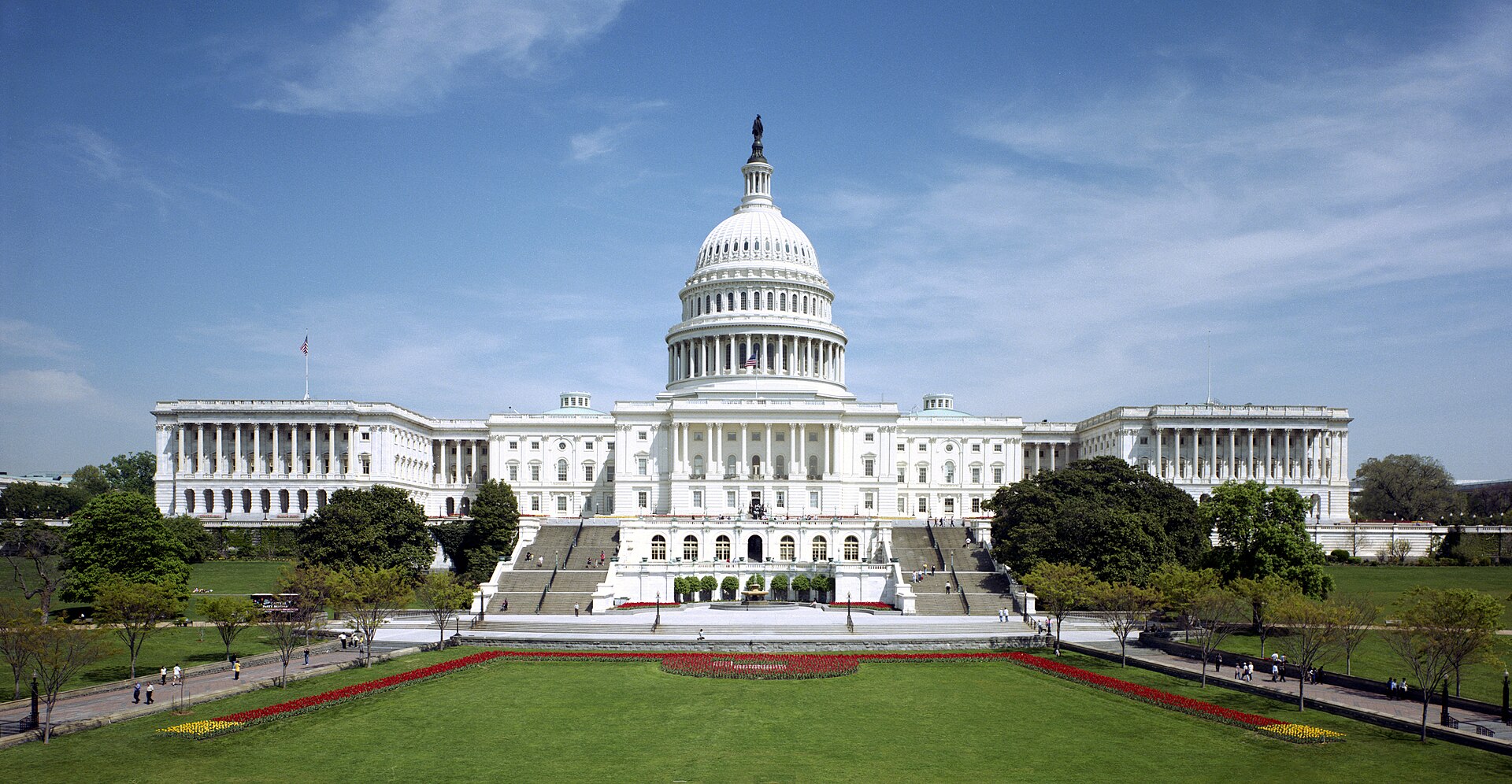
The Senate is in session and the House is not, which makes Wednesday a committee day on Capitol Hill — and the most consequential item on the calendar is not a bill at all. At 2:30 p.m. in Dirksen 562, the Senate Judiciary Subcommittee on Crime and Counterterrorism convenes a hearing titled “Always Watching: Flock’s Nationwide AI Surveillance Network,” according to the committee’s published notice and the Senate hearings and meetings schedule.
Below, The Investigative Journal’s daily accounting of what Congress did, what it is doing, and what it has scheduled — with every claim traced to a public record.
1. Senate Judiciary Puts Private License-Plate Surveillance on the Record
Subcommittee Chairman Josh Hawley (R-Mo.) invited the chief executives of four surveillance-technology firms to appear: Garrett Langley of Flock Safety, Rick Smith of Axon Enterprise, Greg Brown of Motorola Solutions and Filip Kaliszan of Verkada, according to a release from Hawley’s office. The stated purpose, per that release, is to determine who has access to Americans’ vehicle-movement data and what is being done with it.
The policy question here is not partisan, and the coalition interested in it is unusually broad. Automated license-plate reader networks are operated by private vendors under contract to local police departments, which means the data they generate sits partly outside the Fourth Amendment framework that governs government-collected records and partly outside the procurement transparency rules that govern federal systems. Local council votes authorize the cameras; the resulting databases are national in scope. That gap between the level of government that approves a program and the level at which its data actually operates is the structural problem the subcommittee appears to be probing.
Two things are worth watching. First, whether members press on third-party access — federal agencies, out-of-state departments, and commercial resellers querying local systems. Second, whether any witness commits to an audit-log standard that would let a citizen determine, after the fact, who searched for their vehicle. Hearing testimony becomes part of the public record and is the cleanest basis for later oversight. TIJ will review the transcript when it is posted to the committee’s hearing page. The companies named have been invited to respond and right of reply remains open.
2. Protect College Sports Act Clears Its Second Cloture Hurdle, 70-21
The Senate on Tuesday invoked cloture on the Cruz substitute amendment to S. 4668, the Protect College Sports Act of 2026, by a vote of 70-21 (Record Vote 240). That followed the motion to proceed, agreed to 77-22 on Sept. 17 as Record Vote 236, per the Senate’s floor activity summary. The measure is sponsored by Commerce Chairman Ted Cruz (R-Texas) and carries the backing of Ranking Member Maria Cantwell (D-Wash.).
The bill establishes federal requirements for name, image and likeness agreements involving college athletes and provides a limited antitrust exemption permitting schools and conferences to pool and sell certain media rights, according to the Commerce Committee’s summary. It was reported out of that committee earlier in the cycle and has been on a deliberate, rule-bound path to the floor ever since.
Margins of 77 and 70 in a chamber this closely divided are not accidental. They reflect a judgment shared across both conferences that the post-Alston patchwork of state NIL statutes has produced a compliance environment no single institution can navigate. The antitrust carve-out is the provision most likely to draw scrutiny in conference with the House, and it is the provision most worth reading closely: limited exemptions have a durable habit of becoming permanent ones. Final passage is expected in the current work period.
3. Judicial Confirmations Move on Party Lines
The Senate invoked cloture Tuesday on the nomination of Angela Veronica Colmenero to be U.S. District Judge for the Southern District of Texas, 52-43 (Record Vote 239). The nomination is docketed as PN999-1. A week earlier the chamber confirmed Kasdin Miller Mitchell to the Northern District of Texas by 49-45 (Record Vote 238), after invoking cloture 49-47.
The spread between the two tallies is the story. A 52-43 cloture vote is a comfortable working margin; a 49-47 cloture vote is the floor. District nominees are now routinely processed at margins that would once have signaled serious controversy, a consequence of procedural changes made across multiple Congresses by both parties rather than of anything specific to these two nominees.
The Judiciary Committee holds a business meeting Thursday at 10:15 a.m. in Hart 216 to consider the nomination of Anna St. John to be U.S. Circuit Judge for the Fifth Circuit, Gregory Carl Cook for the Northern District of Alabama, four nominees to the U.S. Sentencing Commission — John Peter Cronan, Jason Manion, Claire McCusker Murray and Luis Felipe Restrepo — and a slate of U.S. Attorney and U.S. Marshal nominations, per the Senate schedule. The Sentencing Commission slate deserves attention it rarely gets: the Commission sets the guidelines that shape federal sentencing outcomes nationwide, and a four-seat confirmation is a larger policy event than a single district judgeship.
4. Russia and Iran Sanctions Bill Signed Into Law
The White House confirmed that on Friday, Sept. 18, the President signed H.R. 5334, the “Lindsey O. Graham Sanctioning Russia and Iran Act of 2026,” which the statement describes as authorizing and expanding statutory sanctions, tariffs and prohibitions on Russia and extending existing sanctions on Iran.
The House cleared the Senate amendment on Sept. 16 by 262-159, according to the Clerk’s official roll call. The party breakdown is the notable figure: 203 Republicans and 58 Democrats in favor, 7 Republicans and 152 Democrats opposed. The vehicle was a House-passed tax bill that the Senate replaced by amendment — a routine legislative mechanic, but one that makes the measure harder to track for anyone searching by bill title rather than number.
Codifying sanctions in statute matters for a reason that outlasts any one administration: statutory sanctions cannot be lifted by executive action alone. Congress has traded flexibility for durability. Whether that trade proves sound depends on facts not yet in evidence, and TIJ will track implementation through Treasury’s Office of Foreign Assets Control designations in the months ahead.
5. House Passed an Iran War Powers Resolution, 220-204
Before departing, the House on Sept. 15 agreed to H. Con. Res. 93, directing the President under section 5(c) of the War Powers Resolution to remove U.S. Armed Forces from hostilities with Iran absent a declaration of war or a specific authorization for the use of military force. The official tally was 220-204: 213 Democrats and 7 Republicans in favor, 203 Republicans and one independent opposed. The measure is sponsored by Rep. Seth Moulton (D-Mass.).
Two qualifications belong in the same breath as the headline. A concurrent resolution is not presented to the President and does not carry the force of law; it requires adoption by both chambers to have any operative effect, and no Senate action on a companion measure appears on the current calendar. Reporting indicates this was the third such vote the House has taken on the question during this Congress.
Still, the seven Republican defections are the data point worth recording. War powers votes are among the few remaining occasions on which institutional prerogative competes with party alignment, and the size of that crossover bloc — up or down — is a reasonable proxy for how much appetite exists in the majority for reasserting Article I authority over the use of force. TIJ will be tracking whether the number moves on any subsequent vote.
6. Impeachment Resolution Tabled, 232-147
Also on Sept. 15, the House agreed to a motion to table H. Res. 1486, a resolution impeaching the President, by 232-147, with 47 members voting present. The Clerk’s record shows 213 Republicans, 18 Democrats and one independent voting to table; 147 Democrats opposed the motion.
The 47 “present” votes — 46 of them Democratic — are the number that describes the actual state of play. Tabling motions are privileged and dispose of a resolution without debate on its merits, which means the vote functions as a procedural sorting mechanism rather than a judgment on the underlying allegations. A caucus that splits 147-18-46 on whether to even reach the question is a caucus without a settled position.
7. Wednesday’s Committee Slate
Beyond the Flock hearing, the Senate schedule lists a full day. Environment and Public Works meets at 10 a.m. in Dirksen 406 to examine updating America’s nuclear waste management policy — a perennial question that has gone unresolved since the Yucca Mountain repository stalled, and one that now carries added weight given projected data-center load growth. Judiciary’s full committee convenes at 10:15 a.m. on women’s participation in athletics.
Armed Services receives a closed briefing at 9:30 a.m. on the U.S. Central Command area of operations, and its Cybersecurity Subcommittee meets at 2:30 p.m. for a closed briefing covering cyber operations and readiness for the second and third quarters of fiscal 2026 as well as an update on election security. The Senate Intelligence Committee holds a closed briefing at 3 p.m. Closed proceedings generate no public transcript; the observable output is what members choose to say afterward.
The Special Committee on Aging meets at 3:30 p.m. on restoring domestic generic drug manufacturing — directly relevant to pharmaceutical supply-chain concentration, a standing TIJ beat. Indian Affairs holds a business meeting at 2:30 p.m. to consider S. 5354, reauthorizing the Native American Housing Assistance and Self-Determination Act, followed by a hearing on four land and tribal-recognition measures.
8. CBO Scorekeeping
The Congressional Budget Office published a cost estimate on Sept. 15 for S. 164, the Midnight Rules Relief Act of 2025, as reported by the Senate Homeland Security and Governmental Affairs Committee the previous day. The bill would amend the Congressional Review Act to allow Congress to disapprove multiple rules in a single joint resolution — a procedural change with substantial downstream consequences for the pace of deregulation.
Two other recent estimates bear on TIJ’s technology and supply-chain reporting: S. 4570, the U.S. Technology Procurement and Access to Trusted Hardware Act, and S. 4429, the Connected Vehicle Security Act of 2026, both scored on Sept. 11. Cost estimates are advisory and do not enforce budgetary rules, as CBO itself notes on its cost estimates page. They are nonetheless the most reliable early indicator of which committee-reported bills are being readied for floor time.
Looking Ahead
Thursday, Sept. 24: Armed Services receives a closed briefing on the Defense Department budget at 9:30 a.m.; Foreign Relations takes up pending nominations at 10 a.m.; the HELP Committee holds a business meeting at 10 a.m. on the nominations of Nicole Saphier to be Surgeon General, Timothy Westlake as Assistant Secretary for Mental Health and Substance Use, and Mary Lazare as Assistant Secretary for Aging, then convenes at 10:30 a.m. on the nomination of Heidi Overton to be Commissioner of Food and Drugs. Judiciary’s executive business meeting is at 10:15 a.m.
Tuesday, Sept. 29: the Armed Services Subcommittee on Strategic Forces receives an update on Golden Dome at 4 p.m. in Russell 222 — the missile-defense architecture whose cost profile TIJ has flagged as a candidate for sustained scrutiny.
Relevant to TIJ Beats
Three threads from this week’s record warrant follow-up. The Flock hearing is the first sustained congressional examination of privately operated, nationally networked license-plate surveillance, and the testimony will establish a baseline factual record that oversight can be built on. The Connected Vehicle Security Act and the trusted-hardware procurement bill both touch the question of foreign-manufactured components inside American critical infrastructure — the core of TIJ’s ongoing supply-chain reporting. And the Sentencing Commission slate moving through Judiciary on Thursday will shape federal sentencing policy for years with a fraction of the attention a single appellate confirmation attracts.
All vote totals in this digest are drawn from the official records of the Clerk of the House and the Secretary of the Senate. Hearing times and locations reflect published committee notices and are subject to change. Allegations referenced in committee proceedings are allegations; no findings are reported here as established fact. Parties named have been invited to respond and right of reply remains open.