

The Investigative Journal’s weekly roundup tracks the most consequential output from government and nonprofit watchdogs across the political spectrum. We summarize the findings, link the primary documents, and label each organization’s orientation so readers can weigh the source for themselves. Inclusion here is not an endorsement of any group’s conclusions; where a report names a person or company, we note their response and right of reply.
The week of June 15, 2026 produced an unusually data-rich set of oversight reports. The Government Accountability Office delivered both its annual verdict on the nation’s balance sheet and a rare audit of the system that polices federal inspectors general. The Congressional Research Service mapped the country’s dependence on Chinese rare earths. And nonprofit watchdogs from across the ideological divide — the Project On Government Oversight, ProPublica, Judicial Watch, and the Capital Research Center — each pressed claims about how taxpayer money and government power are being used. Here are eight findings worth your attention.
1. GAO: Federal debt now rivals the entire U.S. economy
In its 10th annual report on the nation’s fiscal health, the Government Accountability Office reported that publicly held federal debt reached roughly $31.3 trillion as of April 2026 — an amount approximately equal to the size of the entire U.S. economy. According to GAO, that marks the first time the publicly held debt has rivaled gross domestic product since the years immediately following World War II. The report, The Nation’s Fiscal Health: Urgent and Sustained Action Needed to Improve the Fiscal Outlook (GAO-26-108610), projects that under current revenue and spending policies, debt held by the public will reach its historical high of 106 percent of GDP by 2029 and climb to 123 percent by 2036 and 251 percent by 2056.
GAO is the nonpartisan, legislative-branch audit agency led by the Comptroller General; its fiscal-health series is among the most closely watched analyses in Washington precisely because it does not represent any administration’s budget messaging. The agency framed the trajectory bluntly, stating that “the rising debt is increasing the risk of a fiscal crisis, and it is time to take action.” In a companion report on federal debt management (GAO-26-107529), GAO found that the Treasury is meeting the government’s borrowing needs but that the deteriorating fiscal outlook poses risks to that ability over time.
Read the report and supporting material directly via GAO’s product page for GAO-26-108610, the agency’s press release urging immediate action, and its standing America’s Fiscal Future data hub.
2. GAO: Who watches the watchdogs? Flaws found in the inspector general oversight system
In a report publicly released June 15, GAO turned its attention to the body that polices the inspectors general themselves. Inspectors General Integrity Committee: Strengthened Oversight and Policy Needed to Ensure Consistent Investigations (GAO-26-107922) examined the Integrity Committee of the Council of the Inspectors General on Integrity and Efficiency (CIGIE), which investigates allegations of misconduct against senior officials in the offices of federal inspectors general.
According to the report, the Integrity Committee did not always follow its own policies and requirements when reviewing complaints. GAO found that many cases were not reviewed in a timely manner, that required information was not consistently documented, and that a single staffer was disregarding complaints deemed “frivolous” despite internal policy requiring such decisions to be reviewed by legal counsel. Auditors also found limited oversight to ensure that assisting inspector-general offices complied with CIGIE’s quality standards for investigations, and that reimbursement requests from inspectors general were supported by inconsistent and incomplete documentation. GAO made eight recommendations, including adhering to required secondary reviews and strengthening compliance with time frames, documentation, and statutory reporting to Congress.
The finding matters because the integrity of the inspector-general system depends on credible internal accountability. Read the GAO product page for GAO-26-107922; Government Executive also summarized the audit.
3. DOJ Inspector General: latest semiannual report logs questioned costs and recoveries
The Department of Justice Office of the Inspector General — a statutorily independent oversight office within DOJ — released its Semiannual Report to Congress covering October 1, 2025 through March 31, 2026. According to the office, during the period it issued 42 reports containing 108 recommendations and identified $487,192 in questioned costs. Its investigative work resulted in 42 convictions or pleas, 65 terminations, administrative disciplinary actions, and resignations, and more than $3.8 million in recoveries.
The report period also included an investigative summary documenting a finding of misconduct by a then-FBI assistant director for dereliction of supervisory responsibility, one of several personnel matters detailed in the office’s recent output. The report was released in late May under Deputy Inspector General William M. Blier, performing the duties of the inspector general — a reminder that DOJ’s oversight office has been operating through a leadership transition.
The full report and the office’s running list of audits are available through the DOJ OIG semiannual reports page and its reports archive.
4. CRS: America remains heavily dependent on China for rare earths
The Congressional Research Service — the nonpartisan research arm that works solely for Congress and whose reports are not subject to copyright — updated its primer Rare Earth Elements and U.S. Supply Chains (IF13171, Version 2) on June 12. The brief, authored by analyst Linda R. Rowan, lays out the scale of the dependency: the People’s Republic of China mines about 60 percent and processes and separates roughly 90 percent of the world’s rare earth elements, and manufactures about 94 percent of rare-earth-based magnets. The United States, the report states, was 67 percent net import reliant for most rare earths in 2025 and 100 percent reliant for scandium and yttrium.
According to CRS, China banned the export of rare-earth processing and refining technologies in 2023 and, in 2025, announced export controls on samarium, gadolinium, terbium, dysprosium, lutetium, scandium, and yttrium — a set of moves with direct implications for both civilian manufacturing and defense applications such as guidance systems and smart munitions. The brief catalogs the federal response, including the Department of Defense’s July 2025 public-private partnership with MP Materials (a $500 million equity stake, a $150 million loan for heavy-rare-earth separation, and a price floor of $110 per kilogram of neodymium-praseodymium), and the White House’s February 2026 announcement of “Project Vault,” a $12 billion initiative to establish a U.S. Strategic Critical Minerals Reserve.
The brief is a useful, non-ideological baseline for any reporting on critical-mineral policy. Read it directly at the CRS PDF for IF13171.
5. POGO: the true cost of the U.S. military is “radically underestimated”
The Project On Government Oversight, a nonpartisan watchdog founded in 1981 (originally to expose Pentagon procurement waste) and often characterized as left-of-center, published an analysis through its Center for Defense Information arguing that the headline Pentagon budget significantly understates what the United States actually spends on its military. The report, The True Total U.S. Military Budget by David Vine, compares several established methodologies for counting military spending and introduces its own.
According to POGO, the various approaches all point to a figure far above the roughly $1 trillion typically cited: base estimates range from about $1.48 trillion (the National Priorities Project methodology) to roughly $1.77 trillion (the Hartung/Smithberger approach), with figures rising to between $1.71 trillion and $2.28 trillion once interest on military-related debt is incorporated. The common conclusion across methods, the report argues, is that U.S. military spending has long exceeded $1 trillion and is consistently undercounted because relevant costs sit outside the Department of Defense’s topline.
Reasonable analysts disagree on which costs belong in a “military” total, and POGO acknowledges that each methodology carries tradeoffs. The full report, including its methodology section, is available at POGO’s site.
6. ProPublica: report says DOJ shut down a criminal probe of a senator’s coal companies
ProPublica — a Pulitzer-winning nonprofit investigative newsroom funded largely by philanthropy and generally regarded as center-left — reported that the Justice Department closed a criminal investigation into potential Clean Water Act violations by Southern Coal and affiliated mining operations largely run by Jay Justice, the son of Sen. Jim Justice (R-W.Va.). According to current and former officials cited by ProPublica, the probe was initiated by career prosecutors before officials in the Office of the Deputy Attorney General shut it down; one person familiar with the matter said prosecutors were told “pencils down.” The reporting notes that the office was then headed by Todd Blanche, before he became acting attorney general in April.
The companies dispute any wrongdoing. Steven Ruby, an attorney for the Justice companies, told ProPublica that “ultimately the finding of the inquiry by the government was that there wasn’t any evidence to pursue criminal charges” and that “there’s never been any intentional wrongdoing by the companies.” He said the company objected to subpoenas in court while simultaneously persuading the DOJ to drop the case. No charges have been filed, and the account rests on ProPublica’s sourcing rather than a public court finding; the Justice family’s mining operations have, however, faced years of civil litigation and thousands of alleged Clean Water Act violations, according to the report.
ProPublica notes that DOJ brings only about a dozen criminal Clean Water Act cases in a typical year and that it is unusual for senior officials to halt a career-initiated probe at an early stage. The full investigation is available at ProPublica. The parties named are entitled to respond, and TIJ will update this item if DOJ or the companies provide further comment.
7. Judicial Watch and GAO: ICE relied on an “honor system” to track paroled migrants
Judicial Watch, a conservative legal and transparency foundation founded in 1994 and known for its Freedom of Information Act litigation, highlighted a Government Accountability Office audit finding serious gaps in how the government tracked migrants paroled into the country. The underlying report, Border Security: Additional Information Could Inform Enforcement Decisions for Noncitizens Paroled at the Southwest Border (GAO-26-107765), found that from October 2018 through May 2025, Customs and Border Protection granted roughly 2.4 million humanitarian paroles at the southwest border, and that at one point an estimated 97 percent of applicants who used the CBP One mobile application were granted parole.
According to GAO, once those migrants were paroled, Immigration and Customs Enforcement was responsible for monitoring them — but ICE’s Enforcement and Removal Operations was “not conducting its required monitoring of all noncitizens CBP paroled at the southwest border,” in part because of a data gap: ICE systems lacked readily accessible fields identifying which noncitizens had been paroled. Judicial Watch and contemporaneous reporting characterized the practical result as an “honor system,” with the audit indicating that a large share of paroled migrants did not check in as required. Notably, the failure spans both Democratic and Republican administrations, and the report notes the current administration directed DHS to review and terminate parole for roughly 654,000 people in spring 2025 — an effort complicated by the very data gap GAO identified.
Read Judicial Watch’s write-up here and the original audit at GAO’s product page for GAO-26-107765.
8. Capital Research Center: scrutiny of an Ohio foundation’s taxpayer grants
The Capital Research Center, a conservative think tank and watchdog founded in 1984 that focuses on the funding of left-of-center nonprofits and publishes the InfluenceWatch database, says its research seeded a broader investigation into an Ohio-based foundation that has drawn more than $1 million in local, state, and federal taxpayer grants. According to CRC, investigative researcher Parker Thayer’s January 19 blog post — “Suspicious immigration NGO rakes in tax dollars in Columbus” — preceded a five-part investigation by the Daily Wire’s Luke Rosiak, the first installment of which posted May 4.
Rosiak, characterizing his own findings, wrote: “I’ve been investigating federal waste and fraud for 20 years. This is the biggest scandal I’ve ever found.” That is the reporter’s assessment, not an adjudicated conclusion; the foundation in question has not been found liable for wrongdoing, and the allegations concern unusual grant and business practices that remain under journalistic scrutiny. We flag the thread here as a developing accountability story and encourage readers to follow the underlying grant data.
CRC’s account of how the investigation began is available here.
What warrants deeper TIJ investigation
Several of this week’s threads merit sustained follow-up. The CBP–ICE data gap identified by GAO is the kind of administrative failure that persists across administrations precisely because it is unglamorous; the test now is whether DHS implements GAO’s recommendations and publishes measurable results. The rare-earth buildout — MP Materials’ federal backstop and the $12 billion Project Vault reserve — deserves a follow-the-money examination of whether taxpayer price floors and equity stakes are structured to protect the public or to subsidize a single supplier. And the GAO finding that the inspector-general system’s own integrity body is cutting corners raises an obvious question for accountability journalists: if the watchdogs’ watchdog is not following its rules, how reliable is the discipline process for senior officials?
Two of the nonprofit items also warrant careful, independent verification rather than amplification. ProPublica’s account of a halted DOJ probe rests on anonymous sourcing and is denied by the companies involved; the responsible path is to pursue the court record, the subpoena fight, and on-the-record comment from the Department of Justice. The Capital Research Center and Daily Wire claims about the Ohio foundation should be tested against primary grant records on USAspending.gov and state databases before any conclusion is drawn. In both cases, the underlying documents — not the framing — are where the story lives.
A note on method and balance: This roundup deliberately draws from nonpartisan government auditors (GAO, CRS, and the DOJ inspector general) as well as nonprofit watchdogs spanning the ideological spectrum, from the left-of-center POGO and ProPublica to the conservative Judicial Watch and Capital Research Center. We have labeled each organization’s orientation, linked the primary documents and datasets, distinguished allegations from findings, and noted where matters remain pending. Named individuals and organizations have a right of reply; TIJ will publish substantive responses.
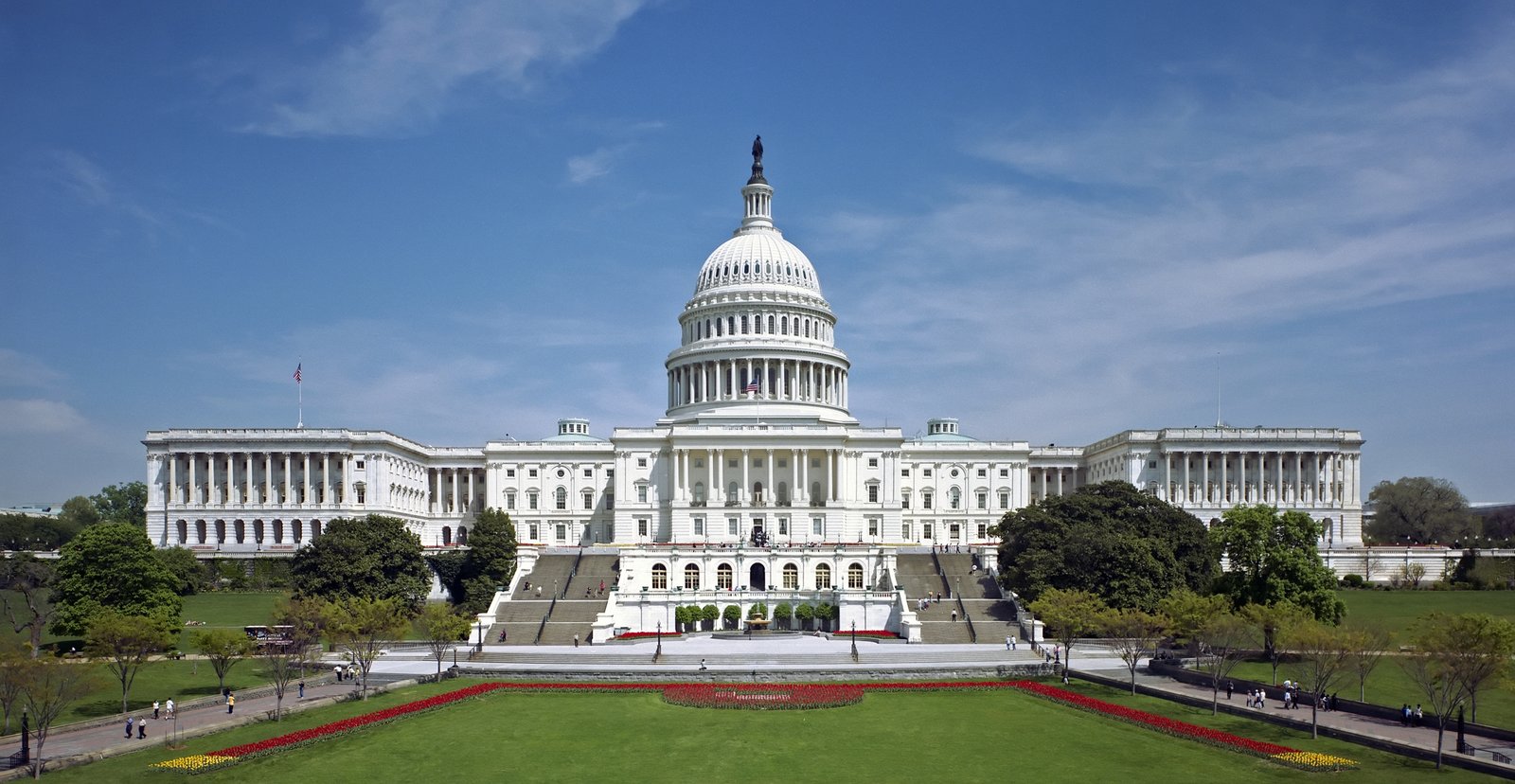
Featured image: The United States Capitol, west front. Photo by the Architect of the Capitol, public domain, via Wikimedia Commons.