

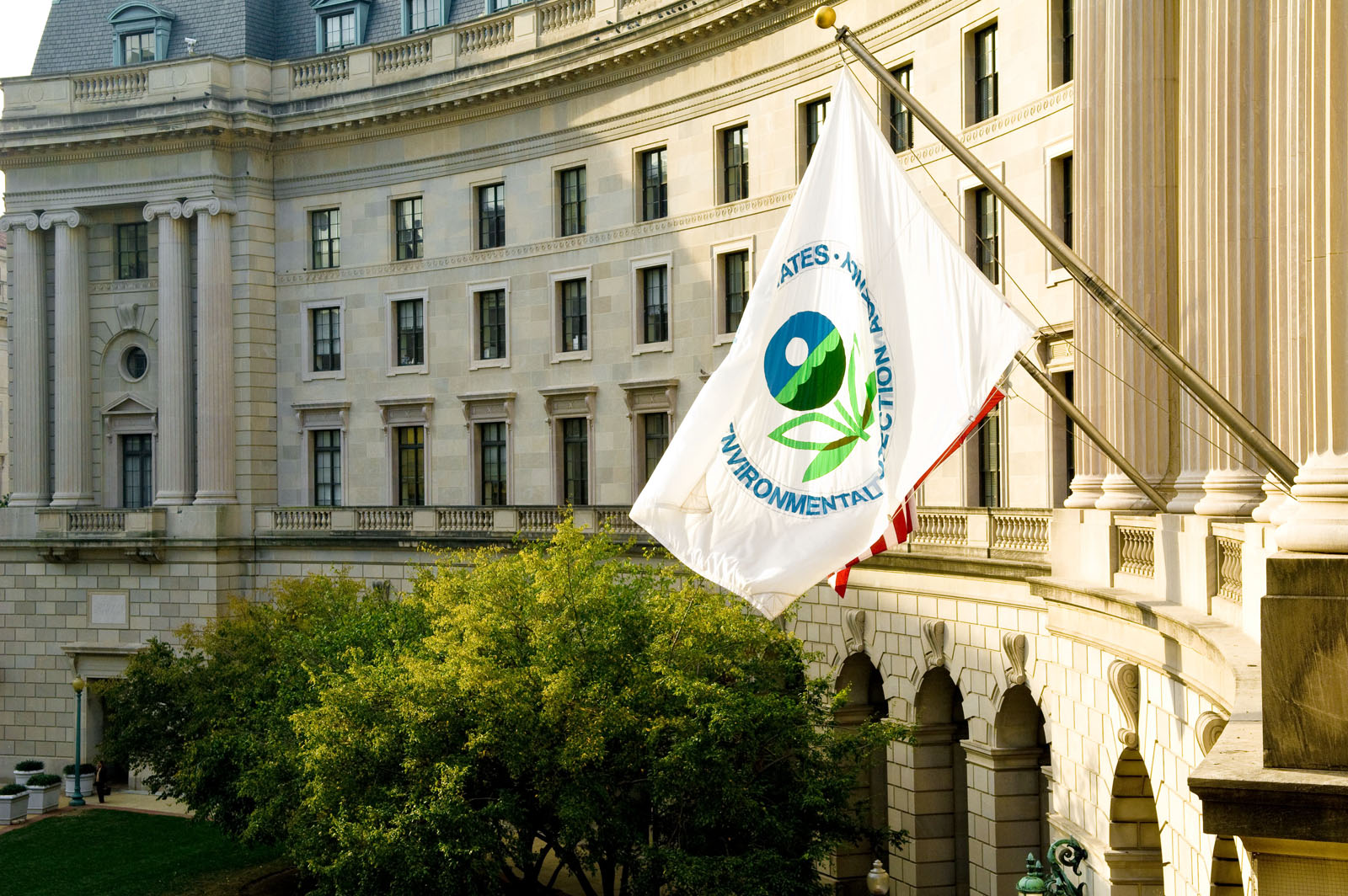
The Investigative Journal’s weekly review of federal and state environmental enforcement. This edition leads with the week’s marquee settlement and rounds up the most consequential enforcement actions concluded across June 2026. All figures and findings below are drawn from public court filings, EPA press materials, and Federal Register notices. Charges in pending matters are allegations; defendants are presumed innocent unless and until proven guilty.
1. Chemours agrees to a $450 million PFAS settlement — the first comprehensive federal deal with a “forever chemicals” maker
The defining enforcement action of the week landed on June 24, when EPA, the U.S. Department of Justice, and the West Virginia Department of Environmental Protection announced a settlement with The Chemours Company that the government values at more than $450 million. According to EPA, the agreement is the first comprehensive federal settlement with a major manufacturer of per- and polyfluoroalkyl substances (PFAS), the persistent “forever chemicals” linked to a range of health risks. The agency alleges Chemours released PFAS into the Cape Fear River in North Carolina, the Delaware River in New Jersey, and the Ohio River in West Virginia — in some instances without required permits, and in others in violation of them.
The numbers in the proposed consent decree are unusual for their structure. Records released by EPA indicate Chemours was assessed a civil penalty of $22.5 million — a figure the agency says was set “based on ability to pay” after EPA and DOJ reviewed the company’s financial records — while the bulk of the cost falls on injunctive relief. The filing requires the company to spend more than $337 million on compliance work, including an estimated $280 million to supply alternative drinking water to affected communities and roughly $60 million to bring its Washington Works facility in West Virginia into compliance. On top of that, Chemours must fund a multi-year, government-supervised $90 million PFAS mitigation program. The settlement resolves alleged violations of the Clean Water Act, the Resource Conservation and Recovery Act, the Toxic Substances Control Act, and the West Virginia Water Pollution Control Act.
The injunctive terms are specific: 14 treatment-system projects at the West Virginia plant, controls capturing at least 99 percent of GenX (a type of PFAS) at each facility, enhanced leak detection, and drinking-water testing near the company’s plants. The proposed decree was filed in the U.S. District Court for the Southern District of West Virginia and carries a 30-day public comment period before a judge can approve it; the complaint and settlement are posted on the Justice Department’s consent decree page and the action is detailed in DOJ’s own announcement. Notably, West Virginia Governor Patrick Morrisey called the deal “an encouraging first step” that “addresses only one piece of a much larger issue,” signaling that negotiations over the Washington Works facility are not finished — a thread worth following.
2. U.S. Borax consent decree targets arsenic at a Missouri Superfund site
On the cleanup side, the Justice Department on June 5 lodged a proposed consent decree in United States and the State of Missouri v. U.S. Borax, Inc. (No. 4:26-cv-00482-FJG, W.D. Mo.), according to a Federal Register notice published June 11 (91 FR 35574). The complaint asserts claims under Section 107(a) of the Comprehensive Environmental Response, Compensation, and Liability Act (CERCLA) and Missouri law for response costs at the Armour Road Superfund Site in North Kansas City.
Under the proposed terms, U.S. Borax would implement an EPA-selected interim remedy to address arsenic-contaminated groundwater at the site and reimburse response costs incurred by the federal government and the state. In exchange, the company would receive a covenant not to sue under CERCLA Sections 106 and 107. The notice opened a 30-day public comment window. The matter is a reminder that the Superfund program’s enforcement engine — recovering cleanup costs from responsible parties rather than the public — continues to grind forward on legacy industrial contamination, even as PFAS dominates headlines.
3. Michigan demolition firm hit with $500,000 criminal fine over asbestos
Criminal enforcement of the Clean Air Act remained active. On June 5, Applied Partners LLC was sentenced to pay a $500,000 fine and complete two years of probation for illegally handling regulated asbestos-containing material at a defunct industrial site in Saginaw, Michigan, according to DOJ. The company had previously pleaded guilty to violating the Clean Air Act’s asbestos work-practice standards.
Court documents cited by prosecutors describe a 2019 demolition in which workers used heavy machinery to break apart brick walls and pull down a component covered in asbestos-containing material from a structure known as the “Power House,” despite the company knowing the material remained on site. Work stopped only after regulators sampled the debris and ordered remediation. EPA’s Criminal Investigation Division led the case. The sentencing illustrates a consistent agency theme this year: companies that cut corners on hazardous air pollutants face criminal exposure, not just civil penalties.
4. Nashville waste-plant managers plead guilty to bypassing pretreatment and tampering with monitors
In a Clean Water Act criminal matter, two former managers of a Nashville pretreatment facility operated as Onsite Environmental pleaded guilty in the Middle District of Tennessee to conspiring to bypass waste-treatment systems and discharge untreated waste into the city’s sewer system, DOJ announced on May 19. Former plant manager David Ray Stark and former supervisor Caleb Warren Randall also admitted to directing employees to tamper with a city sampling device by moving its intake hose into a bucket of cleaner water unrepresentative of the actual discharge.
According to the filings, the conduct occurred in late 2022 and early 2023 and caused damage to municipal infrastructure. Both men face a maximum of five years in prison and $250,000 in fines; sentencing is set for August 2026. The case follows a prior corporate resolution in which Onsite Environmental was sentenced to a $512,000 fine, and Nashville separately recouped more than $80,000 in repair costs and an additional $299,576 in unpaid surcharges. EPA’s Criminal Investigation Division and Office of Inspector General investigated. The episode underscores why the federal pretreatment program — designed to protect sewer systems from industrial waste — depends on accurate self-monitoring that, records suggest, was deliberately defeated here.
5. Florida biofuel operator sentenced over $7 million in fraudulent EPA fuel credits
Fuel-credit fraud produced another prison sentence. On May 29, DOJ reported that Christopher Burdett, owner of a Fort Pierce, Florida, biofuel company, was sentenced to 18 months in prison, two years of supervised release, $2,857,029 in restitution, and a $150,000 fine. According to court documents, Burdett and a general manager vastly overstated biodiesel production volumes reported to the IRS and EPA, generating more than $7 million in fraudulent renewable fuel credits and seeking over $6 million in fraudulent tax credits, then supplied false information when auditors pressed for detail.
The general manager, Royce Gillham, was previously sentenced to 37 months. EPA’s Criminal Investigation Division and IRS Criminal Investigation handled the matter. Renewable Fuel Standard fraud is a recurring vulnerability in the federal credit market, and data shows it remains a steady source of EPA-referred criminal prosecutions — a sector pattern that obligated parties and credit purchasers should watch closely.
6. Alaska aggregate site settles stormwater Clean Water Act violations
At the smaller end of the docket, EPA Region 10 published notice on June 4 of a proposed expedited settlement with Colaska, Inc. for Clean Water Act violations at its AggPro Site in Juneau, Alaska. The agency alleges the company failed to comply with Alaska’s multi-sector general permit for industrial stormwater discharges into Lemon Creek, including failures to maintain inspection reports, visual-assessment documentation, training records, and a stormwater pollution prevention plan.
Under the proposed agreement (docket CWA-10-2026-0183), the respondent would pay a civil penalty of $12,797, with a public comment period running through July 6. The penalty is modest, but the action is representative of EPA’s high-volume, low-dollar stormwater enforcement — the routine compliance work that rarely makes news yet shapes day-to-day behavior at thousands of industrial sites.
7. Pending: Puerto Rico incinerator operators charged under the Clean Air Act
Finally, an environmental-justice matter to track. In early May, a federal grand jury in San Juan returned an indictment charging Ramon Plaza-Gregory, Ileana Cortes-Gonzalez, and Mo-Na-Co Biomedical & Environmental Corp. with five Clean Air Act counts and one conspiracy count tied to a commercial incinerator in Aguadilla, Puerto Rico, according to a DOJ announcement. The indictment alleges that, beginning in August 2021, the operators burned unpermitted materials, used malfunctioning equipment, and exceeded emissions limits at a facility permitted only for pathological waste.
Prosecutors further allege that, after an EPA inspector flagged the violations, the operators shifted incineration to weekends and holidays to avoid detection, and that they continued operating after the facility’s emissions permit expired in September 2024 — persisting through at least April 2026. The case, investigated by EPA’s Criminal Investigation Division and the FBI under the Puerto Rico and U.S. Virgin Islands Environmental Crimes Task Force, remains an allegation; no findings of guilt have been entered. If proven, the conduct would represent a textbook environmental-justice concern: a community exposed to uncontrolled emissions from a facility that, filings indicate, operated for roughly 18 months after its permit lapsed.
Patterns worth noting
Three threads run through this month’s docket. First, EPA and DOJ are leaning hard into the “polluter pays” framing on PFAS, with the Chemours deal channeling the overwhelming majority of its value into community remediation and drinking-water relief rather than government penalties — a model that may preview future settlements with other manufacturers. Second, criminal enforcement of the Clean Air Act and Clean Water Act remains robust across the size spectrum, from a $500,000 corporate asbestos fine to felony pleas for sewer-bypass and monitor-tampering schemes; EPA’s Criminal Investigation Division appears in nearly every matter. Third, fraud against EPA’s market-based programs — particularly the Renewable Fuel Standard — continues to generate prosecutions, suggesting a structural vulnerability that has not been closed.
Readers can track the underlying records through EPA’s Enforcement and Compliance History Online (ECHO) database and the Justice Department’s consent decree repository, both of which publish primary documents for the actions described above.
What warrants a deeper TIJ look
Several of these matters deserve sustained reporting. The Chemours consent decree’s 30-day comment window is the moment to scrutinize whether a $22.5 million “ability to pay” penalty is proportionate given the scale of the alleged contamination and the roughly $280 million in drinking-water costs the company will shoulder — and Governor Morrisey’s statement that the Washington Works question remains unresolved invites a follow-up on what a second agreement might contain. The U.S. Borax matter raises the standard Superfund question of cost allocation: who else, if anyone, bears responsibility for arsenic at Armour Road, and what is the full public cost of the cleanup. The recurring Renewable Fuel Standard fraud cases warrant a systemic examination of how many invalidated credits re-entered the compliance market and which obligated parties absorbed the loss. And the Aguadilla incinerator indictment merits on-the-ground reporting in Puerto Rico into how a permitted medical-waste facility allegedly operated for some 18 months after its permit expired before charges were brought. The Investigative Journal will continue to monitor each as the records develop.