

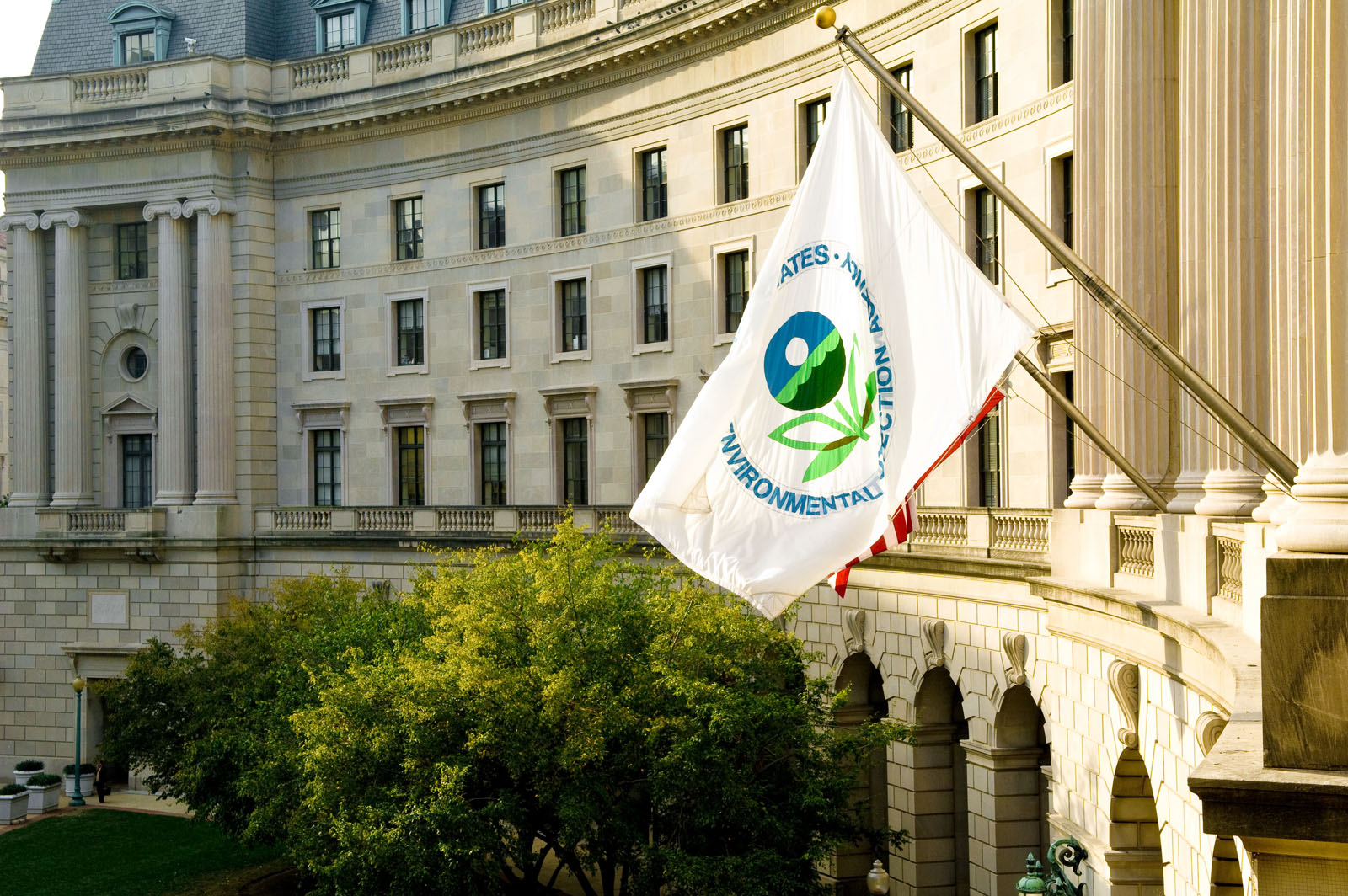
EPA Watch is The Investigative Journal’s weekly digest of federal and state environmental enforcement, compiled from public records including the U.S. Environmental Protection Agency’s Enforcement and Compliance History Online (ECHO) database, agency press releases, and U.S. Department of Justice filings. Figures reflect what public records demonstrably show; settlements resolve alleged violations and, except where a court has entered judgment, do not constitute findings of liability.
The enforcement week was defined by a single number: $450 million. On June 24, EPA, the Justice Department, and West Virginia environmental regulators announced what they called the first comprehensive federal settlement with a major manufacturer of PFAS “forever chemicals,” resolving claims against The Chemours Company across four plants in three states. The agreement anchored a stretch of enforcement activity weighted heavily toward water pollution, toxic-chemical reporting, and hazardous-waste handling — with civil penalties assessed against companies large and small, and a criminal sentence for an Oregon operator who dumped a half-million gallons of industrial wastewater into a public sewer.
Below are the notable actions from the period, each with the penalty amounts and compliance obligations the public record documents, followed by the enforcement patterns worth watching and the cases TIJ believes warrant a closer look.
1. Chemours: $450 million PFAS settlement across three states
According to EPA’s June 24 announcement, Chemours will spend a combined total estimated to exceed $450 million to resolve allegations that it released per- and polyfluoroalkyl substances (PFAS) into the Cape Fear River in North Carolina, the Delaware River in New Jersey, and the Ohio River in West Virginia — in some cases without required permits, and in others in violation of them. The settlement covers the company’s Washington Works facility in West Virginia, Fayetteville Works in North Carolina, and the Chambers Works and Parlin sites in New Jersey.
The structure of the deal is as significant as its headline figure. Records indicate the civil penalty itself is $22.5 million — an amount EPA says was set based on the company’s ability to pay after the agency and DOJ reviewed Chemours’ financial records — while more than $337 million is directed to injunctive relief, including an estimated $280 million to supply alternative drinking water to affected communities and roughly $60 million to bring the West Virginia plant into compliance. A separate multi-year, government-supervised program worth $90 million funds additional PFAS mitigation. Under the agreement, Chemours must complete 14 treatment-system projects at Washington Works and control releases of GenX, a type of PFAS, at an efficiency of at least 99 percent. The EPA case summary lists alleged violations of the Clean Water Act, the Resource Conservation and Recovery Act (RCRA), the Toxic Substances Control Act (TSCA), and the West Virginia Water Pollution Control Act.
The matter is not closed. The proposed consent decree was lodged in the U.S. District Court for the Southern District of West Virginia and is subject to a 30-day public comment period and final court approval, according to both EPA and the Justice Department. West Virginia Gov. Patrick Morrisey, whose office investigated the Washington Works site as attorney general, called the agreement “an encouraging first step” while noting that discussions over a “comprehensive resolution” for that facility remain open — a public signal that further liability may still be litigated.
2. Wilbur-Ellis: $630,737 for unreported chemical production
On June 4, EPA announced a settlement with Wilbur-Ellis Company, an international agribusiness firm, over alleged Toxic Substances Control Act violations at facilities in California and Washington. The company agreed to pay $630,737 — the largest stand-alone TSCA reporting penalty of the period — for what the agency describes as failures to properly report chemical production.
EPA alleges Wilbur-Ellis manufactured a new, unreported chemical substance on at least 29 separate occasions at plants in Willows, San Joaquin, and Rio Linda, California, and in Pomeroy, Washington, without first submitting the required premanufacture notice; processed a chemical EPA had designated “inactive” without notice; and produced more than 25,000 pounds each of three additional substances without filing mandatory quadrennial chemical-data reports. Those filings, the agency notes, are what allow EPA to screen chemicals for risk. The company returned to compliance by submitting the relevant premanufacture notice and revised data reporting. The case is a reminder that TSCA’s recordkeeping requirements — often overshadowed by higher-profile pollution cases — carry real financial exposure.
3. Union Pacific: $155,234 over PCB waste disposal in Oakland
EPA announced on June 18 that Union Pacific Railroad Company agreed to pay $155,234 to resolve alleged TSCA violations tied to the disposal of polychlorinated biphenyl (PCB) waste from a cleanup at its 73rd Avenue property in Oakland, California. PCBs, banned from U.S. manufacture in 1979, persist in the environment and bioaccumulate through the food chain.
The agency found that after removing PCB-contaminated soil under state supervision, the railroad improperly disposed of 334 tons of the cleanup waste in 2022 at a landfill not authorized to accept it, failed to document the waste or notify the receiving facility of its contents, and failed to properly document disposal of an additional 205 tons at an approved site. Union Pacific certified that it is now in compliance. The case illustrates a recurring enforcement theme — that the paperwork and chain-of-custody obligations governing hazardous waste are treated by EPA as substantive protections, not formalities, because approved landfills carry engineering controls that unauthorized sites lack.
4. Trenton Housing Authority: lead-paint settlement protecting 1,838 residents
In a joint action announced June 22, EPA and the U.S. Department of Housing and Urban Development reached parallel settlements with the Trenton Housing Authority (THA) in New Jersey over alleged violations of federal lead-based paint rules across six public-housing developments — roughly 982 units housing 1,838 residents. EPA’s agreement assesses a $100,000 civil penalty that can be waived if THA completes required corrective actions on schedule; HUD’s assesses an additional $7,500.
EPA and HUD found that THA did not provide required lead-disclosure information to residents at the Mayor Donnelly Homes and Woodrow Wilson Homes and that renovation work was performed by staff who were neither trained nor certified under federal lead-safe work-practice standards. Within 90 days, the authority must inspect for lead-based paint in all units where young children live and move quickly to address hazards, alongside a longer-term abatement plan and quarterly progress reports. Because the burden of lead exposure falls disproportionately on low-income families and children in older housing stock, the action sits squarely within the environmental-justice enforcement category — even as the current EPA has recast such work under a “protect vulnerable communities” framing rather than the prior administration’s environmental-justice terminology.
5. Colaska/AggPro: a $12,797 stormwater case now in public comment
At the smaller end of the docket, EPA Region 10 issued a public notice on June 4 of a proposed $12,797 penalty against Colaska, Inc. for alleged Clean Water Act violations at its AggPro aggregate site in Juneau, Alaska. The comment period runs through July 6, making this one of the few actions from the period still open to public input as of publication.
EPA alleges the company failed to comply with its Alaska Pollutant Discharge Elimination System multi-sector general permit for industrial stormwater discharging into Lemon Creek — specifically, failing to maintain routine inspection reports, quarterly visual assessments, corrective-action and training records, and a Stormwater Pollution Prevention Plan. The matter (docket CWA-10-2026-0183) is being handled as an expedited settlement agreement under Section 309(g) of the Clean Water Act. Modest as the penalty is, the case is a useful data point on how EPA pursues routine industrial-stormwater noncompliance, which rarely generates headlines but forms the backbone of Clean Water Act administrative enforcement.
6. Criminal enforcement: five months in prison for a 500,000-gallon sewer dump
The period’s most consequential criminal resolution came out of Oregon. According to the U.S. Attorney’s Office for the District of Oregon, Kayla Hartley, 36, of Troutdale was sentenced to five months in federal prison, a $25,000 fine, and three years of supervised release for conspiring to violate the Clean Water Act. As director of operations at Northwest Slurry Solutions and Hydro Excavation, LLC in Hillsboro, she marketed the company as able to accept industrial wastewater it had no permit to handle.
Court records show that between February and September 2020, the company accepted and discharged roughly 500,000 gallons of industrial wastewater — containing hydrofluoric acid, titanium, molybdenum, vanadium, arsenic, and other heavy metals — into the sanitary sewer operated by Clean Water Services, and that Hartley attempted to conceal the discharges when sewer-district staff visited the facility. The case, investigated by EPA’s Criminal Investigation Division, underscores that individual operators, not just corporations, face personal criminal liability for knowingly routing untreated industrial waste into public treatment systems.
Patterns worth watching
Two threads run through the period. The first is the primacy of PFAS and water enforcement. Chemours is the clearest expression of EPA’s stated “polluter pays” posture, and agency leadership framed it explicitly as a template — Assistant Administrator Jeffrey Hall said the settlement showed that “by appropriately employing the full suite of existing legal authorities,” EPA can “greatly reduce PFAS contamination.” Notably, the marquee action leaned on long-standing statutes (CWA, RCRA, TSCA) rather than novel PFAS-specific rules, suggesting enforcers are pressing existing authorities hard while newer PFAS regulations mature. The second thread is a concentration of TSCA reporting cases — Wilbur-Ellis and Union Pacific both turned on failures to notify or document rather than on measured harm, indicating EPA continues to treat chemical transparency requirements as an enforcement priority.
The data also show EPA calibrating penalties to a company’s ability to pay, most visibly in Chemours, where a $22.5 million cash penalty sits atop more than $427 million in mandated cleanup and mitigation — a structure that channels dollars toward remediation and affected communities rather than the U.S. Treasury. This period produced no major new Clean Air Act civil settlement in the public record, a gap worth monitoring against prior quarters when refinery and vehicle-emissions cases featured prominently. Context matters here too: EPA announced its Superfund Solutions Initiative on June 3, promising faster remediation across more than 1,340 National Priorities List sites — an agenda whose enforcement footprint TIJ will track in coming weeks.
What warrants a deeper TIJ investigation
Three items merit follow-up. First, the Chemours consent decree: with the 30-day comment window open and Gov. Morrisey signaling that a “comprehensive resolution” for Washington Works remains unsettled, the $450 million figure may prove a floor rather than a ceiling. TIJ will review the lodged consent decree and complaint — both posted to the Justice Department’s proposed-consent-decree page — and track community comments. Second, the drinking-water commitments: an estimated $280 million earmarked for alternative water supply raises the question of which specific communities near the Cape Fear, Delaware, and Ohio rivers will receive relief, on what timeline, and with what independent verification of the 99 percent GenX-control standard. Third, the recurrence of TSCA reporting failures at large, sophisticated firms invites a broader look at whether chemical-production underreporting is systemic across the agribusiness and rail sectors.
Methodology and right of reply: This digest is compiled solely from public records — EPA and DOJ press releases, EPA’s ECHO database and public notices, and court filings. Each dollar figure and factual claim above is drawn from the linked primary source. Settlement agreements described here resolve alleged violations; where a company has not admitted liability, that is the legal posture of the case. TIJ invites any party named in this report to respond, and will update the record accordingly. Cases still in a public-comment period or awaiting court approval are noted as such.