

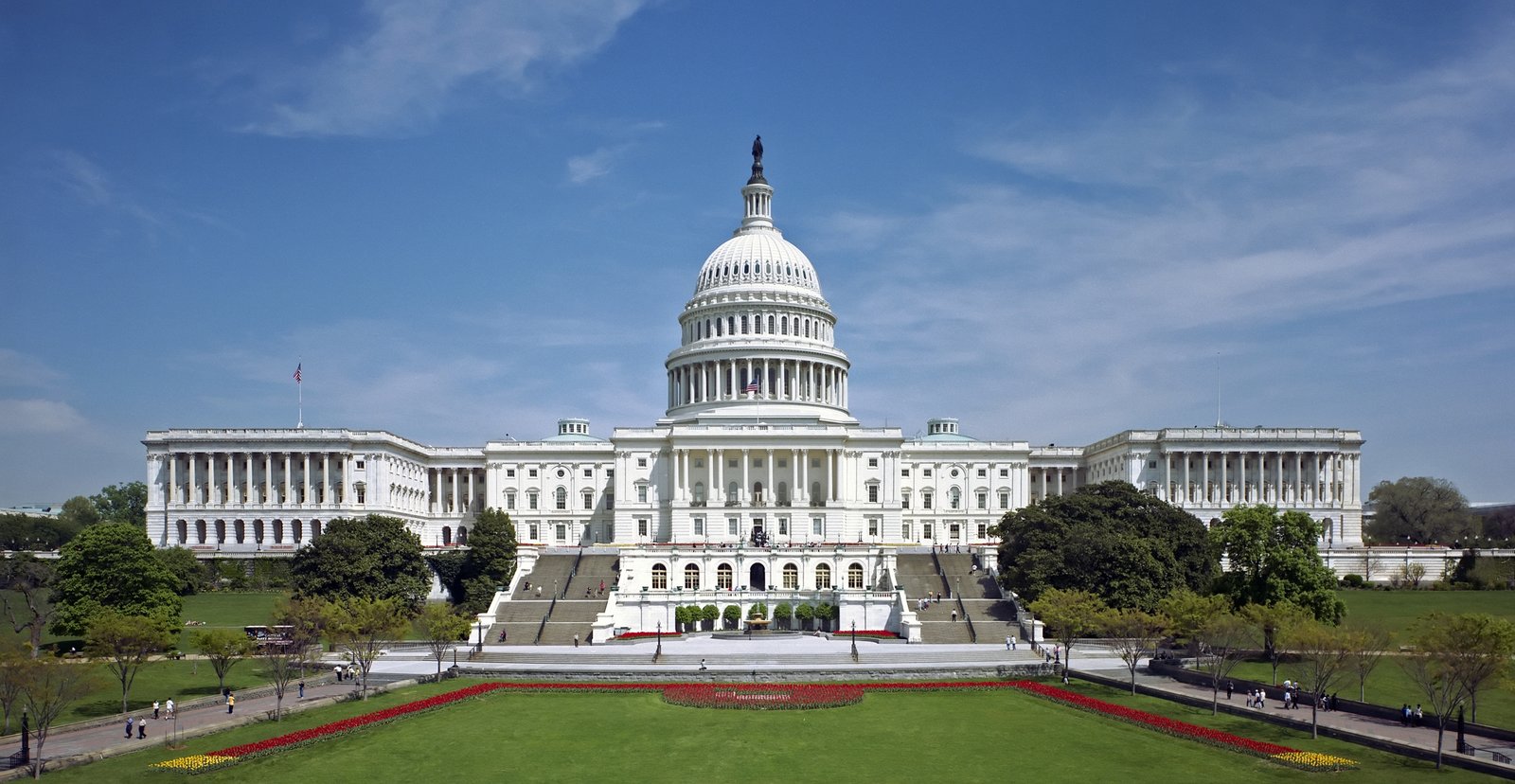
WASHINGTON — Congress emptied out ahead of the Independence Day holiday this week, but not before a fresh eruption of Republican infighting froze the House floor, stalled the annual defense policy bill, and underscored the arithmetic problem confronting Speaker Mike Johnson’s narrow majority. With the nation preparing to mark its 250th anniversary, both chambers are now dark until July 13, leaving a crowded legislative runway — defense authorization, a cryptocurrency market-structure bill, and the fiscal 2027 spending bills — for the weeks ahead. What follows is The Investigative Journal‘s account of the week’s notable congressional activity, drawn from the public record.
House leaves early after rule collapses over voter-ID fight
The House abandoned its pre-recess agenda on Tuesday after a bloc of Republicans sank a procedural rule needed to bring up several priority measures, according to CQ Roll Call. The rule failed 198-224, with 14 Republicans joining Democrats in opposition — though Majority Leader Steve Scalise, R-La., cast a “no” vote as a procedural maneuver to preserve the option of a later do-over. The defeat blocked floor consideration of the fiscal 2027 National Defense Authorization Act (NDAA), the National Security–State spending bill, and other items leadership had hoped to clear before the break.
At the center of the standoff was the SAVE America Act, which would require documentary proof of citizenship to register to vote. Rep. Anna Paulina Luna, R-Fla., the most prominent holdout, objected to leadership’s plan to attach the voter measure to the NDAA through a procedural device, calling it a “procedural head fake” that the Senate could easily unwind, Roll Call reported. Speaker Johnson countered that the rule would have written the voting text directly into the defense bill. Other dissenters — including Freedom Caucus Chairman Andy Harris, R-Md., and Reps. Chip Roy and Keith Self of Texas — cited leadership’s failure to schedule a border-security overhaul modeled on the prior Congress’s H.R. 2.
The episode marked the second time in a month that the House GOP agenda buckled on the floor, records show. Johnson told reporters he intends to revive the rule after further negotiation, but the math is unforgiving: with a slim majority, he can afford to lose no more than three Republican votes on reconsideration if all members are present and voting. Both chambers return July 13, with the House scheduled to be in session July 13–23 before the August recess, The Hill reported.
Senate defense bill advanced from committee, awaits floor time
While the House NDAA stalled, the Senate’s version is further along. The Senate Armed Services Committee completed its markup of the fiscal 2027 NDAA, advancing the measure on an 18-9 committee vote on June 11 and sending it toward the floor. Committee summaries indicate the bill sets topline defense policy for the coming year, spanning personnel, procurement, and emerging-technology provisions.
The divergent paths of the two chambers’ defense bills set up a familiar late-summer dynamic. Even if the House clears its version after the recess, a House-Senate conference would still be required to reconcile the differences — the very venue Luna warned could strip out any voter-ID language. For now, the Senate measure waits behind a crowded floor calendar that leaders are still trying to sequence.
Crypto market-structure bill snags on ethics language
Senate Republican leaders want to bring a long-negotiated digital-assets market-structure bill to the floor this month, but talks have snagged on an ethics provision, Roll Call reported. The Senate Banking Committee adopted a substitute amendment 15-9 on May 14, with two Democrats — Sens. Ruben Gallego of Arizona and Angela Alsobrooks of Maryland — joining Republicans, though both cautioned that their floor support was not guaranteed without stronger conflict-of-interest guardrails.
The negotiations grew more sensitive after President Donald Trump’s annual financial disclosure, filed with the Office of Government Ethics, reported more than $1.4 billion in cryptocurrency-related income in 2025, including royalties tied to his memecoin business and proceeds from tokens distributed by World Liberty Financial. Democrats led by Banking ranking member Elizabeth Warren, D-Mass., want the bill to bar the president, vice president, senior officials, lawmakers and their families from profiting off the industry. The White House, which backs the underlying bill, did not comment, Roll Call reported. Banking Chairman Tim Scott, R-S.C., has said he is seeking a full Senate vote this month, and House Financial Services Chairman French Hill, R-Ark. — whose chamber passed its own market-structure bill last year — urged the Senate to finish before the August recess.
Joint Economic Committee spotlights health-program fraud
The Joint Economic Committee held a hearing June 24 titled “Protecting Patients and Taxpayers: Combating Healthcare Fraud and Leakage to Strengthen Program Integrity,” chaired by Rep. David Schweikert, R-Ariz., with Sen. Maggie Hassan, D-N.H., as ranking member. Witnesses examined both outright fraud — such as home-health schemes — and “leakage,” including Medicare Advantage overpayments that drain the programs without meeting patients’ needs.
Brian Blase, president of the Paragon Health Institute, testified that roughly 6.2 million Affordable Care Act exchange enrollees in 2026 appeared to have been improperly enrolled — about 27 percent of total exchange enrollment, according to his written estimate. Federal auditors have for years flagged tens of billions of dollars in improper payments across Medicare and Medicaid annually; the hearing signaled a measure of bipartisan appetite for program-integrity fixes even as the parties clash over broader health spending.
CBO scores land on fraud, State Department bills
The Congressional Budget Office issued fresh cost estimates in late June that offer a window into pending legislation. CBO estimated that H.R. 2978, the GUARD Act of 2026 — which would expand Justice Department grants for state, local and tribal agencies to investigate financial fraud and scams — would cost about $128 million over the 2026–2031 period, assuming appropriation of the necessary amounts. Separately, CBO found that H.R. 8668, the State Department Recurring Reports Repeal and Sunset Act of 2026, would reduce costs by roughly $5 million by cutting an average of about 40 required reports per year.
The figures are modest in budget terms, but they illustrate the steady, less-visible work of the authorizing and appropriations committees that continues beneath the floor drama. CBO’s cost-estimate archive remains the authoritative reference for how much pending bills would add to — or subtract from — the federal ledger.
Appropriators pivot to fiscal 2027
With the fiscal 2026 spending cycle finally closed — the last of those bills, the Department of Homeland Security measure, was signed into law April 30 after a protracted funding fight — appropriators have turned to fiscal 2027, budget trackers show. Subcommittees in both chambers have begun drafting and marking up the twelve annual bills ahead of the Oct. 1 start of the new fiscal year.
The stalled National Security–State spending bill in the House is one piece of that puzzle. With only a narrow band of legislative days between the July 13 return and the August recess, lawmakers face pressure to make headway or risk another autumn scramble to avert a funding lapse — a recurring pattern that has defined the appropriations process in recent years.
TIJ Watch: Chinese laundering networks, cartel financing draw House scrutiny
Of particular relevance to The Investigative Journal‘s accountability beats, the House Financial Services Subcommittee on Oversight and Investigations held a June 9 hearing, “Converging Criminal Enterprises: Chinese Money Laundering Networks and Cartel Financing in the U.S. Financial System.” Members examined how Chinese money-laundering organizations increasingly partner with Latin American drug cartels to move billions in narcotics proceeds through the U.S. financial system and to procure fentanyl precursor chemicals.
Witnesses included Liana Rosen, a specialist in international sanctions and financial crimes at the Congressional Research Service; John Cassara, a retired U.S. Treasury special agent; Leland Lazarus of Lazarus Consulting; and Louis DeTitto of MissionLytics. According to the committee’s hearing materials, the Justice Department had, weeks earlier, unsealed an indictment in the Eastern District of Virginia charging two Chinese nationals with conspiracy to launder money on behalf of the Sinaloa Cartel and the Cartel de Jalisco Nueva Generación. Those charges are allegations; the case remains pending, and the defendants are presumed innocent unless and until proven guilty.
Looking ahead
When Congress reconvenes July 13, the Senate is expected to resume work on judicial nominations, including district-court picks John George Edward Marck and Arthur Roberts Jones for the Southern District of Texas and Michael J. Hendershot for the Northern District of Ohio. House leaders will try again to thread the defense-bill rule, while Senate leaders weigh whether to force the crypto market-structure bill onto the floor. The Investigative Journal will continue tracking the money-laundering and program-integrity threads as they develop.
All figures and actions in this digest are drawn from public congressional records, committee materials, the Congressional Budget Office, and official disclosures. Where matters remain in litigation or negotiation, they are noted as such.