

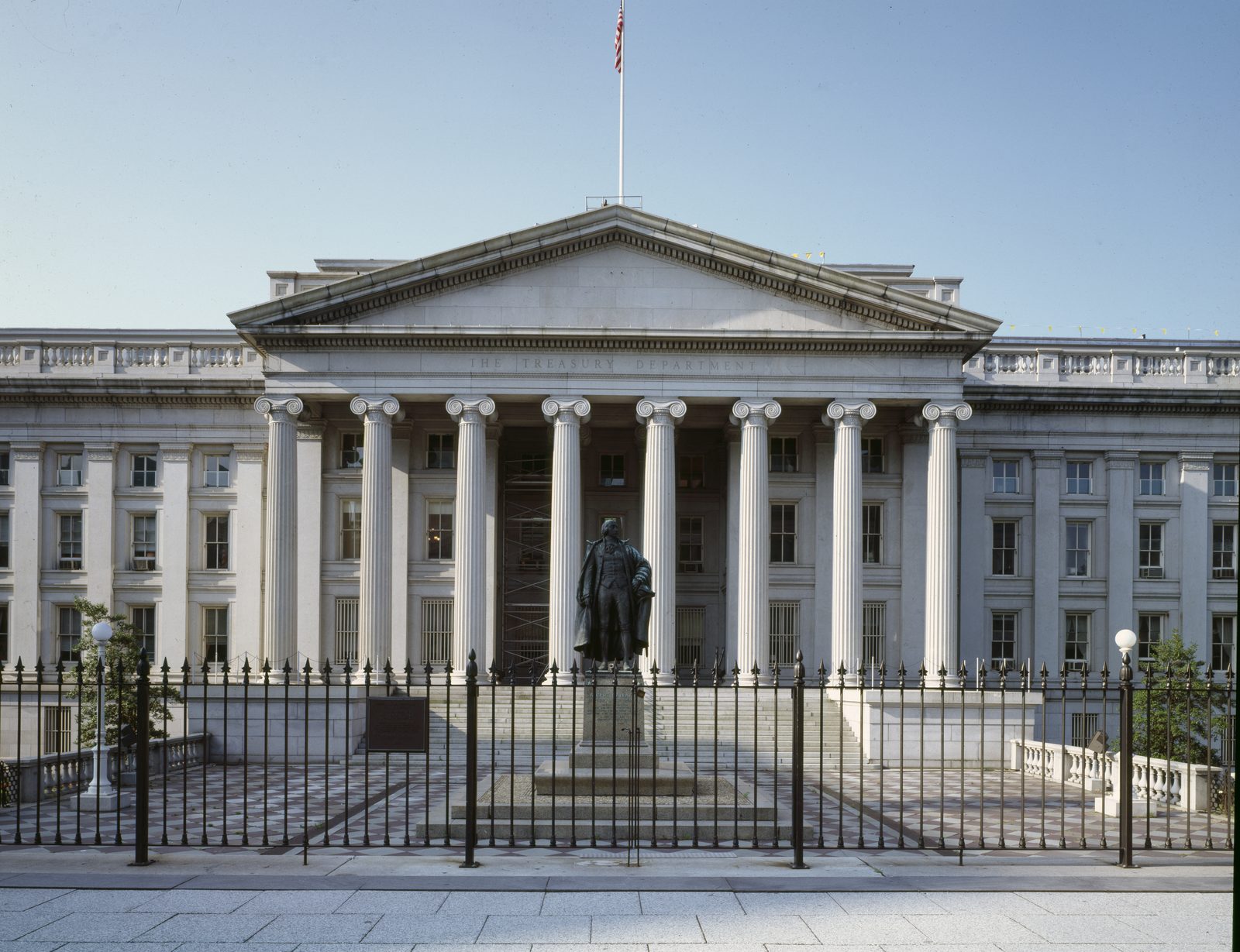
The Investigative Journal’s weekly digest of sanctions designations, export-control actions, and trade-enforcement developments, compiled from public U.S. government records for the week of July 7, 2026.
The U.S. Treasury opened July with a dense run of sanctions activity, blacklisting a Brazilian money-laundering network tied to Latin America’s largest prison-born crime syndicate even as the department pressed ahead with a broader “modernization” drive that has stripped dozens of older names from its blacklist. Records published by the Treasury’s Office of Foreign Assets Control (OFAC) show designations spanning narcotics trafficking, transnational fraud, terrorism finance, and country-specific programs from Cuba to Sudan over the past two weeks, alongside a steady stream of Russia-related delistings. Taken together, the filings point to a strategy Treasury leadership has described openly: fewer but sharper designations aimed at what officials call high-impact targets, paired with the removal of entries the department deems obsolete.
Below are eight notable sanctions and trade-enforcement developments, each drawn from primary government sources.
1. Treasury blacklists a money-laundering ring tied to Brazil’s PCC
On July 1, OFAC designated a São Paulo–centered network that it said launders drug proceeds for the Primeiro Comando da Capital (PCC), the prison gang widely regarded as Brazil’s most powerful criminal organization. The action named Victor Henrique de Oliveira Shimada and Stella Stefanie Nunes Henrique de Oliveira, along with five companies: the payments-technology firm Pixwave Soluções de Pagamentos, Victory Trading, Wave Construções Inteligentes, and a Portuguese logistics company, Avenidas Flutuantes Unipessoal. The designations were made under Executive Order 13224, the counterterrorism authority, as amended, together with the illicit-drugs authority in Executive Order 14059.
The listing is significant for what it reveals about how a hemispheric trafficking organization moves money. According to the OFAC records, the network folded a licensed Brazilian payments company into the laundering apparatus—an indication that the PCC’s financial footprint reaches into the regulated fintech sector rather than relying solely on cash. The inclusion of a Portuguese entity underscores the group’s transatlantic reach; investigators have long documented PCC involvement in cocaine flows moving through Brazilian ports toward Europe. The practical effect is to freeze any U.S.-jurisdiction assets and bar American firms from dealing with the listed parties, while exposing foreign banks that transact with them to secondary-sanctions risk.
2. The Prince Group scam-network crackdown widens
Within the same window, OFAC added more individuals and companies to its blacklist of the Prince Group Transnational Criminal Organization, a Cambodia-based conglomerate the department has tied to industrial-scale online investment fraud. The June 23 tranche named figures including Chen Bo and a financial network associated with Hu Xiaowei—among them the Hong Kong–registered China Reserve Securities—as well as a London cluster of restaurants, real-estate, gambling and telecommunications firms linked to Kong Ka On, and CCU Commercial Bank Plc in Phnom Penh. Treasury summarized the move in a release titled “Treasury Further Dismantles Overseas Scam Operations Targeting Americans.”
The action builds on what Treasury described in October 2025 as the largest-ever action against Southeast Asian cyber-scam networks, which targeted 146 people and entities. In a parallel case, the Justice Department indicted the group’s chairman, Chen Zhi, over forced-labor compounds where trafficked workers were made to run cryptocurrency “pig butchering” schemes, and announced a record forfeiture of roughly 127,000 bitcoin. Reporting indicates Chen Zhi was arrested in early January 2026. The latest additions matter because they map the network’s Western-facing infrastructure—United Kingdom shell companies and a Cambodian bank—showing how proceeds from schemes that Treasury says have cost Americans billions are cycled through ostensibly legitimate businesses.
3. Cuba’s military-run revenue apparatus
The June 23 filings also struck the Cuban regime’s economic machinery under Executive Order 14404. OFAC listed Banco Financiero Internacional, the cargo conglomerate Almacenes Universales, the steelmaker Empresa Siderúrgica José Martí (Antillana de Acero), the mining company Geominera, and the consultancy Rafin, along with an individual, Annalie Rueda Cardero, whom the listing links to Alejandro Castro Espín. A companion State Department fact sheet framed the designations as targeting revenue streams that flow to the island’s military-controlled economic enterprises.
The designations tighten pressure on the network of state-owned enterprises that channel hard currency to the Cuban armed forces. Because several of the listed entities operate in banking, cargo handling and mining, the action is likely to complicate the regime’s access to trade financing and foreign-exchange settlement. As with all designations, the listings reflect the U.S. government’s assertions; affected parties may seek delisting through OFAC’s administrative process.
4. Networks “fueling Sudan’s civil war”
On June 26, OFAC sanctioned a procurement web that the department said supplies materiel to combatants in Sudan’s civil war, in a release titled “Treasury Sanctions Networks Fueling Sudan’s Civil War and Worsening Humanitarian Crisis.” The action, taken under Executive Order 14098, named the Indian commercial-explosives manufacturer SBL Energy Limited (also known as Amin Explosives), the Khartoum-based chemicals wholesaler Target Multiactivities Company, and the state-owned Ports Engineering Company, along with individuals in Sudan, India and Panama connected to a broker identified as Talent Bridge.
The most striking element is the reach of the supply chain: OFAC’s records indicate that a licensed explosives producer outside the conflict zone became a node in wartime procurement, a finding with direct implications for export-control compliance in the commercial-explosives and dual-use chemicals sectors. The designations arrive against the backdrop of one of the world’s gravest humanitarian emergencies, and they signal that Treasury intends to pursue the international logistics and finance that sustain the fighting, not only the belligerents themselves.
5. Conflict gold, Rwandan refineries and the M23
A day earlier, on June 25, OFAC designated the Kigali-based Gasabo Gold Refinery, which the department linked to the M23 armed group operating in the eastern Democratic Republic of the Congo, together with the businessmen Jean Malic Kalima Karekezi and Bosco Kayobotsi and the mining firms Bugambira Mines, Rwinkwavu Mining Corporation, and Wolfram Mining and Processing. The designations fall under the DRC-related sanctions program. The same notice issued an amended Russia-related general license concerning the potential sale of Lukoil International.
The gold-refining designation targets a link in the supply chain that turns minerals extracted amid armed conflict into exportable bullion. For refiners, jewelers and electronics manufacturers, the action is a reminder that due-diligence obligations extend deep into upstream sourcing, and that intermediary refineries can carry sanctions exposure. The listing reflects OFAC’s stated assessment of the entities’ ties to M23; it does not, on its face, extend to the broader regional actors that international monitors have separately scrutinized.
6. An Ecuadorian gang joins the terror list; ISIS-K’s crypto wallets exposed
The July 1 tranche carried two additional counterterrorism elements. OFAC designated the Ecuadorian gang known as the Chone Killers as both a Foreign Terrorist Organization and a Specially Designated Global Terrorist—an escalation that mirrors the administration’s broader use of terrorism authorities against violent Western Hemisphere criminal groups. Separately, the department refreshed its entry for ISIL-Khorasan (ISIS-K), appending an extensive list of Monero and Tron cryptocurrency addresses associated with the group.
The crypto-wallet update is a notable enforcement signal: by publishing digital-currency identifiers, Treasury puts exchanges, custodians and blockchain-analytics firms on notice to screen for and block the flagged addresses. The FTO designation of a Latin American gang, meanwhile, continues a pattern that compliance teams and financial institutions have been tracking closely, as terrorism-finance rules increasingly attach to organizations once treated primarily as narcotics or organized-crime threats.
7. The “modernization” drive: dozens of names removed, Russia delistings, a new appeals portal
Even as it added targets, OFAC continued a high-profile effort to prune its blacklist. In a late-May action described in “Treasury Begins Sanctions Modernization Effort by Removing Outdated Entries,” the department removed 76 entries it deemed obsolete—covering deceased individuals, decommissioned vessels and defunct networks—and framed the move as part of an initiative championed by Treasury Secretary Scott Bessent. Treasury noted that annual new listings had grown from 880 in 2017 to more than 3,000 in 2024, and argued that success should be measured by “effect, impact, and national security benefit—not just based on the number of names Treasury places on a list.” In the days that followed, OFAC’s recent-actions log recorded repeated Russia-related removals on June 24, 29 and 30, and, on June 29, the launch of an OFAC Reconsideration Portal to streamline delisting requests.
The recalibration is defensible on compliance-cost grounds: Treasury itself has acknowledged that firms devote significant resources to screening low-risk name matches. But the timing invites scrutiny. Removing Russia-related entries during a period of active diplomacy raises reasonable questions about which parties are being delisted and on what basis—precisely the sort of transparency issue that warrants close, non-partisan monitoring. The new portal’s criteria and turnaround times will bear watching as the program matures.
8. Export controls and tariffs: the “ultimate parent” chip rule and metals duties
On the trade side, the Commerce Department’s Bureau of Industry and Security (BIS) has moved to close a loophole in advanced-chip export controls. Guidance issued in late spring clarifies that licensing requirements follow a company’s ultimate parent rather than its mailing address, meaning firms headquartered in China or Macau—and their affiliates registered in Singapore, Malaysia or elsewhere—need licenses to receive advanced processors. The approach parallels the Entity List “affiliates” rule that treats entities 50 percent or more owned by listed parties as themselves restricted; industry advisories indicate that rule’s automatic application was suspended for roughly a year under a U.S.–China understanding tied to rare-earth licensing, with re-implementation expected in November 2026. The current Entity List is maintained on the BIS website.
In parallel tariff activity, trade-compliance analyses indicate that a June 1 presidential proclamation adjusted Section 232 duties on steel, aluminum and copper—applying the tariff to the full value of covered products and taking effect June 8—while the Office of the U.S. Trade Representative determined on June 2 that some 60 countries had failed to adequately bar imports of goods made with forced labor, opening the door to action under Section 301. Because those measures were reported via secondary channels rather than confirmed here through primary filings, they are noted with appropriate caution; readers should consult the Federal Register and Customs and Border Protection guidance for authoritative text.
What warrants a closer look
Several threads in this week’s filings merit deeper reporting. The first is the Western corporate-registry angle: the Prince Group additions lean heavily on United Kingdom shell companies, raising questions about how easily overseas fraud proceeds are cycled through Companies House registrations. The second is the co-option of regulated fintech—the São Paulo payments firm caught in the PCC designation—which suggests that licensed payment processors deserve scrutiny as laundering vectors. Third, the Rwandan gold-refining designation invites a supply-chain investigation into how conflict gold reaches global bullion and electronics markets. Fourth, the sanctioning of an Indian explosives manufacturer over Sudan points to gaps in commercial-explosives export controls that extend well beyond a single firm. Finally, the modernization removals—especially the cluster of Russia-related delistings and the new Reconsideration Portal—call for sustained transparency reporting on which names are coming off the list and why.
Methodology and right of reply: This digest relies solely on public U.S. government records, including OFAC recent-actions notices, Treasury and State Department press materials, and Commerce/BIS publications. Sanctions designations reflect the U.S. government’s assertions; in pending criminal matters, indictments contain allegations that are not proven unless established in court. Designated parties may contest listings through OFAC’s administrative petition process. The Investigative Journal will update this report if affected parties provide substantive responses.