

Government watchdogs across the ideological spectrum produced an unusually pointed set of findings this week, and a common thread ran through them: money that moved where it should not have — into fraudulent claims, weakly controlled programs, and channels of political influence that public records only partly illuminate. This roundup surveys eight reports and investigations, from the nonpartisan auditors of the Government Accountability Office (GAO) and the Congressional Research Service (CRS) to advocacy-driven groups on the left and right. For each, we note the organization’s orientation and funding, link directly to the underlying report or dataset, and separate documented findings from allegations that remain unproven. Figures are drawn from primary documents; where a claim rests on a group’s own analysis rather than an audit, we say so.
1. Who watches the watchdogs? GAO faults the inspectors general’s own oversight body
The week’s most consequential finding concerns the machinery of oversight itself. In a report publicly released in June (GAO-26-107922), the Government Accountability Office examined the Integrity Committee of the Council of the Inspectors General on Integrity and Efficiency (CIGIE) — the body responsible for investigating misconduct allegations against inspectors general — and found it frequently failed to police its own. GAO reported that the committee regularly missed the 150-day statutory deadline for completing investigations; the minimum investigation length was 427 days and the maximum reached roughly three years. Auditors found that just 24 percent of cases met all timeframe requirements, that “improper reviews” could discard complaints that should have been investigated, and that final investigative reports sometimes “did not reflect the conclusions reached by the investigating office of inspector general.” Required information, including recusals by members with conflicts of interest, was not always documented.
GAO made eight recommendations, and CIGIE Chairwoman Cheryl Mason — the Department of Veterans Affairs inspector general — wrote that the council “concurs in principle” with all of them, while noting the Integrity Committee relies on assisting inspectors general offices with their own resource constraints. On July 1, House Oversight and Government Reform Committee Chairman James Comer (R-Ky.), joined by subcommittee chairmen Pete Sessions (R-Texas), Clay Higgins (R-La.) and Andy Biggs (R-Ariz.), sent CIGIE a letter demanding documents by July 15 and warning it may move to strip the council of its duty to investigate wrongdoing within inspector general offices. GAO is the nonpartisan audit arm of Congress; the follow-up oversight is being led by the committee’s Republican majority. The findings were also covered by the Daily Signal, the news outlet of the conservative Heritage Foundation.
2. GAO’s annual duplication report: $774 billion saved, $100 billion-plus still on the table
GAO’s 16th annual report on duplicative, overlapping and fragmented federal programs (GAO-26-108505, May 12) offers a running scorecard of what accountability work actually recovers. As of March 2026, Congress and agencies had fully or partially addressed 1,662 of the 2,148 matters GAO has identified since 2011, producing about $774.3 billion in financial benefits — an increase of roughly $49.3 billion since the prior report. The document adds 97 new recommendations and identifies 610 that remain open, of which 182 carry potential financial benefits.
GAO estimates that fully addressing the remaining items could yield $100 billion or more; in an accompanying press release, it put the range at $132 billion to $251 billion. Illustrative items include equalizing Medicare payment rates across care settings (a Congressional Budget Office estimate of $156.9 billion over 10 years), curbing incentives in the Medicare Part B and 340B drug programs (tens of billions), and reclassifying certain nuclear waste (potentially tens of billions). These are auditor estimates, not booked savings, and GAO cautions the figures rest on differing assumptions and methodologies. The full 100-page report and highlights are posted at gao.gov.
3. Improper payments reach $186 billion — GAO and CRS quantify the leak
Two nonpartisan congressional bodies converged on the same problem. GAO’s payment-integrity assessment (GAO-26-108694) found that federal agencies’ estimated improper payments rose to about $186 billion in fiscal year 2025 — spread across 64 programs at 15 agencies, and up roughly $24 billion from the prior year. Improper payments include overpayments, underpayments, and payments lacking sufficient documentation, and are not synonymous with fraud, though they create the conditions in which fraud thrives.
The Congressional Research Service, the nonpartisan research arm of the Library of Congress, put the concentration of the problem into relief in “Improper Payments: Ongoing Challenges and Recent Legislative Proposals” (R48296, June 2). CRS reported that five of the largest programs — Medicare (Parts C and D and Fee-for-Service), Medicaid, the Earned Income Tax Credit, Unemployment Insurance and Supplemental Security Income — accounted for roughly $128 billion, or about 66 percent, of FY2025 improper payments. CRS reports are prepared for Congress and take no policy position; the report catalogs recovery-audit mechanisms and pending legislative proposals rather than advocating a course of action.
4. DHS inspector general: $13.5 billion in pandemic FEMA aid went to fraud and unsupported costs
An independent inspector general audit put a hard number on one legacy of the pandemic response. In OIG-26-11 (June 2026), the Department of Homeland Security Office of Inspector General found that more than $13.5 billion in COVID-19 recovery awards administered by the Federal Emergency Management Agency went to ineligible recipients or unallowable and unsupported costs. Investigators traced roughly $3.7 billion in potentially fraudulent or duplicate payments in the Lost Wages Assistance and Funeral Assistance programs, about $8.2 billion in unallowable or unsupported costs, and $1.5 billion in over-obligated funding. The report’s key finding: “Ineffective Controls Led to COVID-19 Funding Being Susceptible to Fraud, Waste, and Abuse.” The programs date to 2020–2021, and the audit faults reliance on self-certification and inconsistent documentation review.
The findings were amplified by Judicial Watch, the conservative legal watchdog led by Tom Fitton that pursues records through Freedom of Information Act litigation. Separately, Judicial Watch has obtained records it says show New York City received $188 million from a FEMA shelter program used to house migrants — documents the group secured after suing for their release. The inspector general’s audited financial findings and Judicial Watch’s FOIA-obtained records are matters of public record; we have set aside the group’s more contested political characterizations, which are its own.
5. POGO: the $1.5 trillion Pentagon budget and its biggest beneficiaries
The Project On Government Oversight (POGO), a nonpartisan watchdog founded in 1981 and funded by foundations and individual donors, examined the roughly $1.5 trillion Pentagon budget request and reported that it “boosts troubled programs and contracting giants.” In its analysis, POGO identified 24 major weapons programs slated to at least double annual spending and named six incumbents — Lockheed Martin, Huntington Ingalls Industries, RTX, General Dynamics, Boeing and Northrop Grumman — as the principal beneficiaries. A POGO review of lobbying disclosures found those six spent a combined $21.2 million on lobbying in the first quarter of 2026; Boeing, Lockheed and Northrop have together spent more than $1 billion since 1998.
POGO’s defense-spending work is frequently embraced by the left, but its conclusions this week rhyme with those of the nonpartisan GAO, whose Weapon Systems Annual Assessment, released July 2, found the Department of Defense has not fully implemented reforms meant to speed delivery and continues to face persistent schedule and capability challenges across a portfolio it plans to invest more than $2.4 trillion to develop and acquire. Read together, the two documents make a bipartisan case that procurement oversight is lagging the money.
6. OpenTheBooks: California’s immigration-NGO spending draws a Senate probe
OpenTheBooks, the transparency nonprofit (formally American Transparency) founded by Adam Andrzejewski and generally aligned with fiscal conservatives, used state disclosure data to document that California directed tens of millions of dollars to immigration-focused nonprofits, some of which provide legal aid to contest deportations. Its report draws on public expenditure records, which are verifiable, and the group’s underlying database remains its calling card.
The spending analysis fed a political response that should be described precisely. Sen. Josh Hawley (R-Mo.) opened an inquiry and sent a letter to the Coalition for Humane Immigrant Rights (CHIRLA) demanding donor lists and internal records amid allegations that the group helped finance coordinated violent protests in Los Angeles; he also urged the Justice Department to investigate. Those allegations are unproven, no charges have been filed, and CHIRLA is entitled to respond; a congressional demand for documents is not a finding of wrongdoing. What the public records establish is the spending; the rest is a pending inquiry.
7. Capital Research Center: a $2.65 billion “foreign grants” loophole
Capital Research Center (CRC), an explicitly conservative watchdog that studies what it calls “liberal money in politics” and runs the InfluenceWatch database, published an analysis titled “Foreign Grants: The Darkest of ‘Dark Money.’” CRC contends that six foreign entities routed more than $2.65 billion into U.S. advocacy organizations through nonprofit grants — a channel it argues is “virtually unchecked” because grants to tax-exempt groups face far lighter disclosure requirements than direct political spending. The figure and framing are CRC’s own analysis of grant records, not an audited government finding, and the organizations named would dispute the “dark money” characterization.
The report drew coverage from Fox News, and CRC’s research has increasingly been cited by Republican lawmakers. Presented alongside the left-leaning transparency concerns elsewhere in this roundup, CRC’s work underscores a point both sides accept in the abstract even as they disagree about targets: money that shapes public policy through tax-exempt intermediaries is harder to trace than money spent openly.
8. ProPublica’s “Friends of the Court” and the limits of judicial disclosure
On the other side of the ledger sits ProPublica, the nonprofit investigative newsroom generally viewed as left-of-center and funded by foundations and donors (it has won nine Pulitzer Prizes). Its ongoing “Friends of the Court” series has documented undisclosed luxury travel and gifts to Supreme Court justices from wealthy benefactors — most prominently Justice Clarence Thomas’s years of travel funded by real-estate magnate and Republican donor Harlan Crow, and Justice Samuel Alito’s 2008 fishing trip with billionaire Paul Singer, whose firm later had matters before the Court. ProPublica maintains a searchable database of the justices’ disclosures.
The reporting is not without dispute: Justice Thomas has said he was advised that “personal hospitality” from friends did not require disclosure, and the reforms it prompted are incomplete. In 2023 the Court adopted its first formal code of conduct, but the code lacks an independent enforcement mechanism — a gap that keeps the underlying accountability question open. Whatever one makes of the series’ framing, its factual core rests on financial-disclosure records and property and travel documents that ProPublica has published.
What warrants a deeper TIJ investigation
Four threads deserve sustained follow-up. First, recovery: the $186 billion improper-payments total and FEMA’s $13.5 billion in questioned COVID awards raise the question of how much is actually being clawed back, and whether the control failures the inspector general identified have been fixed. Second, the watchdogs’ watchdog: whether CIGIE adopts GAO’s eight recommendations and satisfies the House Oversight Committee’s July 15 document demand, or whether Congress moves to restructure how inspector general misconduct is investigated. Third, procurement: POGO’s 24 doubling weapons programs and GAO’s parallel weapon-systems findings point to a defense-acquisition system where oversight trails the dollars. Fourth — and most bipartisan — the transparency gap itself: foreign and domestic grants to advocacy groups flagged on the right, and undisclosed gifts to public officials flagged on the left, describe the same structural problem from opposite ends. A unified TIJ data project tracing money-through-intermediaries, applied without regard to which side it embarrasses, would be the most useful contribution this newsroom could make.
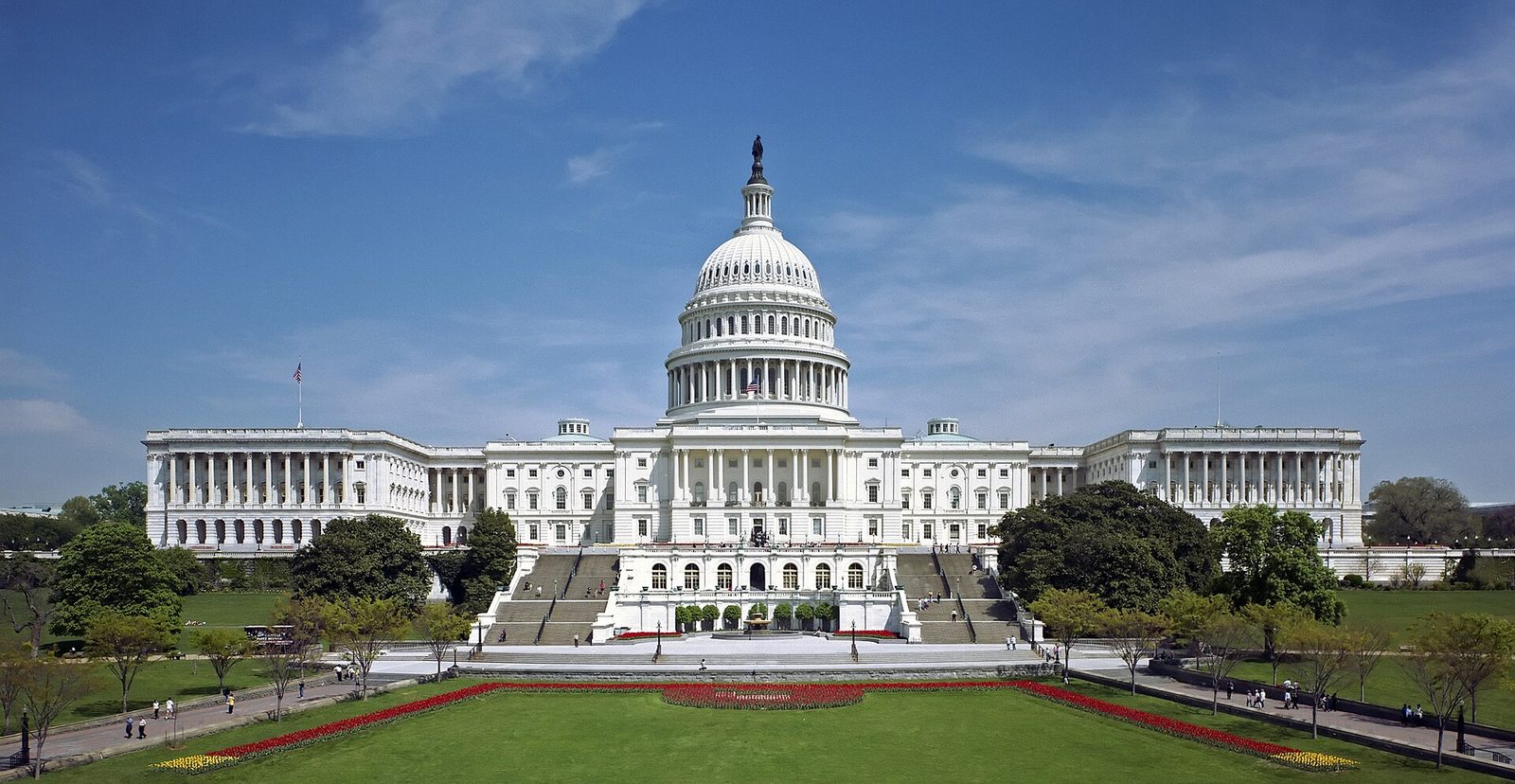
Editor’s note: This roundup summarizes publicly available reports and links to the original documents. Findings from GAO, CRS and the inspectors general reflect completed audits; characterizations attributed to advocacy organizations reflect those groups’ own analyses. Allegations described as under investigation are unproven, and the individuals and organizations named are entitled to respond. Featured image: The United States Capitol. Photo by Martin Falbisoner, CC BY-SA 3.0, via Wikimedia Commons.