

The Afternoon Wire is The Investigative Journal’s daily digest of the developments that matter in government, the courts, and world affairs — sourced to public records and primary documents.
Washington heads into the Labor Day weekend with an unusually crowded docket. The Bureau of Labor Statistics released its August employment report Friday morning, the last major labor reading before the Federal Reserve’s policy meeting later this month. At the Supreme Court, the solicitor general filed a new emergency application Thursday afternoon seeking to restore a Postal Service mail-ballot rule ahead of the midterm elections — with the first state ballot mailings beginning as soon as today. And Congress, having cleared a stopgap funding measure earlier this week, has pushed the next shutdown deadline to December 11. Here is where each story stands, and what to watch next.
Government
Stopgap spending bill moves shutdown deadline to December 11
Congress this week completed action on a continuing resolution extending federal funding through December 11, 2026, averting a lapse at the end of the fiscal year on September 30. The House passed the Senate-approved measure, H.R. 6500, on September 1 by a vote of 370-48, according to Government Executive, and the bill then went to the president’s desk. The House Appropriations Committee described the measure as a clean funding extension that continues fiscal 2026 levels across the twelve appropriations divisions, with targeted anomalies and rescissions.
The lopsided vote reflects a calculation on both sides of the aisle to avoid a funding fight two months before the November midterms. But the December 11 date sets up a consequential lame-duck session: none of the twelve full-year bills has been enacted, according to the Committee for a Responsible Federal Budget’s appropriations tracker, leaving defense, homeland security, and domestic programs on autopilot until negotiators strike a deal — or punt again.
August jobs report lands after a soft summer for hiring
The Bureau of Labor Statistics released the August Employment Situation at 8:30 a.m. Friday. Heading into the release, economists surveyed by Dow Jones expected payroll growth of roughly 53,000 and an unemployment rate near 4.1 percent, according to CNBC, while other forecasts reported by NBC News anticipated a tick up to 4.2 percent. The stakes were raised by July’s reported loss of 23,000 jobs and by Wednesday’s ADP print showing just 38,000 private-sector hires in August, per Yahoo Finance — a labor market that ADP’s chief economist characterized as “cooling, not cracking.”
Pre-release coverage framed the report as the decisive input for the Federal Reserve’s rate decision later this month. Readers can find the official tables and revisions directly in the BLS release linked above; whatever the headline number, the summer trend — three straight months of weak or negative prints — is now the baseline against which policymakers will judge it.
Ballroom construction proceeds after 5-4 Supreme Court stay
Above-ground construction on the new White House State Ballroom is moving forward this week under the Supreme Court’s August 31 emergency order, which stayed a district-court injunction that had halted the project. The 5-4 majority concluded the government is likely to show that the preservation group challenging the project lacks Article III standing, according to SCOTUSblog’s account of the order; the Washington Times reported the ruling allows work to continue while litigation proceeds.
Notably, Chief Justice John Roberts wrote for the four dissenters, arguing the project is “likely unlawful” and that the challengers likely do have standing. The underlying merits — including an August 7 appeals-court holding that congressional sign-off is required — remain unresolved, meaning the dispute is far from over even as concrete is poured.
Courts
Mail-ballot rule reaches the Supreme Court — with ballots already moving
The Trump administration on Thursday asked the Supreme Court to pause a Boston federal judge’s order blocking parts of a new U.S. Postal Service rule governing mail-in ballots. In the application, Solicitor General D. John Sauer argued that U.S. District Judge Indira Talwani’s August 27 temporary restraining order “partially nullifies” the Postal Service’s anti-fraud efforts, and stressed the timing: North Carolina begins sending ballots as soon as September 4, with Alabama to follow September 9. “Once those ballot envelopes enter the mailstream, there is no retrieving them,” Sauer wrote.
The challengers — 23 states led by California, plus the District of Columbia — contend the underlying March executive order and USPS rule intrude on the states’ constitutional authority over voter eligibility and the times, places, and manner of elections. The filings indicate Talwani’s 14-day order runs through September 14, and the justices have directed a response by 10 a.m. Tuesday, September 8. This is the administration’s second trip to the Court on mail-voting rules in six weeks; in late August, the justices allowed implementation of the executive order to begin, reasoning the states’ challenge was premature.
Maryland judge halts revised birthright citizenship order
U.S. District Judge Deborah Boardman on Wednesday temporarily blocked enforcement of the president’s August 6 executive order narrowing birthright citizenship, writing that the order “is almost certainly unconstitutional” as applied to children of parents in the country temporarily or without documentation, per SCOTUSblog. The ruling in CASA v. Trump follows the Supreme Court’s June 30 decision in Trump v. Barbara, which struck down the administration’s first birthright order and reaffirmed the 14th Amendment citizenship clause’s “broad reach.”
The August order sought to carve out children of embassy and international-organization employees, children of parents designated “alien enemies,” and children born after what the order terms commercial transactions arranged to secure a U.S. birth. Boardman found the new carve-outs “bear little to no resemblance” to the narrow exceptions the Supreme Court has recognized. The case remains pending, and the administration is expected to defend the order on appeal; these are preliminary findings, not a final judgment.
Third Circuit becomes eighth appeals court to reject mandatory-detention policy
The U.S. Court of Appeals for the Third Circuit has rejected the administration’s policy of mandatory immigration detention without bond hearings — by the count of the ACLU, which brought the case, the eighth federal appeals court to find the policy unlawful. The policy, rolled out last year, treated millions of longtime residents in removal proceedings as ineligible for individualized bond determinations.
The government has defended the policy in court as a lawful reading of the detention statutes, and the accumulating circuit rulings — now a near-sweep against the administration’s position — make eventual Supreme Court review more likely, since the justices typically step in when a policy of this scale is enjoined across multiple circuits. Readers should note the characterization above draws on the plaintiffs’ release; the opinion itself controls.
NFA registration injunction holds as appeal window narrows
A month after a Northern District of Texas ruling held the National Firearms Act’s registration and approval requirements for suppressors and short-barreled firearms unconstitutional, the decision’s injunction remains in effect, according to NPR and industry trackers such as Silencer Central. The court’s seven-day stay lapsed in mid-August without the government seeking appellate relief, and filings indicate the Justice Department has until October 5 to notice an appeal to the Fifth Circuit.
Rep. Andrew Clyde of Georgia has said he received confirmation that the department will not appeal, though DOJ’s on-record position is that it is assessing the ruling’s impact. If no appeal is filed by the deadline, a core piece of the 1934 firearms-regulation framework would stand invalidated in that district — a significant realignment achieved through litigation rather than legislation.
International
Peace-talk signals from Kyiv and Moscow — as drones still fly
Ukrainian officials signaled renewed diplomatic movement this week. Foreign Minister Andrii Sybiha said peace efforts could gain “new momentum” as diplomatic activity resumes, per the Kyiv Post, and President Volodymyr Zelensky said preliminary dates are set for U.S. negotiators to visit both Moscow and Kyiv. Russian President Vladimir Putin, for his part, said a deal must be reached, while citing complications from Kyiv’s warning to civil aviation about Russian airspace.
The diplomacy proceeds against unrelenting strikes: Russian drones hit central Kyiv on Wednesday, wounding 11 people in a seventh consecutive day of attacks, Reuters reported, and Moscow vowed to head off aviation disruptions after Zelensky’s airspace warning. The gap between negotiating-table signals and battlefield reality remains the story to watch as U.S. envoys travel in the coming days.
Gaza plan’s second phase strains over disarmament sequencing
Implementation of the U.S.-backed Gaza framework remains hung up on sequencing: Hamas has agreed to a framework for gradual disarmament alongside phased Israeli withdrawals, while Prime Minister Benjamin Netanyahu has insisted troops remain until disarmament is verified, according to reporting from the Times of Israel. U.S. envoy Steve Witkoff has said Hamas officials privately committed to disarm and that Washington is standing up a decommissioning and amnesty program — claims the group’s public statements have repeatedly contradicted.
An international verification commission, a stabilization force, and a new Palestinian police force are slated to oversee the process, which initially targets heavy weaponry, production sites, and the tunnel network. The distance between Witkoff’s account and Hamas’s public posture is the fault line on which the second phase will hold or fail; both descriptions are attributed claims, not verified outcomes.
Xi courts Cairo as election season tightens abroad
Chinese President Xi Jinping received a lavish welcome in Egypt this week, where he called on Middle Eastern nations to oppose “external interference” and consider reshaping the region’s security order, Reuters reported — a direct bid to expand Beijing’s influence in a theater Washington has long anchored. The New York Times described a reception that included President Abdel Fattah el-Sisi personally greeting Xi at the airport.
Meanwhile, two closely watched elections tightened. Sweden’s ruling right-wing coalition has nearly closed the gap with the center-left bloc ahead of the September 13 parliamentary vote, a TV4 poll showed, per Reuters, and in Brazil, President Lula da Silva’s lead over Senator Flavio Bolsonaro narrowed further ahead of October’s election, according to a Quaest poll reported by Reuters. Both contests carry consequences for U.S. alignment in Europe and the hemisphere.
Tomorrow’s Watch
The Labor Day weekend thins the official calendar, but the clock keeps running on several fronts. Watch for a possible administrative stay from the Supreme Court in the Postal Service case at any hour — North Carolina ballots begin entering the mailstream now, and the challengers’ response is due at 10 a.m. Tuesday, September 8. Judge Talwani’s restraining order expires September 14, which effectively forces the justices’ hand within the week. Markets are closed Monday for the holiday, making Tuesday the first full trading session to digest the August jobs data ahead of the Fed’s meeting later this month. Abroad, U.S. negotiators are expected to travel to Moscow and Kyiv in the coming days, per Kyiv’s account, and Sweden enters the final week before its September 13 vote. Congress returns after the holiday to begin the twelve-bill appropriations slog toward December 11. The Afternoon Wire will track all of it.
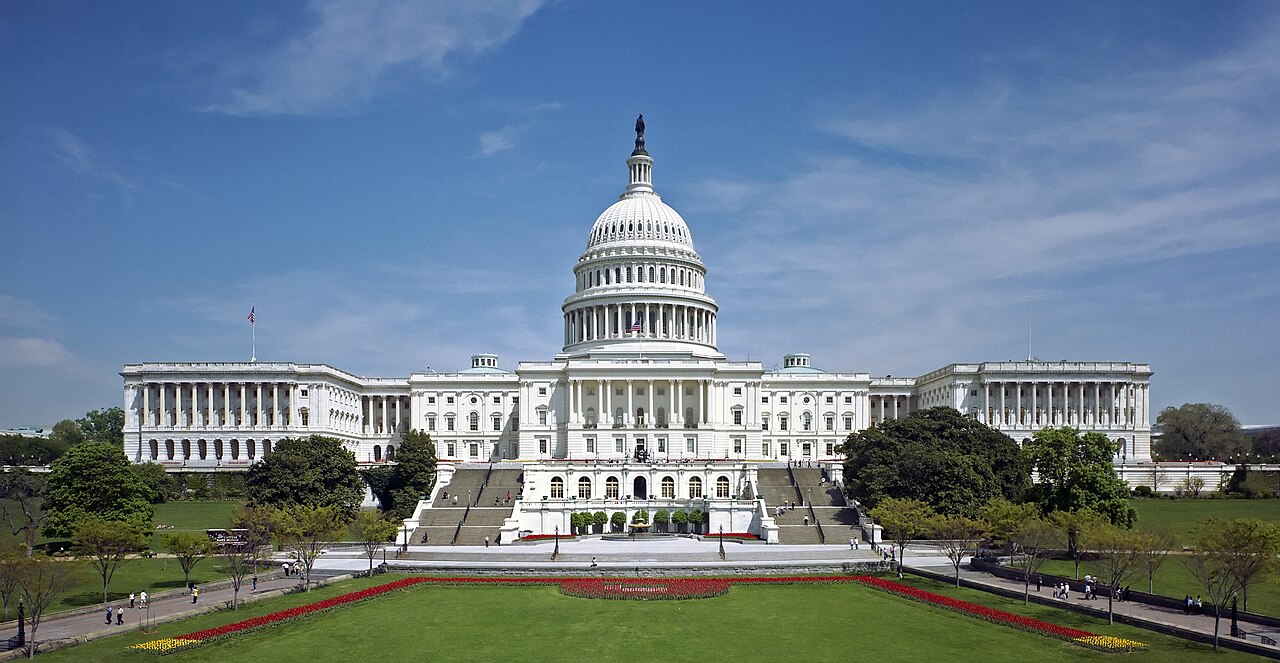
Featured image: the west front of the United States Capitol (public domain, via Wikimedia Commons). Corrections and right-of-reply requests: parties referenced in pending litigation may respond via the contact page and responses will be noted in updates.