

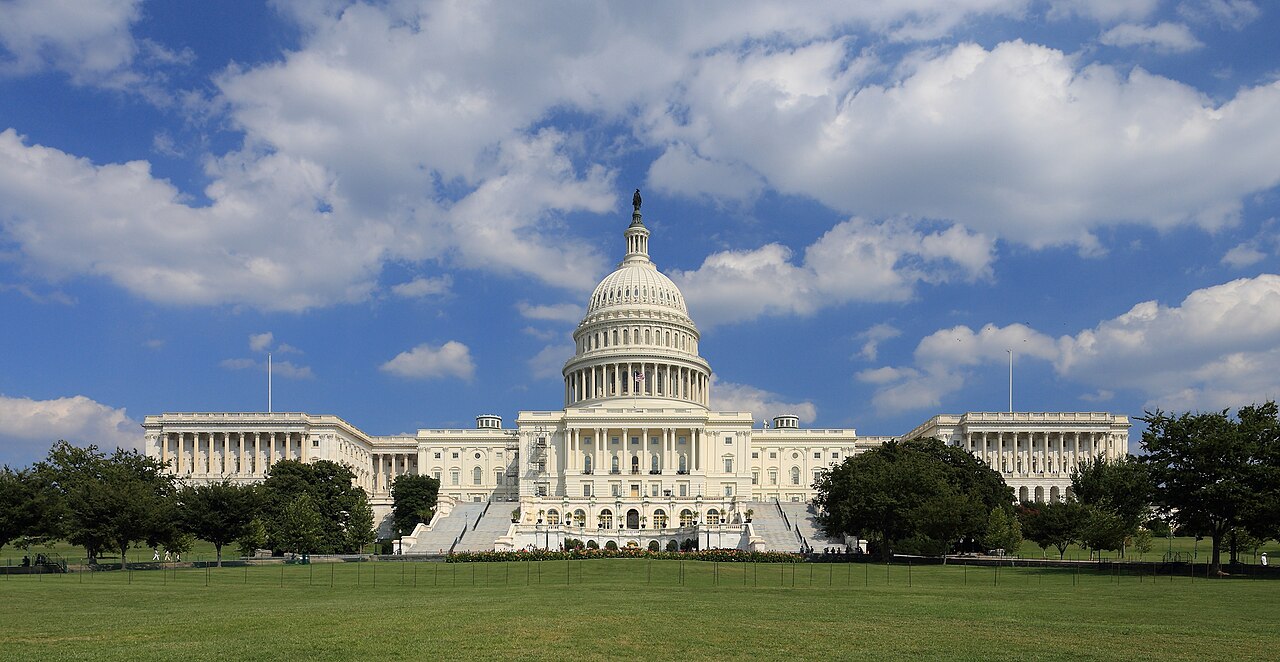
WASHINGTON — The first week of September delivered the quietest kind of consequential news: a presidential signature that took a government shutdown off the table until December, followed a day later by a House decision to cancel most of its remaining pre-election session. With both chambers operating on pro forma schedules through Labor Day, the week’s action played out in signing ceremonies, schedule memos, field hearings, and the Congressional Budget Office’s estimate pipeline. Here is what moved, what stalled, and what to watch as lawmakers prepare to return on September 14.
1. Shutdown Averted: Stopgap Funding Signed Into Law Through December 11
President Trump on Wednesday, September 2, signed H.R. 6500, the Continuing Appropriations and Extensions Act, 2027, keeping the federal government funded through December 11, 2026. According to the White House signing statement, the measure provides fiscal year 2027 appropriations for continuing projects and activities of the federal government and extends authorities for a broad range of programs, including surface transportation and veterans programs. County government analysts note the package also delays implementation of a pending Office of Management and Budget rule.
The margins tell the story of a compromise that held. The Senate passed the measure 90-6 on August 8; the House cleared it 370-48 on September 1, according to vote records. That is a marked shift from July, when the House narrowly passed its own stopgap on a largely party-line 220-205 vote, per reporting on the appropriations process. The Senate’s substitute, negotiated to run through December 11 rather than December 4, drew broad bipartisan support in both chambers — one of the larger cross-party funding votes of the 119th Congress.
The practical effect: the funding fight moves past the midterm elections into a lame-duck December, when Congress must choose between full-year appropriations bills, another stopgap, or an omnibus. As The Hill reported, the signature temporarily removes shutdown risk — but only until the new December 11 cliff.
2. House Cancels Two Session Weeks, Plans One-Week September Sprint
Roll Call reported Thursday that House Republican leadership is scrapping the final two weeks the chamber had been scheduled to be in session before the midterms. Under the revised schedule, the House returns for votes the evening of Monday, September 14 — for what is now expected to be a single week of legislative business before members head back to their districts.
The stopgap’s enactment “essentially negated the need for an extended September session,” some members argued, per Roll Call, while vulnerable incumbents are eager for campaign time. Notably, members were advised the schedule could change if the Senate adopts a budget resolution — a signal that a third reconciliation package remains a live, if dormant, possibility (see item 5). The compressed calendar leaves scarce floor time for the twelve FY2027 appropriations bills, the defense authorization, and any oversight-driven legislation before the election.
3. Appropriations Scoreboard: Zero of Twelve Enacted
The stopgap was necessary because the regular appropriations process remains far behind. According to SpacePolicyOnline’s analysis, only three of the twelve FY2027 appropriations bills have passed the House, and none has been reported from the Senate Appropriations Committee. The Congressional Research Service is tracking the process bill-by-bill; its FY2027 Legislative Branch appropriations report is among the current references for the state of play.
Law firm trackers put the situation plainly: Congress returned in September with “the FY2027 funding clock ticking”. With the House in session for roughly one week in September and the Senate scheduled through October 2, records suggest most full-year funding decisions will be resolved — if at all — in the post-election lame duck.
4. Defense Authorization Still Stalled in the Senate
The House passed its FY2027 National Defense Authorization Act, H.R. 8800, on July 22 by a largely party-line 219-206 vote, authorizing roughly $1.15 trillion, per MeriTalk’s reporting. The Senate picture is more complicated: a July 14 cloture vote on the motion to proceed failed 50-46, and Breaking Defense reports the chamber has taken no further procedural steps since. The Senate Armed Services Committee completed its markup of the companion measure, S. 4784, earlier this year.
The Congressional Research Service’s status report on FY2027 NDAA activity documents the procedural standoff. Congress has enacted a defense authorization annually for more than six decades; with the Senate’s legislative window running only through early October before the election, the path to conference this fall is narrow. Watch for whether Senate leadership schedules a second cloture attempt when the chamber returns September 14.
5. Reconciliation 3.0 Punted — But Not Dead
Roll Call reported in early August that Senate Republicans shelved plans to take up a budget resolution for a third reconciliation package — reportedly designed to provide up to $105 billion for defense spending, farm aid, and voter ID measures — after leadership concluded the votes were not there. The decision followed discussions with President Trump, who, per the report, agreed to work through August and September on a revised package.
The chambers’ earlier framework remains on the books: the Senate passed S.Con.Res. 33 on April 23 by a 50-48 vote, with reconciliation instructions allowing up to $70 billion in deficit increases each for the Judiciary and Homeland Security committees; CBO subsequently scored the Homeland Security reconciliation legislation. The House’s advisory that its September schedule could change “if the Senate were to adopt a budget resolution” suggests leadership has not abandoned the effort.
6. Senate’s Return: A Judicial Nomination Is First Up
The Senate held pro forma sessions on September 1 and September 4, with additional pro forma sessions scheduled for September 8 and September 10, according to the Senate floor schedule. When the chamber returns Monday, September 14, its first roll call — expected around 5:30 p.m. — is a cloture vote on Executive Calendar #902, the nomination of Matthew R. Byrne of Ohio to be United States District Judge for the Southern District of Ohio.
The choice of a judicial nomination as the reopening vote suggests the confirmation pipeline will continue to consume Senate floor time this fall, alongside the unresolved NDAA and appropriations questions. The Senate is currently scheduled to remain in legislative session through October 2, per Roll Call.
7. Recess Does Not Stop Committee Work: Defense Field Hearing in California
While the Capitol itself was quiet, the House Appropriations Subcommittee on Defense, chaired by Rep. Ken Calvert (R-Calif.), scheduled a field hearing for Friday, September 4, at 1:00 p.m. at College of the Canyons entitled “Industrial Base and Workforce Development for Skilled Trades.” Field hearings in members’ districts are a recess-season staple, but the topic tracks a sustained bipartisan concern: whether the defense industrial base can recruit and train enough welders, machinists, and technicians to meet shipbuilding and munitions production goals.
Testimony from the hearing, once posted to the committee’s Congress.gov page, will be worth reading against the FY2027 defense appropriations bill’s industrial-base accounts when the process resumes.
8. CBO’s Week: Five Estimates Ahead of Floor Action
The Congressional Budget Office kept producing through recess. On September 2, CBO released its estimate for H.R. 6633, the High-Capacity Grid Act — finding no direct spending or revenue effects, an intergovernmental mandate whose costs cannot be determined, and a private-sector mandate below the reporting threshold — along with an estimate for H.R. 3872, amending the Mineral Leasing Act for Acquired Lands. On September 3, CBO published estimates for S. 252 (the Guidance Out Of Darkness Act), S. 3010 (the 21st Century Dyslexia Act), and S. 3720 (the Bay Area Ridge National Scenic Trail Feasibility Study Act).
The grid bill is one to watch: H.R. 6633 was ordered reported by House Energy and Commerce on July 21 and addresses interregional transmission capacity — an area where data shows load growth from data centers and electrification is outpacing buildout. A clean CBO score removes one procedural obstacle to floor scheduling in the House’s compressed fall calendar.
On the Docket
Pro forma Senate sessions are set for September 8 (1:15 p.m.) and September 10 (3:00 p.m.). Both chambers return Monday, September 14 — the Senate at 5:30 p.m. for the Byrne cloture vote, the House for evening votes opening its lone September work week. Items with a plausible path to floor time: additional judicial confirmations, a possible second NDAA cloture attempt, and suspension-calendar bills carrying fresh CBO scores. The next hard deadline is December 11, when the stopgap expires.
For the Investigative Beat
Three oversight threads merit continued attention. First, House Oversight Chairman James Comer’s subpoena to the Sixteen Thirty Fund, issued May 14, remains active. Committee records state the fund produced 135 pages between November 18, 2025 and the subpoena date — a pace the chairman called unacceptable — and the committee alleges the fund’s “Chorus” influencer program was registered as a trade name the day after the fund asserted it was not an independent legal entity. These are committee allegations, not adjudicated findings; the fund’s document production indicates it is engaging with the inquiry, and its side of the dispute should be weighed as records become public.
Second, the House Ways and Means Committee’s July 21 subpoenas to The People’s Forum, BreakThrough News, and Tricontinental — part of its inquiry into foreign funding of tax-exempt organizations — carried an August 7 production deadline. Compliance status was not reflected in public records reviewed for this digest. Third, law firm trackers report that pandemic-relief fraud investigations, including multi-committee scrutiny of federal funds in Minnesota, will intensify heading into the midterms — and that a change in chamber control would reshape subpoena authority overnight.
All claims in this digest are sourced to the linked public records, official schedules, and named reports. Entities under congressional investigation are entitled to respond; where responses were not available in the public record, that is noted. Corrections: editor@tij.news.