

Capitol Watch is The Investigative Journal’s daily digest of congressional activity — floor votes, hearings, oversight actions, and budget analysis, sourced directly to the public record.
Stopgap Signed: Government Funded Through December 11
President Trump on Wednesday signed H.R. 6500, the Continuing Appropriations and Extensions Act, 2027, extending federal funding at fiscal 2026 levels through December 11 and removing the threat of an October 1 shutdown, according to a White House statement. The House cleared the Senate-amended measure Tuesday on a 370-48 vote under suspension of the rules — Republicans 193-19 and Democrats 176-29 in favor, per the Republican Cloakroom vote sheet — after the Senate passed it 90-6 in early August. Roll Call reported the action marked the earliest completion of a fall stopgap in recent memory, a reflection of both parties’ interest in avoiding a funding crisis ahead of the November midterms.
The measure is not a bare-bones extension. According to the bill text and reporting, it carries funding flexibility for the WIC nutrition program, disaster relief and wildland fire accounts, money for 2028 Olympics preparations and housing assistance, and a straight extension of surface transportation programs through December 11. It also extends economic pacts with sub-Saharan African countries and Haiti for two years. On defense, records indicate the bill declines a $1 billion administration request to begin construction of “Trump-class” battleships while accelerating funds for other Navy shipbuilding programs. The House Appropriations Committee said the bill “averts a partisan October shutdown.”
Passage was not without friction. House Freedom Caucus members objected to language delaying implementation of a ban on certain THC-infused hemp products and to a provision pausing a proposed Office of Management and Budget rule that would give political appointees a larger role in federal grant approvals — a pause that runs to December 11. Rep. Chip Roy, R-Texas, argued in a letter to committee chairs that the bill continues FDA funding under the current mifepristone framework; Appropriations Chairman Tom Cole, R-Okla., pushed back, noting “Hyde is the law of the land.” The dispute previews a December collision when full-year appropriations — tracked in the CRS appropriations status table — come due.
House Censures Rep. Chuck Edwards, 413-2
The House voted 413-2 Tuesday to censure Rep. Chuck Edwards, R-N.C., adopting an Ethics Committee report that found what it described as “persistent unprofessional and inappropriate conduct” toward two former staffers (Roll no. 292, on H.Res. 1498). Ethics Chairman Michael Guest, R-Miss., said the committee’s concern was a hostile work environment rather than quid pro quo harassment, according to Roll Call. Only Rep. Ralph Norman, R-S.C., joined Edwards in opposing the resolution.
Edwards contested the findings on the floor, saying, “I am imperfect. I have made mistakes, but I do not believe I committed sexual harassment,” and circulated a 22-page letter to colleagues disputing the committee’s conclusions — his response is noted here as his right of reply. Records show Edwards dropped his reelection bid in August after the Ethics Committee recommended censure, and he has said he will serve out his term. Censure carries no formal penalty beyond the public rebuke.
The vote lands amid a broader institutional reckoning: two members resigned earlier this year over misconduct allegations, and a bipartisan group led by the chairs of the Republican and Democratic women’s caucuses is expected to release recommendations this month to overhaul how the House handles harassment cases — a process worth watching for whether penalties like committee-assignment stripping enter the rules.
Mining Permitting Bill Clears the House
The House passed H.R. 1501, the Protecting Domestic Mining Act, on Wednesday by a 218-201 vote. The bill would make domestic mining and mineral processing permanently eligible for the FAST-41 expedited federal permitting program and provide statutory authority to speed environmental reviews of certain mining infrastructure projects. The Natural Resources Committee majority says the bill does not waive environmental laws or guarantee any permit; supporters framed it as reducing dependence on China for critical minerals used in defense and energy applications.
Opponents, including Natural Resources ranking member Jared Huffman, D-Calif., characterized the measure as letting the administration “fast-track permits” with diminished review. The accompanying committee report is H. Rept. 119-691. The bill now moves to the Senate, where its floor prospects are unclear.
Lobster Industry Wins Seven-Year Delay of Right Whale Rules
On a 219-196 vote Wednesday, the House passed H.R. 9436, the Northeast Lobsterman Protection Act, which would extend the current regulatory pause on new North Atlantic right whale rules for the lobster and Jonah crab fisheries through 2035 — delaying, among other things, a looming ropeless-gear requirement, according to Maine Public.
The bill is a notable cross-party product: it is sponsored by Rep. Jared Golden, D-Maine, and moved with Republican floor support. Industry groups argue the extension allows gear technology and whale-population science to mature before costly mandates take effect; conservation organizations counter that the delay heightens extinction risk for a species with only a few hundred individuals remaining. Senate action is not yet scheduled.
On the Floor Today: Israel Boycott Certification Bill
The House meets at 9:00 a.m. today with votes expected around 10:00 a.m. on H.R. 4795, the Protect Economic and Academic Freedom Act, per the Majority Leader’s schedule. Sponsored by Rep. Virginia Foxx, R-N.C., with Rep. Josh Gottheimer, D-N.J., the bill would condition institutional eligibility for certain Higher Education Act funds on not participating in “nonexpressive commercial boycotts” of Israel and would require schools to certify that students are not unreasonably obstructed from study programs in Israel.
The rule for consideration was adopted on a narrow 210-208 vote Tuesday, suggesting a close, largely party-line final tally despite the bipartisan sponsorship. Judiciary ranking member Jerrold Nadler, D-N.Y., argued the measure raises First Amendment concerns; supporters contend it targets commercial conduct, not protected speech. The roll call will post at clerk.house.gov.
Hearing Today: Data Centers, Drinking Water, and Who Pays
The Energy and Commerce Subcommittee on Environment convenes at 9:00 a.m. in 2123 Rayburn for “Reliable Water in the Digital Age,” a legislative hearing on two discussion drafts: a reauthorization of Safe Drinking Water Act programs covering infrastructure, cybersecurity, and lead removal, and a draft Water Cost Accountability Act addressing data center water consumption.
The data center draft would let states receiving State Revolving Fund grants bar public water systems from passing data-center connection and infrastructure-expansion costs to ordinary ratepayers, recovering them instead from the facility’s owner or operator, according to the committee announcement and Washington Examiner reporting. With AI-driven data center construction accelerating nationally, the ratepayer-protection question is likely to recur across several committees this fall.
Budget Desk: CBO’s Numbers to Know
The Congressional Budget Office’s current baseline projects a $1.9 trillion federal deficit for fiscal 2026, which ends September 30 — about 5.8 percent of GDP, per the agency’s Budget and Economic Outlook. On September 2, CBO released fresh cost estimates including H.R. 3872 (applying the Mineral Leasing Act for Acquired Lands to hardrock minerals), H.R. 6633 (High-Capacity Grid Act), and H.R. 7894 (Truman Scholarship Clean House Act). The agency’s 2026 long-term Social Security projections are also expected this month — a report that historically frames year-end entitlement debates.
Ahead: Senate Returns September 14 to NDAA and Nominations
The Senate stands adjourned until 3:00 p.m. Monday, September 14, per the Senate Daily Press gallery. Awaiting it: the FY2027 National Defense Authorization Act (S. 4784), where a cloture vote on the motion to proceed was teed up before recess, and a substantial nominations backlog. Confirmation pressure grew this week after the Army secretary’s resignation, which Roll Call reports has defense hawks lamenting Pentagon leadership “churn.” In the House, members used a Rules Committee member day Wednesday to renew a push for limited proxy voting next Congress.
On TIJ’s Radar
Three accountability threads we are tracking. First, the House Oversight Committee’s investigation of the Sixteen Thirty Fund and the “Chorus” influencer program: Chairman James Comer subpoenaed the group’s records in May (cover letter), and committee statements indicate document production has been slow — roughly 135 pages since last November, by the committee’s count. The inquiry concerns whether paid influencer messaging circumvented campaign finance disclosure law; these are allegations under investigation, not findings, and the fund has not been charged with wrongdoing. Second, the OMB grantmaking rule now frozen until December 11 — filings and floor statements indicate both parties view the December funding bill as the venue for a decisive fight over political-appointee control of grant approvals. Third, the forthcoming bipartisan recommendations on House harassment procedures, which could restructure how ethics findings translate into penalties.
The Investigative Journal seeks comment from parties named in oversight matters; responses received will be added to future coverage. Sources: Congress.gov, the House Clerk, committee releases, CBO, and outlets linked above.
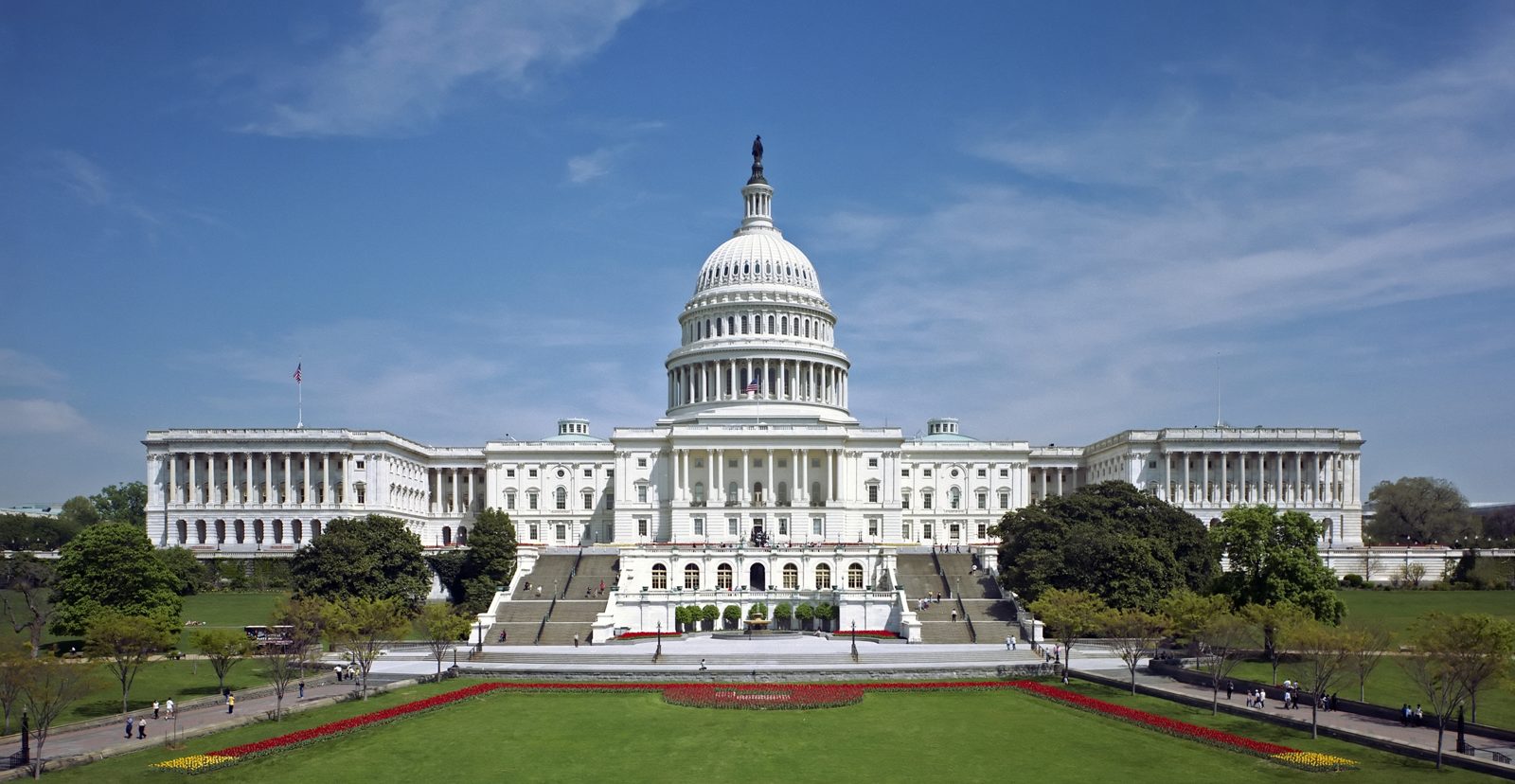
Photo: U.S. Capitol west front (public domain, via Wikimedia Commons).