

Good morning. Here is The Investigative Journal’s wire briefing for Friday, September 4, 2026 — overnight developments across government, the courts, and international affairs, and what to watch today.
The day’s marquee event arrives at 8:30 a.m. Eastern, when the Bureau of Labor Statistics releases the August employment report — the last major labor-market reading before the Federal Reserve’s September meeting and one of the final broad economic gauges voters will see before the November 3 midterm elections. It lands on a morning already crowded with consequence: courts in Maryland and Missouri issued rulings this week with direct implications for administration policy and the midterm map, new national-security tariffs on imported drones took effect Thursday, and Vice President JD Vance used his first press briefing in more than a month to describe the administration’s posture toward Iran.
Government
Drone tariffs take effect. Tariffs of up to 100 percent on imported drones and drone components took effect Thursday, the culmination of a Section 232 national-security investigation the Commerce Department opened in July 2025 and a proclamation President Trump signed in mid-August, according to trade press accounts of the proclamation. The measure reportedly applies the full 100 percent rate to drones heavier than 25 kilograms at maximum takeoff weight, drones that integrate thermal imagers, docking stations, and critical components listed in an annex, while smaller drones without those capabilities face a 25 percent rate. Drones manufactured by allies including Japan, South Korea, Taiwan and Britain face reduced rates of roughly 10 to 15 percent, records of the proclamation indicate.
The White House has framed the tariffs as a supply-chain security measure aimed at rebuilding domestic drone manufacturing and reducing dependence on Chinese suppliers, which dominate the global commercial market, The Hill reported. Industry coverage suggests the near-term effect will be higher acquisition costs for U.S. businesses and public-safety agencies that rely on imported airframes; domestic manufacturers, for their part, have long argued they cannot scale against subsidized foreign competition without protection. How quickly U.S. production can fill the gap remains the open question.
House compresses its fall calendar. House Republican leaders announced Thursday that two scheduled work weeks in Washington at the end of September have been canceled, a move that gives members roughly six and a half weeks to campaign before the November 3 midterms, The Washington Times reported. Under the revised calendar, the chamber’s last scheduled voting day before the election is now September 17. The Senate, meanwhile, remains in its late-summer posture: it convenes only pro forma this morning at 10 a.m. and is not scheduled to resume full business until September 14. With the federal fiscal year ending September 30, the compressed calendar leaves a narrow window of overlapping session days for any must-pass business, a dynamic worth monitoring as the month proceeds.
Lafayette Square fencing plan goes before planners. Administration officials on Thursday presented plans to permanently fence Lafayette Square, the historic park across Pennsylvania Avenue from the White House, before the National Capital Planning Commission, The Washington Post reported. The fencing project has been a long-standing Secret Service priority that prior administrations of both parties declined to approve, wrestling with how to strengthen protection without restricting public access to a park long used for demonstrations. The commission is also reviewing a proposed underground security-screening center for White House visitors, according to Associated Press coverage. The park has been closed to the public since January for renovation work that reports indicate has been complete for some weeks.
Vance briefs on Iran. Vice President Vance held his first White House press briefing in more than a month Thursday, following a Wall Street Journal report that the Pentagon is extending troop deployments in the Middle East. “I wouldn’t call it a war. Right now there’s no active shooting. I recognize there have been places where this has flared up,” Vance told reporters, adding that “economic pressure, military pressure, diplomatic pressure, covert pressure” all remain “tools in the president’s toolkit,” according to a pool account of the briefing. Asked about reported allegations of a U.S. strike that hit a wedding in southern Iran, Vance said the administration has no confirmed information “one way or the other” and that the matter is being investigated. Independent trackers and a UK House of Commons Library briefing indicate that no formal ceasefire has been in force since a June memorandum lapsed without extension, though direct hostilities have been intermittent.
Courts
Second birthright-citizenship order blocked. U.S. District Judge Deborah Boardman in Greenbelt, Maryland, issued a preliminary injunction Wednesday against President Trump’s newest executive order limiting birthright citizenship — an order the White House framed as targeting “birth tourism,” NBC News reported. In the ruling, the judge wrote that the president had attempted “through Executive Order, to upend our country’s longstanding tradition of birthright citizenship,” citing the Supreme Court’s June decision that blocked the administration’s earlier order on the subject, according to wire accounts of the opinion. The ruling is preliminary — the merits litigation continues — and the administration’s response, including any appeal, had not been announced as of publication.
Missouri’s new congressional map thrown out — for now. The Missouri Supreme Court on Thursday blocked the state’s newly drawn congressional map from taking effect and cleared the way for a voter referendum on it this November, ruling that “the referendum petition was legal, sufficient, and timely” and that the secretary of state erred in concluding otherwise, KCUR reported. The practical effect: the map adopted after the 2020 census — which produced a 6–2 Republican delegation — governs the November election, rather than the redrawn 7–1 map that would have dismantled Rep. Emanuel Cleaver’s Kansas City-area district, NBC News reported. Missouri Attorney General Catherine Hanaway said her office will immediately seek relief from the U.S. Supreme Court, according to The Washington Post — making the high court’s emergency docket a venue to watch in the coming days.
Mail-ballot order litigation nears the finish line before November. The legal fight over the president’s executive directive restricting mail balloting continued its rapid pre-election evolution. In late August, the Supreme Court granted the administration’s emergency request to lift a preliminary injunction against portions of the order, concluding in an unsigned opinion that the challenging states had not established standing at this stage, according to a Jurist analysis of the order. Subsequent reporting indicates the remaining lower-court block has since been lifted, clearing the administration to implement new ballot requirements ahead of the midterms while appeals on the underlying question — the scope of executive authority over election administration — continue, CBS News reported. The merits remain unresolved; the emergency-docket rulings address only interim implementation.
International
Nepal flood toll climbs past 1,100. The death toll from the August 26 flash floods along the Nepal-China border rose to 1,114, according to figures from Nepal’s National Disaster Risk Reduction and Management Authority cited in CNN’s ongoing coverage, with more than 4,400 people still unaccounted for across both countries. The disaster authority’s data indicate nearly 1.6 million people have been affected in Rasuwa, Nuwakot, Dhading and surrounding districts, where rescue and relief operations are still underway more than a week after the water came through, relief organizations report. Casualty figures in the region have been revised repeatedly and should be treated as provisional.
Germany investigates suspected grid sabotage. German authorities are investigating two disruptions at power substations — one near Cologne in the country’s west, one in Brandenburg in the east — as possible sabotage, with prosecutors examining theories ranging from foreign-state direction to domestic left-wing extremism, according to Associated Press reporting. In the September 1 incident at Bergheim near Cologne, unknown actors reportedly used improvised launch devices found in a nearby cornfield to loft cables over live lines, causing a short circuit that cut supply to five units at a lignite-fired plant without triggering household outages. Days later, rocket-like devices were found at a substation near the Jänschwalde plant in Brandenburg, Euronews reported. No group has been publicly identified as responsible, and officials have not attributed the incidents.
Ukraine reports another heavy overnight barrage. Ukrainian officials said Russian drone and missile attacks caused damage in 13 regions overnight into Thursday, with strikes reaching western areas of the country; authorities reported at least five people killed and dozens injured, according to Kyiv Independent reporting of official statements. President Volodymyr Zelensky’s office characterized the barrage as part of a sustained campaign against infrastructure heading into the fall, per daily conflict summaries. Casualty and damage figures come from Ukrainian government sources and could not be independently verified as of this writing.
Worth Watching
8:30 a.m. ET — August jobs report. Consensus forecasts compiled ahead of the release point to a gain of roughly 53,000 nonfarm payrolls and an unemployment rate holding at 4.1 percent, CNBC reported. The stakes: July showed a loss of 23,000 jobs, and prior-month revisions erased a combined 103,000 — a “low-hire, low-fire” labor market that will weigh heavily in the Federal Reserve’s September deliberations. A significant miss in either direction likely moves both markets and the political conversation.
Missouri at the Supreme Court. Attorney General Hanaway’s promised emergency application would put the state’s congressional map before the justices with ballots set to be finalized within weeks. Watch the Court’s orders docket for filings and any expedited briefing schedule.
On the Hill. The Senate holds a pro forma session at 10 a.m. with no business expected; full sessions resume September 14. The House’s last scheduled voting day before the election is September 17 — leaving little floor time for September’s remaining business.
Markets. Traders will digest the jobs number alongside Broadcom’s results, released after Thursday’s close: fiscal third-quarter revenue of $29.6 billion, up 86 percent year over year, with AI semiconductor revenue up 221 percent to $16.7 billion and fourth-quarter guidance of roughly $34.8 billion, according to the company’s release. The report is the week’s clearest data point on whether AI infrastructure spending is still accelerating.
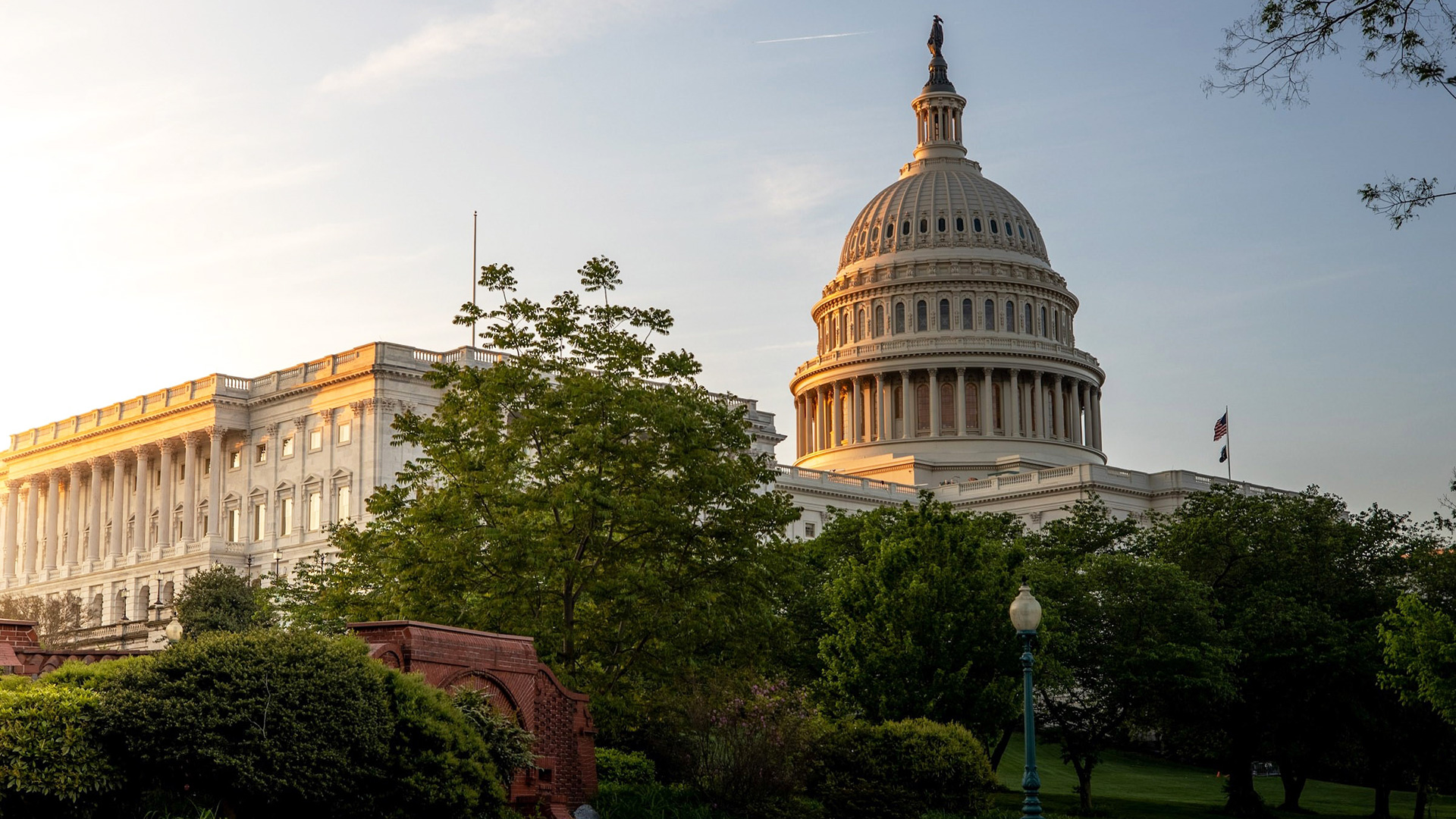
Every item above is attributed to linked public records, official statements, or named news organizations; figures from single-source or government channels are flagged as such. Parties referenced are characterized by their public statements and filings. The Investigative Journal welcomes responses from any party named in this briefing. Featured image: the U.S. Capitol at sunrise (public domain, via Wikimedia Commons).
