

Both chambers of Congress remain out of session for the pre-election recess. Today’s digest therefore tracks the official floor record, the work that continues outside the chamber, and the calendar that will govern the postelection session. Every item below is tied to a public source; where a detail could not be confirmed on an official page, it is attributed or omitted.
1. Senate holds a pro forma session; no votes, no business
The Senate convened for a brief pro forma session at 9:00 a.m. on Monday, October 19, with Sen. Shelley Moore Capito presiding, and the Senate Daily Press record states that no business was conducted. No roll call votes were taken. The same record lists the remaining pro forma dates: October 22, October 26, October 29, November 2 and November 5.
Pro forma sessions are routine during recesses. They keep the chamber technically in session, which generally prevents a long adjournment, and they do not produce legislative action. The practical takeaway for readers is simple: nothing will pass the Senate until it formally returns. The October 9 Daily Press entry likewise records a pro forma session with no business, indicating the Senate has not conducted legislative business since the recess began.
2. Senate scheduled to vote November 9 on the permitting reform vehicle
The most consequential item on the calendar is the Senate’s return. According to the Daily Press, the Senate is scheduled to return Monday, November 9, at 3:00 p.m., and to resume consideration of the motion to proceed to H.R. 2347. A cloture vote on that motion is set for about 5:30 p.m. The Senate Cloakroom announced the vote and described H.R. 2347 as the “legislative vehicle for Permitting Reform.”
The bill’s title on Congress.gov is the Survivor Justice Tax Prevention Act, a House-passed measure on a different subject. As its Congress.gov record shows, the number is being used as a procedural shell, a common Senate practice that lets leadership move a substantive text through an already-available House bill. Readers should not confuse the bill’s name with its eventual content, which would be replaced by an amendment if the Senate proceeds.
The underlying proposal, according to a WilmerHale client alert dated October 13, is the Bipartisan American Affordability and Jobs Act, S. 5653, released September 30. The alert says it would speed environmental reviews and transmission development, protect existing permits, and require data centers to cover related transmission costs, and that the White House supports it. The same analysis cautions that renewable energy terms, amendments and House support remain unsettled. A cloture vote on the motion to proceed is a threshold test only; it does not decide the fate of the underlying text.
3. December 11 funding deadline defines the lame-duck session
WilmerHale’s postelection outlook states that Congress must replace the current stopgap spending measure by December 11, and that the central question is whether to settle fiscal 2027 spending or extend funding into the next Congress. It also notes that surface transportation authorities expire the same day and that Export-Import Bank authorization lapses December 31. The firm lists the FY27 National Defense Authorization Act as a central year-end goal, with Iran war oversight and policy riders complicating negotiations, and identifies a possible debt-limit increase, potentially in a third reconciliation package, as a stretch item.
These are law-firm assessments rather than official scheduling announcements, and the dates for lawmakers’ return other than the Senate’s November 9 plan were not specified in the source. Still, the calendar math is clear. With the Senate returning November 9 and a December 11 deadline, lawmakers have roughly a month of legislative days to deal with funding, defense authorization and any permitting deal. Republicans retain control of both chambers until the new Congress convenes on January 3, 2027, per the same analysis.
4. House Veterans’ Affairs Committee moves to subpoena Oracle over VA health record contract
The most significant oversight thread of the fall involves the Department of Veterans Affairs’ electronic health record modernization contract. Federal News Network reports that the House Veterans’ Affairs Committee unanimously approved a motion by Rep. Maxine Dexter (D-Ore.) to subpoena Oracle Chairman Larry Ellison and CEO Mike Sicilia to testify. According to the report, Oracle accepted an invitation to testify on August 26 and withdrew the next day, citing “time constraints and the two panel structure.” Ranking Member Mark Takano (D-Calif.) objected in an August 28 letter, and Oracle reiterated on August 31 that it would not appear.
On the money, the same report says the VA extended the contract in August for up to three more years and up to $16.9 billion more, and that Dexter described the contract as growing from roughly $10 billion to about $27 billion. Because the contract is time-and-materials, the additional $17 billion is a ceiling rather than a guaranteed payment, the report notes. It also quotes a VA deputy secretary putting full rollout and sustainment at $48 billion. The report does not say the subpoenas have been issued or served, and Oracle did not respond to a request for comment; the company’s position should be treated as limited to its stated letters until it says more. Sen. Richard Blumenthal and Rep. Takano have separately written to VA Secretary Doug Collins on the contract, according to a congressional bulletin summarizing October 13 activity. Oracle and the VA are invited to respond.
Notably, the unanimous committee vote suggests the cost question is drawing support across party lines, and the Government Accountability Office is among those seeking a full lifecycle cost estimate, per Federal News Network.
5. Bills keep arriving even in recess
Pro forma sessions allow members to introduce measures. The WATDmedia bulletin counts 16 bills introduced on October 13, including several with bipartisan sponsorship or oversight angles: the Strengthening Civics Education Act (Sens. Chris Coons and John Cornyn), the SCREENS Act on cancer screening recommendations (Sens. Maggie Hassan and Chuck Grassley), H.R. 10795, the Sudan IMPACT Act (Rep. Baird), H.R. 10796, the United States-Israel Defense Technology Cooperation Act (Rep. Bacon), and H.R. 10806 on Medicare home health fraud (Rep. Tenney). Because the bulletin is a secondary aggregator, readers should verify bill text and status on Congress.gov, where records can lag by days. Introduction is the first step in a long process; none of these measures has received a committee vote based on available records.
The Medicare home health fraud measure is of particular interest to accountability reporting, as program integrity in federal health spending remains a recurring oversight theme.
6. Oversight letters and an unofficial field hearing
Outside formal committee channels, members continue to use letters and field events. The bulletin reports that Sen. Elizabeth Warren and Rep. Ayanna Pressley asked Wynn Resorts for answers by October 23 about the Encore Boston Harbor strike. The company’s response, if any, will be a matter of public record only if the lawmakers release it.
The bulletin also reports a Democratic-led field hearing in Austin, Texas, on October 15 concerning ICE shootings in Texas, organized by Rep. Greg Casar with Reps. Bennie Thompson and Pramila Jayapal. It was not described as an official committee hearing. Such events carry no subpoena power and produce no official transcript, so claims made there are the participants’ own statements and not committee findings. No findings have been established.
What to watch
Upcoming dates: pro forma sessions on October 22, 26 and 29 and November 2 and 5; Wynn Resorts’ October 23 response deadline; the Senate’s November 9 return and 5:30 p.m. cloture vote on the permitting vehicle; and the December 11 funding deadline. Floor activity that matters resumes only after the November 3 election.
Items for TIJ’s investigative beats
Three threads merit follow-up. First, the VA-Oracle contract: the gap between an announced ceiling and actual spending under a time-and-materials structure is a question that public contract and obligation data on USAspending.gov can help answer. Second, the data center cost-allocation provision in the permitting proposal, which may affect ratepayers. Third, the Medicare home health fraud bill, which reflects continuing interest in program integrity. This article reflects publicly available records as of October 20, 2026, and corrections or responses from any party mentioned will be added upon receipt. Subjects of oversight actions are presumed to have the right of reply.
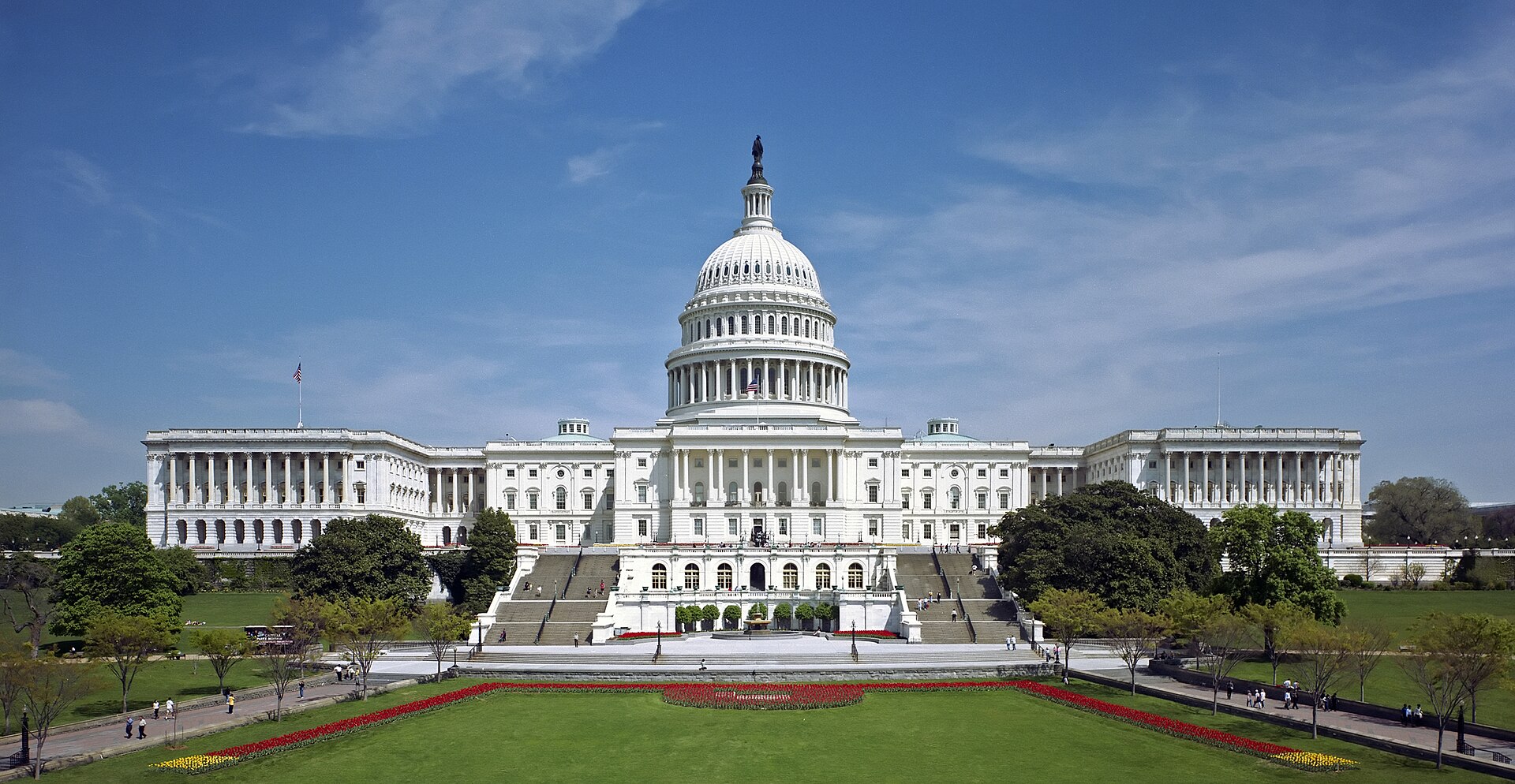
Featured image: U.S. Capitol, west front, via Wikimedia Commons (public domain).