

WASHINGTON — No roll call votes are scheduled in either chamber of Congress today. Both the House and Senate are on a campaign recess that, according to law-firm and trade-group trackers, runs until after the November 3 midterm elections, with lawmakers expected back on November 9 for a lame-duck session. This edition of Capitol Watch therefore takes stock of where major business stands, what was recorded before members left town, and what is queued for the weeks ahead.
Note to readers: this digest is based on published reporting and official records available on October 19, 2026. Where figures come from secondary summaries, they are attributed as such, and bill pages on Congress.gov should be treated as the controlling record.
1. Recess Begins With a Stopgap in Place and No Full-Year Spending Bills Done
Before leaving, Congress cleared a continuing resolution that, according to a Holland & Knight analysis published October 9, funds the government through December 11, 2026. The same analysis states that the House has passed three of the twelve FY 2027 appropriations bills (Agriculture, Military Construction-VA, and National Security-State), and that the Senate had completed no comparable floor action before the recess. A separate October 6 summary from the New England Fuel Institute reports that none of the twelve bills has been finalized.
That leaves lawmakers a compressed window. Records suggest the options discussed by analysts include an omnibus or a series of smaller packages, another stopgap stretching into early 2027, or partial lapses in funding. According to Holland & Knight, House Minority Leader Hakeem Jeffries favors finishing the bills during the lame duck. A No Labels overview of the lame-duck session identifies defense funding as a central dispute, reporting that the administration is seeking $1.5 trillion while Senate Democrats object.
The stopgap also carries a notable policy rider. Per Holland & Knight, it temporarily blocks the Office of Management and Budget from finalizing or implementing proposed changes to federal financial assistance rules through December 11. Readers can follow the underlying legislation and appropriations status through the Congress.gov legislative search.
2. A Bipartisan Objection to the $810 Million “Pocket Rescission”
The most consequential oversight story of the recess is the administration’s late-September announcement that it intends to cancel roughly $810 million in previously appropriated funds. Roll Call reported on September 28 that the announcement came on a Friday night, days before the fiscal year ended, while the House was out of town. Itemized figures in that report include $567 million from an account supporting Office of Refugee Resettlement programs, $70 million for grants and fellowships for foreign students and faculty, $56 million in HUD housing counseling programs, $28 million in health research funding, and $25 million for an Education Department program for migrant students. Those items sum to $746 million; the remainder was not itemized in the reporting reviewed for this digest.
The mechanism is known as a pocket rescission. Under the ordinary process, a rescission request starts a 45-day clock for Congress to act; if that clock runs past the end of the fiscal year, the withheld funds can lapse without a vote. The administration described the move as a “historic action to eliminate wasteful and harmful spending,” according to Roll Call. Roll Call also notes that the administration used the same approach last year on roughly $4 billion in foreign aid and that the Supreme Court ultimately ruled the administration had the right to cancel that money.
What makes this episode worth watching is the reaction across party lines. Senate Appropriations Chair Susan Collins (R-Maine) said the budget office “intentionally withheld these funds for months,” and, per the NEFI summary, called the move “a usurpation of Congress’s appropriations powers.” House Appropriations ranking Democrat Rosa DeLauro (D-Conn.) said the administration has been “unlawfully impounding funds all year.” The administration has not conceded any illegality, and the legal questions have not been resolved in a forum reviewed for this digest. Expect the dispute to shape appropriations talks in November, since the relationship between the branches over spending authority will color any year-end deal.
3. FISA Section 702 Remains Lapsed
The surveillance authority under Section 702 of the Foreign Intelligence Surveillance Act expired on June 12, 2026, after Congress failed to renew it, according to NPR’s reporting carried by OPB. That reporting says talks on a three-year extension with moderate reforms collapsed after the president named Bill Pulte as acting director of national intelligence, and that Democrats said they would not reauthorize the law while Pulte held the role. Senate Majority Leader John Thune is quoted saying, “We don’t need a weaponized DNI.” The president separately named federal prosecutor Jay Clayton as his permanent nominee.
Collection can continue for the duration of the secret court’s existing annual authorization, NPR reported, and companies remain legally required to comply. The No Labels overview lists the matter as still unresolved heading into the lame duck and refers to a court approval in March that keeps collection running into early 2027. Reform-minded lawmakers in both parties have pressed for a warrant requirement before law enforcement reviews Americans’ information. This is a genuine cross-party fault line, and it is one of the items most likely to test whether a lame-duck package can attract votes from both sides.
4. The Defense Authorization Bill Is Stalled in the Senate
Holland & Knight reports that the House passed its version of the FY 2027 National Defense Authorization Act in July, while the Senate Armed Services Committee reported its own version. On the Senate floor, a cloture vote on the motion to proceed failed, and no further floor action has followed. The NDAA has been enacted for 65 consecutive years, according to the same analysis, and No Labels reports that leaders expect a deal after the election. Companion measures that could travel with it include the Intelligence Authorization Act, a State Department authorization, and the National Quantum Initiative Reauthorization Act, per Holland & Knight.
5. Water Resources Bill Shows Bipartisan Capacity
Not everything is gridlocked. On September 16, the House passed H.R. 9497, the Water Resources Development Act of 2026, under a motion to suspend the rules, by a vote of 415 to 9, according to the House Clerk’s Roll Call 313. The Clerk’s tally shows 202 Republicans and 212 Democrats, plus one independent, voting yes, with nine Republicans voting no. Holland & Knight reports the bill includes 14 construction projects, more than 100 feasibility studies, and over $6 billion in environmental infrastructure authorities. The Senate companion, S. 4949, was approved unanimously by the Environment and Public Works Committee in July. The Congress.gov record for H.R. 9497 tracks further action.
6. Farm Bill and Surface Transportation Deadlines
The 2018 Farm Bill extension expired September 30, according to No Labels, although crop insurance and SNAP benefits continue for now. The House passed its Farm, Food, and National Security Act of 2026 on April 30 by a vote of 224 to 200, per Holland & Knight. The Senate Agriculture Committee advanced the Agricultural Act of 2026 (S. 5526) on September 16 and it was formally reported September 24. The main obstacle, per Holland & Knight, is how soon SNAP state cost-sharing should take effect, with Sen. Amy Klobuchar and other Democrats seeking a two-year delay rather than one year. No Labels notes the bill needs 60 votes on the Senate floor.
On transportation, the stopgap extended surface transportation programs through December 11, per Holland & Knight. The House Transportation and Infrastructure Committee approved the BUILD America 250 Act (H.R. 8870) 62 to 2 on May 22, authorizing about $580 billion over FY 2027 through 2031. The analysis reports no Senate text or markup yet. Several other authorities, including the National Flood Insurance Program, expire on the same December 11 date.
7. Permitting Reform and Other Lame-Duck Candidates
Four senators, Mike Lee, Martin Heinrich, Shelley Moore Capito, and Sheldon Whitehouse, unveiled the bipartisan American Affordability and Jobs Act of 2026 on September 30, according to Holland & Knight. The proposal sets two-year deadlines for environmental impact statements and one-year deadlines for environmental assessments, and the analysis says wind and solar treatment remains under negotiation. No Labels reports Capito wants a Senate vote first after the election. Also on the list, per No Labels: the Protect College Sports Act, which passed the Senate 77 to 22 and awaits House action; a possible debt limit increase that Thune has said could come in the lame duck; and a reported third reconciliation package whose timing may slip to January, according to GOP aides cited by No Labels.
Upcoming Dates
Lawmakers are scheduled to return on November 9, per NEFI and No Labels. The next hard deadline is December 11, when the stopgap, surface transportation extension, and flood insurance authority expire. Health programs including the Community Health Center Fund lapse on December 31, per Holland & Knight. Committee hearing notices for the lame duck had not been published in the sources reviewed; readers should consult the Senate hearings page and the House committee schedules.
Relevant to TIJ Investigative Beats
Three threads merit follow-up for accountability reporting. First, the pocket rescission raises questions about how funds were obligated and withheld, which can be tested against agency apportionment records and any Government Accountability Office findings. Second, the FISA lapse leaves open how oversight of intelligence collection will work absent a statutory framework. Third, as spending packages come together in November, the contents of any year-end bill will be public record on Congress.gov, and TIJ will examine them for oversight provisions and funding riders. Right of reply: TIJ will update this piece if any named office or official asks to comment or corrects the record.
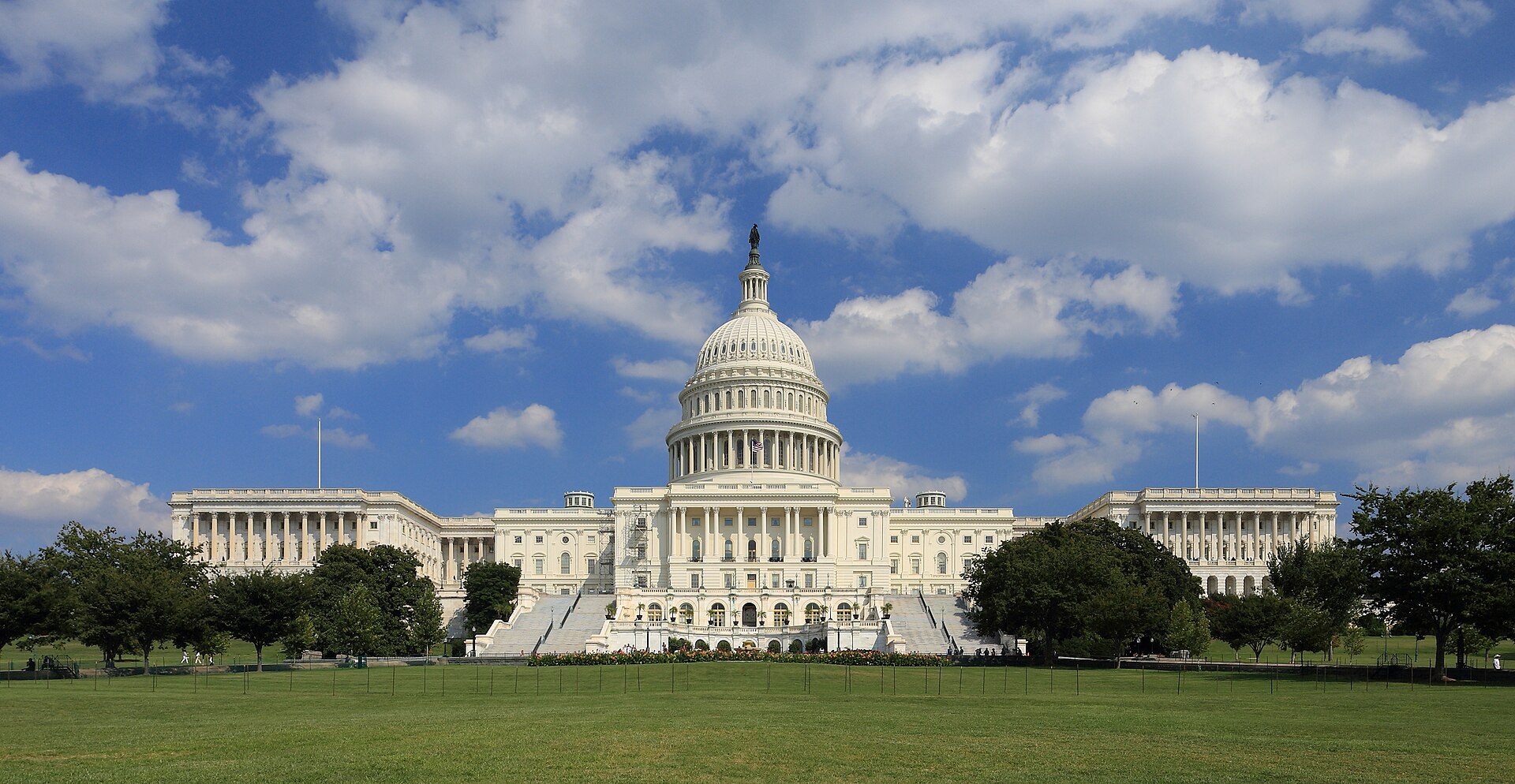
Image: U.S. Capitol, west side, by Martin Falbisoner, via Wikimedia Commons, licensed CC BY-SA 3.0.