

UPDATE (Aug. 4, 2026): The Senate Judiciary Committee voted 12–10 along party lines Tuesday to advance Todd Blanche’s nomination to the full Senate, the committee announced. NBC News reported that Sens. Cornyn and Tillis voted to advance the nomination following the agreement to wind down the DOJ compensation fund. A floor vote has not yet been scheduled.
WASHINGTON — The Senate opened its final scheduled workweek before the August recess by taking the first procedural step toward preventing an October government shutdown, voting overwhelmingly Monday evening to advance a stopgap funding bill that would keep federal agencies open through December 11. The vote headlines a compressed week that also includes a Senate Judiciary Committee vote on the nomination of Todd Blanche to be Attorney General, a subcommittee hearing on artificial-intelligence “surveillance pricing,” and the apparent collapse — for now — of the Senate’s push to pass landmark cryptocurrency market-structure legislation before lawmakers leave town. The House is already gone: representatives are in their districts until August 31, according to the House Press Gallery calendar.
Senate clears first hurdle on stopgap funding through Dec. 11
The Senate voted Monday at approximately 5:30 p.m. to invoke cloture on the motion to proceed to H.R. 6500, the legislative vehicle for a continuing resolution negotiated by Senate Appropriations Committee Chair Susan Collins (R-Maine) and Ranking Member Patty Murray (D-Wash.). The procedural vote passed 89-4, NBC News reported, with Sens. Tim Kaine (D-Va.), Rand Paul (R-Ky.), Bernie Sanders (I-Vt.), and Elizabeth Warren (D-Mass.) casting the only votes in opposition. The tally is recorded on the Senate’s roll call list for the 119th Congress, second session.
According to reports from the Washington Times and others, the measure would extend fiscal 2026 funding levels roughly ten weeks into fiscal 2027 — past the November midterm elections — with targeted adjustments negotiators describe as necessary flexibility for programs including the Special Supplemental Nutrition Program for Women, Infants, and Children (WIC), Navy shipbuilding accounts, and the Disaster Relief Fund. Murray’s office announced the release of the CR text in a statement posted by the committee minority. Negotiators on both sides have characterized the bill as free of policy riders, though that characterization is theirs; the text merits independent review.
The 89-4 margin suggests the measure has well more than the 60 votes needed to clear remaining procedural hurdles, and final Senate passage is expected before the chamber departs for recess at the end of the week. Because current appropriations expire September 30, the House’s August 31 return date leaves roughly a month for that chamber to act on the Senate product — a window that, records from recent funding cycles suggest, is workable but not generous.
The backdrop: FY2027 appropriations remain stalled
The stopgap is necessary in part because the regular fiscal 2027 appropriations process has not produced results. According to the Committee for a Responsible Federal Budget’s appropriations tracker, Senate appropriators have yet to reach a topline spending agreement — the so-called 302(a) allocation that divides funding between defense and non-defense accounts. Committee Democrats have pressed for parity in increases between the two categories, while Republicans have prioritized defense growth, and the impasse has delayed the drafting and markup of the twelve annual bills, analyses by the National Low Income Housing Coalition indicate. The Library of Congress maintains a running appropriations status table tracking each bill’s progress.
Blanche nomination for Attorney General reaches committee vote
The Senate Judiciary Committee convened an executive business meeting this morning at 9:00 a.m. with an agenda that includes the nomination of Todd Blanche to be Attorney General of the United States, according to the Congress.gov committee schedule. The committee held Blanche’s confirmation hearing on July 15, with Chairman Chuck Grassley (R-Iowa) framing the nominee’s record as that of an experienced federal prosecutor and defense litigator. C-SPAN has posted coverage of the committee vote.
The path to today’s vote was not smooth. The committee postponed a scheduled vote late last month after two Republicans — Sens. John Cornyn of Texas and Thom Tillis of North Carolina — withheld support over concerns tied to the Justice Department’s settlement of a lawsuit President Trump filed against the IRS, CNBC reported. On Monday, CNBC reported that Cornyn had reached an agreement to formally wind down the DOJ compensation mechanism critics dubbed the “anti-weaponization fund,” clearing the way for his support; Tillis indicated he was likewise satisfied. If the committee reports the nomination favorably, floor timing before the recess remains an open question given the funding bill’s claim on floor hours.
CLARITY Act misses the pre-recess window
The Digital Asset Market Clarity Act — the crypto market-structure bill that passed the House 294-134 in July 2025 and cleared the Senate Banking Committee 15-9 in May — will not receive a Senate floor vote before the recess, The Hill reported, with Majority Leader John Thune acknowledging the chamber lacks time to complete debate, amendments, and cloture before Friday. The bill vanished from Monday’s floor schedule after negotiations with a group of Democratic senators stalled; those members have said revised ethics provisions — drafted in response to concerns about cryptocurrency ventures linked to the president’s family — along with consumer-protection and illicit-finance safeguards do not go far enough, according to the same reporting.
Prediction markets registered the slip: Polymarket odds on the bill becoming law in 2026 fell to roughly 28 percent, down from a February peak above 80 percent, Yahoo Finance reported. The bill is not dead — it can return in September — but the post-recess calendar is crowded with the funding deadline, and the midterm elections loom over every remaining floor day.
Hearing today: the consumer cost of AI “surveillance pricing”
At 2:30 p.m. today in Dirksen 226, the Senate Judiciary Subcommittee on Crime and Counterterrorism, chaired by Sen. Josh Hawley (R-Mo.), holds a hearing titled “Your Data, Their Profit: The Consumer Cost of AI Surveillance Pricing.” The session is expected to examine the practice of using consumer data and algorithmic tools to set individualized prices — a subject that has drawn bipartisan scrutiny from lawmakers concerned that opaque data collection lets firms charge different customers different prices for identical goods. Witness testimony will be posted to the committee page, and the hearing will stream on the committee’s site.
Oversight file: Epstein-review transcripts, GAO fraud findings
On the investigations front, the House Oversight and Government Reform Committee’s review of the federal investigations into Jeffrey Epstein and Ghislaine Maxwell continues to generate records even with the House out of session. The committee released transcripts on July 17 of its transcribed interviews with financier Leon Black and former Clinton aide Doug Band. Chairman James Comer (R-Ky.) had earlier issued two subpoenas to Black during his June 26 voluntary interview — one compelling a deposition, the other requiring production of nondisclosure agreements — after Black declined to answer questions about NDAs, according to the committee’s release. The committee has announced no findings, and the transcripts speak for themselves; the interviews are part of a document-gathering review, not adjudicated conclusions.
Separately, the Government Accountability Office delivered its first report under a March request from Comer examining fraud risks in federally funded, state-administered programs — findings the committee says affirm its pending anti-fraud legislation. Comer also asked GAO on July 21 to examine whether Army Corps of Engineers rental-rate methodology imposes excessive costs on marina operators.
CBO desk
The Congressional Budget Office closed July with a batch of cost estimates, according to its cost-estimates page: scores published July 30–31 include S. 4668, the Protect College Sports Act of 2026; H.R. 2985, the Modernizing Government Technology Reform Act; and H.R. 5517, the Northern Border Security Enhancement and Review Act, among others. CBO’s most-recent publications feed is the authoritative running list, and several of the late-July scores cover bills ordered reported just before the House left town — data points worth watching as leadership assembles the fall floor calendar.
The week ahead
The Senate is expected to spend its remaining floor hours on the continuing resolution, with final passage targeted before the recess begins at week’s end. The Judiciary Committee has scheduled a nominations hearing Wednesday at 10:15 a.m. in 216 Hart. Senate floor proceedings can be followed via the Senate’s recent floor activity page and the Daily Press Gallery schedule; roll call votes are archived by C-SPAN’s vote tracker. The House returns August 31, leaving thirty days to the funding deadline.
On our radar
For TIJ’s accountability beats, three threads bear watching: the document production compelled by the Oversight Committee’s Epstein-review subpoenas, where deposition testimony and NDA records could surface this fall; the GAO’s new fraud-risk reporting on state-administered federal programs, which records suggest will anchor a legislative push when the House returns; and the DOJ fund wind-down attached to the Blanche nomination, the terms of which have so far been described only in press accounts and merit documentary confirmation. We will follow the paper.
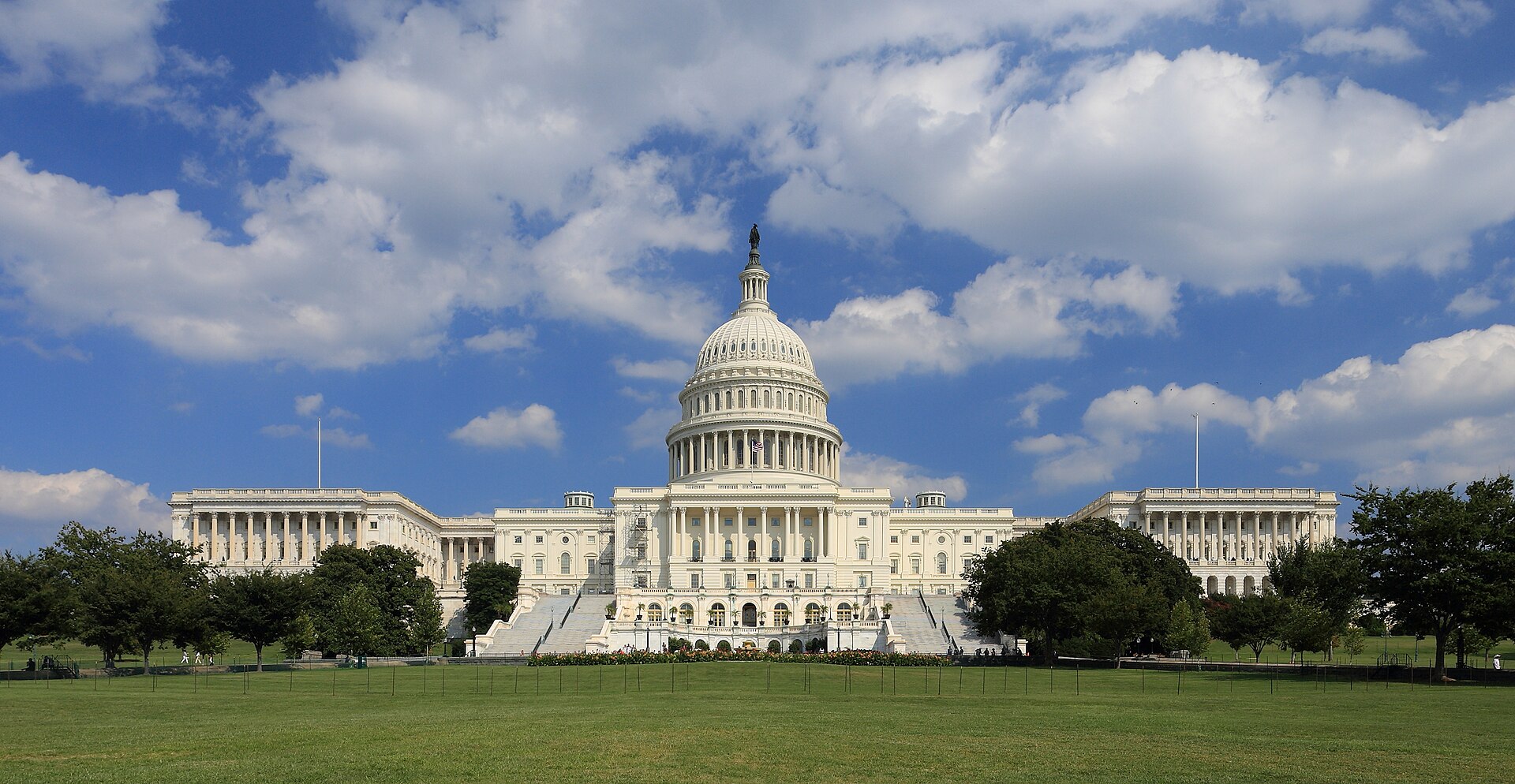
Featured image: The United States Capitol, west front. Photo: Martin Falbisoner, CC BY-SA 3.0, via Wikimedia Commons.