

Each week, The Investigative Journal surveys new reports from oversight bodies and watchdog organizations across the political spectrum — from congressional auditors and inspectors general to nonprofit investigators on the right and left. The goal is simple: surface the findings, link the source documents, and let readers judge the evidence for themselves. This week’s roundup covers eight releases, led by a Government Accountability Office audit of the Department of Government Efficiency’s public savings ledger.
GAO: DOGE “Wall of Receipts” Savings Figures Lack Transparency and Support
The Government Accountability Office, Congress’s nonpartisan audit agency, published its long-awaited review of the Department of Government Efficiency’s “Wall of Receipts” on August 6 (GAO-26-108615). The Wall of Receipts, launched in February 2025 to document savings from terminated contracts, grants, and leases, reported $110 billion in total savings as of July 7, 2026. GAO found that “some savings estimates are incorrect or lack supporting evidence” and that DOGE did not use its own stated methodology to calculate the majority of savings associated with contracts reported as terminated. For grants, the report states DOGE did not provide sufficient information to verify the method used to calculate 96 percent of reported savings.
The audit’s specific examples are notable. According to GAO, DOGE reported $1.7 billion in savings on a Defense Health Agency IT services contract covering more than 700 military treatment facilities — but no action was ultimately taken to terminate, reduce, or defund the contract, so “no savings were achieved.” On real estate, the report found 108 of the 264 leases listed for termination — roughly $15.3 million of $53.5 million in claimed lease savings — were already in the termination process before DOGE was established, and a full section of the report concludes lease savings were overstated by more than $80 million. GAO also identified potential cost savings in some of the contracts it reviewed, noting the basis for other reported savings could not be determined.
GAO issued a single recommendation: that the Executive Office of the President, through the U.S. DOGE Service, prominently display known data-quality issues and limitations on the Wall of Receipts, which remains live even though a July 4, 2026 post on an official DOGE account indicated the entity’s formal mission has ended. Per the report, DOGE did not respond to GAO’s requests for information or interviews and did not provide comments on the draft — so the administration’s side of the ledger remains unstated in the record. The full report is available as a PDF from GAO. Orientation note: GAO is a nonpartisan legislative-branch agency; this review was requested by Senate Homeland Security Committee Democrats Gary Peters and Richard Blumenthal.
GAO: CHIPS Act Disbursements Reach $13.1 Billion as R&D Programs Stall
In a pair of August 6 reports, GAO also updated Congress on the CHIPS for America semiconductor incentive program. The status report (GAO-26-107882) states that, as of July 15, 2026, the Commerce Department had funded 49 projects across 24 companies and disbursed $13.1 billion — about 42 percent of the $31.5 billion in direct funding awarded. As of April 2026, awardees had completed all required milestones by their due dates, according to the report, though some milestones had fallen behind anticipated schedules.
The companion report (GAO-26-109121) focuses on the program’s research and development side, finding that Commerce has canceled most CHIPS R&D efforts on the grounds that they did not align with executive priorities, and recommending the agency develop a plan to meet the R&D requirements that remain in statute. For taxpayers tracking one of the largest industrial-policy commitments in recent history, the two reports offer the most current public accounting of where the money stands. Orientation note: GAO is nonpartisan; findings and recommendations are directed at agency management, not policy choices.
HHS Inspector General: Home Health Billing Audits Continue Amid $1.2 Billion Improper-Payment Backdrop
The Department of Health and Human Services Office of Inspector General posted a new entry on August 10 in its nationwide series of Medicare home health compliance audits (report A-05-24-00007, issued August 6). The context is larger than any single audit: Medicare paid home health agencies about $16 billion in calendar year 2023, and CMS’s own error testing put the improper-payment rate for home health claims at 7.7 percent — roughly $1.2 billion in a single year, according to the report.
In this installment, auditors reviewed 100 sampled claims from Deistic Home Health Care, Inc. and found 37 did not comply with Medicare billing requirements, producing $8,332 in net overpayments in the sample. Extrapolated across the $15.3 million in payments covered by the audit period (2021–2022), OIG estimated net overpayments of at least $43,074 and recommended repayment. Records indicate the company’s Medicare provider agreement was voluntarily terminated in August 2025, and the company elected not to comment on the draft report. The modest dollar figure is less significant than the pattern: the series keeps documenting the documentation and face-to-face-encounter failures that drive the billion-dollar error rate. Orientation note: HHS-OIG is an independent oversight office within the department it audits.
CRS: What OPM’s Demand for Federal Employees’ Health Claims Data Would Do
The Congressional Research Service published an In Focus brief on August 11 — “The Office of Personnel Management’s Request to Collect Claims Data from Federal Employees Health Benefits (FEHB) Carriers” (IF13284) — examining OPM’s move to require insurance carriers to submit medical and pharmacy claims data for the federal workforce. Public filings indicate the collection would cover service-use and cost data for the FEHB and Postal Service Health Benefits programs, which together cover more than 8 million federal employees, dependents, and retirees.
The cost-control rationale is substantial: reporting on the program indicates FEHB premiums and costs have risen far faster than inflation in the last two years, with the program expected to cost about $80 billion in 2026, and OPM has argued claims data is necessary to audit what carriers are actually paying for. Federal employee unions and privacy advocates have raised objections to the scope of the data collection, according to public comments on the proposal. CRS briefs like this one do not take positions; they map the legal authority and the open questions for Congress. Orientation note: CRS is the nonpartisan shared research staff of Congress; its products operate under congressional direction.
POGO: Rival DHS Contractors Fight Over Immigration Enforcement Dollars
The Project On Government Oversight published an investigation on August 3, “DHS Contractors Battle Over Deportation Dollars,” reporting that companies competing for immigration enforcement contracts — including detention, transport, and support services — have filed dueling protests and allegations that the procurement system has been rigged against them. According to POGO’s reporting, migrants in government custody are caught in the middle of these contractor disputes as the enforcement buildout accelerates.
The piece is part of POGO’s ongoing series on the business of immigration enforcement, which has tracked the flow of contract dollars to detention, medical, and logistics vendors. Whatever one’s view of the underlying enforcement policy, the procurement questions POGO raises — whether contracts are being competed fairly and whether taxpayers are getting what they pay for — are squarely within traditional oversight territory, and the contractor allegations it reports remain allegations, not adjudicated findings. Orientation note: POGO is a nonprofit watchdog funded primarily by foundations and individual donors; it describes itself as nonpartisan and its investigative newsroom operates under an editorial independence policy, though its defense- and enforcement-spending critiques are often cited by the political left and right alike.
Judicial Watch: FBI Tells Court “Burn Bag Room” Records Would Take 158 Years to Process
Judicial Watch, the conservative legal watchdog, announced that the FBI told a federal court that processing the more than 2 million pages of records found in a so-called “hidden room” at FBI headquarters would take approximately 158 years at its proposed rate of 500 pages per month. The figures appear in a Joint Status Report filed July 30, 2026 in the group’s FOIA lawsuit against the Justice Department (No. 1:25-cv-04047), per the organization’s release. A status conference was held before U.S. District Judge Dabney L. Friedrich on August 3.
Filings indicate Judicial Watch has asked the court for a limited deposition about who discovered the room, who had access, and how records ended up stored in file cabinets, safes, boxes, and burn bags — a request the FBI opposes. The room’s existence was first disclosed by then-Deputy Director Dan Bongino in May 2025. It is worth separating the documented record from the characterizations: the page counts and processing-rate estimate come from the government’s own filing, while Judicial Watch’s descriptions of the records as “weaponization and lawfare” documents are the group’s allegations, not established findings. The organization also filed a new FOIA suit on August 10 seeking the contents of Anthony Fauci’s government-issued cell phones. Orientation note: Judicial Watch is a conservative 501(c)(3) funded by individual donors and foundations; it litigates FOIA cases predominantly, though not exclusively, against Democratic administrations and officials.
ProPublica: Texas River Authority Central to Corpus Christi Water Fix Is Running Out of Money
ProPublica, with The Texas Tribune and KRIS 6 News, published an investigation on August 4 examining the Nueces River Authority, the state agency working on a desalination project intended to expand the drought-stressed Corpus Christi region’s water supply. According to the reporting, board members learned in late June that funding for the project is months from running out, and the authority has been spending more than it takes in as other contracts that kept it afloat were canceled.
The accountability angle: Governor Greg Abbott appoints every member of the authority’s board and publicly criticized Corpus Christi officials over the water crisis in March, yet the reporting indicates the state has done little to address the agency’s financial condition. The story is a useful case study in how infrastructure oversight failures at the state level can compound a regional crisis — and it relies on board records and budget documents that other newsrooms can check. Orientation note: ProPublica is a nonprofit newsroom funded primarily by philanthropic foundations; it describes itself as nonpartisan, while critics on the right characterize its coverage as left-leaning.
Capital Research Center: Anti-Nuclear Advocacy Groups’ Combined Revenue Tops $3.5 Billion
On the right, the Capital Research Center published an analysis on August 12, “Opponents of nuclear power now hauling in $400k per hour,” tallying the combined annual revenue of nonprofit organizations known to oppose nuclear energy at more than $3.5 billion — a figure CRC says is $200 million higher than last year even after removing one of the largest names from its list. The headline figure works out to roughly $400,000 per hour across the movement, according to CRC’s calculation from the groups’ public filings.
The analysis lands amid a bipartisan turn toward nuclear power as a carbon-free baseload source, and it raises a question worth examining from any political vantage: which donors fund opposition to a technology both parties increasingly support, and what do those groups actually spend the money on? CRC’s revenue figures derive from IRS filings, which are verifiable; its characterizations of the groups’ motives are the organization’s own analysis. Orientation note: the Capital Research Center is a conservative think tank founded in 1984, funded by right-of-center donors and foundations, that specializes in tracing funding networks of left-of-center nonprofits.
What Warrants Deeper TIJ Investigation
Three threads from this week merit follow-up reporting. First, the GAO’s DOGE audit leaves the central question unanswered: how much of the $110 billion in claimed savings is real? GAO could not tell because DOGE did not respond — but the underlying contract and lease records live in FPDS, USAspending.gov, and GSA’s lease tracker, all public. A line-by-line reconciliation of the largest claimed terminations against those databases is achievable with the datasets GAO identified, and would serve taxpayers regardless of what it finds. Second, the FEHB claims-data fight pits two legitimate interests — fraud detection in an $80 billion program versus the medical privacy of 8 million people — and the carrier contracts and Privacy Act notices deserve close reading before the data starts flowing. Third, POGO’s reporting on immigration enforcement procurement and the bid-protest record at GAO suggests a documentable story about competition, or its absence, in one of the fastest-growing categories of federal contracting. TIJ will pursue all three.
Transparency notes: Every finding above is attributed to the originating report or filing, with direct links to source documents. Organizations’ political orientations and funding sources are noted in each section. Agency and subject responses are included where the source documents contain them: DOGE did not respond to GAO; Deistic Home Health declined comment on the OIG draft; the FBI’s position appears in the joint court filing. TIJ did not independently seek comment from the entities named; characterizations by advocacy organizations are identified as such and should not be read as adjudicated findings.
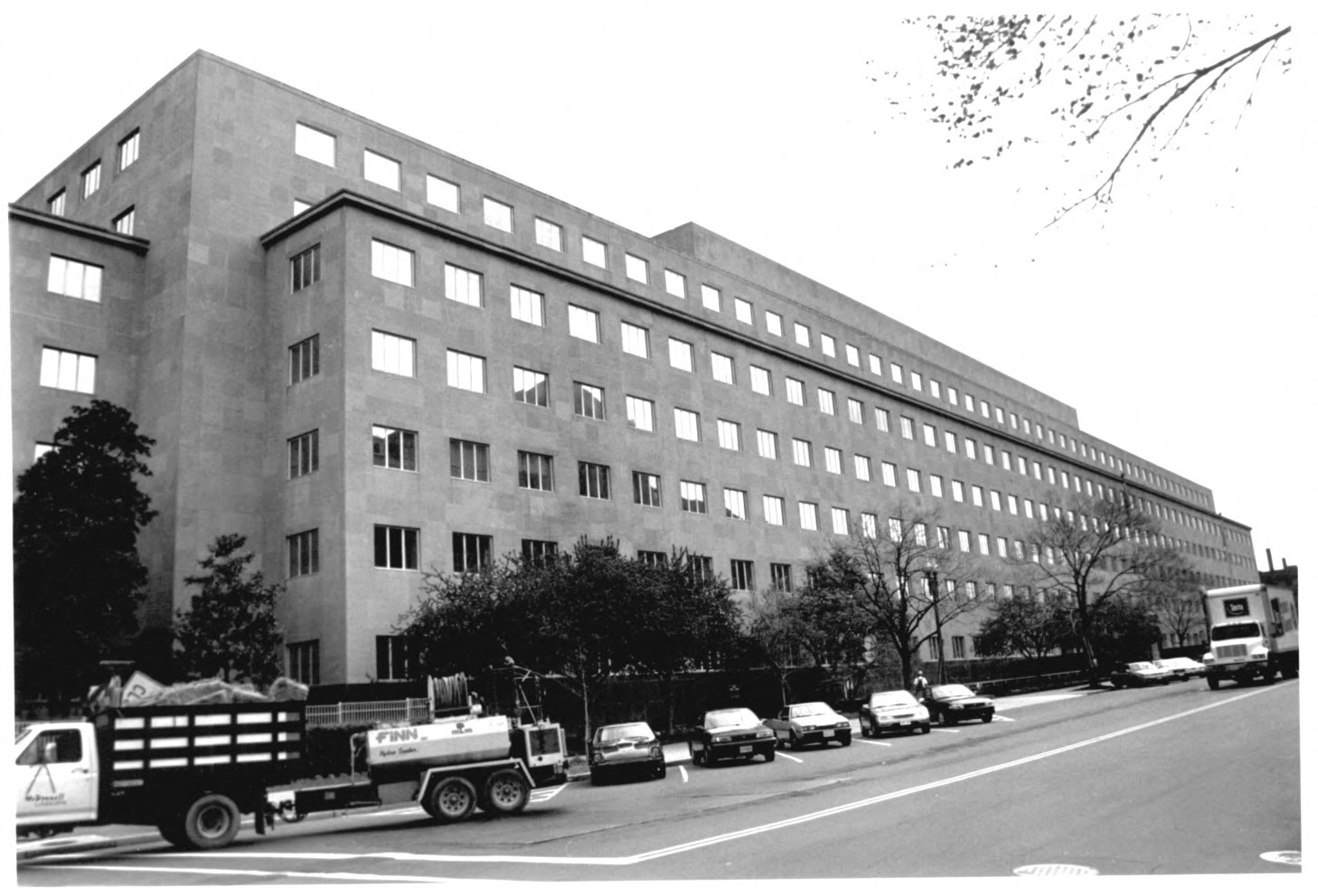
Featured image: U.S. Government Accountability Office headquarters, Washington, D.C. (public domain, via Wikimedia Commons).