

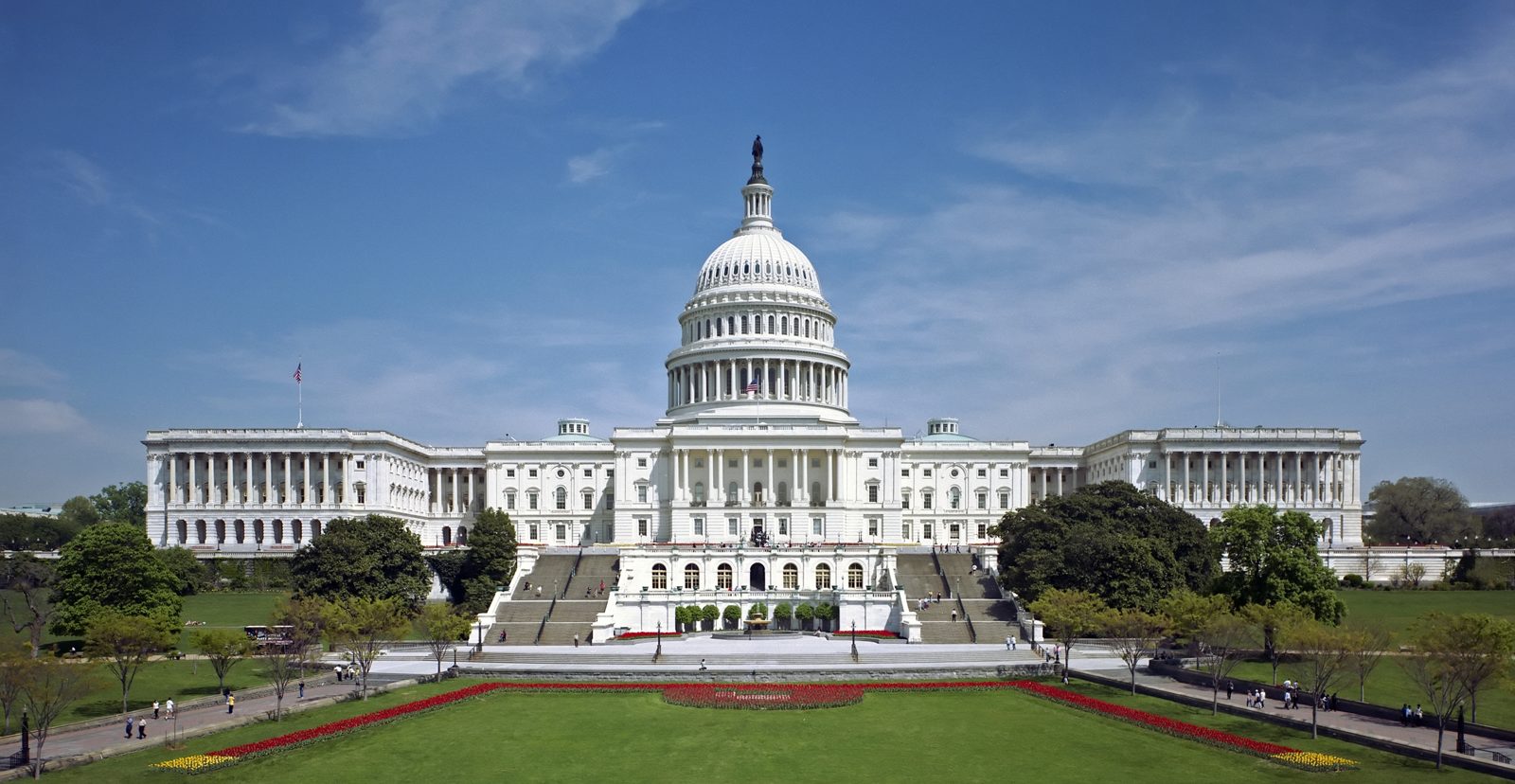
Washington is quiet this week — both chambers gaveled in and out of pro forma sessions on Thursday, with the House on the floor for roughly two minutes — but the record Congress left behind before scattering for the August recess will define a consequential September. Before adjourning in the early hours of Saturday, August 8, the Senate passed a stopgap funding bill, cleared a long-stalled Russia and Iran sanctions package, and confirmed a new attorney general by a single vote. Here is where matters stand, drawn from the official record.
1. Dueling stopgaps: Senate passes CR through December 11, setting up a September reconciliation with the House
The Senate voted 90-6, with one senator voting present, at 3:37 a.m. on August 8 to pass H.R. 6500, as amended — a continuing resolution that would fund the government through December 11 and stave off a shutdown when the fiscal year ends September 30. The chamber first invoked cloture on the Collins substitute amendment 91-6, according to the Senate floor wrap-up, and disposed of a dispute over THC-infused hemp products by tabling the Budd amendment 61-32 — a fight that, Roll Call reported, had held up the timing agreement for days.
The Senate measure now heads to the House, which passed its own, shorter stopgap — H.R. 9770, running through December 4 — by a 220-205 vote on July 21. The two versions differ in more than dates. According to an analysis by Akin’s appropriations team, the Senate bill carries anomalies the House version deliberately omitted, most notably Section 157, which would bar the Office of Management and Budget from implementing its revisions to the Uniform Guidance for federal grants during the CR period. That rule, which drew roughly 500,000 public comments and bipartisan concern from appropriators, is slated to take effect October 1 — making the CR, as Akin put it, the last legislative train leaving the station before the rule goes live.
House members are scheduled to return for votes the week of August 31, per the chamber’s 2026 calendar, and will have to decide whether to accept the Senate’s December 11 date and its grants-rule rider. The Senate, for its part, is out until September 14. The margin for error is narrow: funding lapses at midnight on September 30.
2. Russia-Iran sanctions package clears the Senate 86-11, renamed for the late Sen. Lindsey Graham
A day before the CR vote, the Senate passed H.R. 5334, the Lindsey O. Graham Sanctioning Russia and Iran Act of 2026, by a vote of 86-11, per the floor wrap-up. The 61-page bill targets major purchasers of Russian oil and gas, authorizes targeted tariffs on products from the five largest importing countries, and layers additional sanctions on Russian leaders, family members, and oligarchs, according to Roll Call. A Paul amendment was rejected 32-64 before passage.
The bill is named for Sen. Lindsey Graham of South Carolina, who died July 11 — a day after announcing a long-sought agreement with the White House on the measure, NBC News reported. The final deal was announced by his appointed successor, Sen. Darline Graham (R-S.C.), together with Sens. Richard Blumenthal (D-Conn.), Katie Britt (R-Ala.), Jeanne Shaheen (D-N.H.), Roger Wicker (R-Miss.), and Jim Risch (R-Idaho) — a genuinely cross-party coalition on a bill that had idled for more than a year. Because the Senate amended a House-passed vehicle, the package returns to the House for a final vote before it can reach the president’s desk.
3. Todd Blanche confirmed as attorney general, 50-49, in a pre-dawn vote
In its final roll calls before recess, the Senate confirmed Todd Blanche of Florida as attorney general by a vote of 50-49, NPR reported, with the tally coming at 4:31 a.m. on Saturday, August 8. Cloture was invoked by the same 50-49 margin, per the official wrap-up. All Democrats, joined by Republican Sens. Susan Collins of Maine and Lisa Murkowski of Alaska, voted against confirmation; Sen. Mitch McConnell (R-Ky.), who has been absent since a June fall, did not vote.
Blanche, who previously served as deputy attorney general and before that as President Trump’s personal defense lawyer, now leads the Justice Department after what the Washington Post described as a bruising confirmation fight. In the same session, the Senate confirmed 74 additional nominations en bloc, 51-47, clearing a substantial portion of the executive calendar before the five-week break.
4. Defense authorization remains stalled in the Senate as the House version waits
The House passed its $1.15 trillion fiscal 2027 National Defense Authorization Act on July 22 by a 216-212 vote, per MeriTalk, but the measure has gone nowhere in the Senate since. A cloture vote to begin floor consideration failed 50-46 on July 14, and the Congressional Research Service’s status tracker records no further procedural steps since. The Senate Armed Services Committee approved its own $1.14 trillion version in June, Breaking Defense reported, but leadership has not announced a timeline for bringing it up. Congress has enacted an NDAA every year for six decades; September’s crowded floor schedule now puts that streak under pressure.
5. CBO: Navy’s new battleship program would cost $275 billion through 2056
The Congressional Budget Office published an analysis August 5 estimating that the Navy’s planned fleet of 15 nuclear-powered Trump-class battleships would cost roughly $275 billion in 2026 dollars through 2056 — about $23.4 billion for the lead ship and an average of $18 billion for each of the next 14. The roughly 35,000-ton design would be the largest surface combatant in the world, about three and a half times the size of an Arleigh Burke-class destroyer, and the Navy has stated the ship would be equipped to carry the nuclear-armed sea-launched cruise missile, USNI News reported.
CBO cautioned that its figures are “highly uncertain” and rest on assumptions about ship design and program pace, and it noted that a nuclear-powered fleet would cost about 13 percent more to build than a conventionally powered one, with fuel savings it lacked data to quantify. The report lands directly in the middle of the NDAA and appropriations debates: the Navy is seeking roughly $1 billion in advance procurement and $837 million in research and development for the program in FY2027, according to Breaking Defense. Expect the industrial-base findings to feature prominently when the Senate returns to the defense bill.
6. Oversight: Ranking members demand documents from Vulcan Elements over $620 million Pentagon loan
Rep. Robert Garcia (D-Calif.), ranking member of the House Oversight Committee, and Rep. Jared Huffman (D-Calif.), ranking member of the Natural Resources Committee, sent a letter August 11 to Vulcan Elements CEO John Maslin demanding documents related to the company’s $620 million Department of Defense loan — the largest in the history of the Pentagon’s Office of Strategic Capital at the time it was made. The letter cites ProPublica reporting that the loan followed direct White House intervention, and lays out a timeline in which 1789 Capital, a venture firm where Donald Trump Jr. is a partner, took an equity stake in the company in August 2025, roughly three months before the loan was finalized alongside a $50 million Commerce Department equity stake.
It is important to note what this is and is not: a document request from minority-party ranking members, who lack subpoena power, containing allegations that have not been adjudicated by any court or committee finding. The company has maintained to committee staff and reporters that it received no preferential treatment — assurances the letter itself now contests — and TIJ could not locate a public response from Vulcan Elements to the August 11 letter as of publication. The request builds on a formal inquiry Garcia, Huffman, and Sen. Martin Heinrich (D-N.M.) opened in February into equity stakes the administration has taken in critical-minerals companies, a probe Bloomberg reports Democrats view as a template for oversight should they win committee gavels in November.
7. Oversight: Garcia presses Goldman Sachs over former top lawyer’s Epstein testimony
In a separate letter first reported by CNN on August 7, Garcia urged Goldman Sachs CEO David Solomon to sever the firm’s remaining ties with Kathy Ruemmler, its former chief legal officer, following her July 15 transcribed interview in the committee’s Jeffrey Epstein investigation — a session that ran more than seven hours, among the longest in the probe. Garcia called portions of the testimony “nothing short of shocking,” per the committee release, and asked the bank to respond by August 21. Ruemmler, a former White House counsel, appeared voluntarily before the committee; the letter reflects the ranking member’s characterization of her testimony, and TIJ notes that no charge or formal finding of wrongdoing has been made against her.
What’s ahead
Both chambers remain in pro forma session through the month — Thursday’s House session lasted from 11:00 to 11:02 a.m. — with the House back for votes the week of August 31 and the Senate returning at 3 p.m. on September 14. Beyond the CR, the Senate has locked in one piece of its September schedule: a cloture vote on the motion to proceed to S. 4668, the Protect College Sports Act — the chamber’s name-image-likeness framework for college athletics — between September 15 and September 23.
The full-year appropriations picture remains lopsided. The House Appropriations Committee has reported all 12 FY2027 bills and passed three on the floor, totaling roughly $1.856 trillion in base discretionary spending — about 13 percent above the FY2026 enacted level, per the American Action Forum’s tracker. The Senate Appropriations Committee, where Chair Susan Collins (R-Maine) and Vice Chair Patty Murray (D-Wash.) have not agreed on topline levels, has reported none, according to the Committee for a Responsible Federal Budget. CRS has begun publishing its FY2027 appropriations series, including a Legislative Branch report, for those tracking the bills line by line.
On TIJ’s radar
Three threads from this week bear directly on our accountability beats. First, the Office of Strategic Capital loan file: whether Vulcan Elements produces documents, and what they show about how the largest loan in OSC history was underwritten, is a test case for how taxpayer-backed industrial policy is policed. Second, the OMB Uniform Guidance fight: Section 157 of the Senate CR is Congress’s most significant intervention yet against a rule that would shift federal grant decisions toward political appointees — half a million commenters and appropriators of both parties are watching whether it survives House negotiations. Third, largely unnoticed in the pre-recess rush, the Senate passed H.R. 2069, the Stop Secret Spending Act, a transparency measure we will examine in a coming edition. We will track all three when Congress returns.
This digest is compiled from official records — roll call votes, committee releases, CBO publications, and the Congressional Record — linked throughout. Where letters or investigations contain allegations, they are attributed to their authors and remain unproven unless otherwise noted. The public positions of named parties are included where available; parties wishing to respond may contact the TIJ editorial desk.