

Influence Watch is The Investigative Journal’s monthly review of federal lobbying disclosures, foreign-agent registrations and revolving-door moves. Every figure below is drawn from public records filed under the Lobbying Disclosure Act (LDA) or the Foreign Agents Registration Act (FARA), or from published analyses of those records. Direct links to the underlying filings and databases are provided throughout.
The big picture: $2.7 billion in six months
Federal lobbying disclosures for the second quarter of 2026, filed with the Senate Office of Public Records in late July, show an influence industry still operating near record levels. According to an OpenSecrets analysis published August 11, lobbying spending neared $1.3 billion in the second quarter — the second-highest Q2 total since quarterly reporting began in 2008, down just 0.5 percent (about $6.9 million) from the record set in the same period of 2025.
Combined with the record-breaking $1.4 billion spent in the first quarter, a record 17,118 organizations spent roughly $2.7 billion on federal lobbying in the first half of 2026, OpenSecrets found — keeping the year on pace for a tenth consecutive annual spending record. The U.S. Chamber of Commerce and the National Association of Realtors again topped the list of organizational spenders, with totals slightly below their 2025 pace. The underlying filings are searchable in the Senate Lobbying Disclosure database and at OpenSecrets’ federal lobbying tracker.
K Street’s balance sheet: Ballard, BGR, Miller Strategies
On the revenue side, OpenSecrets’ data shows Ballard Partners reported nearly $30.1 million in second-quarter revenue across 359 first-half clients — its first quarterly revenue decline since 2023, though only by about $20,000. The firm’s most profitable Q2 client was Bancrédito International Bank & Trust, which records show paid Ballard $1.3 million to lobby on banking regulatory issues. OpenSecrets notes the Puerto Rico-based bank is in liquidation following a corruption and campaign-finance scandal involving its founder, Julio Herrera Velutini, who received a pardon in January 2026 on bribery-related charges. Other notable Ballard clients disclosed for the quarter include Korea Zinc ($1.2 million) and Nerobreeze Ltd. ($750,000), which filings indicate is promoting investment in energy and nuclear-power issues.
BGR Group grew second-quarter revenue more than 3.5 percent to $21.6 million, with $42.4 million booked in the first half across 351 clients, according to the same analysis. Disclosures show Qualcomm paid BGR $480,000 in 2026, half of it in Q2, to lobby on trade, telecommunications and semiconductor industrial-base priorities, while Netherlands-based AI infrastructure company Nebius Group paid $400,000 for work on data-center, energy and federal permitting policy. Miller Strategies reported $16.3 million for the quarter, an increase of more than $1 million over Q1 — the largest quarter-over-quarter gain of any major firm in the OpenSecrets data.
Tech and AI: $230,000 a day
The technology sector remains the most closely watched corner of the influence economy. An Issue One review of the new filings found that 11 of the largest technology, social media and AI companies, together with their leading trade associations, spent a combined $41.8 million on federal lobbying from January through June — more than $230,000 per day, and up roughly 10 percent from the same period in 2025.
Within that group, disclosures show Meta led Q2 spending at nearly $6 million, followed by Alphabet at $5.3 million and Microsoft at about $3 million. Nvidia reported $1.25 million and OpenAI $1.2 million. Anthropic reported a company-record $1.97 million for the quarter — notable given that, as Issue One observes, Anthropic, Nvidia and OpenAI had no federal lobbyists at all four years ago. ByteDance and the newly created TikTok USDS Joint Venture LLC reported a combined $1.88 million. Six of the biggest companies — Alphabet, Anthropic, Meta, Microsoft, Nvidia and OpenAI — paid for 324 lobbyists in Q2, roughly one for every 1.5 members of Congress; Alphabet alone retained 111.
The spending comes as industry figures take on formal advisory roles: Issue One’s analysis notes that Meta CEO Mark Zuckerberg was named to the White House Artificial Intelligence Advisory Council alongside Nvidia’s Jensen Huang, Oracle’s Larry Ellison and Andreessen Horowitz co-founder Marc Andreessen. CNBC’s read of the same filings found AI firms boosting spending even as legacy tech and defense-sector lobbying slipped. Child-safety legislation, including the Kids Online Safety Act, appears among the issues listed on major platforms’ disclosure reports.
The revolving door: from the West Wing to K Street in months
The clearest theme in this quarter’s filings is speed. A Sludge review of Q2 disclosures documented multiple recent administration officials registering to lobby the offices they left only months earlier — activity that is lawful because no executive-branch ethics pledge restricting post-government lobbying is currently in force, the prior pledge having been rescinded in January 2025.
Among the cases documented in filings: Adam Suess, who left his post as acting assistant secretary for land and minerals management at the Interior Department in late February 2026, joined Squire Patton Boggs, where disclosures list clients including the American Petroleum Institute, KKR and Paradigm Operations. His largest client, Polar LNG — a company incorporated in late March 2026 that is pursuing an $8–9 billion Alaska LNG export terminal — paid the firm $380,000 in the second quarter alone, and a separate LDA filing shows Suess already lobbying the Interior Department on behalf of agribusiness firm Simplot. Sludge reports that Polar LNG has said publicly it wants to buy discounted equipment from Arctic LNG 2, a sanctioned Russian project — a transaction that would require Treasury Department sign-off.
Filings also show Harrison Fields, principal deputy press secretary until August 2025, now at CGCN Group lobbying the Commerce Department and Executive Office of the President for semiconductor maker GlobalFoundries and quantum-computing firm Infleqtion, which has been selected for $100 million in proposed Commerce Department funding; Taylor LaJoie, who ran Senate liaison work in the White House legislative affairs office until February 2026, now at Alpine Group representing German utility RWE and the Sustainable Aviation Fuel Coalition; and Sean Cooksey, former counsel to the vice president and past FEC chairman, now a managing director at BGR Group with Q2 clients including Zillow, SanDisk and Indian conglomerate Hindalco Industries — with the White House Office listed among offices lobbied. OpenSecrets’ Revolving Door database tracks these career moves across administrations of both parties.
Foreign agents: a rare FARA conviction, and a database worth reading
In foreign-influence enforcement, the standout event of the year remains the May 2026 conviction of former Florida congressman David Rivera. A federal jury in the Southern District of Florida found Rivera guilty of acting as an unregistered agent of Venezuela in connection with a $50 million consulting contract with a subsidiary of Venezuela’s state-owned oil company, according to the Justice Department’s announcement. A client alert from Shook, Hardy & Bacon called the case a rarity — FARA saw only seven criminal prosecutions between 1966 and 2015 — and suggested it may signal more enforcement to come.
The broader pattern is well documented: a Responsible Statecraft analysis counts roughly 100 former members of Congress who have performed work for foreign interests registrable under FARA since 2000. New registrations, supplemental statements and informational materials are all public and searchable at the Justice Department’s FARA filings portal and via the DOJ’s public data feeds.
Legislative battleground: digital assets
Lobbying around pending legislation concentrated heavily on digital-asset market structure this year. The Senate Banking Committee advanced a crypto market-structure bill on May 14, and disclosure records reflect the fight around it: filings compiled by Legis1 show the Digital Chamber spent $226,170 lobbying the Senate on market-structure legislation in Q2, alongside outside firms retained for digital-asset work. Banking trade groups have mobilized on the other side, with stablecoin yield emerging as the most contested provision, according to American Banker. The industry’s electoral arm looms over the debate as well: the crypto-backed super PAC Fairshake has reportedly amassed a war chest approaching $193 million ahead of the 2026 midterms.
What TIJ is watching next
Three threads from this month’s records merit deeper investigation. First, Polar LNG: a company months old, paying $380,000 a quarter to a lobbyist who recently ran federal oil-and-gas leasing policy, while publicly discussing equipment purchases that records suggest would require sanctions relief. Second, Nerobreeze Ltd., the little-known energy client that was Ballard Partners’ most profitable account in Q1 before Bancrédito overtook it — the beneficial ownership and policy aims behind that $750,000 quarterly retainer deserve scrutiny. Third, the think-tank disclosure gap: unlike lobbyists, U.S. think tanks are under no general obligation to disclose foreign funding, a transparency hole documented by the Quincy Institute’s think-tank funding research and addressed by pending proposals such as the Think Tank and Nonprofit Foreign Influence Disclosure Act. Where funding meets coordinated lobbying campaigns, TIJ will follow the records.
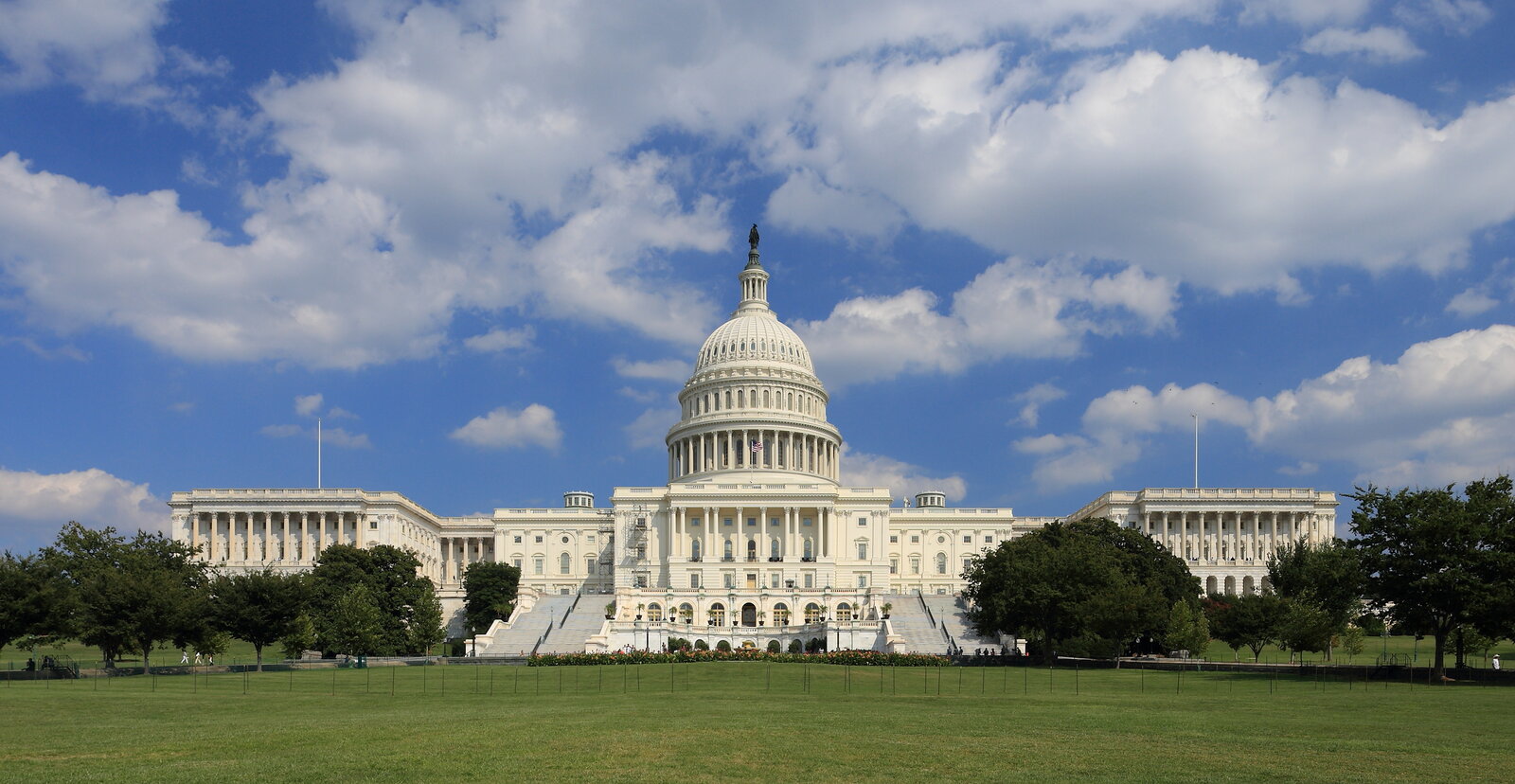
Featured image: The U.S. Capitol, west front. Photo by Martin Falbisoner via Wikimedia Commons, CC BY-SA 3.0.

Methodology and right of reply: This report is based entirely on public disclosure records and published analyses linked above; TIJ has not independently verified figures beyond the cited filings, and characterizations attributed to named organizations reflect those organizations’ analyses. Rivera’s conviction is a jury finding; other matters described are civil, regulatory or unadjudicated, and no unlawful conduct is implied where none has been found. Individuals and organizations named in this report who wish to respond or submit corrections may contact the editors at tij.news; responses will be appended or incorporated.