

WASHINGTON — Both chambers remain in their August state work period, but the quiet on the floor belies the volume of unfinished business waiting on the other side of Labor Day. The Senate’s published schedule shows a final pro forma session set for Thursday, August 27, and the House schedule shows the next votes expected Monday, August 31 — leaving lawmakers roughly a month of working time before annual appropriations lapse on September 30. Here is where the record stands, and what it suggests about the month ahead.
Two Stopgaps, One Deadline
The defining fact of the September calendar is that the House and Senate left town having passed different continuing resolutions. On July 21, the House passed H.R. 9770, a stopgap funding the government through December 4, on a largely party-line 220–205 vote. On August 8, the Senate answered with its own version — an amended H.R. 6500, the Continuing Appropriations and Extensions Act, 2027 — funding agencies through December 11. That measure cleared on a strikingly bipartisan 90–6 roll call, and, according to Senate offices, carries an extension of surface transportation program funding alongside the spending patch.
The two bills now have to be reconciled, and the tracking by the Committee for a Responsible Federal Budget notes the Senate-passed CR moves to the House for consideration when members return. The one-week difference in end dates is small; the procedural question — which chamber accepts the other’s text, and how fast — is not. Reporting on the House schedule indicates the chamber has roughly 16 session days remaining before the September 30 deadline.
The stakes are informed by recent history. CRFB’s records show the FY2026 cycle produced three separate funding lapses: a shutdown from October 1 through November 12, 2025, tied to the debate over Affordable Care Act tax credits; a brief lapse January 31 through February 3; and a Department of Homeland Security shutdown that ran February 14 through April 30 and ended only with H.R. 7147, a DHS funding bill that excluded the contested immigration enforcement accounts. Against that backdrop, the 90–6 Senate vote reads as a deliberate signal that neither party’s Senate leadership wants a repeat this fall.
Appropriations Scoreboard: House Ahead, Senate Stalled
On the full-year FY2027 bills, the chambers are in visibly different places. The House Appropriations Committee has approved all twelve bills, per the CRFB status table, and three have passed the floor: Military Construction–VA on a 400–15 vote May 15, Agriculture on a 213–210 vote June 4, and the National Security–State measure on a 217–209 vote July 15.
The Senate Appropriations Committee, by contrast, has yet to agree on topline subcommittee allocations, and advocacy groups tracking the process report no FY2027 bills have been released or marked up. The official Congress.gov appropriations status table reflects the same imbalance. Unless the Senate committee moves quickly in September, the practical vehicle for FY2027 funding will be whichever continuing resolution survives — and, later, an omnibus or minibus negotiation conducted under deadline pressure.
DHS Watchdog: FEMA Crew Unlawfully Skipped Homes With Trump Signs
The most consequential accountability document of the week came not from a hearing room but from an inspector general. A DHS Office of Inspector General report (OIG-26-21, dated August 18 and drawing press coverage Tuesday) found that a FEMA Disaster Survivor Assistance crew skipped 11 Florida homes displaying Trump campaign signage during Hurricane Milton recovery operations in October 2024. According to The Hill’s account of the report, the watchdog concluded the crew’s conduct violated the Hatch Act, and case notes documented entries such as “did not visit due to Trump flag.”
The report attributes the episode to poor training and supervision, noting FEMA did not require crews to document why homes were bypassed. Coverage of the findings also indicates the OIG said the conduct “eroded public trust in FEMA’s ability to treat everyone impartially.” One detail with ongoing oversight implications: the inspector general reportedly could not determine whether similar targeting occurred in earlier disasters because a data-system contract lapsed and the contractor shut the system down — a records-availability gap that congressional investigators are likely to probe. The underlying incident occurred under the prior administration, and House Oversight Committee Republicans had pressed FEMA on the conduct since late 2024; the OIG process includes an agency response, and FEMA’s formal concurrence posture is set out in the report itself.
Oversight Docket: Epstein Records Production, Fauci Deposition Fallout
House Oversight Chairman James Comer’s committee says the Justice Department is complying with its subpoena for records related to Jeffrey Epstein, issued August 5. The committee has also announced deposition subpoenas to a roster of former officials — including former Attorneys General and FBI leadership — seeking testimony about the handling of Epstein-related matters. Those depositions concern allegations and investigative questions, not adjudicated findings, and the named individuals have not, in materials reviewed for this digest, publicly responded to the committee’s characterizations.
On a separate track, the committee stated on July 29 that Dr. Anthony Fauci invoked the Fifth Amendment during a deposition in its COVID-origins inquiry, and on August 19 Comer accused the former Biden HHS secretary of withholding a diary and phone from Congress. Two cautions for readers: invoking the Fifth Amendment is a constitutional protection and not an admission of wrongdoing, and the committee’s releases represent one side of a contested oversight dispute. The committee’s release of deposition transcripts offers the primary-source record for those wishing to evaluate the testimony directly.
NDAA: Passed the House, Parked in the Senate
The FY2027 National Defense Authorization Act remains half-finished. The House passed its version — authorizing roughly $1.15 trillion — on a narrow 216–212 vote in July, with provisions reported to include “right to repair” requirements and $500 million toward a second destroyer. The Senate Armed Services Committee advanced its own bill 18–9 in June, documented in Senate Report 119-127, but the measure has not moved to the floor. The Congressional Research Service maintains a running status report on the FY2027 NDAA; reporting attributes the Senate stall to Democratic objections over the defense topline and related policy disputes. A bill Congress has enacted annually for decades now depends on floor time competing directly with the funding fight.
CBO Corner: Tariff Revenue, Shipbuilding Costs
The Congressional Budget Office’s August output gives appropriators fresh numbers to argue over. CBO’s updated budgetary projections of tariffs, current as of July 31, remain the reference point for claims about how much tariff revenue is actually offsetting deficits. Separately, a CBO analysis summarized by CRFB on August 12 estimates the proposed Trump-class battleship program would cost about $275 billion over 30 years — a figure likely to feature in both NDAA and Defense appropriations debates this fall. The office also released a batch of cost estimates on August 12 for bills ordered reported by Senate Homeland Security and Governmental Affairs, along with a report on the cost of federal credit programs in 2026.
After “Reconciliation 2.0,” an Uncertain Third Act
The immigration-enforcement funding stripped from the FY2026 DHS deal found another path. A budget reconciliation package — passed the House 214–212 and signed into law — provides roughly $70 billion for ICE and CBP, including, according to Time’s breakdown, about $38.5 billion for ICE personnel over three years. Filings and advocacy tracking indicate the path for a third reconciliation package remains uncertain, which keeps the question of how enforcement funding interacts with regular FY2027 appropriations squarely on September’s agenda.
The Week Ahead
Recess has not been entirely quiet: the House Education and Workforce Committee held a field hearing Tuesday in Richmond, Michigan — “Deployed Not Disqualified: Defending Servicemembers in Our Schools” — per the official House schedule. The Senate’s final scheduled pro forma session is Thursday, August 27, per the Senate calendar, with the House returning for votes Monday, August 31. Committee calendars for the return week are posted on Congress.gov’s committee schedule as notices are filed.
On TIJ’s Radar
Three threads from this week’s record merit continued digging. First, the FEMA data-system contract lapse cited by the DHS inspector general: if disaster-assistance records were rendered unrecoverable, the procurement file and records-retention decisions behind that lapse are a government accountability story in their own right. Second, the pace and completeness of DOJ’s Epstein records production — subpoena compliance announced by a committee is a claim best tested against what is eventually released. Third, the Senate Appropriations Committee’s failure to publish topline allocations: opaque spending negotiations conducted under shutdown pressure historically produce the least-scrutinized legislative text of the year. Records will tell each of these stories; we will keep pulling them.
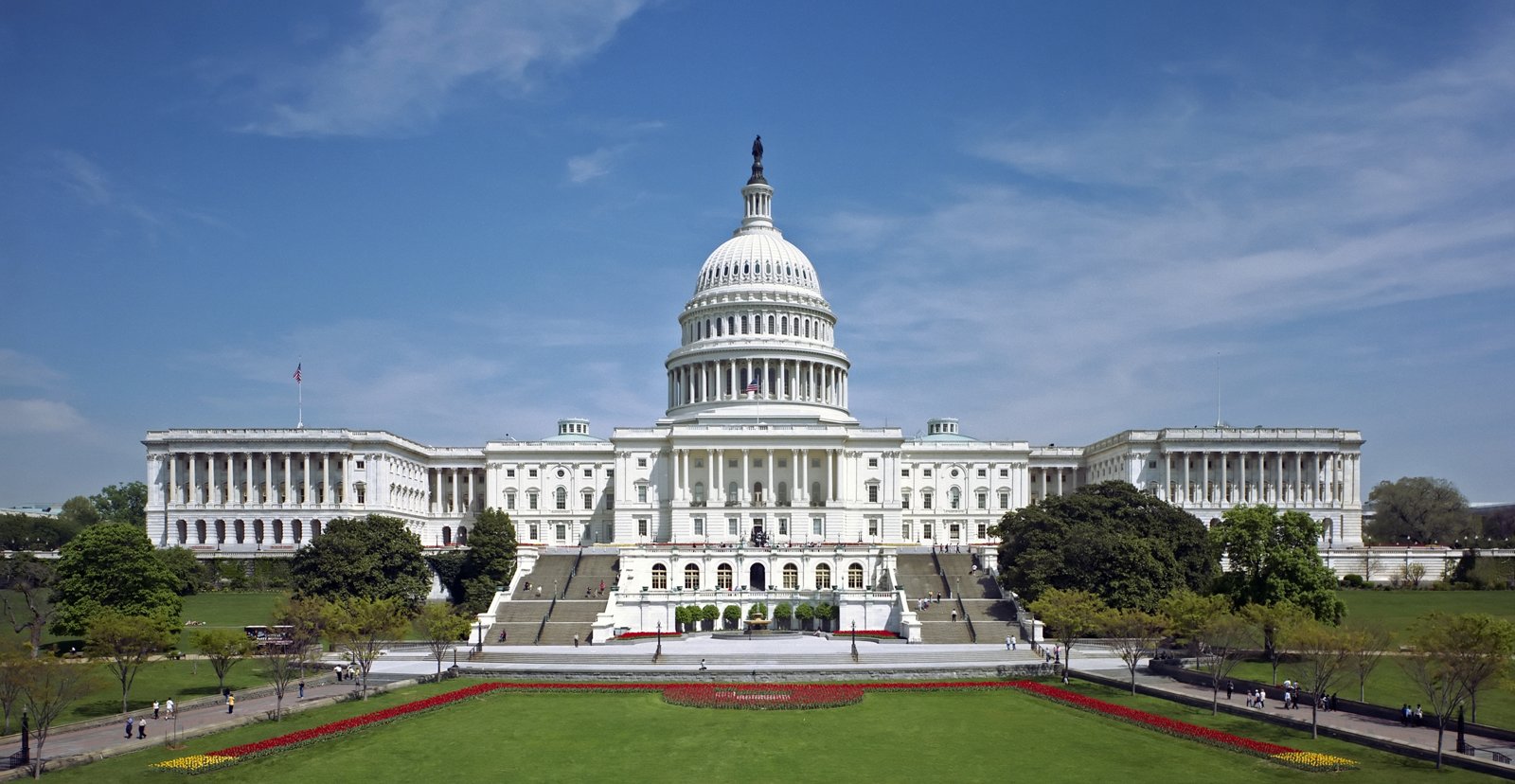
Featured image: U.S. Capitol, west front. Public domain, via Wikimedia Commons.