

The Afternoon Wire is The Investigative Journal’s daily digest of the day’s most consequential developments across government, the courts, and international affairs. Every item below is drawn from official statements, court records, or on-the-record wire reporting, with links to the underlying sources.
Washington’s day split along two tracks: abroad, Iran fired missiles and drones at U.S. allies in defiance of President Trump’s warning against retaliation, pushing oil past $95 a barrel; at home, Congress removed the threat of an election-season shutdown by passing a stopgap funding bill four weeks ahead of the deadline. Here is where things stand as of Wednesday afternoon.
Government
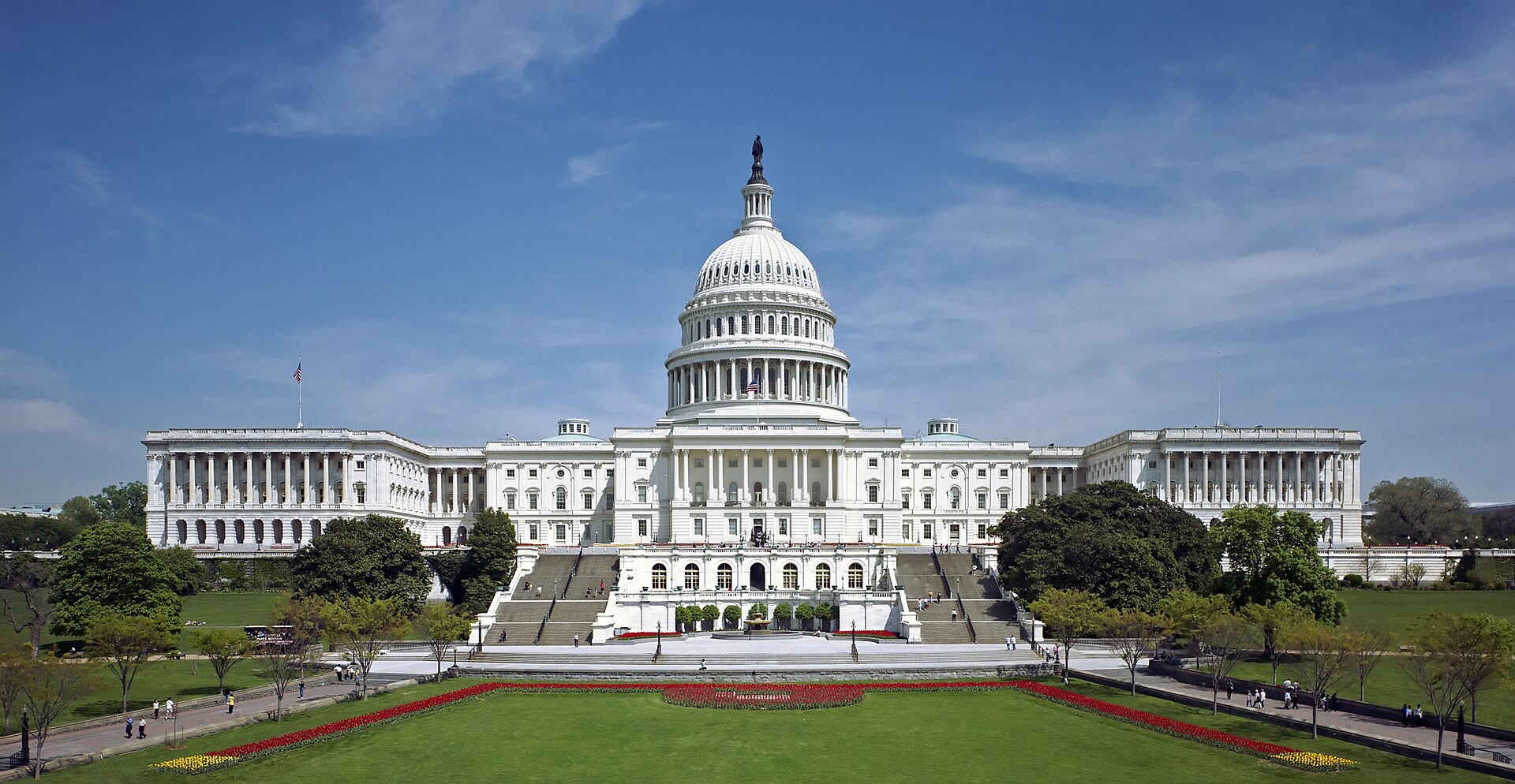
House passes stopgap, taking a shutdown off the table until December. The House voted 370-48 on Tuesday to extend federal spending at current levels through December 11, according to NPR, punting the broader appropriations fight until after the November midterms. The Senate passed the continuing resolution in August, and the White House has signaled the president will sign it. The move follows a bruising fiscal year that saw two record-long shutdowns — a 43-day lapse that ended in November 2025 and a 76-day partial shutdown at the Department of Homeland Security that closed in April. House Appropriations Committee leadership described the measure as a clean extension that restores order to the funding process, while Government Executive reports the bill makes limited adjustments for priority programs. The early, lopsided vote suggests both parties concluded that a pre-election shutdown carried more risk than reward.
Army Secretary Dan Driscoll resigns. Driscoll submitted his resignation to the White House and is expected to depart the Pentagon within days, NPR reports, ending an 18-month tenure in which he became the youngest-ever Army secretary. Reporting indicates the resignation followed friction with Defense Secretary Pete Hegseth over the removal of senior generals whom Driscoll viewed as central to his Army transformation and drone-modernization agenda. PBS NewsHour notes Driscoll was well regarded on both sides of the aisle and is a close associate of Vice President JD Vance. The timing is notable: the departure of the Army’s civilian chief comes as the service manages extended Middle East deployments, with families of the 82nd Airborne told rotations will stretch into 2027, according to CBS News reporting.
Treasury frames the Iran campaign as leverage economics. Treasury Secretary Scott Bessent said the administration’s economic pressure campaign is designed to drive Tehran to the negotiating table, per CBS News, and President Trump met Tuesday with oil refiners and distributors as crude prices climbed on renewed hostilities. With Brent trading just below $96 a barrel and West Texas Intermediate above $91, the administration faces the practical challenge of insulating U.S. pump prices from a conflict centered on the world’s most important oil chokepoint. Data in the coming days will show how much of the increase reaches consumers.
A quieter Washington change: the Kennedy Center removes “Blue.” Crews began removing Joel Shapiro’s 24-foot painted-aluminum sculpture from the REACH campus Wednesday, with the National Park Service closing northbound Rock Creek Parkway from 6 a.m. to about 1 p.m. to accommodate a crane, WTOP reports. The Kennedy Center has confirmed the removal but has not publicly explained the decision; a foundation dedicated to Shapiro, who died in 2025, will determine the work’s next home.
Courts
The mail-ballot fight accelerates as the first ballots near the mail stream. The administration has appealed to the First Circuit after U.S. District Judge Indira Talwani in Boston again blocked implementation of the president’s mail-voting executive order for two weeks, according to Associated Press reporting. Under the order, the Postal Service could decline to deliver ballots from states that do not submit eligible-voter lists and adopt a uniform envelope design — measures the White House calls “commonsense” ballot security and challengers call an unconstitutional intrusion on state authority over elections. The Supreme Court sided with the administration on procedural grounds on August 24, finding Judge Talwani had acted too soon, but has not resolved the order’s legality. Filings indicate the first mail ballots of the general election are scheduled to go out September 4, giving this litigation an unusually short fuse. The case remains pending, and no court has issued a final merits ruling.
Ballroom construction stays halted; administration signals a Supreme Court appeal. A federal appeals court ruled 2-1 this summer that the White House ballroom project cannot proceed without congressional approval, PBS NewsHour reports, affirming a lower-court injunction. President Trump has said he will appeal, per NBC News, setting up another separation-of-powers test over executive authority on federal property. The dispute turns on whether major alterations to the White House complex require legislative sign-off — a question with implications well beyond this project.
Looking toward the new Supreme Court term. The justices return the first Monday in October to a docket already carrying significant Second Amendment questions, including the consolidated cases Viramontes v. Cook County and Grant v. Higgins, which the Court added to the 2026-27 docket in April; briefing is underway. Court watchers also expect continued heavy traffic on the emergency docket, which SCOTUSblog notes has become a principal venue for disputes between the administration and lower courts.
International
Iran retaliates after U.S. strikes on IRGC targets, defying Trump’s warning. U.S. Central Command said Tuesday it completed a round of strikes on Islamic Revolutionary Guard Corps targets — including air-defense sites, radar systems, maritime assets, mine-laying capabilities, and communications sites — according to its official statement. President Trump said the strikes answered Iranian attempts to lay new sea mines in the Strait of Hormuz and an earlier attack on a U.S. base in Jordan, and warned, in an interview flagged by Fox News, that Iran would be “hit much harder” if it retaliated. Tehran retaliated anyway. Jordan’s armed forces said they detected 13 ballistic missiles launched from Iranian territory, intercepting 10, with three falling in remote areas and no reported casualties, per CBS News’s live coverage; Bahrain confirmed intercepting Iranian drones. Iranian state media claimed U.S. forces were killed in Jordan — a claim a U.S. official told CBS News is false. Separately, Iran’s foreign ministry alleged that a U.S. strike hit a wedding party in Hormozgan province, with claimed casualty figures ranging from two dead, per a provincial official, to “more than 50” killed or wounded, per a ministry spokesman. Those figures come from Iranian government sources, have not been independently verified, and U.S. officials had not commented as of this writing. The six-month-old conflict, which began in late February, has returned to active hostilities after a period of relative quiet.
In Bishkek, the Kremlin floats a Putin-Xi-Trump meeting. On the sidelines of the Shanghai Cooperation Organization summit in Kyrgyzstan, Kremlin foreign-policy aide Yuri Ushakov said a trilateral meeting among Presidents Putin, Xi, and Trump could take place if arrangements come together, according to Reuters reporting carried by U.S. News. The summit has doubled as a stage for Iran diplomacy: Iranian President Masoud Pezeshkian met Putin and held brief talks with Chinese leadership, thanking Moscow for its stance “at every stage” of the war, per CBS News. A Kremlin trial balloon is not a scheduled summit — but the fact that Moscow is advertising the possibility mid-conflict is itself a signal worth watching.
USS Abraham Lincoln reaches Thailand after a grueling extended deployment. The carrier, with roughly 5,000 sailors aboard, arrived at Laem Chabang port for rest and recovery after serving as a primary launch platform in the Iran conflict, CBS News and the Associated Press report. The Lincoln left San Diego last November; the Asia-based USS George Washington relieved it in the Middle East in August. Family members have raised concerns about conditions aboard during the extended cruise — a readiness data point Congress is likely to probe when it takes up defense oversight this fall.
Tomorrow’s Watch
Thursday, September 3 brings a data-heavy morning: the Bureau of Economic Analysis releases July international trade figures at 8:30 a.m. Eastern, per the agency’s release schedule — the first trade snapshot since the latest round of Hormuz disruptions began filtering into shipping costs — and the Labor Department publishes weekly jobless claims, a read on whether the labor market’s summer cooling has continued. Watch the First Circuit for any action on the mail-voting appeal: with the first general-election ballots scheduled to enter the mail stream Friday, September 4, any ruling lands immediately on live election machinery. Friday also brings the August employment report. Abroad, the SCO summit’s closing sessions may clarify whether the floated Putin-Xi-Trump trilateral advances, and markets will track whether Tehran’s next move — or Washington’s — pushes Brent past the $95 threshold it tested this week. The continuing resolution heads to the president’s desk; a signature would formally close the books on shutdown risk until December 11.
All items reflect information available as of publication time on September 2, 2026. Claims attributed to Iranian government sources are noted as unverified. Pending litigation is described as pending; no item should be read as reporting a final adjudication where none exists.