

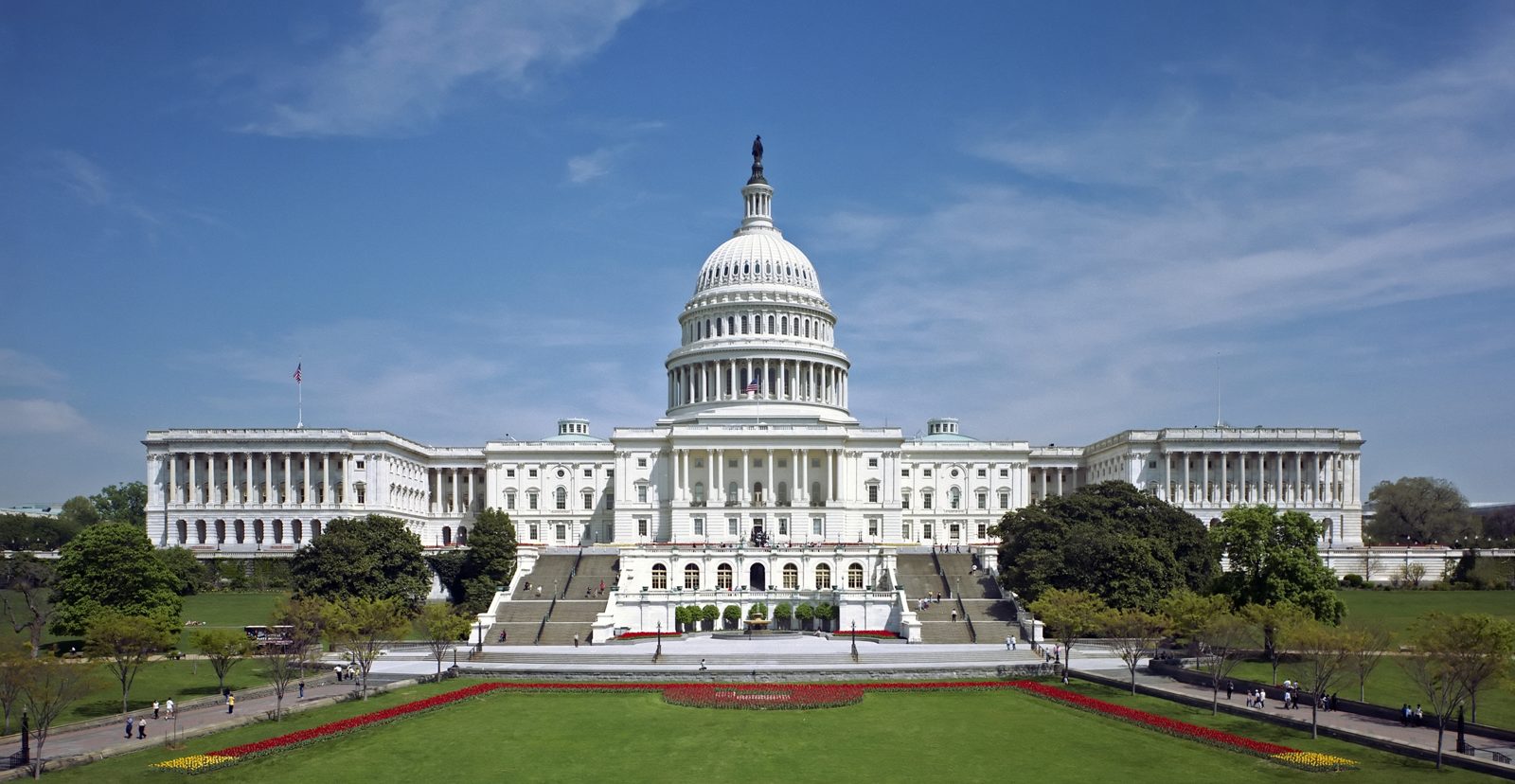
WASHINGTON — The Capitol is quiet this week, but the story of the week is the quiet itself. House Republican leaders have scrapped the chamber’s final two scheduled work weeks before the midterm elections, a decision made possible by a stopgap funding law signed September 2 that pushes the next shutdown deadline to December 11. Off the floor, the machinery kept moving: a billionaire sued the House Oversight Committee to block Epstein-probe subpoenas, the Congressional Budget Office priced a stack of good-government bills, and budget analysts warned that a $41.1 trillion debt-ceiling fight is now on the horizon. Here is where congressional activity stands as of Thursday, September 10, 2026.
House scraps its late-September session
Under a revised schedule announced September 3, the House will return for votes the evening of Monday, September 14, for what is now expected to be a single week of legislative business before members head home to campaign, according to Roll Call. The two weeks previously scheduled for late September have been cancelled outright.
The rationale, as members described it, is that the stopgap spending law removed the only must-pass deadline standing between Congress and the election. “I don’t think there’s any probably compelling reason that we need to be here” late in the month, Rep. Robert B. Aderholt, R-Ala., a House appropriator, told the publication — adding that further action on fiscal 2027 spending bills will likely “wait till the election’s over.”
Members were also advised the schedule could change again if the Senate adopts a budget resolution laying the groundwork for a third reconciliation package — a priority President Trump has pressed, with reported components including funding related to the Iran conflict and new voting rules. The Senate, which held a brief pro forma session on September 8 (its 2026 roll-call record is here), returns from recess September 14 and is scheduled to remain in session through October 2.
What rode along on the stopgap
The funding measure itself, H.R. 6500, the Continuing Appropriations and Extensions Act, 2027, was signed into law on September 2, according to the White House, and funds federal agencies through December 11, 2026.
The Senate-amended package carried more than a date change. Roll Call’s accounting of conservative objections indicates the bill included a delay of new restrictions on sales of THC-infused hemp products otherwise set to take effect November 12, an extension of surface transportation programs, and — by virtue of a lapsed 2025 prohibition — continued Medicaid reimbursements to Planned Parenthood. Rep. Chip Roy, R-Texas, publicly urged colleagues to oppose both the measure and the rule that blocked amendments to it, posting “NO ON CR. NO ON RULE THAT DOES NOT ALLOW US TO AMEND AND FIX THE CR” before the vote. Because leadership moved the bill under suspension of the rules, amendments were barred and a two-thirds threshold applied — which the measure comfortably cleared.
The last votes before the exit
The House’s final recorded votes of the work period, compiled by the Clerk of the House, tell their own story. On September 3, the chamber passed H.R. 4795, the Protect Economic and Academic Freedom Act of 2026 (Roll No. 295), a Rep. Virginia Foxx bill that would make colleges participating in “nonexpressive commercial boycotts” of Israel ineligible for certain Higher Education Act funds; reports put the tally at 237-169. Judiciary ranking member Jerrold Nadler opposed the measure, and CBO published a cost estimate ahead of floor action.
A day earlier, the House passed H.R. 1501, the Protecting Domestic Mining Act (Roll No. 294) — part of a package Roll Call reported would streamline permitting for mining and mineral-processing projects — and rejected H.J. Res. 1 (Roll No. 293), a proposed constitutional amendment to fix the Supreme Court at nine justices, which failed to reach the two-thirds majority required under suspension.
The procedural vote that set up the week was the closest call. The rule governing floor debate squeaked through 210-208 on September 1, with five Republicans — Reps. Roy, Pete Sessions, Andy Harris, Clay Higgins and Ralph Norman — voting no, offset by two Democrats, Reps. Jared Golden of Maine and Marie Gluesenkamp Perez of Washington, per Roll Call. Cross-party rescues of a rule vote remain rare, and this one underscores how thin the majority’s floor margin has become.
Oversight: Black sues to block Epstein-probe subpoenas
In the oversight arena, billionaire investor Leon Black filed suit against the House Oversight Committee on September 3, seeking to stop the panel from enforcing subpoenas issued in its investigation of the late Jeffrey Epstein, according to NPR. NBC News reported that Black’s attorney characterized the committee’s demands as a “fishing expedition that oversteps its authority,” while lawmakers have sought records on the financial arrangements that sustained Epstein’s operation, including any nondisclosure agreements Black signed. The suit is pending; no court has ruled on the committee’s authority, and the filings contain allegations, not findings. Black’s position is set out in his complaint — his side of the dispute is on the record.
Chairman James Comer has separately published an update on the committee’s review of the federal government’s handling of the Epstein and Maxwell investigations. However the Black litigation resolves, it will help define how far congressional subpoena power reaches private financiers — a question with implications well beyond this probe.
Debt past $40 trillion, ceiling fight ahead
Fiscal watchers got a sobering read Wednesday. Federal debt topped $40 trillion for the first time last month, and lawmakers will likely need to lift the $41.1 trillion statutory ceiling within the next year or so, Roll Call reported September 9. Net interest on the debt — already costlier than national defense — is projected to top $1 trillion this year, consuming nearly 19 percent of federal tax revenue; CBO projects those figures reach $2 trillion and 25 percent within a decade.
The report notes the 30-year Treasury rate touched 5.3 percent in mid-August, its highest in nearly two decades, and that federal revenue has run below expectations since the Supreme Court’s ruling against broad tariff authority. Republicans’ current “reconciliation 3.0” effort reportedly excludes the debt limit, with some floating a lame-duck package to address it. House Budget ranking member Brendan Boyle, D-Pa., says he will insist on his proposal to let the Treasury secretary suspend the limit for up to two years absent a disapproval resolution, while Rep. Lloyd Smucker, R-Pa., cited bond-market “turmoil” as a reason to pair any increase with slower debt growth. The positions are hardening before the fight has formally begun.
CBO’s week: pricing the good-government pipeline
With the floor dark, the Congressional Budget Office supplied much of the week’s official output. Between September 2 and 4, CBO published cost estimates for a cluster of accountability-focused bills ordered reported by the Senate Homeland Security and Governmental Affairs Committee: S. 2732, the Bonuses for Cost-Cutters Act of 2026, which would reward federal employees who identify savings; S. 2733, the Duplication Scoring Act, requiring assessments of program overlap; and S. 252, the Guidance Out Of Darkness Act, mandating public posting of agency guidance documents.
The office also scored two grid-related measures reported by House Energy and Commerce — H.R. 6633, the High-Capacity Grid Act and H.R. 9332, the Load Forecasting Enhancement Act — along with H.R. 3340, the Modernizing Access to Our Public Oceans Act and S. 3010, the 21st Century Dyslexia Act. On September 8, CBO released an analysis of how changing temperatures affect the Medicare population, examining emergency-department visits, spending and mortality. The scoring activity signals which committee-reported bills are queued for possible floor time in the lame duck.
On the radar
Both chambers return Monday, September 14 — the House for votes that evening, the Senate through a scheduled October 2 adjournment. The House Oversight Committee’s hearing calendar lists a session on fraud in federally funded homelessness services announced September 9. CBO’s 2026 long-term projections for Social Security are expected this month, per the office’s publications schedule — a release that will land squarely in the debt-limit debate, given trust-fund exhaustion projections already circulating. And a Trump administration census overhaul proposal, reported by Roll Call September 9, bears watching for its potential to reshape apportionment. The next hard deadline is December 11, when H.R. 6500’s funding runs out.
For the accountability file
Three threads from this week belong on the investigative docket. First, the Black litigation will test whether congressional subpoenas can reach the private financial records at the center of the Epstein network — and how long targets can run out the clock in court. Second, the CR’s ride-along provisions — the hemp-restriction delay and the quietly lapsed Planned Parenthood reimbursement prohibition — illustrate how consequential policy moves through must-pass vehicles with minimal debate; the beneficiaries of that delay merit scrutiny. Third, the homelessness-services fraud hearing and the duplication-scoring and cost-cutter bills point to a growing paper trail on federal program integrity that records-based reporting can mine. We will track all three when Congress returns Monday.