

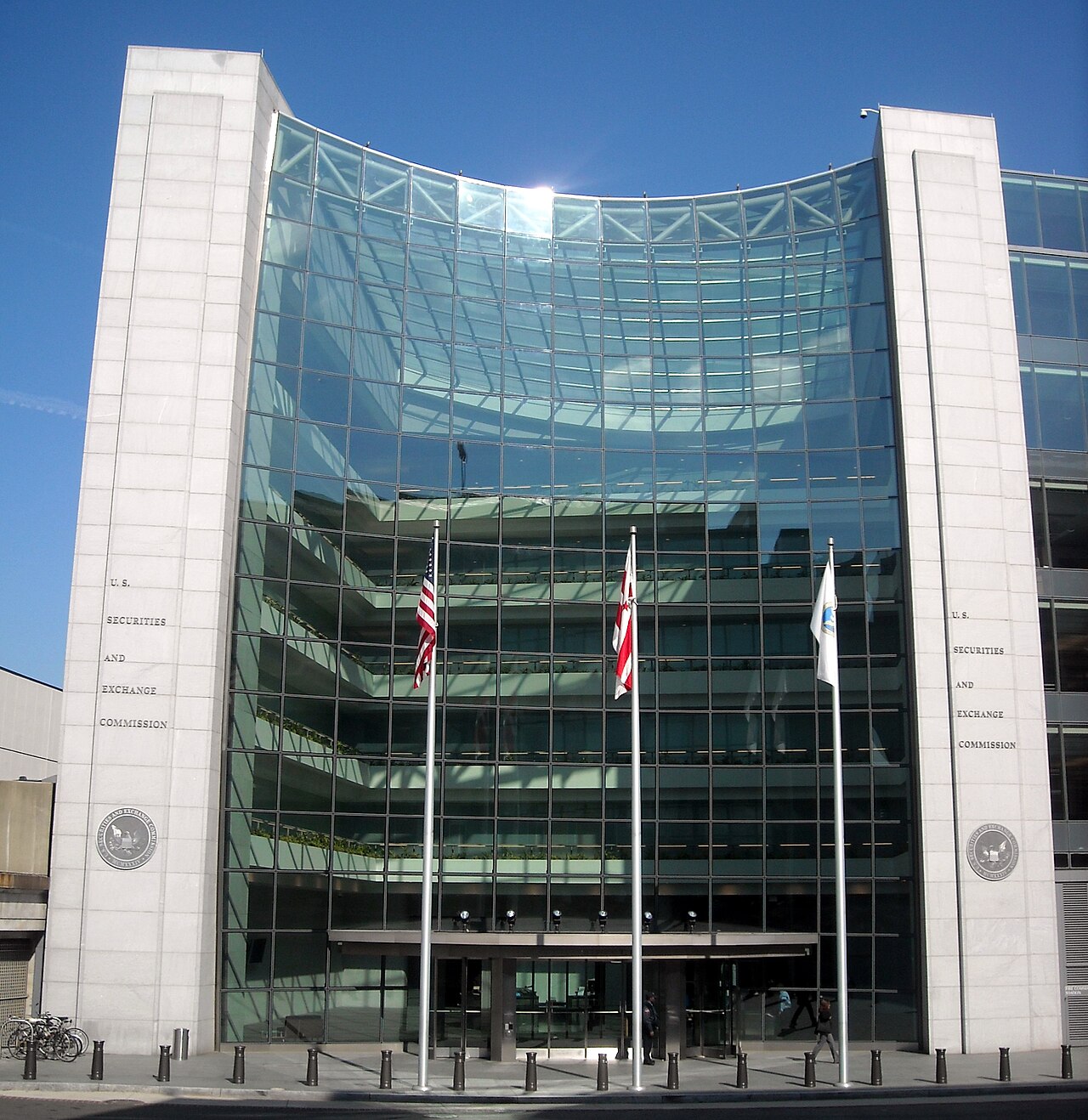
This week’s public filings offered a mix of a large strategic transaction, a cluster of scheduled executive stock sales, a notable chief executive transition, and a portfolio shift at one of the market’s most closely watched investors. As always, this roundup reports what the documents say, notes what they do not say, and points readers to the primary filings. Nothing here suggests wrongdoing by any person or company named. Where we cite advocacy groups or press accounts, we say so.
1. Schneider Electric Agrees to Buy PTC for $205 a Share
The largest disclosure of the week is a Form 8-K filed by PTC Inc. (Nasdaq: PTC) reporting a merger agreement with Schneider Electric SE. According to the filing, each PTC share would convert into the right to receive $205 in cash. The agreement was reported under Item 1.01 (material definitive agreement), with a joint press release furnished under Item 7.01. Press reporting by The Tech Capital puts the equity value near $22.6 billion and the implied enterprise value near $23.7 billion, and describes the price as a 42.3 percent premium to the last close and a 46.1 percent premium to the 30-day volume-weighted average price.
Several terms in the 8-K deserve attention. PTC would owe Schneider a $700 million termination fee in specified circumstances, including a change in the board’s recommendation or acceptance of a superior offer. By our arithmetic, that is about 3.1 percent of the roughly $22.6 billion equity value. Schneider disclosed a $25 billion bridge term loan commitment from Morgan Stanley Europe SE and Société Générale, dated October 4, 2026, and the filing indicates the merger is not conditioned on financing. Closing conditions include approval by a majority of PTC’s outstanding shares, HSR antitrust clearance and CFIUS approval. Press reports indicate a closing target in the third quarter of 2027.
On valuation, the reported enterprise value is roughly 8.8 times PTC’s 2025 revenue of about $2.7 billion (per the same press account), which also cites an adjusted EBITA margin near 40 percent. We have not benchmarked that multiple against comparable software transactions, and readers should not treat it as a finding. Notably, the filing says unvested RSUs and PSUs would convert into deferred cash awards rather than vest immediately, a detail that matters to how much of the deal value reaches executives and when. The full merger agreement is Exhibit 2.1 and warrants a close read for the deal-protection provisions.
2. SentinelOne CEO Sells About $13.3 Million Under a 10b5-1 Plan
A Form 4 filed October 6 shows SentinelOne (NYSE: S) President and CEO Tomer Weingarten exercised 500,000 options at $9.74 (about $4.87 million in cost), converted the resulting Class B shares to Class A, and sold 527,368 Class A shares at a weighted-average price of about $25.26. Gross proceeds were roughly $13.32 million. The filing states the sale was made under a Rule 10b5-1 plan adopted July 2, 2026.
After the transactions, the filing lists 1,717,510 Class A and 3,421,153 Class B shares held directly, plus 423,629 Class B shares in an irrevocable trust for which he disclaims beneficial ownership beyond any pecuniary interest, and 2,906,920 employee options. By our calculation, the sale represents roughly a tenth of his directly held shares before the transaction. Rule 10b5-1 plans are designed to remove discretion from trade timing, and a plan adopted three months before first execution is consistent with the cooling-off periods the SEC has required in recent years. The sale, taken alone, indicates scheduled diversification rather than a signal about the company’s prospects.
3. Nutanix CEO Sells 400,000 Shares, About $29.5 Million
Nutanix (Nasdaq: NTNX) CEO Rajiv Ramaswami reported sales on October 6 and 7 totaling 400,000 Class A shares, according to a Form 4 accepted October 8. Weighted-average prices ranged from about $73.35 to $74.00, for approximate proceeds of $29.46 million. The filing states the sales were executed under a 10b5-1 plan adopted July 7, 2026.
The filing shows 414,339 shares held directly after the final sale. On our math, the three tranches equal roughly half of his directly held shares immediately before the sales. A sale of that proportion is larger than the other two executive sales we reviewed this week, which makes the 10b5-1 adoption date and any other holdings, such as unvested awards, worth reviewing in the company’s most recent proxy statement. The Form 4 alone does not tell readers the full picture of his equity position.
4. Halozyme CEO Exercises and Sells 60,000 Shares
Halozyme Therapeutics (Nasdaq: HALO) CEO Helen Torley exercised 60,000 options granted in February 2018 at $18.41 and sold the same number of shares across October 6, 7 and 8, per a Form 4. Gross proceeds were about $6.61 million against an exercise cost of about $1.10 million, for a pre-tax spread near $5.51 million. The trades followed a 10b5-1 plan adopted December 3, 2025, and the filing shows 767,780 shares held directly afterward.
This is a comparatively routine pattern: options that expire in February 2028 were exercised and sold in even daily increments of 20,000 shares under a plan adopted about ten months earlier. Her post-sale direct holdings are many times the amount sold. Absent other information, the filing is consistent with an orderly, pre-planned exercise ahead of an option expiry.
5. Adeia’s CEO Transition and a $12.5 Million Target Package
Adeia Inc. disclosed in a Form 8-K (Item 5.02) that CEO Paul Davis resigned effective October 12, 2026, citing a desire “to focus on his health and personal pursuits.” The filing says he first notified the board on May 4, 2026. Dipti Vachani, a former head of Arm’s automotive business unit, became CEO and a director on the same date.
The filing details her terms: a $730,000 base salary, a target bonus of 100 percent of base, and aggregate target equity of $11 million, split between $4.4 million in time-based RSUs vesting over four years and $6.6 million in performance RSUs over three years. By our addition, target annual cash plus equity is about $12.46 million. Severance would equal 150 percent of base plus target bonus ($2.19 million at current figures, by our calculation) outside a change-in-control window, rising to 200 percent ($2.92 million) within three months before or twelve months after a change in control, with equity acceleration. Davis will serve as a consultant through December 31, 2026 for a fixed $183,000 fee and receive COBRA premiums through September 30, 2027. The agreements will be filed with the quarterly report for the period ended September 30, so exhibit-level terms remain to be seen.
6. Berkshire Hathaway’s Second-Quarter 13F Ends a Selling Streak
Berkshire Hathaway’s second-quarter 13F, reported in Morningstar and IBTimes coverage, indicates about $23.5 billion of equity purchases against about $3.7 billion of sales, a net of roughly $19.8 billion. Those accounts say this ended a 14-quarter run of net selling. The largest move was Alphabet: the reports say Berkshire bought about 24.5 million Class A and 23.6 million Class C shares (roughly $7.9 billion and $7.6 billion), lifting the stake about 83 percent to roughly 106 million shares worth about $37 billion.
The same accounts report continued reductions in Bank of America (30.2 million shares, about $1.6 billion, a fifth straight quarter), a roughly 58 percent cut in Capital One, trimming of Kroger and Ally Financial, and the sale of remaining Constellation Brands shares. Delta Air Lines (17.5 million shares, about $1.4 billion) was added. We have not independently reviewed the second-quarter information table; EDGAR’s first-quarter 13F-HR (portfolio of about $263.1 billion across 90 entries, signed May 15) is the baseline for comparison, and Berkshire’s full filing list is on EDGAR. Readers should remember that 13F filings are a lagged snapshot of long US equity positions only.
7. A Shareholder-Access Proposal at Procter & Gamble
The National Legal and Policy Center, an advocacy group, says it presented a proposal on October 13 at P&G’s annual meeting asking the board to commit in writing to preserve current shareholder-proposal access even if the SEC changes or repeals Rule 14a-8. These are NLPC’s claims, and we have not reviewed its exempt-solicitation report or P&G’s proxy statement. NLPC says P&G’s board opposed the proposal, that ISS recommended in favor, and that Glass Lewis called it “unnecessary” for now. NLPC also says the SEC proposed rescinding Rule 14a-8 on September 21, 2026; readers should confirm that against the SEC’s own releases.
P&G has not, in the materials we reviewed, commented on the proposal. The company’s right of reply remains open. The underlying question, how shareholders would file proposals if the federal rule changed, is one to watch across the proxy season.
Disclosures That Warrant Deeper TIJ Investigation
First, the PTC merger agreement: deal-protection terms, the treatment of executive equity, and any related-party or advisory-fee disclosures that will appear in the merger proxy. Second, the Nutanix sale in context: how the 10b5-1 adoption date compares to company announcements, and what unvested awards remain. Third, Adeia’s exhibits, due with the next quarterly report, for any terms that differ from the 8-K summary. Fourth, the SEC’s reported Rule 14a-8 proposal, which we will verify against the primary release and cover if confirmed. Finally, Berkshire’s Alphabet position once the full second-quarter information table is reviewed line by line.
Right of reply: TIJ invites any company or individual named here to submit a response, which we will review for publication. This roundup summarizes public filings for informational purposes and is not investment advice. Figures marked “by our calculation” are TIJ arithmetic from the cited filings.