
Federal Register Watch for Friday, October 23, 2026, led by a Treasury Department proposal that would define how a new federal ban on large institutional investors buying single-family homes will work. Other notable entries include a USDA proposal to move SNAP benefit cards to chip-and-tap technology, a Federal Trade Commission consent order tied to a $2.2 billion advertising-data merger, and a Justice Department and Education Department notice stating that seven civil rights guidance documents are not enforceable. The documents were posted on the Federal Register’s public inspection list and are scheduled for publication in the October 23 issue; comment deadlines below are calculated from that date and should be confirmed against each document’s final listing.
1. Treasury Proposes Rules for the ROAD Act Institutional-Investor Home Purchase Ban
The Department of the Treasury has issued a proposed rule to implement section 1001 of the 21st Century ROAD to Housing Act, which, according to the notice, was enacted on July 11, 2026 and prohibits “large institutional investors” from purchasing single-family homes, subject to listed exceptions. The statute’s restrictions take effect 180 days after enactment, which the notice identifies as January 7, 2027. Treasury describes the proposal as the first phase of a phased rulemaking and says it may issue further rules on other excepted-purchase categories, compliance procedures, reporting and recordkeeping, and enforcement.
The proposal would define terms the statute leaves open. Under the draft, a “program” would be a set of written policies or procedures adopted before purchases are made. A build-to-rent program would cover homes that have not been occupied by an owner-occupant, are bought within 18 months of receiving a certificate of occupancy, and are first occupied by renters. A renovate-to-rent program would require improvements totaling at least 15 percent of the home’s purchase price, with a non-exclusive safe harbor tied to spending at least 10 percent on structural or core systems and resolving all material deficiencies. A homeownership program would need rental contracts with specified terms, including a renter’s right to purchase the home and positive reporting of rent payments. The notice also addresses what makes an investor “passive,” using criteria related to director and management overlap and property control rights.
Enforcement language may draw attention from compliance counsel. The notice states that the statute provides civil penalties of up to the greater of $1 million or three times a property’s purchase price, and the proposal would treat a purchase that violates the law with respect to more than one large institutional investor as a single violation when calculating the maximum penalty. Comments are due 30 days after publication, which falls on or about November 22, 2026, through Regulations.gov under docket TREAS-DO-2026-0529. The full text runs 96 pages in its public inspection form. Federal Register document 2026-21675.
2. USDA Proposes Chip-and-Tap Security Standards for SNAP EBT Cards
The Food and Nutrition Administration at USDA has proposed changes to the Supplemental Nutrition Assistance Program intended to modernize Electronic Benefit Transfer cards and align them with consumer payment standards. According to the notice, about 42 million people received SNAP benefits in an average month of fiscal year 2025, and all states still issue benefits on magnetic-stripe cards secured by PINs. The agency says criminals have shifted toward EBT cards as credit and debit cards moved to chip and contactless technology, citing skimming, cloning and PIN-guessing as methods.
The proposal would add SNAP EBT Operating Standards as a new appendix to 7 CFR Part 274 and move states toward chip and near-field communication (tap-to-pay) cards. It also describes account features such as transaction detail that includes retailer names and user-controlled security options. The notice says seven states had issued EBT chip cards as of August 2026. It cites Section 501(a) of the Consolidated Appropriations Act, 2023, which directs the Secretary to issue regulations requiring state agencies to take security measures against benefit theft.
The notice includes figures worth noting. It states that, as of the second quarter of fiscal year 2025, 753,929 claims for replacement of stolen SNAP benefits had been approved nationwide, with a total replacement value of $360,441,561, while acknowledging that these data may not capture the full scope of theft and that federal replacement authority expired December 20, 2024. USDA estimates one-time implementation burdens of roughly $283 million across fiscal years 2028 and 2029, with ongoing costs beginning in fiscal 2030. Comments are due 60 days after publication, or about December 22, 2026. Federal Register document 2026-21658.
3. FTC Seeks Comment on Publicis and LiveRamp Consent Order
The Federal Trade Commission has placed a proposed consent agreement on the public record concerning Publicis Groupe’s planned acquisition of LiveRamp Holdings. According to the FTC’s analysis, the all-cash deal, under a merger agreement dated May 16, 2026, carries an enterprise value of approximately $2.2 billion. The Commission’s complaint alleges the acquisition would lessen competition in the U.S. markets for media agency services and for audience data services by giving Publicis the ability and incentive to use competitively sensitive data to its advantage. These are the Commission’s allegations, and the matter is being resolved through a proposed settlement rather than a litigated finding.
The proposed order would require, for five years, that the companies act as a non-discriminatory supplier of LiveRamp’s data connectivity services to current and future customers and protect competitors’ competitively sensitive information from improper use or disclosure. The FTC will review public comments for 30 days before deciding whether to finalize, modify or withdraw from the agreement. Comments can be filed at Regulations.gov under “Publicis and LiveRamp; File No. 261 0115” (FTC Docket No. C-4841). Federal Register document 2026-21659.
4. Justice and Education Departments Say Seven Guidance Documents Are Not Enforceable
The Department of Justice’s Civil Rights Division and the Department of Education’s Office for Civil Rights issued a joint clarification that seven guidance documents issued between 2015 and 2023 are not enforceable and will not be relied upon in enforcing federal civil rights laws. The list includes the January 2015 materials on English learner students and limited-English-proficient parents, a May 2021 document on COVID-19-related harassment in schools, a May 2023 resource on racial discrimination in student discipline, and two August 2023 documents on the Supreme Court’s decision in Students for Fair Admissions v. Harvard.
The departments say they plan to revisit the documents in light of the Supreme Court’s decision in Loper Bright Enterprises v. Raimondo to assess whether they reflect the “single best meaning” of the underlying statutes, and note that guidance does not carry the force of law. Schools, districts and universities that relied on the documents for compliance planning may want to review how the notice interacts with the statutes themselves, which remain in force. Federal Register document 2026-21685.
5. BLM Terminates Section 368 Energy Corridor Environmental Review
The Bureau of Land Management announced the immediate termination of the environmental impact statement and related resource management plan amendments for revisions to Section 368 energy corridors, which it first announced in a December 1, 2023 notice of intent (88 FR 83959). The bureau states the original goal was to enable preferred siting and efficient environmental review for linear energy infrastructure, and that updated processing methods and tools now allow such activities to proceed without an EIS. The notice does not specify which individual corridors are affected, so developers and landowners will likely look to BLM field offices for project-level guidance. Federal Register document 2026-21645.
6. FDA Finalizes Mandatory Cosmetics Recall Guidance
The Food and Drug Administration announced the availability of final guidance, “Questions and Answers Regarding Mandatory Cosmetics Recalls,” which finalizes a draft published December 18, 2025. It addresses the criteria, process and expectations for mandatory recalls of cosmetic products under the agency’s recall authority. Guidance documents represent the agency’s current thinking rather than binding requirements, and comments may be submitted at any time under docket FDA-2025-D-2246. Federal Register document 2026-21679.
7. Smaller Items With Open Comment Periods
Several other entries carry deadlines. The Treasury Department is seeking comment, for 60 days, on a routine extension without change of the collection for the “Trump Accounts Qualified Class Contribution Application” (OMB control number 1505-0285). The notice says the accounts were established under section 70204 of the One, Big, Beautiful Bill Act as a category of individual retirement account for people under 18, and the application supports donor contributions benefiting certain classes of beneficiaries (2026-21643).
The Nuclear Regulatory Commission docketed a petition for rulemaking from Howard L. Hall, PhD, who is described as acting in his individual capacity, asking the agency to remove the exclusion of irradiated fuel reprocessing plants from 10 CFR Part 74 and to set material control and accounting requirements for that facility class. The NRC has not decided whether to pursue rulemaking; comments are due in 30 days under docket NRC-2026-4456 (2026-21690). The Agricultural Marketing Service is asking dairy stakeholders for input on whether market conditions have changed since 1999 for the monthly route sales limits in the federal milk marketing order “exempt plant” definition, also with a 30-day window (2026-21668). Interior and seven other agencies propose extending the manufactured-products element of a joint public interest waiver for Indian Tribes issued January 10, 2025, with comments due in 30 days under docket DOI-2026-0232 (2026-21634).
What to Watch on TIJ’s Beats
For readers following regulatory accountability, three threads stand out. First, the SNAP proposal draws on a theft-replacement program whose federal authority has lapsed, and the notice itself acknowledges that USDA lacks long-term data on electronic benefit theft. How states, retailers and processors respond on cost and timing could shape the final rule. Second, the Treasury housing proposal arrives less than three months before the statute takes effect, so the final definitions of “program” and “passive investor” will determine how much of the market falls inside the ban. Third, the DOJ and Education notice and the BLM termination are examples of agencies withdrawing or narrowing prior guidance and review processes; the public record will show how courts, states and regulated parties respond.
Right of reply: TIJ invites comment from any agency, company or party named in this digest and will update the article if responses are received. This digest summarizes public documents and does not reflect independent verification beyond the cited filings.
Sources
- Treasury, ROAD to Housing Act Prohibition on Large Institutional Investor Purchases of Single-Family Homes (2026-21675)
- USDA, SNAP: Electronic Benefits Transfer Card Security Measures (2026-21658)
- FTC, Consent Agreement: Publicis and LiveRamp (2026-21659)
- DOJ and Education, Clarification on Guidance Documents (2026-21685)
- BLM, Termination of Section 368 Energy Corridor Revisions EIS (2026-21645)
- FDA, Mandatory Cosmetics Recalls Guidance (2026-21679)
- Treasury, Trump Accounts Qualified Class Contribution Application (2026-21643)
- NRC, Irradiated Fuel Reprocessing Plants petition (2026-21690)
- AMS, Request for Information: Exempt Plant Definition (2026-21668)
- Interior, Public Interest Waiver to Indian Tribes, Manufactured Products (2026-21634)
- Federal Register Public Inspection
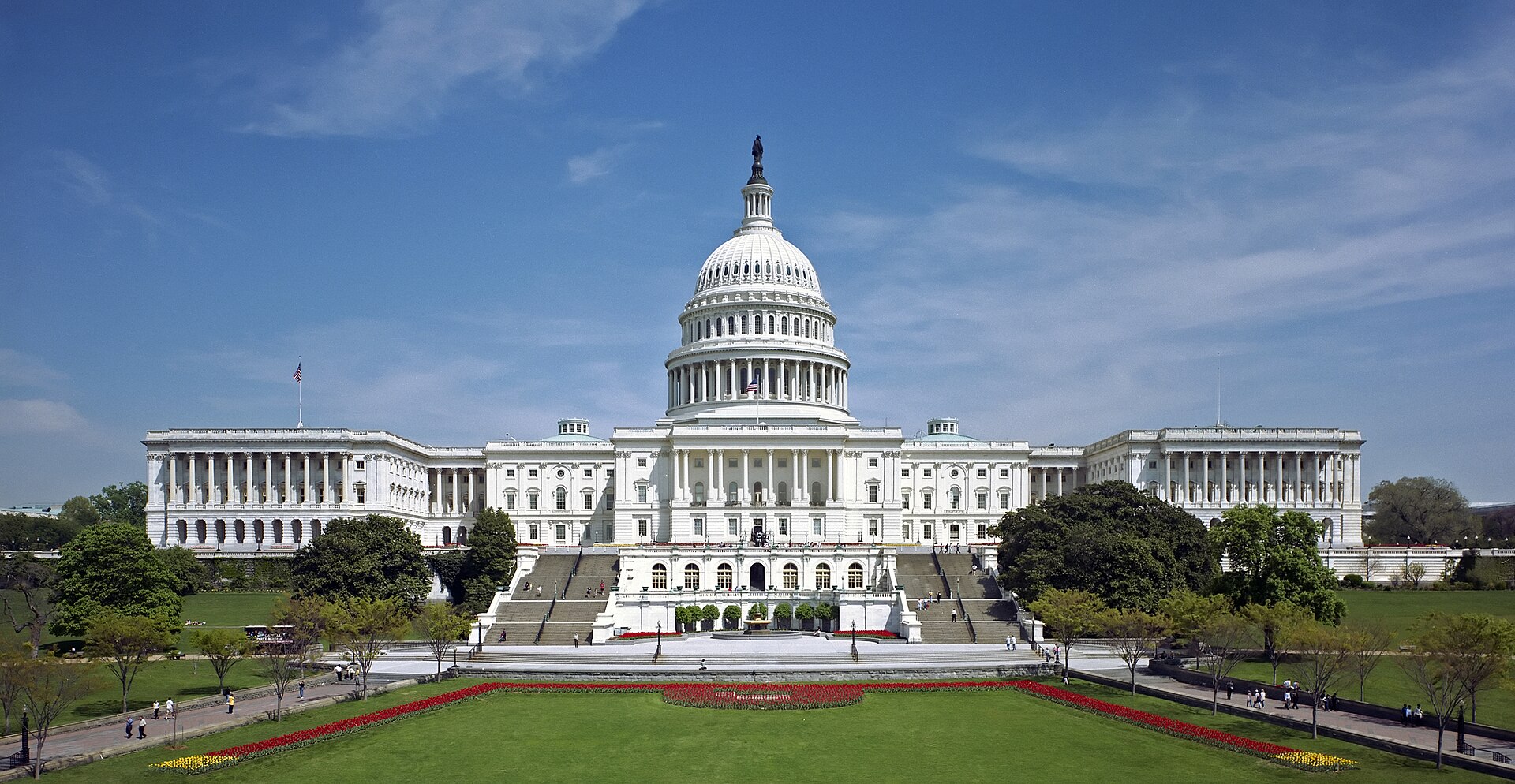
Featured image: U.S. Capitol west front, public domain, via Wikimedia Commons.