

Sunday, October 25, 2026. This briefing covers official actions and filings published between Wednesday, October 21 and Saturday, October 24, because federal agencies and courts publish little on weekends. Every item links to the primary record. Allegations in criminal matters are unproven, and pending cases are labeled as pending.
Government
White House announces a localized Russia–Ukraine pause around Oleshky
In an October 23 statement, the Office of the First Lady announced a temporary, localized ceasefire limited to the southern Ukrainian city of Oleshky. According to the statement, the pause begins October 29 and is meant to allow humanitarian aid to reach residents and to prepare a civilian evacuation along a designated safe route. The statement says Russian and Ukrainian teams would also handle demining, and that an American media organization would accompany them.
The statement puts the prewar population at roughly 24,000 and estimates that 1,700 to 2,000 people remain, mostly elderly, along with about 50 children. It also says no formal census has been taken since 2022 and that about 90 percent of the city’s territory was flooded after the Kakhovka Dam was destroyed. These figures are the White House’s own estimates. The statement credits the First Lady with opening talks through a communication channel she says she previously established with both countries for child reunifications, and says the President helped set terms and timing.
What the record does not yet show is confirmation from Moscow or Kyiv. The document we reviewed contains no independent statement from either government, so readers should treat the arrangement as announced rather than verified until both sides address it. The October 29 start date will be the first test of whether the mechanics described, including safe passage and demining, are carried out as written.
Two batches of bills signed into law
The White House reported that the President signed H.R. 952 and H.R. 7022 on October 22. H.R. 952, the Reversionary Interest Conveyance Act, directs the Department of the Interior to transfer the federal government’s reversionary interest in certain land in Sacramento, California. H.R. 7022, the Mystic Alerts Act, requires the Federal Communications Commission to set any rules needed so commercial mobile service providers can send emergency alerts by satellite.
Two days earlier, the White House listed ten more measures signed on October 20, among them H.R. 227, H.R. 837 and H.R. 7831. The steady cadence of narrow, largely administrative bills is typical of the weeks before an election, when floor time is limited and noncontroversial measures move by consent. The satellite alert measure is the one with the broadest practical reach, since it touches wireless carriers and the FCC’s rulemaking docket.
Contractor arrested over alleged leak of national defense information
The Justice Department said on October 23 that a government contractor was arrested on a criminal complaint alleging unlawful transmission of national defense information. The release identifies the defendant as Ian A. Brinksman, 42, of the District of Columbia, a former federal employee who later worked as a developer for a government contractor and held a Top Secret clearance with SCI access. It says the FBI made the arrest after searching his residence, and that prosecutors from the National Security Division and the U.S. Attorney’s Office for the Eastern District of Virginia are handling the case.
The release also describes a personal relationship between the defendant and the operator of a Substack publication, referred to only as “Individual 1,” and references a September 2026 fundraising article by that person. The Justice Department states plainly that charges in a complaint are merely allegations and that the defendant is presumed innocent unless proven guilty beyond a reasonable doubt. A complaint is the first step; an indictment or information and a detention hearing would follow, and the filings in those proceedings will show how much the government can document.
Virginia state senator indicted in racketeering case
On October 22 the Justice Department announced that Virginia state Senator Lillie Louise Lucas was indicted along with six others in an eight-count indictment. The counts listed include racketeering conspiracy, marijuana distribution, money laundering, honest-services fraud through bribery, maintaining drug-involved premises, firearms possession in furtherance of drug trafficking, and wire fraud. The Eastern District of Virginia is prosecuting. According to the release, Lucas, 82, has served in the state Senate since 1991 and chairs its Finance and Appropriations Committee.
The indictment alleges that the enterprise operated retail businesses and that Lucas used her legislative position to shield it from scrutiny and failed to report an interest in a shell company on required disclosure forms. The FBI director estimated the alleged scheme at about $4.5 million over five years. These are allegations only; every defendant is presumed innocent. We have not independently reviewed the indictment itself, and the defendants’ responses were not included in the release. TIJ extends the right of reply to all named parties.
Courts
Supreme Court lets New Hampshire’s student-ID rule stand for now
On October 22, the Court issued a brief, unsigned order in Scanlan v. Coalition for Open Democracy, No. 26A512, pausing a federal district court ruling while the state’s appeal proceeds. Justice Ketanji Brown Jackson was the only noted dissenter, according to SCOTUSblog. The dispute concerns HB 323, passed in April 2026, which removed student IDs from the photo IDs valid for obtaining a ballot. Judge Joseph Laplante declined to block the law itself but did block the Secretary of State’s April directive to the extent it discouraged officials from accepting student IDs under a separate “safety-valve” provision.
The reporting indicates the Court relied on the Purcell principle, under which federal courts generally avoid changing election rules close to an election. With midterm voting days away, the practical effect is that the state’s existing procedures govern in November. The litigation itself is not resolved; the appeal continues in the First Circuit.
Justices decline to revive Bureau of Prisons policy on transgender inmates
In Trump v. Kingdom, No. 26A416, the Court on October 21 denied the administration’s emergency request to stay a lower-court order blocking a 2026 Bureau of Prisons health-care policy. The policy would have restricted items such as hormone therapy and certain “social accommodations.” Justices Samuel Alito and Clarence Thomas said they would have granted the request. The order gave no reasoning.
Senior District Judge Royce Lamberth issued the underlying order on August 26 in a class action brought by three inmates. The government argued the district court substituted its own judgment for that of prison officials and relied on evidence outside the administrative record. The inmates argued the agency failed to give a reasoned explanation. Because the denial is a procedural ruling on interim relief, the merits remain with the lower courts.
Border wall dispute reaches the emergency docket
On October 21 the administration asked the justices in Mullin v. Friends of the Ruidosa Church, No. 26A560, to lift an order halting border wall construction in the Big Bend region of Texas. Judge Kathleen Cardone of the Western District of Texas barred construction on October 2 until the government complies with environmental and other laws, finding the challengers likely to succeed on a claim that the Homeland Security Secretary lacked clear congressional authority under the major questions doctrine to issue the waivers. Solicitor General D. John Sauer argues the district court lacked jurisdiction to hear the statutory claim and that Congress clearly authorized the waivers.
The matter is pending. SCOTUSblog’s interim docket roundup reports that responses are due at 4 p.m. EDT on Thursday, October 29.
Texas–DOJ consent agreement on immigration-court rule
Also pending is City of Baltimore v. Texas, No. 26A500. The administration and Texas filed opposition briefs on October 22 defending an agreement that eliminated a 2024 rule allowing immigration judges to administratively close certain cases. The challengers, including three cities and a legal-services group, argue the judgment reflects improper collusion; the government and Texas argue the challengers lack standing.
Home-distilling ban granted for review
The Court agreed on October 19 to hear Department of Justice v. McNutt, No. 26-204, testing an 1868 federal ban on home distilleries. The Fifth Circuit held the ban exceeds Congress’s taxing power, while the Sixth Circuit upheld it in a separate case, creating the kind of split that typically draws review. Argument is likely in early 2027, and a decision is expected by the end of the term. Law-firm tracking of the term’s other grants, including the October 13 grant in the DOGE records case, shows the Court building a heavy docket on executive-power questions.
International
Oleshky: the diplomatic test
The Oleshky arrangement described above is the day’s most consequential international item, and also the least verified. If both governments confirm it, it would be a narrow humanitarian corridor rather than a broader truce. Observers should watch for statements from Moscow and Kyiv, and for any role of the International Committee of the Red Cross or other neutral monitors, none of which the White House text mentions.
State Department backs Venezuela reconciliation talks
On October 22 the State Department welcomed the end of a third round of talks between Venezuela’s 2015 National Assembly, led by Dinorah Figuera, and the interim government. The department describes the process as Venezuelan-led and lists outcomes including an agreement to review repressive laws, progress toward rebuilding an independent Supreme Court with 32 judges still to be chosen, restored access to more than 70 blocked websites, and the release of more than 1,000 political prisoners since the talks began. These figures are the department’s own characterization. The statement continues to call for the immediate release of all political prisoners and describes a three-phase plan of stabilization, economic recovery and political reconciliation.
Paraguay joins Pax Silica
The State Department said on October 23 that it welcomed Paraguay as the 26th signatory to the Pax Silica Declaration, signed in Washington by Foreign Minister Ramírez and Under Secretary Jacob Helberg. The announcement says the two countries committed to using Paraguay’s critical minerals and hydropower to support advanced computing infrastructure in the Americas. The release does not publish financial terms.
Extradition in cryptocurrency fraud case
The Justice Department also reported on October 23 that a Chinese national was extradited over an alleged role in a multimillion-dollar cryptocurrency scam targeting U.S. citizens. We cite the headline only; details of the charges should be checked against the full release and the court docket, and the defendant is presumed innocent.
Tomorrow’s Watch
Monday, October 26 has no court event on the record we reviewed. SCOTUSblog’s roundup does not list scheduled orders or arguments for that day, so any developments would likely come through routine order lists or new emergency filings. The calendar items that are documented fall later in the week and beyond.
The first is October 29, when responses are due in the Big Bend border wall application at 4 p.m. EDT, and when the Oleshky pause is scheduled to begin. The second is the November 3 midterm elections, which frame the New Hampshire ruling and the Court’s election-timing caution. Watch also for the first court filings in the Brinksman and Lucas cases, including detention rulings and arraignments, and for any confirmation from Moscow or Kyiv on Oleshky. Argument in St. Mary Catholic Parish v. Roy is set for November, with no date confirmed in the sources reviewed.
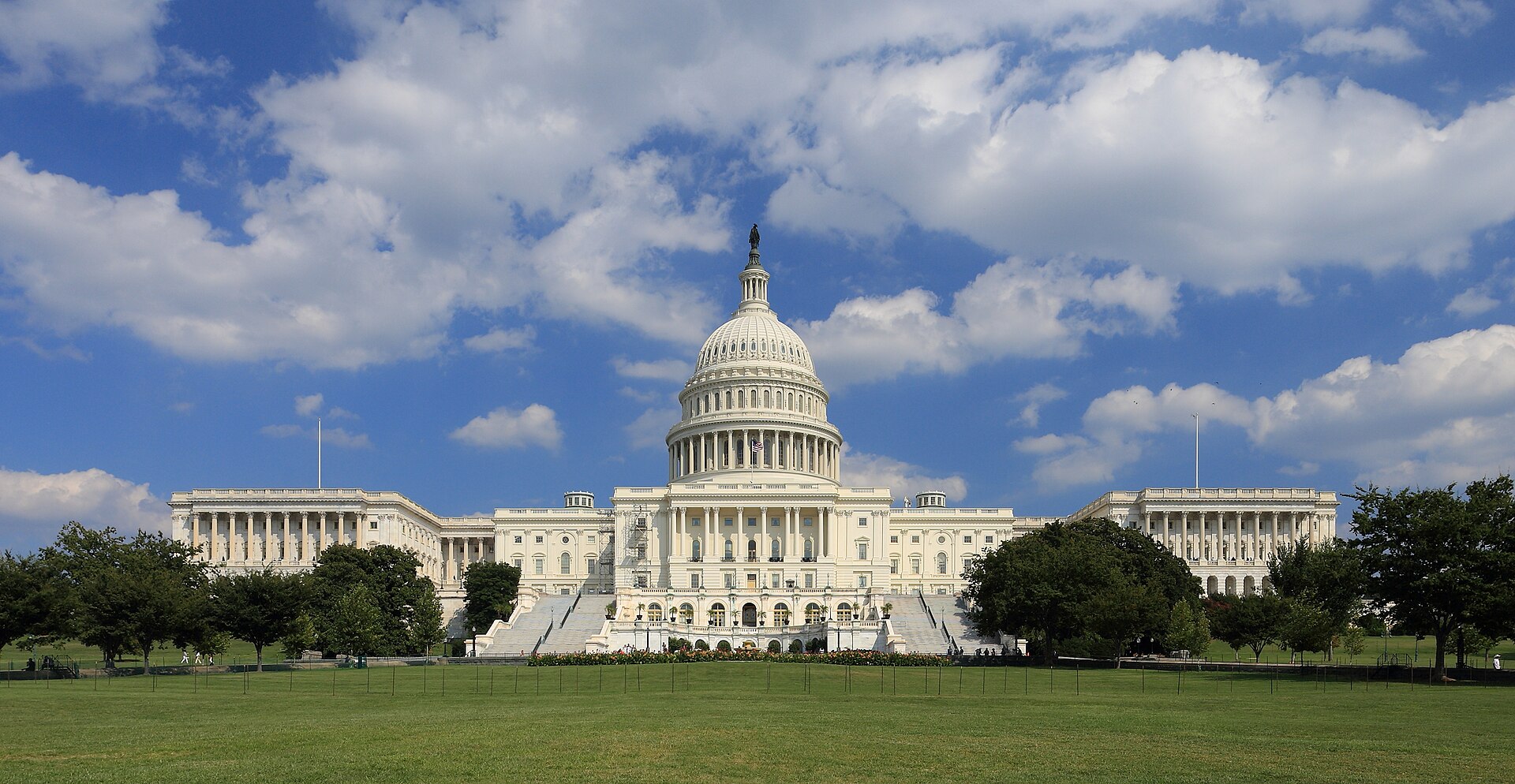
Right of reply: TIJ invites responses from any person or entity named. Contact the editor at tij.news. Featured image: U.S. Capitol, west side, photograph by Martin Falbisoner via Wikimedia Commons, licensed CC BY-SA 3.0.