
Congress is out of town. Both chambers left Washington for the campaign trail before the November 3 midterm elections, and according to a legislative briefing from the National Energy & Fuels Institute (NEFI), lawmakers do not return until Monday, November 9, when a lame-duck session begins. Because of that, today’s Capitol Watch looks at the most consequential actions of the pre-recess weeks, the oversight activity that continued during the break, and the deadlines waiting on the other side of Election Day. Where a source does not confirm a detail, this report says so.
1. Congress is in recess, with a December 11 funding deadline ahead
The Senate left Washington on September 30, and the House entered its campaign recess, according to a Holland & Knight analysis dated October 9. The firm reports that the Continuing Appropriations and Extensions Act, 2027, was signed September 2 and keeps the government funded through December 11. That date is the next hard deadline. The same stopgap extends the National Flood Insurance Program, EPA’s TSCA fee authority and surface transportation programs through December 11, and it temporarily bars the Office of Management and Budget from finalizing certain federal financial assistance rule changes until that date.
The analysis says the House has passed three of the twelve fiscal year 2027 appropriations bills: Agriculture, Military Construction-Veterans Affairs, and National Security-State. The Senate had completed no comparable floor action before leaving. NEFI’s October 6 briefing states that none of the twelve bills is complete. Additional authorizations, including TANF funding, the Community Health Center Fund and a Medicare physician payment increase, expire December 31, according to Holland & Knight, which sets up a crowded lame-duck calendar.
Note on schedule sources: the House Press Gallery’s 2026 calendar page displays a district-work-period banner saying the next votes are expected Monday, November 9. Members should confirm the date against the official House and Senate calendars.
2. GAO says the $810 million “pocket rescission” violates the Impoundment Control Act
The sharpest institutional dispute of the fall involves spending authority. According to Roll Call, President Trump sent Congress a special message on September 25 proposing to cancel $810 million in appropriated funding for health, education and other programs. Because the fiscal year ended September 30, the funds would expire before Congress could act on the request. The Government Accountability Office, Congress’s nonpartisan investigative arm, reaffirmed on September 29 that such “pocket rescissions” would violate the Impoundment Control Act of 1974, rejecting the argument that the practice is permitted because the statute does not expressly prohibit it.
Roll Call reports that the practical effect of the GAO opinion is limited unless the agency sues, and that White House officials say they are not bound by it. Budget Director Russ Vought dismissed the opinion on X and accused GAO of partisan motives, according to the report. Senate Appropriations Chair Susan Collins (R-Maine) called the move “a usurpation of Congress’s appropriations powers,” NEFI’s briefing notes. Roll Call adds that the administration canceled more than $4 billion in foreign aid by similar means last year, and that the Supreme Court allowed that cancellation in a brief order while stating it was not a final ruling on the merits.
Why it matters: the dispute is a test of the boundary between executive spending discretion and the power of the purse, and it will likely resurface in the December 11 funding talks. The administration’s legal position is that the practice is authorized; GAO’s is that it is not. Neither question has been resolved by a court in this instance, according to the sources reviewed. TIJ will update this item if the White House responds.
3. Russia and Iran sanctions bill clears the House
On September 16, the House passed a sanctions package targeting Russia and extending expiring Iran sanctions by a vote of 262-159, with seven Republicans opposed and 58 Democrats in favor, according to Roll Call. The Senate had approved the measure 86-11 in August. The House first adopted the procedural rule 214-211 the previous day, a margin that blocked votes on six Democratic amendments, including one authorizing $15 billion in foreign military financing for Ukraine.
The bill would impose sanctions on individuals and institutions in Russia and in third countries that support Russia’s defense programs, energy industry or sanctions evasion. Its most contested element is a tariff mechanism aimed at the top five importers of Russian energy and the top five facilitators of sanctions evasion. Roll Call reports most Democrats opposed the bill over concerns that the tariff authority could be misused, and House Minority Leader Hakeem Jeffries argued it contains “loopholes.” Sen. Richard Blumenthal called the vote a demonstration of bipartisan unity. The article says the president was expected to sign the measure but does not say whether he has done so; readers should check Congress.gov for the current status of the bill.
4. House Oversight widens its prediction-market insider trading probe
On September 29, House Oversight and Government Reform Chairman James Comer (R-Ky.) sent new letters to Hyperliquid Labs, Crypto.com and Aristotle Exchange, Inc., according to a committee press release. The letters request documents on how each platform verifies account owners and detects and prevents insider trading. The committee opened the inquiry in May and says it has received nearly 1,000 documents and five briefings from Polymarket and Kalshi. The release states no response deadline.
The inquiry followed a May 2026 letter from Rep. Chris Pappas (D-N.H.), who asked the committee to subpoena platform records. The Pappas press release describes reported patterns of well-timed trades ahead of military actions; those descriptions are the congressman’s allegations and were not independently verified in the sources reviewed. Comer said at the time that an investigation begins with information requests and that subpoenas would follow if documents are not provided. No subpoena has been reported in the material reviewed, and no findings of wrongdoing have been issued. The platforms named have not been accused of misconduct by the committee.
5. FBI oversight hearing draws election-security and hiring questions
FBI Director Kash Patel testified before the Senate Judiciary Committee on September 15, according to the committee’s hearing page. Per ABC News, Democratic senators pressed him on whether agents would be present at polling places. Patel said each of the bureau’s 56 field offices has an election crimes coordinator and that the FBI would be “manning the post for election interference matters.” Asked by Sen. Richard Blumenthal whether sending agents to polls would be unlawful, Patel answered, “I don’t know that we can’t legally do it,” and Blumenthal said he was dissatisfied with the lack of a clear commitment.
Democrats also criticized changes to FBI hiring standards, which ended a categorical ban on certain applicants, with each case now considered individually, ABC reports. Patel’s written testimony is available on the committee’s site. The hearing reflects the usual partisan split over oversight of the bureau; the characterizations of Patel’s tenure offered by individual senators are their opinions rather than findings.
6. Bipartisan permitting reform bill introduced for the lame duck
On September 30, Sens. Shelley Moore Capito (R-W.Va.), Mike Lee (R-Utah), Sheldon Whitehouse (D-R.I.) and Martin Heinrich (D-N.M.) introduced the Bipartisan American Affordability and Jobs Act of 2026, according to the Environment and Public Works Committee. The bill is listed on Congress.gov as S. 5653. It would overhaul environmental review and permitting for energy and infrastructure projects, protect issued permits from revocation except under extraordinary circumstances, legal violations or court orders, and require data centers to pay the transmission costs associated with their operations. Sponsors say it preserves environmental safeguards and Tribal consultation rights.
Holland & Knight reports that no vote is expected before the midterms and that backers are targeting the lame-duck session. The sources reviewed did not include a Congressional Budget Office score for the bill.
7. Farm bill and water resources: bipartisan momentum, unresolved differences
The House passed the Farm, Food, and National Security Act of 2026 by 224-200 on April 30, according to Holland & Knight. The Senate Agriculture Committee advanced its own bill, S. 5526, the Agricultural Act of 2026, on September 16 and formally reported it September 24. NEFI notes that the bill needs 60 votes on the Senate floor and that a dispute over SNAP cost-sharing remains unresolved. The 2018 Farm Bill extension expired September 30.
The House also passed the Water Resources Development Act of 2026 (H.R. 9497) by 415-9 on September 16, per Holland & Knight, while the Senate Environment and Public Works Committee approved its counterpart, S. 4949, unanimously in July. The lopsided tallies suggest broad agreement on water infrastructure, in contrast with the farm bill.
8. The defense authorization bill remains stalled in the Senate
The Senate rejected cloture on the motion to proceed to S. 4784, the fiscal year 2027 defense authorization bill, on July 14 by a vote of 50-46, short of the 60 required, according to the official Senate roll call record (Vote 195). The House passed its version in July, and Holland & Knight reports there has been no further Senate floor action. The measure has been enacted for 65 consecutive years, so attention now turns to the lame-duck session.
What to watch
November 3: midterm elections. November 9: Congress returns for the lame-duck session. December 11: the stopgap funding law expires. December 31: several health and safety-net authorizations lapse. In the lame duck, watch for action on the permitting bill, the farm bill, the defense authorization and a possible fight over rescissions and impoundment.
Items for TIJ’s investigative beats
Three threads bear directly on accountability coverage. First, the impoundment dispute raises questions about how appropriated funds were handled in the final days of the fiscal year; agency-level records on which programs were affected would clarify the impact. Second, the prediction-market inquiry may produce documents on account verification and insider-trading controls. Third, the House was slated in September to take up anti-fraud legislation, including a bill to create a National Fraud Enforcement Division at the Justice Department, according to ABC News; whether those bills advance is worth tracking.
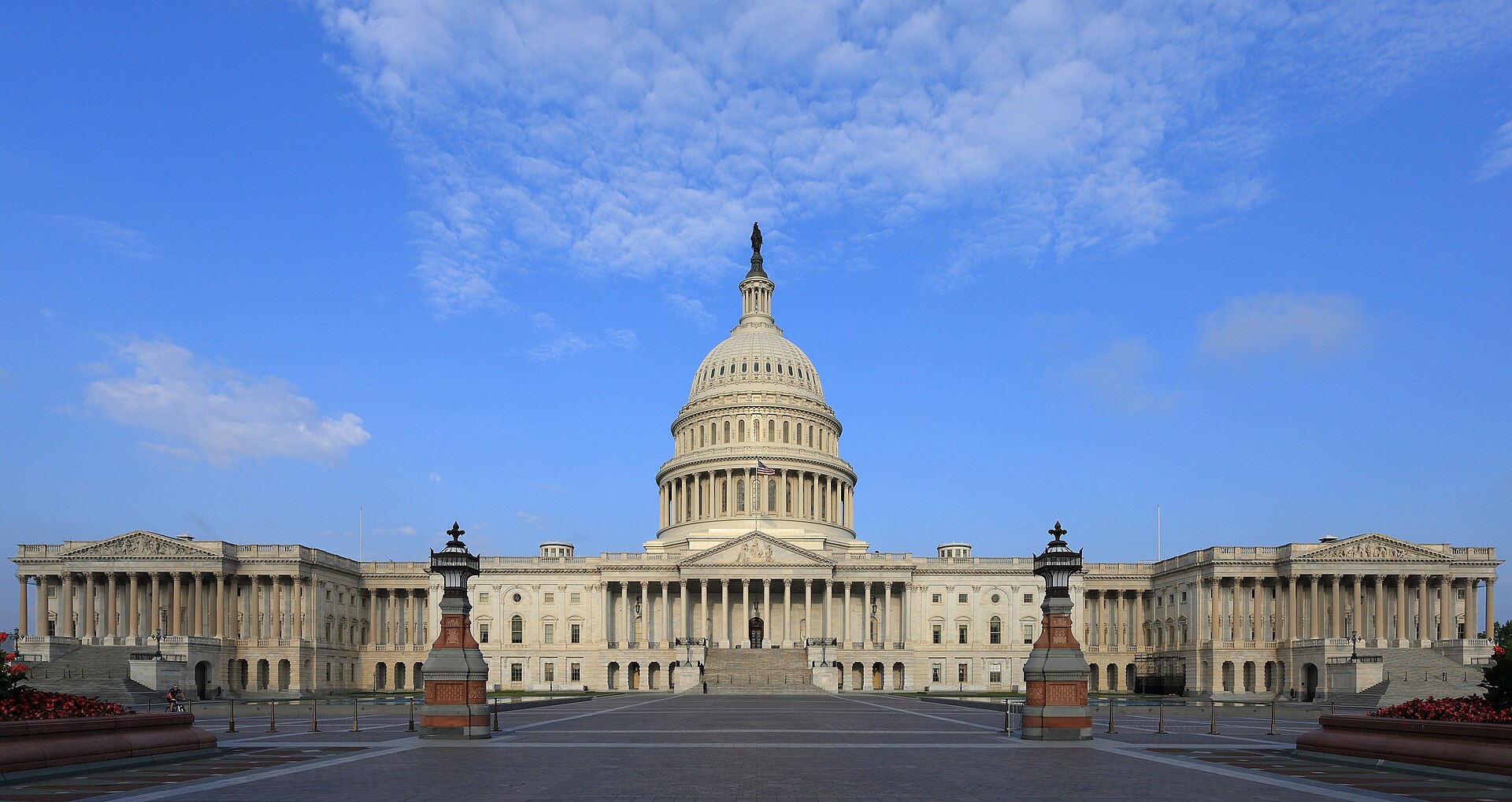
Right of reply: TIJ welcomes responses from any official, agency or company named in this report. Allegations described above are unproven, and no findings of wrongdoing are asserted. Featured image: U.S. Capitol east side by Martin Falbisoner, licensed CC BY-SA 3.0 via Wikimedia Commons.