

The Investigative Journal’s daily review of federal criminal charges, civil enforcement actions, and related court developments. Coverage is based on public records; pending cases are allegations until proven in court.
A pivot toward centralized fraud enforcement
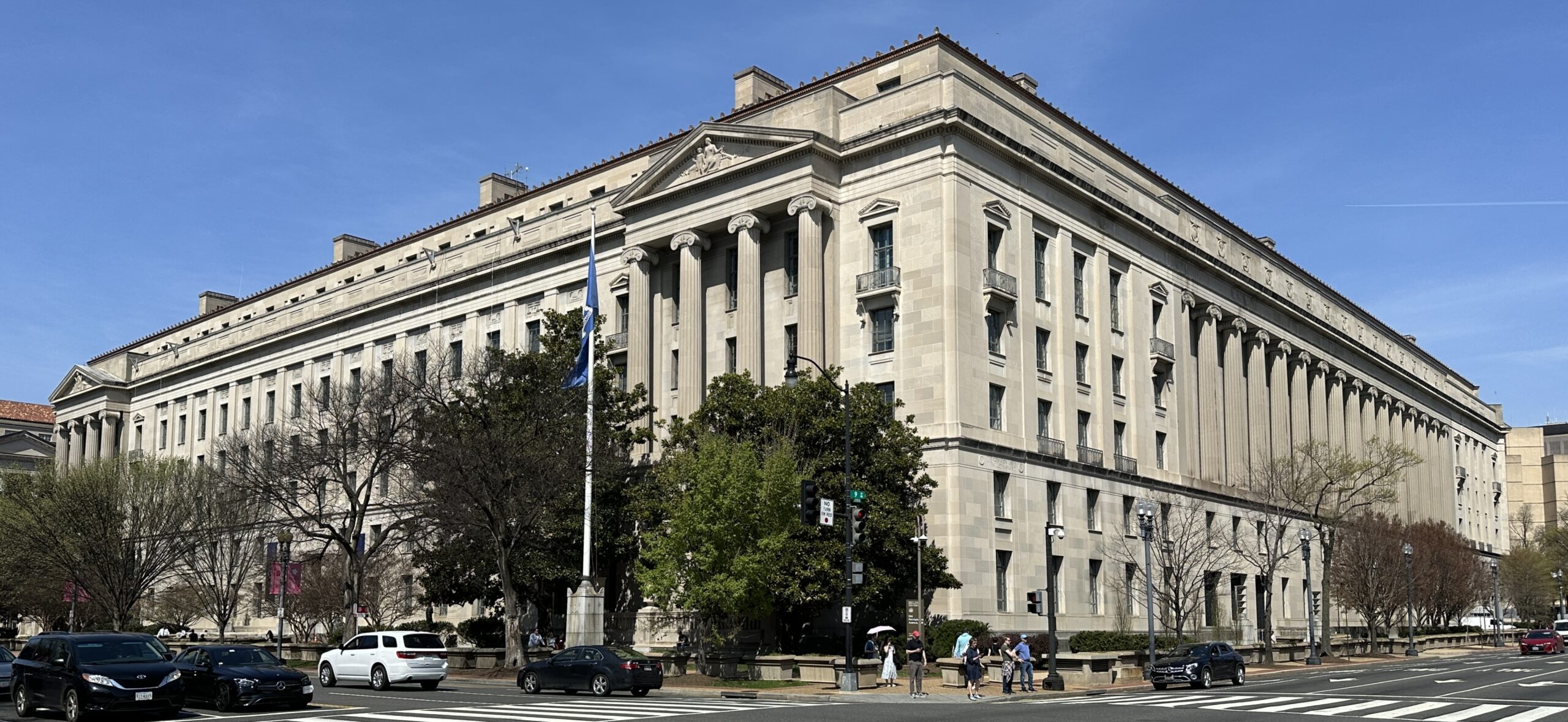
The past week has reshaped the architecture of federal fraud enforcement. On April 7, Acting Attorney General Todd Blanche formally established a National Fraud Enforcement Division at the Department of Justice, consolidating prosecutors and analysts into a single prosecutor-led unit tasked with pursuing fraud against federal programs. The memorandum also created a National Fraud Detection Center, described by Blanche as a “permanent, prosecutor-led, multi-agency, data-analytics team” aimed at identifying high-loss schemes in real time. (DOJ announcement; Sidley analysis; Ropes & Gray analysis.)
That structural shift shapes how the week’s individual cases should be read. Several of the actions summarized below were announced under the umbrella of the President’s Task Force to Eliminate Fraud, chaired by Vice President J.D. Vance, and filings indicate the department is deploying the False Claims Act, wire fraud statutes, and the Espionage Act in combination to widen the perimeter of enforceable conduct.
1. IBM agrees to $17M False Claims Act settlement — first case under Civil Rights Fraud Initiative
On April 10, the Justice Department announced that IBM agreed to pay more than $17 million to resolve allegations that the company violated the False Claims Act by failing to comply with antidiscrimination requirements embedded in its federal contracts. According to the settlement papers, DOJ alleged IBM engaged in practices the government contends discriminated against employees and applicants on the basis of race, color, national origin, or sex. IBM did not admit liability.
The resolution is the first under the Civil Rights Fraud Initiative launched in May 2025, which treats non-compliance with antidiscrimination clauses in federal procurement contracts as an FCA violation. Records suggest the initiative was sharpened by Executive Order 14398, “Addressing DEI Discrimination by Federal Contractors,” signed March 26, 2026.
The case is significant because it converts contract-certification disputes — historically handled administratively — into treble-damages FCA exposure. Defense bar commentary indicates federal contractors across technology, consulting, and financial services are reassessing internal diversity and employment programs to avoid becoming the next test case.
2. Courtney Williams indicted under the Espionage Act for alleged leaks to a journalist
A federal grand jury on April 8 indicted Courtney Williams, 40, of Wagram, North Carolina, on one count of willful transmission of national defense information under the Espionage Act. The FBI arrested Williams on April 7. The charge carries a maximum of 10 years in prison. (DOJ press release.)
Court filings indicate Williams worked for a Special Military Unit from 2010 to 2016 and held a Top Secret/SCI clearance. The indictment alleges that between 2022 and 2025 she communicated with a journalist in more than 180 messages and over ten hours of phone calls, transmitting information she had been authorized to receive as a clearance holder. She is identified in reporting as a named source in Seth Harp’s August 2025 book The Fort Bragg Cartel, which examined unsolved deaths at the special operations base.
The case warrants close attention. Harp has publicly stated the indictment does not specify which information is alleged to be classified national defense information — a threshold legal question in any Espionage Act prosecution. The prosecution is also the first high-profile Espionage Act leak case filed after President Trump’s April statements vowing action against leakers, and will test judicial willingness to police the boundary between whistleblower disclosure and criminal transmission. (Washington Times coverage.)
3. Half-billion-dollar healthcare and COVID fraud actions
Also on April 7, DOJ announced three separate civil and criminal actions targeting schemes that allegedly sought to bill taxpayer-funded programs for more than $500 million combined. The filings name two corporate defendants and two individuals. The department characterized the actions as the first coordinated output of the President’s Task Force to Eliminate Fraud. (DOJ press release.)
Data from DOJ’s 2025 healthcare-fraud takedown, which charged 324 defendants in connection with $14.6 billion in alleged fraud, suggests the department is continuing to prioritize telehealth, durable medical equipment, and Medicare Advantage risk-adjustment schemes. (2025 takedown release.)
Significance: the combination of civil FCA complaints filed alongside criminal indictments is increasingly the department’s template. Records suggest defendants who resolve criminal exposure are frequently left with parallel civil liability, compounding the financial consequences of healthcare-billing misconduct.
4. Michigan man charged with $5 million-plus PPP fraud
DOJ announced federal charges against a Michigan man alleging a Paycheck Protection Program fraud scheme exceeding $5 million. The case, filed under the President’s Task Force to Eliminate Fraud, is one of dozens of pandemic-era fraud prosecutions that have continued to move through the system five years after the CARES Act disbursements. (DOJ press release.)
Filings indicate the defendant submitted loan applications on behalf of shell entities that did not have the employee counts or payroll expenses certified to the Small Business Administration. The allegations, if proven, are a familiar template: fabricated payroll records, straw businesses, and use of proceeds for personal expenses.
The case is worth tracking because it illustrates the statute-of-limitations posture on pandemic fraud. Congress in 2022 extended the limitations period for PPP and EIDL fraud to ten years, meaning a significant wave of prosecutions remains available to the department through 2030–2031.
5. Former NATO official and Turkish defense contractor indicted in bribery scheme
A federal grand jury indicted a former NATO official and a Turkish defense contractor in an alleged bribery scheme tied to military-equipment contracts. The indictment alleges that the contractor paid the official in exchange for favorable treatment in the award or administration of NATO-related procurement. (DOJ press release.)
The case is significant for two reasons. First, it extends U.S. anti-bribery enforcement into the multilateral-procurement space, where jurisdictional questions have historically been murky. Second, it fits a pattern — documented in the Gibson Dunn 2025 year-end FCPA update — of DOJ using domestic bribery statutes rather than the Foreign Corrupt Practices Act to pursue corruption cases involving foreign officials and intermediaries. That choice carries evidentiary and sentencing implications for the defendants.
6. Four sentenced in U.S. Postal Service bribery scheme; corrections officer convicted
DOJ announced on April 7 that four individuals were sentenced to a combined 99 months in federal prison for their roles in a U.S. Postal Service bribery scheme. The next day, a federal correctional officer was convicted of bribery, smuggling, and drug conspiracy charges arising from a scheme to introduce contraband into a federal prison.
On April 2, a former active-duty U.S. Air Force Master Sergeant pleaded guilty to fraudulently inflating the cost of IT contracts for U.S. Pacific Air Forces by at least $37 million. According to the plea documents, the defendant used the excess funds to enrich himself and co-conspirators and to channel bribes to a federal public official. Filings indicate the cooperating defendant’s admissions may generate additional charges against recipients of the bribes.
Taken together, the three matters illustrate the Public Integrity Section’s continuing focus on insider corruption across federal employment — postal, corrections, and military procurement — even as headlines focus on larger financial-fraud actions. (DOJ Public Integrity Section.)
7. Feeding Our Future: two more guilty pleas
On April 10, brothers Suleman Yusuf Mohamed and Gandi Yusuf Mohamed pleaded guilty for their roles in the Feeding Our Future scheme, the Minnesota-based fraud centered on federally reimbursed child-nutrition programs. The pleas add to a tally that now exceeds 70 charged defendants. (DOJ press releases index.)
Court filings in the Feeding Our Future cases have documented fabricated meal counts, shell non-profits, and kickbacks. Data shows reimbursement claims well into the hundreds of millions of dollars. The case has become a reference point for federal prosecutors evaluating how pandemic-era waivers in nutrition and benefit programs should be policed going forward — and for defense counsel advising non-profits to improve documentation of service delivery.
8. Georgia licensing boards settle SCRA claims for $3 million
DOJ and the U.S. Attorney’s Offices reached a $3 million settlement with Georgia professional licensing boards to resolve alleged violations of the Servicemembers Civil Relief Act. Records suggest the boards failed to extend protections the SCRA affords active-duty servicemembers whose professional licenses lapse during deployment. (DOJ press release.)
Although smaller in dollar terms than the week’s fraud cases, the SCRA settlement is notable as part of a broader civil-rights enforcement track that the Civil Rights Division has pursued across state-level licensing, housing, and consumer-credit regimes. Settlements in this area typically include corrective policies and ongoing compliance monitoring in addition to monetary relief.
Cases that warrant deeper TIJ investigation
Three threads from this week’s docket merit continuing TIJ scrutiny.
First, the IBM resolution sets a template for Civil Rights Fraud Initiative enforcement. We will track which contractors and agencies are the next targets, how courts respond to FCA theories grounded in antidiscrimination certifications, and whether the initiative expands beyond employment-based claims into supplier-diversity and subcontracting practices.
Second, the Williams Espionage Act indictment should be followed through the first set of defense motions. The threshold question — which specific information is alleged to be classified national-defense information — will shape the public record and determine whether the prosecution converges with or diverges from prior leak cases such as those against Reality Winner and Daniel Hale.
Third, the new National Fraud Enforcement Division and National Fraud Detection Center will generate a measurable fingerprint over the next six months: case mix, agency partners, average loss per indictment, and the share of cases originating from data-analytic referrals versus traditional whistleblower complaints. TIJ will track those metrics in this digest series.
Methodology
Coverage draws on DOJ Office of Public Affairs press releases, U.S. Attorneys’ Office filings, FBI announcements, and court documents accessed through the DOJ press-release portals linked above. Secondary sources are cited only where they add analytical context (Sidley, Ropes & Gray, Gibson Dunn, Holland & Knight). Allegations in pending cases are not findings of guilt. Each defendant is presumed innocent until proven guilty beyond a reasonable doubt. The Investigative Journal extends the right of reply to any party named in a pending matter.
— Eduardo Bacci, The Investigative Journal