

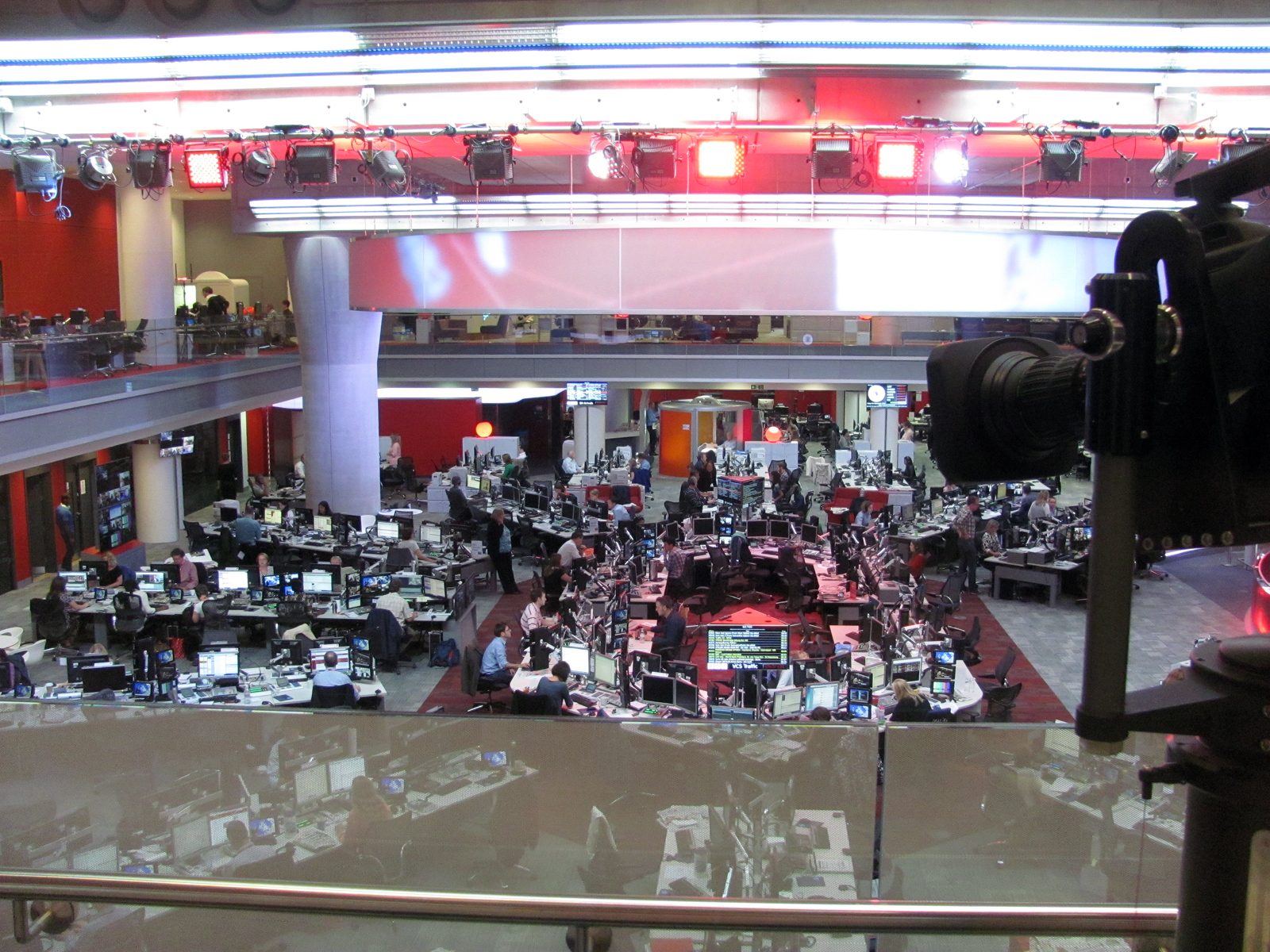
Accountability journalism had a notably active week. From a multinational probe of cancer drug pricing to a federal-courts audit of immigration protest arrests, major investigative newsrooms published findings this week that raise pointed questions about enforcement conduct, regulatory capture, campaign finance and procurement integrity. The Investigative Journal summarizes the most consequential reporting, links to primary sources, and flags where TIJ will pursue independent follow-up. Nothing below reproduces the original reporting; each item distills public-record findings in our own words.
1. ProPublica and FRONTLINE: Protest-arrest prosecutions from immigration sweeps are collapsing in court
On April 14, ProPublica and FRONTLINE published “Caught in the Crackdown,” a joint investigation by A.C. Thompson and Gabrielle Schonder reviewing more than 300 cases in which bystanders and demonstrators were arrested during federal immigration enforcement operations in Los Angeles, Chicago, Minneapolis and Charlotte. Reporters matched original charging documents against body-camera video, internal DHS records and court outcomes obtained through PACER and local dockets.
According to the published findings, more than a third of the charges reviewed did not survive judicial scrutiny. The investigation records 75 of 109 Chicago-area arrests in which prosecutors later dropped charges, eight trial acquittals in California, and 32 convictions among 116 California cases reviewed. The outlets note that federal prosecutors historically secure convictions in well above 90 percent of cases and that only 8.2 percent of federal criminal matters were dismissed in 2022 — a baseline that makes the collapse rate documented here statistically unusual.
ProPublica’s editorial orientation is nonprofit and center-left; the reporting here is document-driven and presents DHS and DOJ responses in full. TIJ follow-up: dockets in the four jurisdictions are public. We will pull the underlying complaints and dispositions in a subset of dismissed matters to examine whether dismissals reflect evidentiary weakness, prosecutorial discretion, or procedural defects in the initial arrests.
2. ICIJ’s “Cancer Calculus”: how Keytruda became a $25 billion franchise
The International Consortium of Investigative Journalists on April 13 released Cancer Calculus, a yearlong project with 47 media partners across 37 countries examining how Merck & Co. has maintained extraordinary pricing on pembrolizumab, marketed as Keytruda, the world’s top-selling cancer immunotherapy. Reporters reviewed patent filings, SEC disclosures, clinical trial registries and physician payment records from the Open Payments database.
ICIJ’s data shows list prices ranging from approximately $850 per vial in Indonesia to $6,015 per vial in the United States, with a two-year course exceeding $416,000 at U.S. list. The investigation identifies more than 1,200 patent applications that could extend exclusivity to 2042, roughly $52 million in consulting and speaking payments to U.S. healthcare professionals from 2018 through 2024, and cumulative shareholder distributions since 2014 of $75 billion in dividends and $43 billion in buybacks. Filings indicate Merck has also leveraged accelerated approvals and orphan-drug designations to extend market position.
ICIJ operates as an independent nonprofit consortium with a long-standing specialty in cross-border document analysis. TIJ follow-up: the Open Payments data underlying the physician payments figure is publicly accessible. We will review U.S. oncology prescribers receiving the largest Merck-related transfers and cross-reference against Medicare Part B Keytruda claims to assess whether payments correlate with prescribing volume.
3. Wall Street Journal: U.S. Attorney’s office makes unannounced visit to Federal Reserve renovation site
The Wall Street Journal reported this week that prosecutors from U.S. Attorney Jeanine Pirro’s office in Washington, D.C., made an unannounced visit to the Federal Reserve’s headquarters renovation site. The reporting is based on a source familiar with the matter and a letter reviewed by the paper.
The visit intersects with a broader, previously reported inquiry into cost overruns at the Fed’s Eccles Building project. The Journal’s account does not characterize the probe’s status or charge theory; it documents the factual sequence and the Fed’s response. The story is significant because the Federal Reserve is an independent agency, and on-site prosecutorial visits to independent agencies are procedurally unusual.
The Journal’s investigations desk is generally regarded as nonpartisan with a business-focused editorial frame. TIJ follow-up: the Fed’s original 2017 construction disclosures, its inspector general reports on the project, and GSA/Fed procurement records are public. TIJ will seek the underlying scope-change documents to assess whether cost overruns reflect contractor performance, design changes, or inflation baselines.
4. OCCRP: Politically connected crypto project pursued resort partnership with alleged scam-syndicate figures
The Organized Crime and Corruption Reporting Project, in reporting published in early April, examined AB, a blockchain network that recently partnered with a crypto firm tied to members of the Trump family. OCCRP’s records review indicates AB pursued a resort-development venture alongside three individuals subsequently sanctioned by the U.S. Treasury Department in a crackdown on the Cambodia-based Prince Group, which Treasury has alleged operates one of the world’s largest online investment-scam syndicates.
OCCRP’s findings draw on corporate registrations, sanctions designations and publicly filed partnership agreements. The piece is careful to note that the Treasury designations post-dated some of the documented interactions. No criminal allegations are made against the blockchain project or U.S.-linked counterparties; OCCRP’s framing centers on due-diligence gaps and counterparty-risk exposure.
OCCRP is a nonprofit investigative consortium focused on transnational crime and corruption. TIJ follow-up: Treasury Office of Foreign Assets Control designations are public. TIJ will review OFAC’s Prince Group designation package and Cambodia-based corporate filings to independently trace the resort venture’s cap table and confirm the counterparty identities.
5. Washington Free Beacon: ActBlue counsel warned of “substantial risk” on foreign-donor vetting
The Washington Free Beacon published reporting this month indicating that outside counsel for ActBlue, the Democratic-aligned online fundraising platform, warned the organization it may have misrepresented its foreign-donor screening practices in communications with Congress. The Beacon’s account references internal legal memoranda and congressional correspondence.
The reporting is relevant because ActBlue has been the subject of a Justice Department inquiry following an April 2025 executive order directing investigation of alleged foreign-national political contributions routed through online platforms. The Beacon notes that ActBlue disputes the characterization in its attorneys’ memoranda and maintains that its vetting procedures meet federal requirements.
The Free Beacon is a center-right outlet with a policy-advocacy editorial posture; its investigative reporting is generally document-driven. TIJ follow-up: FEC filings and any congressional correspondence placed in the public record are accessible. TIJ will pull ActBlue’s recent FEC Form 3X filings and any sworn testimony from the House Administration Committee to evaluate the specificity of the compliance claims at issue.
6. Daily Caller: Vance procurement task force flags $6.3 billion in potentially fraudulent contracts
The Daily Caller first reported that Vice President JD Vance’s anti-fraud task force, working jointly with the General Services Administration, has identified nearly $6.3 billion in federal contracts awarded to businesses that the task force believes may not be legitimate operating entities. According to the reporting, GSA is sending letters to roughly 400 contractors demanding 30-day verification of physical addresses and business legitimacy.
The reporting cites task-force personnel and copies of outgoing correspondence. It does not name specific contractors or allege specific criminal conduct; it frames the matter as an administrative verification push. GSA’s OIG has flagged shell-contractor risk in multiple reports since 2019, providing context for the current initiative.
The Daily Caller maintains a center-right editorial orientation; the story is sourced to task-force officials and documentary material. TIJ follow-up: USASpending.gov, SAM.gov registrations and GSA’s annual IG reports make contractor-level data publicly accessible. TIJ will build a sample of flagged contracts, check address registrations against corporate filings in the relevant states, and report which award categories and agencies are most affected.
7. Washington Post: Potomac Interceptor sewer-line failure followed years of documented delay
The Washington Post’s investigations desk published a review earlier this month of the January failure of the Potomac Interceptor sewer line, a regional trunk line serving the D.C. metropolitan area. Reporters reviewed the utility’s capital-planning documents, federal environmental-review records and internal correspondence. The reporting indicates that reinforcement work proposed in 2018 was repeatedly deferred as a federal environmental review extended over multiple years.
The investigation is a classic infrastructure-accountability piece: it traces the paper trail of a failure back through the planning calendar rather than alleging intent. The piece does not make criminal allegations; it documents a sequence in which deferred maintenance preceded a catastrophic spill. Federal and utility responses are presented in full.
The Post’s investigations desk operates with a traditional institutional editorial posture. TIJ follow-up: the utility’s capital-improvement plans, its NEPA-review correspondence with federal agencies, and EPA enforcement records are accessible. TIJ will examine the NEPA review timeline in detail to assess whether any specific procedural step contributed disproportionately to the delay, and whether similar interceptor lines elsewhere face comparable backlog.
8. New York Times: multi-year review identifies Adam Back as the strongest candidate for Satoshi Nakamoto
The New York Times published an investigation earlier in April, authored by John Carreyrou, analyzing writing style, email metadata and cryptographic-forum posting patterns to conclude that Blockstream chief executive Adam Back is the strongest publicly identifiable candidate to be Satoshi Nakamoto, the pseudonymous author of the Bitcoin white paper. Back publicly denied the identification following publication.
The Times’s methodology relies on stylometric analysis and records reviewed over a multi-year period. The piece does not allege wrongdoing; it is a historical-identification investigation. Coverage by Fortune and CNBC noted both the evidentiary strength of certain claims and the gaps that prevent definitive conclusion. The story matters for accountability journalism because billions of dollars in dormant Bitcoin are linked to the original Satoshi wallets.
The Times operates with an institutional editorial posture; Carreyrou, formerly of the WSJ, is best known for his Theranos reporting. TIJ follow-up: stylometric analysis is reproducible with public archives of the cypherpunk mailing list and early Bitcointalk forum. TIJ will not duplicate the identification effort but will examine the custody status of early Satoshi wallet clusters using publicly available chain-analysis tooling and report on whether any movement has occurred.
Investigations aligned with TIJ beats
Three of this week’s stories sit squarely on TIJ’s standing beats and warrant sustained coverage. The ICIJ Keytruda investigation aligns with our pharmaceutical-pricing and Medicare-integrity beat; we will pursue the Open Payments crosswalk described above. The Daily Caller/GSA procurement-fraud reporting aligns with our federal-contracts beat; we will track the 30-day verification responses and report on which flagged vendors fail to clear review. The OCCRP crypto/Prince Group reporting aligns with our sanctions-evasion beat; we will monitor subsequent OFAC actions and any civil complaints filed in the Southern District of New York or the District of Columbia.
Right of reply: the outlets cited above each solicited comment from the principal parties named in their reporting, and published responses where provided. TIJ’s follow-up reporting will independently solicit comment from any individual or entity newly identified in our coverage. All allegations discussed above remain allegations; pending matters are noted as such.
The Investigative Journal’s Watchdog Roundup tracks the work of other accountability newsrooms so our readers can see who is doing what. We summarize findings, credit the reporting outlet, and link to the original work. We do not reproduce other outlets’ content.
Sources
- ProPublica & FRONTLINE, “Caught in the Crackdown: As Arrests at Anti-ICE Protests Piled Up, Prosecutions Crumbled” (April 14, 2026).
- ICIJ, “About the Cancer Calculus investigation” (April 13, 2026).
- The Wall Street Journal — DOJ visit to Federal Reserve renovation site (April 2026).
- OCCRP, “Politically Connected Crypto Project Pursued Resort With Alleged Scam Syndicate Figures” (April 2026).
- Washington Free Beacon, “‘Substantial Risk’: ActBlue May Have Misled Congress About Vetting Foreign Donations, Its Own Attorneys Warned” (April 2026).
- Daily Caller / Fox News, “JD Vance’s task force flags nearly $6.3B in government contracts going to potentially fraudulent businesses” (April 2026).
- The Washington Post, “Catastrophic sewage spill followed years of delay on repairs, Post review finds” (April 2, 2026).
- The New York Times / CNBC coverage, “Latest investigation into bitcoin founder ties identity to Blockstream CEO Adam Back” (April 8, 2026).