

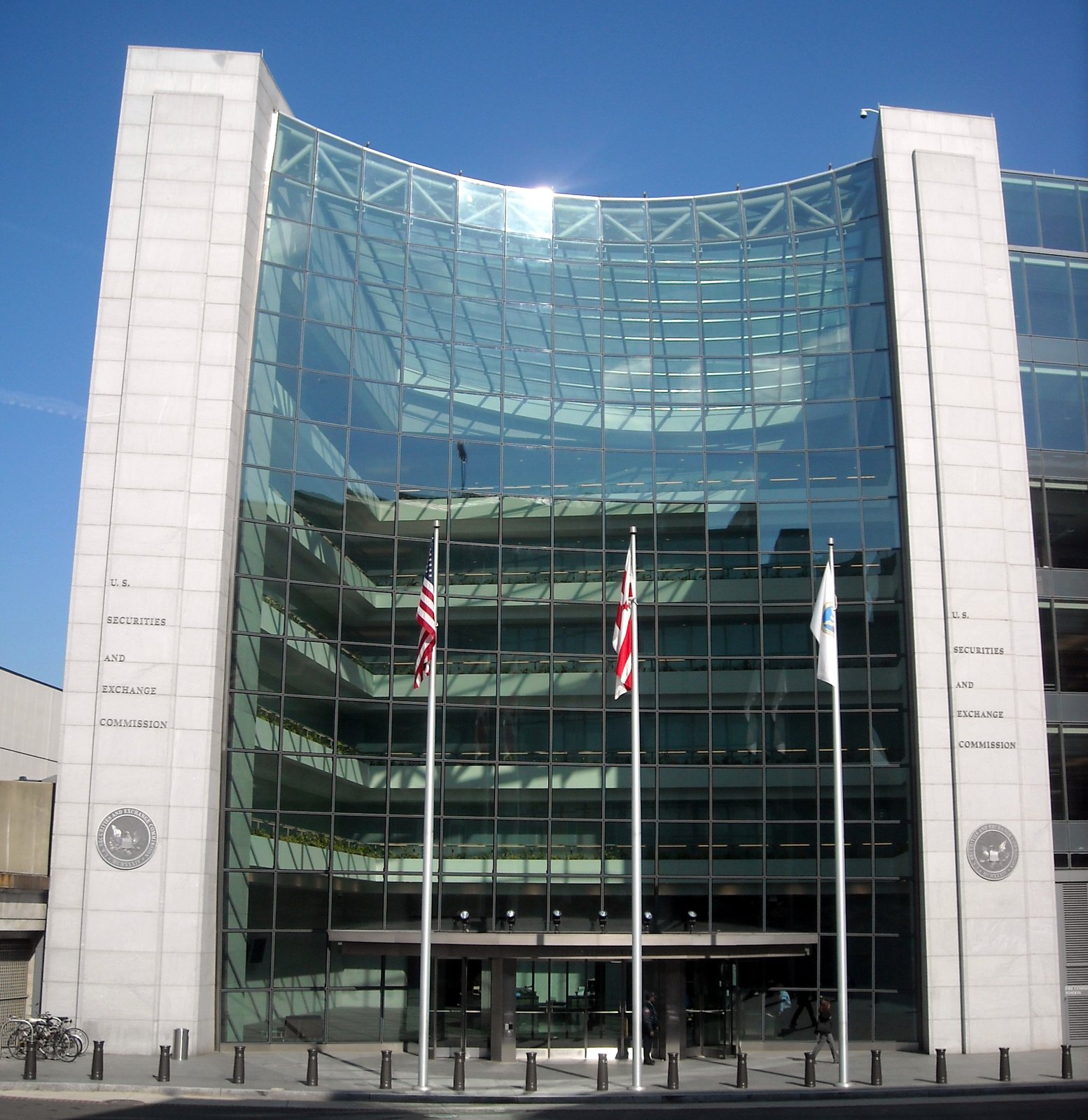
Tuesday’s SEC EDGAR intake delivered a dense slate of material-event filings that ranged from a completed regional-bank merger in California to a multibillion-dollar AI acquisition in enterprise software, and from a Nasdaq compliance notice tied to an ongoing accounting restatement to a series of thinly financed micro-cap capital raises that merit closer scrutiny. The April 21, 2026 filing day also unfolded against the backdrop of the Commission’s own recent shift in enforcement posture, with the agency having released its fiscal year 2025 results earlier this month and having named a new enforcement division director to take effect in May.
Below is The Investigative Journal‘s review of the most consequential 8-K, proxy, and compliance disclosures processed at the SEC on April 21, 2026, drawn directly from EDGAR’s current-filings index and cross-checked against the filers’ own press statements and investor relations disclosures. Dollar figures, vote counts, and deal terms are stated as reported in the filings; allegations in pending civil litigation are noted as such.
1. CVB Financial closes Heritage Commerce merger, vaults past $20 billion in assets
The day’s most significant corporate transaction was the completion of the previously announced merger between Ontario, California-based CVB Financial Corp. (NASDAQ: CVBF) and San Jose-based Heritage Commerce Corp (NASDAQ: HTBK), closed effective April 17, 2026 and disclosed in parallel 8-Ks from both registrants late Tuesday. CVB’s filing reported items 2.01 (completion of acquisition), 5.02 (director and officer changes), 7.01 (Regulation FD disclosure), and 9.01 (financial statements and exhibits). Heritage’s matching 8-K listed items 2.01, 3.01 (notice of delisting), 3.03 (material modifications to rights of security holders), 5.01 (change in control), 5.02, 5.03 (amendments to charter), and 9.01 — the full slate associated with the target of an all-stock bank-holding-company combination.
According to the press release attached to CVB’s filing, the transaction lifts total assets of the combined Citizens Business Bank franchise above $20 billion, with total loans near $12 billion and total deposits and customer repurchase agreements of roughly $17 billion. Heritage’s 16 Bay Area branches have been folded into Citizens, substantially expanding the buyer’s Northern California footprint. The parties had disclosed the original agreement in a joint announcement dated December 17, 2025.
The deal is notable for regulatory accountability watchers because it crosses the $20-billion asset threshold that triggers heightened prudential scrutiny at the Federal Reserve and carries implications for Community Reinvestment Act performance reporting. Records indicate both institutions had satisfactory CRA ratings at their most recent examinations, but post-merger branch consolidation in the Bay Area will be worth tracking.
Filings: CVB Financial 8-K · Heritage Commerce 8-K
2. SoundHound AI to absorb LivePerson in stock-and-debt-restructuring merger
In a separate strategic transaction, conversational-AI firm SoundHound AI, Inc. (NASDAQ: SOUN) and enterprise customer-engagement software provider LivePerson, Inc. (NASDAQ: LPSN) jointly announced a definitive agreement under which LivePerson will be acquired in an all-stock deal and its outstanding secured notes will be simultaneously restructured. The 8-K LivePerson filed Tuesday (items 1.01, 5.03, 7.01, and 9.01) discloses both the Merger Agreement and a concurrent Notes Restructuring Agreement dated April 21, 2026.
Per the filing, Merger Sub Inc., an indirect wholly owned subsidiary of SoundHound, will merge with and into LivePerson, with LivePerson surviving as an indirect subsidiary of SoundHound. Concurrently, holders of LivePerson’s First Lien Convertible Secured Notes due 2029 and Second Lien Senior Subordinated Secured Notes due 2029 have agreed to release the secured notes for consideration specified in the restructuring agreement. Public reporting on the parallel SoundHound filing describes stock consideration governed by a $7–$12 price collar.
Records suggest LivePerson has been operating under significant balance-sheet pressure, with its capital structure dominated by the secured notes now being extinguished as part of the transaction. The deal therefore functions as both an acquisition and a de-facto debt recapitalization — a structure that warrants ongoing review as proxy materials and fairness opinions become public.
Filing: LivePerson 8-K
3. Laird Superfood acquires Terrasoul, takes $60 million preferred investment from Nexus Capital
Laird Superfood, Inc. (NYSE American: LSF) filed a densely itemized 8-K on Tuesday (items 1.02, 2.02, 3.03, 5.02, 7.01, 9.01) disclosing the completed acquisition of Terrasoul Superfoods, LLC and a concurrent private placement of $60 million of Series A Convertible Preferred Stock to affiliates of Nexus Capital Management LP. The press release attached to the filing reports that Laird paid $48.0 million in cash for Terrasoul, subject to customary purchase-price adjustments, plus a potential earnout of up to $5.0 million tied to performance milestones. Terrasoul generated approximately $65.8 million of unaudited net sales for fiscal year 2025.
According to the disclosure, the newly issued Series A Preferred Shares are convertible into 16,806,722 shares of Laird common stock — a material increase in fully diluted share count that raises dilution questions existing public shareholders are likely to evaluate when the deal’s S-3 and proxy disclosures land. Item 1.02 on the filing reflects the termination of a material definitive agreement, indicating that a prior credit facility or contractual arrangement was unwound in connection with the transaction.
Filings indicate Nexus Capital’s preferred investment, combined with the Terrasoul cash purchase price, nearly triples Laird’s trailing revenue base. This is the kind of transformative deal for a small-cap consumer-packaged-goods issuer that tends to attract class-action bar attention in the event of any post-close earnings miss; investors should read the preferred stock terms (conversion triggers, liquidation preferences, board rights) carefully.
Filing: Laird Superfood 8-K
4. Driven Brands discloses Nasdaq deficiency notice amid ongoing restatement
Charlotte, North Carolina-based automotive-services franchisor Driven Brands Holdings Inc. (NASDAQ: DRVN) filed an 8-K Tuesday (items 2.02, 3.01, 7.01, 9.01) disclosing that on April 15, 2026 the company received a Notice of Deficiency from The Nasdaq Stock Market, stating that the company is out of compliance with Nasdaq Listing Rule 5250(c)(1) due to its delayed filing of its fiscal year 2025 Form 10-K. The notice has no immediate effect on trading. The company has 60 calendar days from the notice — until June 15, 2026 — to submit a plan to regain compliance, and Nasdaq has discretion to extend that window up to 180 days from the original 10-K due date, until October 12, 2026.
Records indicate the delay stems from previously announced material errors in financial statements for fiscal 2023, fiscal 2024, and portions of fiscal 2025 that require restatement. Driven Brands separately disclosed that it no longer expects to meet its previously indicated April 26, 2026 target for the 2025 10-K. Item 2.02 of the filing shared preliminary unaudited results for 2025 and the first quarter of 2026.
Driven Brands is separately named in pending securities class-action litigation concerning the disclosures that preceded the restatement. Those cases remain in early stages, and allegations are not findings; no court has ruled on the merits. TIJ will continue tracking the docket as the restatement timeline develops.
Filing: Driven Brands 8-K
5. HP Inc. annual meeting: board slate ratified, executive compensation approved
HP Inc. (NYSE: HPQ) filed an 8-K (items 5.02, 5.07, 9.01) following its 2026 annual meeting of stockholders, reporting that all twelve director nominees were elected with strong majorities and that Ernst & Young LLP was ratified as HP’s independent registered public accounting firm for the fiscal year ending October 31, 2026. Stockholders also approved, on an advisory basis, HP’s named-executive-officer compensation program.
The filing follows HP’s previously announced leadership transition earlier this year, in which long-tenured director Bruce Broussard was appointed interim chief executive, succeeding Enrique Lores. Tuesday’s 8-K formalizes the board’s post-transition composition going into HP’s second half of fiscal 2026. While no shareholder proposals drew majority support in the vote, the say-on-pay margin will be worth revisiting against HP’s restructuring trajectory and the $1 billion AI-driven savings initiative the company previously announced.
Filing: HP Inc. 8-K
6. Churchill Downs annual meeting results filed alongside Preakness IP acquisition
Churchill Downs Incorporated (NASDAQ: CHDN) filed an item 5.07 8-K Tuesday reporting the results of its 2026 annual meeting. Shareholders elected two Class III directors to three-year terms and ratified PricewaterhouseCoopers LLP as independent auditor for fiscal 2026 with 63,632,857 votes for, 975,233 against, and 33,102 abstentions. The advisory say-on-pay proposal passed with 50,404,461 votes for and 9,078,571 against — a roughly 85% approval rate by voted shares but meaningfully below the near-unanimous ratification of the auditor.
The 5.07 filing arrived the same day Churchill Downs issued a separate press release announcing a definitive agreement to acquire intellectual property rights related to the Preakness Stakes, an announcement that has not yet been reduced to an 8-K item 1.01 but which shareholders will likely hear about in detail on the company’s next earnings call. TIJ will follow the Preakness IP transaction when formal disclosure documents are filed.
Filing: Churchill Downs 8-K
7. NKGen Biotech extends serial financing with additional secured-note drawdown and share issuance
Clinical-stage immuno-oncology company NKGen Biotech, Inc. (NASDAQ: NKGN) filed an 8-K (items 1.01, 2.03, 3.02, 5.03, 9.01) that continues a well-documented pattern of micro-cap serial financings with its principal lender. The filing discloses a new amendment to NKGen’s secured promissory note arrangement, creating additional direct financial obligations of the registrant, along with the issuance of unregistered equity securities and related amendments to charter documents.
Public EDGAR records show multiple prior amendments to NKGen’s loan arrangements throughout 2025 and early 2026, with lender AlpineBrook Capital GP I Limited providing incremental funding in the $250,000 to $350,000 range per amendment. Each tranche has been accompanied by issuances of common stock and five-year warrants with a $0.25 exercise price. Filings indicate the cumulative dilution from this financing pattern is substantial relative to NKGen’s public float.
The combination of ongoing going-concern-style draws, regularly repricing dilution, and product-candidate clinical risk places NKGen in a category of filers where the cadence and terms of each 8-K deserve line-by-line reading. Institutional and retail holders should review the exhibits to this filing closely.
Filing: NKGen Biotech 8-K
8. SEC enforcement context: FY2025 results, new enforcement chief, and the shape of FY2026
Tuesday’s filing slate should be read against the SEC’s broader April 2026 enforcement posture. On April 7, 2026, the Commission released its fiscal year 2025 enforcement results, reporting 456 total enforcement actions, including 303 standalone cases, with approximately $17.9 billion in total monetary relief before adjustments. After backing out amounts satisfied through parallel criminal restitution, forfeiture, or legacy judgments, the Commission’s own disclosed underlying totals are approximately $1.4 billion in disgorgement and prejudgment interest and $1.3 billion in civil penalties — a more conservative baseline than headline figures would suggest.
On April 8, 2026, the SEC announced the appointment of David Woodcock as Director of the Division of Enforcement, effective May 4, 2026. External legal analyses of the early FY2026 case mix indicate a clear emphasis on traditional retail-investor fraud — securities offering fraud, Ponzi-style schemes, affinity fraud targeting veterans, seniors, or religious communities — over the broader disclosure and gatekeeper sweeps that characterized prior years. That priority shift is relevant to filers and investors alike: less thematic enforcement, more concentrated investor-harm cases.
For tij.news readers, this translates into a specific reading lens for the kind of filings above: the Commission’s enforcement attention is most likely to fall where retail harm is most direct — micro-cap issuers with serial dilutive financings, restatement-driven listing risk, and opaque preferred-stock private placements.
Filings warranting deeper TIJ investigation
Three of Tuesday’s disclosures stand out as candidates for follow-on reporting. First, the Driven Brands restatement and Nasdaq notice sit alongside pending securities class actions; TIJ will track the plan-of-compliance submission due by June 15, 2026 and any related amendments to prior financial statements. Second, the Laird Superfood preferred-stock placement concentrates significant convertible ownership in a single sponsor (Nexus Capital) and materially reshapes the cap table of an NYSE American-listed small cap; the conversion mechanics, governance rights, and any standstill provisions warrant closer review when the full exhibits are parsed. Third, the NKGen Biotech pattern of serial small-dollar secured-note amendments, each paired with deeply out-of-the-money warrant issuances, is the kind of micro-cap financing structure that accumulates slowly on EDGAR but can materially dilute non-insider holders before the next clinical catalyst.
Additional filings noted but not covered in depth today — including a change of directors or principal officer disclosure at Trulieve Cannabis Corp. (item 5.02) and a material definitive agreement and debt-creation disclosure at Liberty Star Uranium & Metals Corp. (items 1.01, 2.03) — may also justify follow-up depending on what the full text of those exhibits reveals.
Methodology and right of reply
This digest was compiled from the SEC’s EDGAR current-filings index for April 21, 2026, the filers’ own press releases attached as 8-K exhibits, and publicly available investor relations disclosures. All factual claims are sourced to public records; every company named in this report has standing channels for reply via its investor relations function, and TIJ will publish substantive corrections or additional context on request. Pending litigation is identified as such, and no adjudicated finding is asserted where none exists.
Eduardo Bacci is an investigative journalist and editor for The Investigative Journal.