

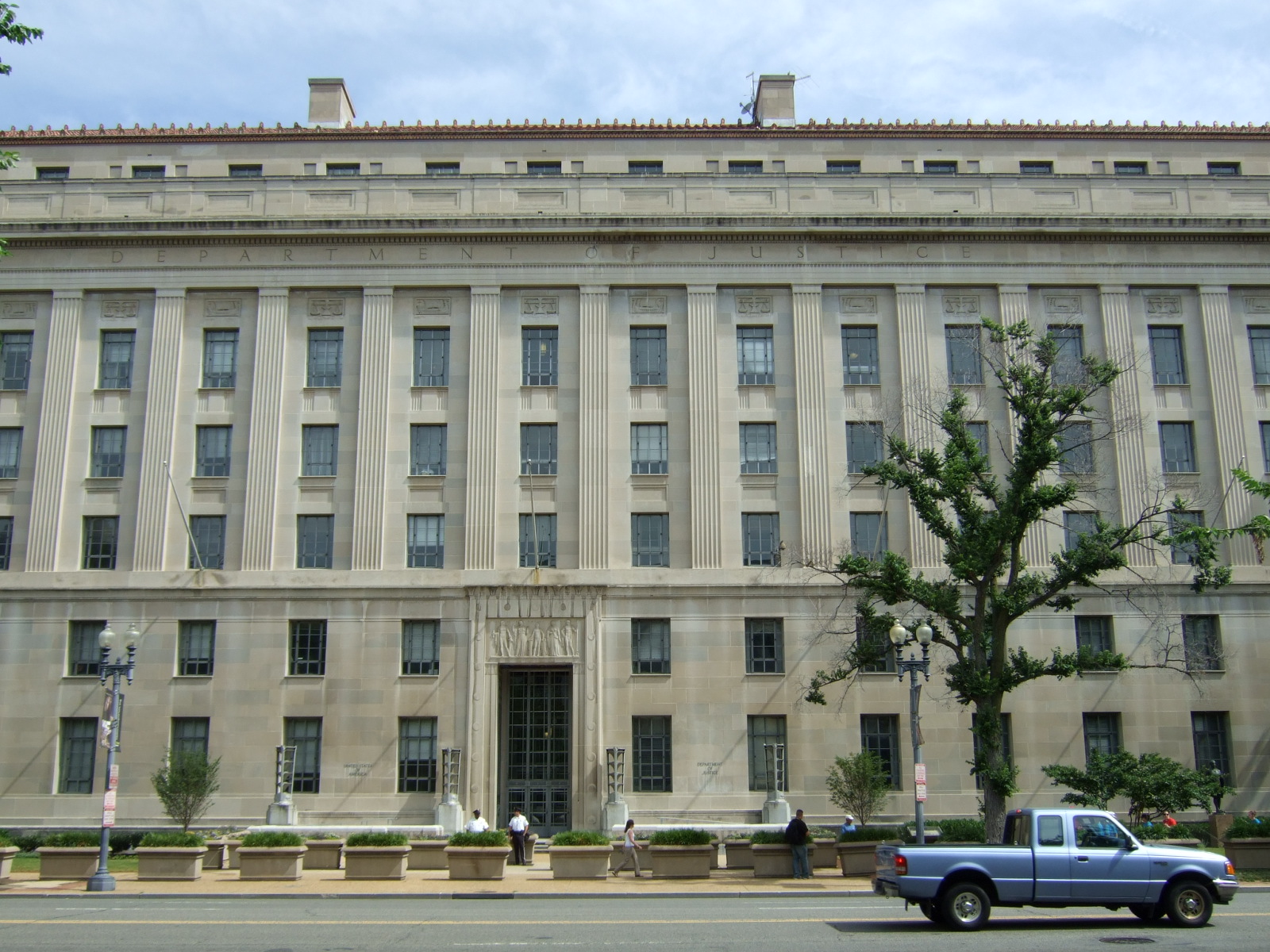
The Investigative Journal’s daily roundup of federal enforcement activity, drawn from Justice Department press releases, charging documents, and court filings. Allegations in charging instruments are not proof of guilt; defendants are presumed innocent unless and until convicted.
The Justice Department opened the final full week of April with a crowded enforcement calendar, headlined by a grand jury indictment of the Southern Poverty Law Center in Alabama, new narco-terrorism charges against alleged Sinaloa Cartel leaders, and an espionage-related prosecution in North Carolina. The cases below, drawn from Justice Department press releases and related filings, capture the shape of federal prosecutorial priorities in April 2026: fraud against taxpayer-funded programs, fentanyl trafficking, cyber intrusions tied to Russian-backed groups, identity-theft-driven tax refund schemes, and the unauthorized handling of classified information.
1. Southern Poverty Law Center Indicted on Wire Fraud, False Statements, and Money Laundering Conspiracy
A federal grand jury in Montgomery, Alabama, on April 21 returned a multi-count indictment charging the Southern Poverty Law Center (SPLC) with 11 counts of wire fraud, false statements to a federally insured bank, and conspiracy to commit concealment money laundering, according to a Justice Department announcement. The charging document alleges that between 2014 and 2023, SPLC routed more than $3 million in donor funds to individuals associated with violent extremist groups, including the Ku Klux Klan, Aryan Nations, and the National Socialist Party of America.
Prosecutors allege that SPLC set up bank accounts linked to fictitious entities to obscure the origin, ownership, and control of the payments. According to the indictment, donors were not informed that some of their contributions were being paid to leaders and organizers of the same groups SPLC publicly denounced. The FBI led the investigation with support from IRS Criminal Investigation.
The case is being prosecuted by the U.S. Attorney’s Office for the Middle District of Alabama. Records indicate SPLC has not yet been arraigned, and the organization has publicly disputed the allegations. An indictment is a formal accusation; the government must still prove its case at trial. The matter has immediate implications for nonprofit governance, donor-disclosure standards, and the IRS’s oversight of 501(c)(3) organizations that operate informant networks.
2. Sinaloa Cartel Leaders Charged With Narco-Terrorism in First-of-Its-Kind Indictment
In an indictment unsealed on April 16 in the Southern District of California, federal prosecutors charged Pedro Inzunza Noriega and his son, Pedro Inzunza Coronel, alleged leaders of the Beltran Leyva Organization (BLO) faction of the Sinaloa Cartel, with narco-terrorism, material support of terrorism, drug trafficking, and money laundering offenses. The Justice Department described it as the first indictment in the nation charging alleged cartel leaders with narco-terrorism since the Sinaloa Cartel’s designation as a Foreign Terrorist Organization.
Court filings indicate that the father-son network is believed to operate one of the world’s largest fentanyl production complexes. Prosecutors cite a December 2024 Mexican law enforcement seizure of approximately 1,500 kilograms of fentanyl, described as the largest single fentanyl seizure on record, as emblematic of the scale of the alleged conspiracy. The indictment also invokes material-support-of-terrorism statutes that can significantly expand sentencing exposure and forfeiture authority compared with conventional drug-trafficking counts.
The case is a proof-of-concept prosecution for the Justice Department’s expanded use of counterterrorism statutes against transnational drug-trafficking organizations, and its outcome is likely to shape charging decisions in future cartel cases. Neither defendant is yet in U.S. custody.
3. Nigerian and Georgia Defendants Charged in $100 Million IRS Identity-Theft Tax Refund Scheme
Indictments unsealed on April 15 in the Northern District of Georgia and the Western District of Texas charge Akinade Adedeji Raheem, 43, of Atlanta, and Abayomi Quadri Eletu, 42, a dual U.K.-Nigeria resident, with conspiracy to commit mail and wire fraud, conspiracy to commit money laundering, and related offenses, according to a Justice Department press release. Filings allege that the defendants and co-conspirators filed more than 300 false tax returns seeking in excess of $100 million in refunds.
Between 2018 and 2023, according to the indictment, the conspirators obtained identifying data for accountants and taxpayers — including names, addresses, and Social Security numbers — by creating fraudulent online accounts with the IRS. Refunds were allegedly loaded onto prepaid debit cards, then laundered through money orders purchased in amounts designed to avoid federal reporting thresholds. Prosecutors say some of the funds were used to purchase used vehicles at auction and ship them to Nigeria.
Eletu is also charged with multiple counts of mail fraud, wire fraud, access-device fraud, and 21 counts of aggravated identity theft, a statute that carries a mandatory two-year consecutive prison term. The case illustrates a recurring vulnerability the IRS has publicly acknowledged: the abuse of its online-account enrollment process to harvest taxpayer identity data.
4. Ukrainian National Charged With Aiding Russian State-Backed Hacking Groups
The Justice Department on April 22 announced two indictments in the Central District of California charging Ukrainian national Victoria Eduardovna Dubranova with conducting cyberattacks against U.S. critical-infrastructure targets and others around the world in support of Russian geopolitical interests. According to the filings, Dubranova provided operational support to CyberArmyofRussia_Reborn (CARR) and NoName057(16) (NoName), both identified by federal investigators as receiving financial backing from the Russian government.
Prosecutors say Dubranova was extradited to the United States earlier this year and has since been arraigned on both indictments. Related Treasury actions and disruption efforts by U.S. Cyber Command are described in the Department’s filings as part of a coordinated response to what officials characterize as persistent Russian-backed denial-of-service and intrusion campaigns.
The indictment follows the March 2026 sentencing in the Southern District of Indiana of Russian citizen Aleksei Volkov to 81 months in prison for enabling the Yanluowang ransomware group, suggesting a sustained federal focus on intermediaries who provide the infrastructure for state-aligned cyber operations. Future superseding filings could expand the conspiracy to additional defendants abroad.
5. Former Army Employee Charged Under the Espionage Act for Alleged Leaks to a Journalist
On April 9, a federal grand jury in the Eastern District of North Carolina indicted Courtney Williams, 40, of Wagram, North Carolina, a former Army employee with Top Secret clearance, on one count of willful transmission of national defense information under the Espionage Act, according to a Justice Department press release accompanying the unsealing. The FBI arrested Williams on April 8.
The charging document alleges Williams communicated with a journalist for more than ten hours by telephone and exchanged more than 180 messages, during which she is said to have disclosed classified material related to a special-operations unit. Filings indicate Williams was a named source in a nonfiction book published in August covering unsolved deaths on a U.S. military base. Williams faces up to 10 years in prison if convicted.
Right-of-reply considerations loom over the case. The journalist cited in court papers has publicly questioned the specificity of the “national defense information” at issue, and press-freedom groups have flagged the prosecution as a test of how the Espionage Act applies to source-reporter communications. The Justice Department’s filings do not charge the journalist. TIJ will track pretrial motions closely.
6. Long Island Investment Adviser Pleads Guilty to $160 Million Fraud
Vincent J. Camarda, chief executive of A.G. Morgan Financial Advisors LLC, pleaded guilty on April 3 in the Eastern District of New York to securities fraud and investment adviser fraud tied to a scheme that, according to a Justice Department EDNY announcement, took at least $138 million from more than 430 investors. Filings indicate restitution in the matter may exceed $160 million. Camarda faces a statutory maximum of 20 years at sentencing.
The guilty plea was unveiled alongside a parallel SEC civil enforcement action, a pattern consistent with the Department’s announced emphasis on coordinated criminal-civil resolutions for adviser-led frauds. Court documents allege that Camarda misled retail investors about the risk and returns of certain private funds, and that investor funds were used in part for unauthorized purposes.
The case underscores renewed attention from federal prosecutors and the SEC to investment-adviser misconduct in the wake of the Department’s April 7 memorandum formally establishing the National Fraud Enforcement Division (NFED), which consolidates prosecutions of frauds against taxpayer-funded programs and investor-facing schemes.
7. $500 Million in Healthcare and COVID-Era Fraud Prosecutions
In a set of coordinated criminal and civil actions in early April, the Justice Department announced three parallel matters targeting two companies and two individual defendants over schemes that together allegedly attempted to bill more than $500 million to taxpayer-funded programs. Filings describe roughly $126.5 million in asset seizures, including $111 million in bank funds and securities, nine luxury vehicles valued at approximately $1 million, nine luxury real properties valued at approximately $13.5 million, and more than $1 million in sports memorabilia.
One individual defendant has pleaded guilty to one count of wire fraud and faces up to 30 years in prison at sentencing, according to the Department’s release. The cases combine criminal charges, civil False Claims Act theories, and forfeiture actions, a structure that permits the government to recover restitution even when parallel criminal proceedings are delayed.
The enforcement package is the largest healthcare and pandemic-relief fraud action since the Department’s February national takedown, and is being cited by officials as illustrative of the NFED’s operating model: bundling related cases across districts to maximize deterrence and recovery. TIJ has open records requests pending with several districts to confirm the identities of the companies and the distribution of seized assets.
8. Bangladeshi National Extradited From Brazil in Central American Migrant-Smuggling Case
Saiful Islam, 39, a Bangladeshi national, made his initial appearance on April 14 in Laredo, Texas, following his extradition from Brazil, according to Justice Department filings in the Southern District of Texas. The indictment charges Islam with participating in a conspiracy that moved numerous foreign nationals through Central America into the United States.
Charging documents describe a multi-country logistics chain in which migrants were moved across borders by ground, sea, and air, with payment structures tied to successful delivery to the U.S.-Mexico border region. Prosecutors allege that Islam managed a segment of the route in Central America and maintained communication with co-conspirators in the U.S. Southwest.
The case is emblematic of the Justice Department’s stepped-up use of extraditions from Latin American partner states to reach human-smuggling organizers outside the United States. Pretrial filings are expected to address the admissibility of electronic communications obtained from foreign law enforcement partners.
Cases Warranting Deeper TIJ Investigation
Three of the week’s filings merit extended reporting. The SPLC indictment raises discrete questions about the IRS Form 990 disclosures filed by the organization between 2014 and 2023, the identity and legal status of the alleged shell accounts, and whether any donor-facing communications triggered the wire-fraud theory the grand jury adopted — all answerable through court filings, tax records, and bank compliance documents once they become available.
The Sinaloa Cartel narco-terrorism prosecution is the first live test of material-support-of-terrorism statutes against cartel leadership and will shape venue, discovery, and extradition practice across multiple U.S. attorney offices. TIJ will follow the Inzunza defendants’ custody status, any superseding indictments, and related asset-forfeiture filings.
The Williams espionage prosecution, finally, is a significant data point for understanding how the Department is drawing lines between classified-information leaks and protected newsgathering. TIJ is tracking publicly filed motions and will seek comment from counsel on both sides consistent with right-of-reply protocols.
Sourcing notes. This digest relies on Justice Department press releases, charging documents, and publicly available court records. Where allegations are drawn from indictments or criminal informations, they are pending and unproven. Right-of-reply status for each named defendant or organization is pending publication of counsel contact information in the public docket. TIJ will update this digest as additional filings become available.