

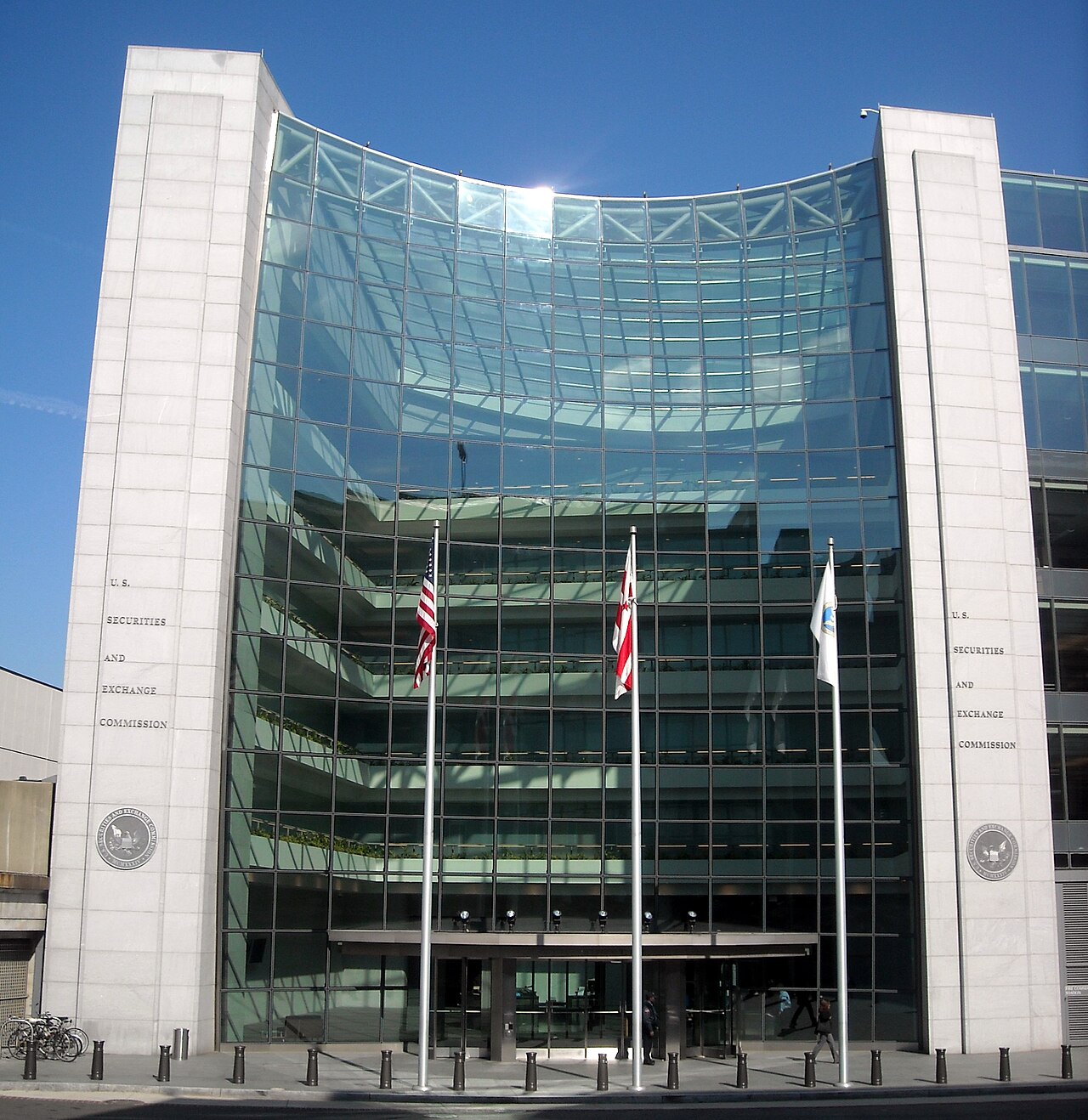
By Eduardo Bacci, The Investigative Journal
A Friday closeout to a heavy week of corporate disclosure delivered fresh annual reports, quarterly filings, and one notable Form 10-K amendment that together provide a snapshot of how publicly traded companies and their investors are positioning for a slower growth U.S. economy and a re-tooled enforcement posture at the Securities and Exchange Commission. Filings reviewed by The Investigative Journal across SEC EDGAR on April 24, 2026 included 8-K material events, 10-Q quarterly reports from companies spanning rail, energy services, semiconductors and exchanges, and proxy statements from a wide range of mid-cap issuers. Records suggest investors should pay close attention to executive shake-ups and merger-related charges that are reshaping the operating-ratio picture at industrial bellwethers, even as the SEC’s Division of Enforcement transitions to new leadership.
Norfolk Southern 10-Q: Merger Expenses and Ohio Incident Costs Pressure Operating Ratio
Norfolk Southern Corporation (CIK 0000702165) filed its Form 10-Q for the quarter ended March 31, 2026 on April 24, disclosing that railway operating revenues held essentially flat at roughly $3.0 billion against a 1% volume decline. The filing indicates that income from railway operations fell to $877 million, a 23% drop, and the operating ratio deteriorated to 70.7% from 61.7% a year earlier. Diluted earnings per share were $2.43, down 27%. The 10-Q is available on EDGAR at Norfolk Southern’s filing page.
Norfolk Southern attributed the headline weakness to two non-recurring items: $52 million in merger-related expenses tied to the pending Union Pacific transaction, and $10 million in costs connected to the Eastern Ohio incident. On an adjusted basis, the company reported income from railway operations of $939 million, down 2%, with an adjusted operating ratio of 68.7% and adjusted diluted EPS of $2.65, only 1% below the prior-year level. Records indicate operating cash flow fell sharply to $344 million from $950 million, and the company ended the quarter with $1.34 billion in cash and equivalents.
The data shows the merger integration narrative will dominate the next several reporting cycles, with merger-related charges still pending and the operating-ratio trajectory likely to remain volatile. The Eastern Ohio liability remains an open enforcement and litigation exposure that warrants continued monitoring.
Constellation Brands 10-K: Divestitures Reset Top Line, Mexican Brewery Capex Continues
Constellation Brands, Inc. (CIK 0000016918) filed its Form 10-K for fiscal year ended February 28, 2026 on April 24, reporting consolidated net sales of $9,139.0 million, down from $10,208.7 million the prior fiscal year. The filing is available at Constellation Brands’ EDGAR page. Net income reached $1,756.8 million, with diluted EPS of $9.61, lifted by reversals of prior impairments and lower interest expense.
Filings indicate the headline revenue decline reflects the 2025 Wine Divestitures rather than core operating weakness. The Beer segment, anchored by Modelo Especial and Corona, generated $8,315.2 million in sales versus $8,539.8 million in fiscal 2025. Wine and Spirits net sales fell to $823.8 million from $1,668.9 million as the company pivoted toward higher-end brands. The company disclosed it spent more than $700 million on modular Mexican brewery expansion in fiscal 2026 and plans approximately $800 million in similar capital expenditures for fiscal 2027. A 2025 Restructuring Initiative is on track to deliver more than $200 million of annualized savings by fiscal 2028.
For investors and accountability watchers, the disclosure raises questions about portfolio concentration risk: the Beer segment now drives more than 90% of consolidated revenue, and Mexican production exposure means any tariff, immigration, or border-policy disruption could meaningfully affect cash flow. The company’s risk-factor disclosures merit a deeper read.
Halliburton 10-Q: International Mix Shifts as North America Softens
Halliburton Company (CIK 0000045012) filed its Form 10-Q for the quarter ended March 31, 2026 on April 24, available at Halliburton’s EDGAR page. The oilfield services company reported revenue of $5.4 billion, essentially flat year-over-year, net income of $461 million, and diluted EPS of $0.55. Operating income rose to $679 million, an approximate 13% operating margin.
The filing shows a continued geographic rotation. North America revenue fell 4% to $2.1 billion while international revenue rose 3% to $3.3 billion, with Latin America surging 22% to $1.1 billion and Europe/Africa/CIS climbing 11% to $858 million. Middle East/Asia declined 13% to $1.3 billion, which the company attributed to reduced activity in Saudi Arabia and Qatar. Free cash flow came in at $123 million after $192 million in capital expenditures.
Records suggest the Saudi softness is the most TIJ-relevant data point in the filing: U.S. oilfield services exposure to Gulf state procurement decisions has periodically been correlated with broader geopolitical signaling, and the trajectory of activity in those jurisdictions warrants ongoing monitoring.
CME Group 10-Q: Record Quarter Amid Volatility-Driven Volumes
CME Group Inc. (CIK 0001156375) filed its Form 10-Q on April 24, reporting record first-quarter revenue of approximately $1.9 billion, operating income of $1.3 billion, and net income of $1.2 billion. Diluted earnings per common share reached $3.18, with adjusted diluted EPS of $3.36. The filing is accessible at CME Group’s EDGAR page.
Average daily volume reached 26.9 million contracts, up 9%, with growth across all six asset classes. International ADV climbed 14% to a record 7.8 million contracts. Commodities revenue alone reached $1.7 billion, up 16%, with metals up 23%, energy up 17%, and agriculture up 13%. Volume in EMEA grew 34%, underscoring the global rerating of risk-management demand during a period of elevated tariff and rate uncertainty.
For accountability journalism, the CME data is a useful macro indicator: surging hedge volumes typically correlate with corporate balance-sheet stress, and a 22% jump in average daily volume of any kind signals that institutional risk managers are pricing in continued turbulence. The filing should be read alongside the SEC and CFTC’s joint April 20 proposal to reduce private-fund reporting burdens, available at SEC press release 2026-40, which could affect how derivatives positions are surfaced to regulators going forward.
Texas Instruments 10-Q: CHIPS Act Cash and Sequential Acceleration
Texas Instruments Incorporated (CIK 0000097476) filed its Form 10-Q on April 24, disclosing first-quarter revenue of $4.83 billion, net income of $1.55 billion, and earnings per share of $1.68. Revenue rose 9% sequentially and 19% year-over-year, with growth led by industrial and data center end markets. The filing is available at Texas Instruments’ EDGAR page.
The Analog segment generated $3.92 billion in revenue, up 22% year-over-year, with operating profit of $1.64 billion. For the trailing twelve months, the company generated $4.35 billion in free cash flow and returned $6.03 billion to shareholders, including $5.05 billion in dividends and $982 million in stock repurchases. Records indicate CHIPS Act incentive proceeds drove a 154% year-over-year increase in free cash flow on a TTM basis, an item that warrants close attention as a public-money-to-private-balance-sheet flow that TIJ readers may want to track.
Forward guidance points to second-quarter 2026 revenue of $5.00 billion to $5.40 billion and diluted EPS between $1.77 and $2.05. The disclosed CHIPS Act benefits will continue to require visibility into the Department of Commerce’s award schedule, particularly as Congress weighs follow-on industrial-policy legislation.
Shutterstock 10-K/A: Part III Disclosures Detail Pay Structures Ahead of Getty Combination
Shutterstock, Inc. (CIK 0001549346) filed an amended Form 10-K/A on April 24 to its annual report for the fiscal year ended December 31, 2025, originally filed February 17, 2026. The amendment is accessible at Shutterstock’s EDGAR page. Records indicate the amendment was filed solely to include Part III information that had been omitted from the original filing in reliance on General Instruction G(3) to Form 10-K — a routine procedural step companies often take when they elect not to file a stand-alone proxy statement on the typical schedule.
The disclosure provides updated executive compensation tables and director information as of March 31, 2026, and reiterates the previously approved merger-of-equals with Getty Images. Filings indicate Shutterstock posted 2025 revenue of $989.9 million and net income of $45.6 million. The pending Getty Images combination remains under regulatory review in multiple jurisdictions and is one of the more consequential mergers in the digital content licensing market in recent memory; the U.K. Competition and Markets Authority issued an interim report earlier in the year on the deal.
SEC Enforcement: Leadership Transition and Strategic Reset
On the regulatory side, the SEC announced on April 8, 2026 that David Woodcock will become Director of the Division of Enforcement effective May 4, 2026, succeeding Acting Director Sam Waldon. The press release is available at SEC press release 2026-35. Woodcock is currently a partner at Gibson, Dunn & Crutcher and previously served as the SEC’s first Director of the Financial Reporting and Audit Group. The appointment follows the March 16 resignation of Judge Margaret A. Ryan, disclosed in press release 2026-27.
The SEC also disclosed FY2025 enforcement results on April 7, available at press release 2026-34. The Commission filed 456 enforcement actions, including 303 standalone cases — declines of 22% and 30%, respectively, from FY2024. Orders for monetary relief totaled $17.9 billion, but after deductions for restitution or forfeiture in related criminal cases and certain legacy judgments, underlying FY2025 totals were approximately $1.4 billion in disgorgement and prejudgment interest and $1.3 billion in civil penalties. Under Chairman Paul Atkins and Commissioner Mark Uyeda, the agency has signaled a strategic pivot away from what it characterizes as “regulation by enforcement” and toward fraud, investor harm, and what the Commission describes as congressional intent. The SEC also reported that nearly nine of ten standalone actions during the Atkins-Uyeda period have included at least one individual defendant.
Filings Warranting Deeper TIJ Investigation
Several filings reviewed warrant deeper investigation in subsequent reporting. Norfolk Southern’s $10 million Eastern Ohio incident charge is recurring across multiple quarterly cycles and the cumulative liability picture, including potential shareholder litigation outcomes, remains unsettled. Constellation Brands’ Mexico-concentration risk and the trajectory of its $1.5 billion two-year capital expenditure plan should be tracked against any tariff or immigration policy shifts. Texas Instruments’ CHIPS Act receipts represent one of the largest public-to-private capital transfers in recent industrial policy and merit transparency-focused follow-up. The Shutterstock-Getty combination, where Part III pay disclosures are now public, is a candidate for an executive-compensation deep dive ahead of integration. Finally, the Woodcock transition at the SEC’s Division of Enforcement will shape priority cases through 2027 and bears close watching, particularly with respect to the Commission’s posture toward digital asset enforcement and accounting fraud cases.
This article is based on public records filed with the U.S. Securities and Exchange Commission and SEC press releases. All filings cited are publicly available on EDGAR. Readers should consult original source documents for complete context. The Investigative Journal does not provide investment advice. Pending matters described above are allegations or disclosures by registrants and have not been adjudicated unless otherwise specified.