

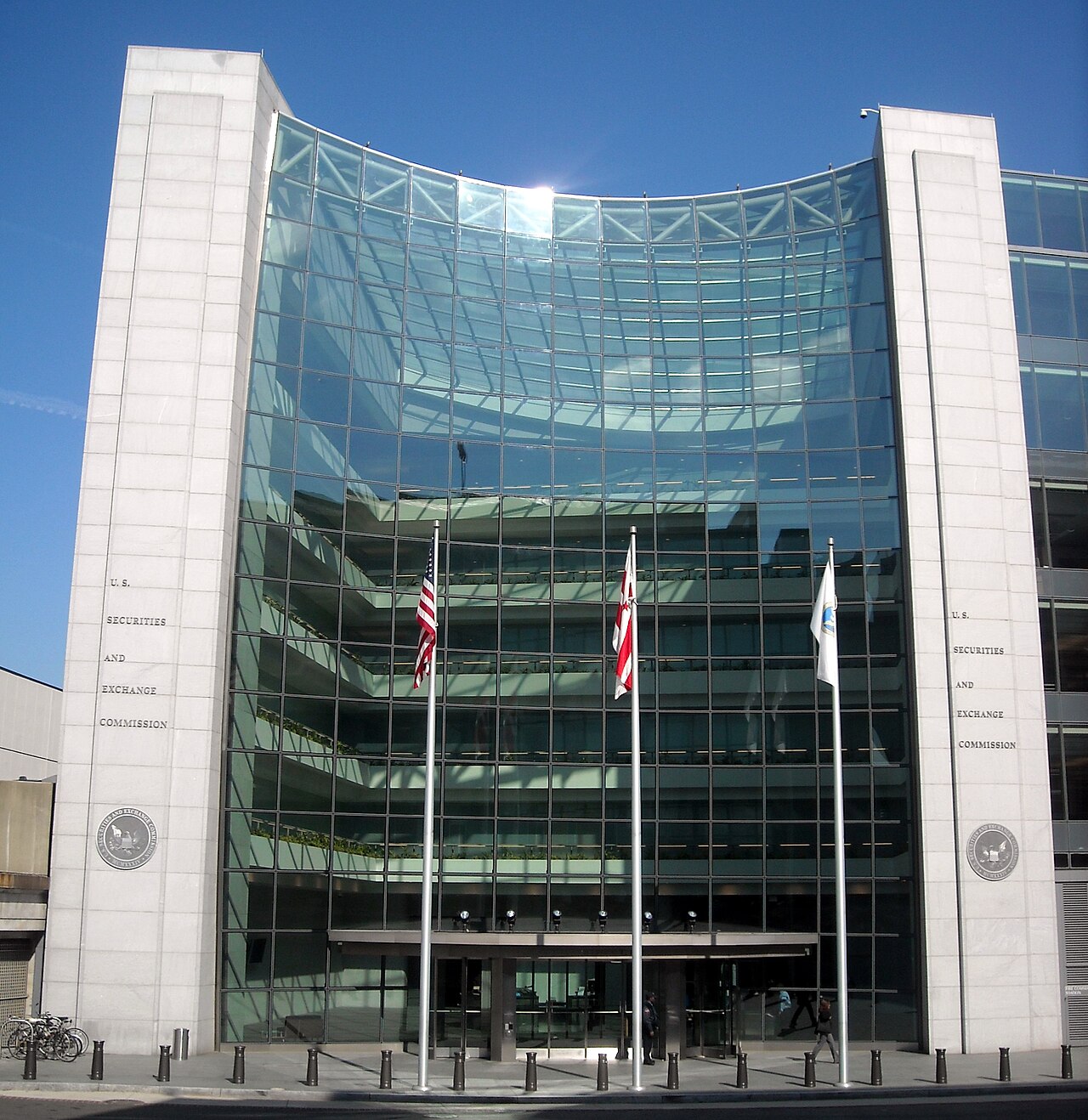
Corporate America’s paper trail ran thick this week, with the final stretch of the 2026 proxy season colliding with a string of executive shake-ups, a cybersecurity breach filed under the SEC’s Item 1.05 rule, and the Commission’s release of fiscal-year enforcement data showing a double-digit drop in standalone cases. Investors parsing filings between April 19 and April 25, 2026 encountered a recurring theme: boards are defending large pay packages to shareholders even as the agency responsible for vetting those disclosures narrows its own enforcement footprint.
The most watched vote of the week lands on Wednesday, April 29, when Goldman Sachs shareholders will weigh in on a $47 million compensation package for Chairman and Chief Executive David Solomon. According to the bank’s definitive proxy statement filed March 19, 2026, Solomon’s pay is framed as overwhelmingly performance-based, delivered through performance stock units and a carried-interest program tied to the firm’s alternatives business. The board will also face advisory votes on thirteen director elections, the reappointment of PricewaterhouseCoopers, and four shareholder proposals the board recommends against.
The Goldman filing is noteworthy for another reason: President and Chief Operating Officer John Waldron’s 2025 compensation was reported at roughly $45 million, a figure that exceeded JPMorgan Chase CEO Jamie Dimon’s pay for the year and drew objections from proxy advisers Glass Lewis and ISS. Records suggest the gap between Waldron’s package and that of peer-firm chief executives represents one of the widest number-two-to-peer-CEO spreads in recent banking-compensation history, a point advisory firms flagged as a retention-versus-pay-discipline question for the compensation committee.
JPMorgan Chase: $43 million for Dimon, 11 directors up for election
JPMorgan Chase filed its 2026 proxy statement ahead of a May 19 virtual annual meeting, disclosing total 2025 compensation of $43.0 million for Jamie Dimon. Filings indicate roughly 88 percent of Dimon’s variable pay is deferred into performance share units, a structure the compensation committee describes as aligning payouts with multi-year shareholder returns. Shareholders will vote to elect eleven directors, approve executive pay on an advisory basis, and ratify PricewaterhouseCoopers as auditor.
Industry context matters here: the AFL-CIO’s most recent Executive Paywatch analysis pegged average S&P 500 CEO pay at $18.9 million in 2024, with a median CEO-to-worker pay ratio of 285-to-1. Dimon’s package is more than double that average. JPMorgan’s proxy emphasizes what the bank calls “record 2025 results,” framing the number as a function of firm-wide performance across its consumer, corporate, and asset-management lines.
Separately, JPMorgan filed an 8-K on April 23 closing four public note offerings — floating-rate notes due 2030 and fixed-to-floating-rate notes due 2030, 2032, and 2037 — adding fresh long-duration debt to its balance sheet at a moment when the Treasury curve remains elevated. The note pricing data appears in the company’s most recent Item 8.01 filing and deserves attention for what it signals about the bank’s funding strategy into 2037.
Meta Platforms: ten shareholder proposals, board opposition unanimous
Meta Platforms made its 2026 proxy materials available on or about April 16, 2026, with CEO Mark Zuckerberg’s controlled-company structure intact and his base salary again set at $1. The filing discloses 2025 revenue of $200.97 billion against $117.69 billion in costs and expenses, producing a 41 percent operating margin — a figure the board cites in defense of a pay program weighted heavily toward equity.
Shareholders will face an unusually dense ballot: twelve directors up for election, an Ernst & Young ratification, and ten shareholder proposals, every one of which the board opposes. The proposals span AI oversight, platform integrity, youth safety, content moderation, and shareholder voting rights. Data shows that at controlled companies such as Meta, shareholder proposals rarely clear majority thresholds among non-insider holders, but the volume and topical range this year reflect what governance analysts describe as rising investor pressure on emerging-technology risk.
Alphabet: fourteen shareholder proposals, AI at the center
Alphabet’s 2026 proxy statement, also filed in April, outlines fourteen shareholder proposals and a 200-million-share capital plan. According to the filing, proposals address climate disclosures, water use, equal voting rights, viewpoint diversity, content moderation, immigration policy, and multiple aspects of AI governance — all opposed by the Board. The filing arrives as Glass Lewis has placed AI oversight at the top of its 2026 proxy-season predictions, and as CalPERS has signaled it may withhold votes from directors at companies where AI oversight is deemed insufficient.
Data from the Harvard Law School Forum on Corporate Governance shows that just over half of S&P 100 companies disclosed board-level AI oversight in 2025, and fewer than one-third disclosed both oversight and a formal AI policy. Alphabet’s fourteen-proposal ballot is a leading indicator that large-cap tech boards will spend disproportionate time this season defending their AI governance architecture rather than debating financial performance.
Itron Inc.: cybersecurity incident disclosed under Item 1.05
Utility-technology provider Itron filed a Form 8-K disclosing that an unauthorized third party accessed certain company systems on April 13, 2026. The filing, made under Item 1.05 of Form 8-K — the SEC’s post-2023 cybersecurity incident rule — states that Itron activated its cybersecurity response plan, engaged external advisors, notified law enforcement, and has since removed the unauthorized activity. Records indicate no further unauthorized access has been observed in Itron’s corporate systems and no unauthorized activity in customer-hosted systems.
Itron’s disclosure language tracks the materiality framework the SEC has consistently applied since Item 1.05 took effect: the company states that, based on information currently available, it does not believe the incident has had or is reasonably likely to have a material impact on financial condition or operations, and expects a significant portion of direct incident-related costs to be reimbursed by insurance. The filing is a useful template for the growing population of public-company cyber disclosures, which surveys suggest now dominate cybersecurity-related 8-K traffic.
Clean Energy Fuels and Energy Fuels: two different CEO transitions
Clean Energy Fuels Corp. announced that Barclay F. (“Clay”) Corbus was appointed President and Chief Executive Officer effective April 22, 2026, succeeding Andrew J. Littlefair, according to the company’s 8-K. Separately, uranium producer Energy Fuels Inc. filed an 8-K confirming that President Ross Bhappu became President and CEO on April 15, 2026 under a succession plan previously disclosed, as outgoing CEO Mark Chalmers retired and resigned from the Board. Both filings explicitly state the outgoing executives’ departures were not the product of any disagreement with the company on operations, policies, or practices — the boilerplate language Item 5.02 requires but which nonetheless can be probative when absent.
A third leadership disclosure also crossed the wire this week: Beyond Meat’s 8-K noting that Chief Operations Officer Jonathan Nelson will resign effective May 17, 2026 to pursue another opportunity. Taken together, the three transitions underscore the volume of Item 5.02 filings typically concentrated in the weeks immediately before annual meetings, as boards refresh management slates ahead of shareholder votes.
Insider activity: Block CFO and a $107 million Target Hospitality block trade
Form 4 filings produced two figures worth flagging this week. Block, Inc. Chief Financial and Operating Officer Amrita Ahuja sold 30,919 shares of Class A common stock on April 21, 2026 at a weighted-average price in the mid-$70s, under a Rule 10b5-1 trading plan adopted February 25, 2025. The transaction is routine under planned-trading mechanics but the sale-price band and the plan’s vintage will be scrutinized by shareholders assessing alignment between executive liquidity and the company’s 2025 share-price trajectory.
A larger transaction appeared in Target Hospitality Corp.’s April 23 Form 4: MFA Global S.à r.l. and Arrow Holdings S.à r.l., entities affiliated with TDR Capital, sold an aggregate 8,050,000 shares at $13.265 per share — an approximate $106.8 million secondary-sale stake rotation. For a small-cap issuer, a block trade of that magnitude functions as a de facto free-float event, and filings suggest TDR’s position continues to be monitored by institutional holders tracking post-sponsor overhang.
SEC FY2025 enforcement data: fewer cases, sharper focus
The Commission itself produced a disclosure worth noting this week. On April 7, 2026, the SEC released its fiscal-year 2025 enforcement results, reporting 456 total actions including 303 standalone cases — declines of 22 percent and 30 percent, respectively, from FY2024. Chairman Paul Atkins said the current Commission is prioritizing cases involving fraud, market manipulation, and abuses of trust, and emphasized holding individual wrongdoers accountable rather than pursuing aggregate penalty totals.
Two accounting-fraud actions anchor the year’s narrative. The Commission charged Archer-Daniels-Midland and three former executives in connection with alleged accounting and disclosure fraud concerning inter-company transactions that records suggest were used to inflate results of an important business segment; the matter was resolved with a reported $40 million civil settlement. A separate action against Allarity Therapeutics alleged the biopharmaceutical company concealed a harsh FDA critique of its flagship cancer-drug candidate from the investing public. Both cases are worth reading alongside this season’s annual report risk-factor disclosures, which White & Case and Gibson Dunn surveys indicate are increasingly foregrounding AI, tariffs, and cybersecurity — categories the Commission has signaled will remain enforcement priorities.
Disclosures that warrant deeper TIJ investigation
Three threads from this week merit follow-up reporting. First, the Goldman-Waldron pay gap relative to peer-bank CEOs is now large enough that the compensation committee’s rationale — described in the proxy as necessary to retain a successor-track executive — will be tested in the May vote and is likely to draw renewed comment from institutional investors. Second, the contrast between the SEC’s declining case count and its headline-grabbing ADM and Allarity actions raises a policy question about whether accountability is being concentrated in a smaller number of larger matters, a shift that deserves data-backed analysis. Third, the density of shareholder proposals at Meta and Alphabet on AI governance will test whether controlled-company structures can continue to absorb investor pressure without formal board-level AI oversight commitments — a reporting thread TIJ will track through proxy-vote results in May and June.
The investigative bottom line: filings indicate 2026 proxy season is not producing the kind of headline pay-package confrontations that defined prior years, but the underlying disclosure mix — Item 1.05 cyber filings, Item 5.02 leadership changes, and dense shareholder-proposal slates at controlled-governance technology firms — is where governance risk is now being priced. Investors paying attention only to CEO compensation numbers are missing half the story.
Sources and direct links:
- Goldman Sachs 2026 DEF 14A (SEC EDGAR)
- JPMorgan Chase 2026 DEF 14A (SEC EDGAR)
- Meta Platforms 2026 DEF 14A (SEC EDGAR)
- Alphabet 2026 DEF 14A (SEC EDGAR)
- Itron Inc. 8-K filings (SEC EDGAR)
- Clean Energy Fuels 8-K filings (SEC EDGAR)
- Energy Fuels Inc. 8-K filings (SEC EDGAR)
- Beyond Meat 8-K filings (SEC EDGAR)
- Block, Inc. Form 4 filings (SEC EDGAR)
- Target Hospitality Form 4 filings (SEC EDGAR)
- SEC Announces Enforcement Results for Fiscal Year 2025
- SEC Charges ADM and Three Former Executives with Accounting and Disclosure Fraud